


|
Me: Stories of My Life
(1992) Admired and beloved by movie audiences for over sixty years, four-time Academy Award-winner Katharine Hepburn is an American classic. Now Miss Hepburn breaks her long-kept silence about her private life in this absorbing and provocative memoir. |
 |
|
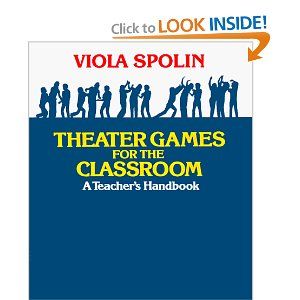
Theater Games for the Classroom: A Teacher's Handbook
(1986) Based on the best-selling book by Viola Spolin, this new CD-ROM of Theater Games for the Classroom offers the most comprehensive theater instruction for all types of students, from small children to young adults. It includes over 130 theater games and exercises, instructional strategies, video examples, a lesson planning section, alignment to other curricular areas, and alignment to California Theatre Arts standards. First developed by Spolin, the originator of modern improvisational theater tec... |
 |
|
The Sound of Music: Vocal Selections
(1981) 11 songs: Climb Ev'ry Mountain * Do-Re-Mi * Edelweiss * I Have Confidence * The Lonely Goatherd * Maria * My Favorite Things * Sixteen Going on Seventeen * So Long, Farewell * Something Good * The Sound of Music. |
 |
|
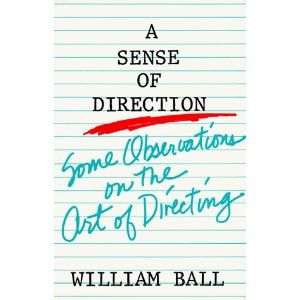
Sense of Direction: Some Observations on the Art of Directing
(1984) By the founder of the famous American Conservatory Theatre (A.C.T.) in San Francisco - a candid account of his working method as a director. A Sense of Direction represents a life's work in directing. William Ball engages his audience in a wide-ranging discussion of the director's process, from first read-through to opening night. An informative, insightful, and often astonishingly clear look at the the process of making theatre. |
 |
|
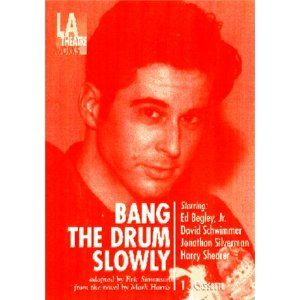
Bang The Drum Slowly
(1992) Sure, Harris's most acclaimed novel, the second of his Henry Wiggen books, centers around a pair of ballplayers for the fictionally fabled New York Mammoths--the novel's narrator, pitcher Wiggen, and Bruce Pearson, his tag-along catcher and best friend. And sure, on one level, it's the conventional tale of a disparate dugout population cohering over the course of a season and marching ineluctably toward the World Series. But convention, like a 55-foot curveball, ends there and then scoots off i... |
 |
|
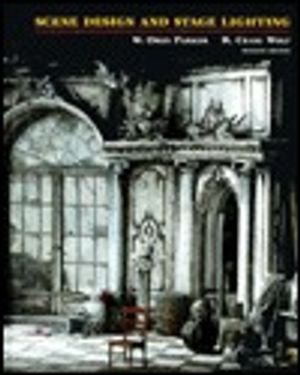
Scene Design and Stage Lighting
(1985) Stressing recent innovations in stage lighting, the authors reveal the techniques and skills involved in designing sets for theatrical productions. |
 |
|
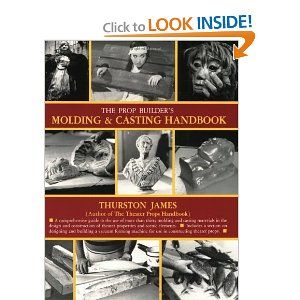
The Prop Builder's Molding & Casting Handbook
(1989) Demonstrates how to work with molds, castings, and vacuum forming equipment, stresses safety precautions, and discusses materials from paper-mache to breakaway glass. |
 |
|
Designing with Light: An Introduction to Stage Lighting
(1983) This comprehensive survey of the practical and aesthetic aspects of basic stage lighting design treats its subject as an art closely integrated with that of the director, actor, and playwright, and as a craft that provides practical solutions for the manipulation of stage space. An eight-page color section provides a discussion of the practical applications of color theory as well as an analysis of the color choices for the lighting design of an actual production. Numerous illustrations of techn... |
 |
|
The Pot of Gold and Other Plays
(1965) One of the supreme comic writers of the Roman world, Plautus (c.254–184 BC), skilfully adapted classic Greek comic models to the manners and customs of his day. This collection features a varied selection of his finest plays, from the light-hearted comedy Pseudolus, in which the lovesick Calidorus and his slave try to liberate his lover from her pimp, to the more subversive The Prisoners, which raises serious questions about the role of slavery. Also included are The Brothers Menaechmus, which... |
 |
|
The Threepenny Opera
(1994) Brutal, scandalous, perverted, yet humorous, hummable, and with a happy ending- Bertolt Brecht's revolutionary masterpiece The Threepenny Opera is a landmark of modern drama that has become embedded in the Western cultural imagination. Through the love story of Polly Peachum and "Mack the Knife" Macheath, the play satirizes the bourgeois of the Weimar Republic, revealing a society at the height of decadence and on the verge of chaos. Complemented with music by Kurt Weill, it was one of the earli... |
 |
|
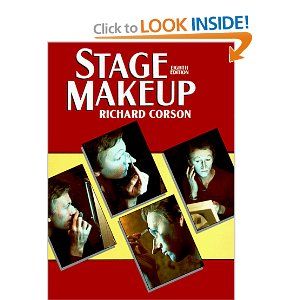
Stage Makeup
(1990) Key Benefit: A classic in the field, this book helps makeup artists and actors learn the proper technique when applying stage makeup. Key Topics: This easy, step-by-step guide is comprised of 20 comprehensive chapters covering all aspects of stage makeup application. Topics include: basic techniques as well as new methods and materials for all types of stage makeup; updated information on hairstyles and fashions. Revered as the stage makeup bible, this book includes listings of makeup colors fro... |
 |
|
The Stanislavski System: The Professional Training of an Actor
(1984) This clearly written guide to the Stanislavski method has long been a favorite among students and teachers of acting. Now, in light of books and articles recently published in the Soviet Union, Sonia Moore has made revisions that include a new section on the subtext of a role. She provides detailed explanations of all the methods that actors in training have found indispensable for more than twenty years. Designed to create better actors, this guide will put individuals in touch with themselves... |
 |
|
A Challenge for the Actor
(1991) This volume completes Hagen's earlier classic, Respect for Acting (Macmillan, 1973). The beliefs, professionalism, and standards of training and performance that make Respect required reading for all actors are explored in this acting textbook that represents a lifetime of performance and teaching. Unlike the more academic texts, Hagen's study reflects exercises, insights, and techniques that have been taught and practiced in acting studios and on stages for many years. Readers should not be pu... |
 |
|
An Unsocial Socialist
(1972) An Unsocial Socialist was published in 1887, having been written in 1883. The tale begins with a humorous description of student antics at a girl's school then changes focus to a seemingly uncouth laborer who, it soon develops, is really a wealthy gentleman in hiding from his overly affectionate wife. He needs the freedom gained by matrimonial truancy to promote the socialistic cause, to which he is an active convert. Once the subject of socialism emerges, it dominates the story, allowing only ... |
 |
|
Impro: Improvisation and the Theatre
(1987) Impro ought to be required reading not only for theatre people generally but also for teachers, educators, and students of all kinds and persuasions. Readers of this book are not going to agree with everything in it; but if they are not challenged by it, if they do not ultimately succumb to its wisdom and whimsicality, they are in a very sad state indeed . . . .Johnstone seeks to liberate the imagination, to cultivate in the adult the creative power of the child . . . .Deserves to be widely read... |
 |
|
Truth in Comedy: The Manual of Improvisation
(1994) Who would have ever thought that learning the finer points of improvisation could be such fun? The "Harold," an innovative improvisational tool, helped Saturday Night Live's Mike Myers and Chris Farley, George Wendt (Norm on "Cheers") and many other actors on the road to TV and film stardom. Now it is described fully in this new book for the benefit of other would-be actors and comics. The "Harold" is a form of competitive improv involving six or seven players. They take a theme suggestion from... |
 |
|
Zoot Suit and Other Plays
(1992) This collection contains three of playwright and screenwriter Luis Valdez's most important and recognized plays: Zoot Suit, Bandido! and I Don't Have to Show You No Stinking Badges. The anthology also includes an introduction by noted theater critic Dr. Jorge Huerta of the University of California-San Diego. Luis Valdez, the most recognized and celebrated Hispanic playwright of our times, is the director of the famous farm-worker theater, El Teatro Campesino. |
 |
|
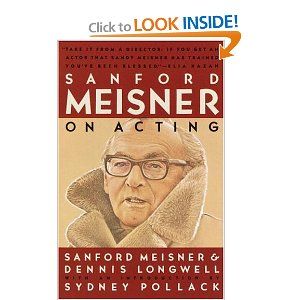
Sanford Meisner on Acting
(1987) Meisner, a member of the Theater Guild and the Group Theater, has devoted most of 50 years to teaching acting and is one of the great unsung resources in American theater. This book is not an acting text, but a journal of a 15-month course taken by 16 adult actors. We follow them as they progress from early exercises through preparation to detailed scene work. Meisner emphasizes emotional truth and acting as the reality of doing. His students find the course difficult, but most improve markedly.... |
 |
|
Rosencrantz and Guildenstern Are Dead
(1988) Rosencrantz and Guildenstern Are Dead is an absurdist, existentialist tragicomedy by Tom Stoppard, first staged at the Edinburgh Festival Fringe in 1966. The play expands upon the exploits of two minor characters from Shakespeare's Hamlet, the courtiers Rosencrantz and Guildenstern. The action of Stoppard's play takes place mainly "in the wings" of Shakespeare's, with brief appearances of major characters from Hamlet who enact fragments of the original's scenes. Between these episodes the two ... |
 |
|
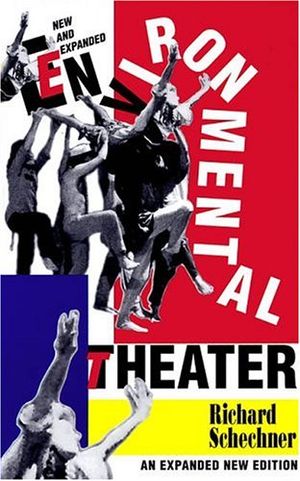
Environmental Theater
(1973) Here are the exercises which began as radical departures from standard actor training etiquette and which stand now as classic means through which the performer discovers his or her true power of transformation. Available for the first time in fifteen years, this new expanded edition offers a new generation of theater artists the gospel according to Richard Schechner, the guru whose principles and influence have influenced a quarter century of theater. |
 |
|
David Merrick - The Abominable Showman
(1993) The chief theater critic for the New York Daily News has written a frank portrait of Broadway's most famous producer, a man as renowned for his outrageous behavior and sharp business practices as for the string of hits that began in 1954 with Fanny , continued through the '60s and '70s with Gypsy , Hello, Dolly! and prestigious British imports like Marat/Sade and climaxed in 1980 with the lavish stage version of 42nd Street , which ran for nine years. As documented in his source notes, Kissel ha... |
 |
|
Backstage Handbook: An Illustrated Almanac of Technical Information
(1994) First published in 1988, Backstage Handbook is one of the most widely used stagecraft textbooks in the United States, with about 10,000 copies sold every year. This handy reference book brings together under one cover an incredible variety of information useful to designers, technicians and students who work behind the scenes in theatre, film and television. Its sturdy leatherette binding will stand up to years of constant use. The third edition updates this popular reference book with new... |
 |
|
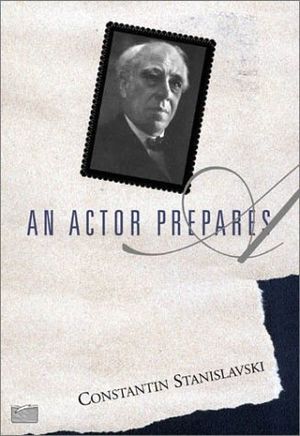
An Actor Prepares
(1989) Stanislavski's simple exercises fire the imagination, and help readers not only discover their own conception of reality but how to reproduce it as well. |
 |
|
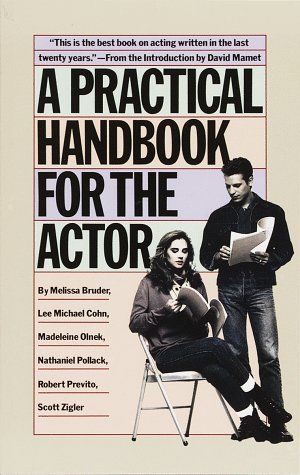
A Practical Handbook for the Actor
(1986) 6 working actors describe their methods and philosophies of the theater. All have worked with playwright David Mamet at the Goodman Theater in Chicago. |
 |
|
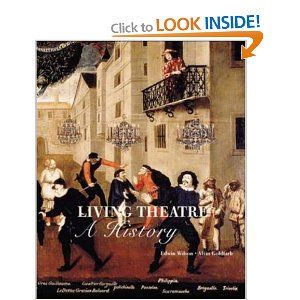
Living Theater: A History
(1994) An updated and expanded edition of Wilson and Goldfarb's Living Theater: A History. The authors combine an engaging narrative style with impeccable scholarship to present the history of theater from ancient Greece to Rome to the present day. Rather than resorting to dry, encyclopedic coverage, Wilson and Goldfarb demonstrate the liveliness, vitality, and distinctiveness of theater as it has unfolded through the ages. Along the way the authors emphasize the constantly changing nature of theater a... |
 |
|
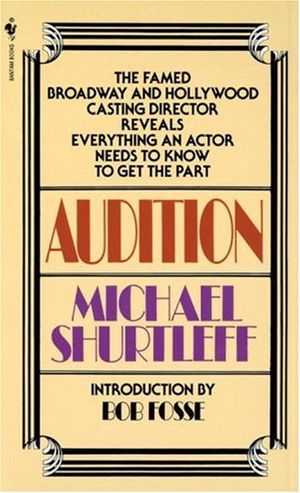
Audition
(1979) Michael Shurtleff has been casting director for Broadway shows like Chicago and Becket and for films like The Graduate and Jesus Christ Superstar. His legendary course on auditioning has launched hundreds of successful careers. Now in this book he tells the all-important HOW for all aspiring actors, from the beginning student of acting to the proven talent trying out for that chance-in-a-million role! |
 |
|
Backwards & Forwards: A Technical Manual for Reading Plays
(1983) This guide to playreading for students and practitioners of both theater and literature complements, rather then contradicts or repeats, traditional methods of literary analysis of scripts. Ball developed his method during his work as Literary Director at the Guthrie Theater, building his guide on the crafts playwrights of every period and style use to make their plays stageworthy. The text is full of tools for students and practitioners to use as they investigate plot, character, theme, expo... |
 |
|
No Exit and Three Other Plays
(1989) 4 plays about an existential portrayal of Hell, the reworking of the Electra-Orestes story, the conflict of a young intellectual torn between theory and conflict and an arresting attack on American racism. |
 |
Videos