


Interview: Department Chair Robert Caisley On the University of Idaho's Distance-Based M.F.A. in Theatre Arts
The internationally produced playwright discusses how the fully online program lets working theatre professionals earn an advanced degree without pausing their careers.
The University of Idaho Department of Theatre Arts offers a distance-based M.F.A. in Theatre Arts geared toward Working Theatre professionals and seasoned educators. The 60-credit program can be completed in three years, or fewer through an M.A. to M.F.A. conversion option, and offers both synchronous and asynchronous coursework so students can continue working within their local theatre communities while earning their degree. Notably, students who register only for online courses pay in-state tuition regardless of where they live, with no Idaho residency required.
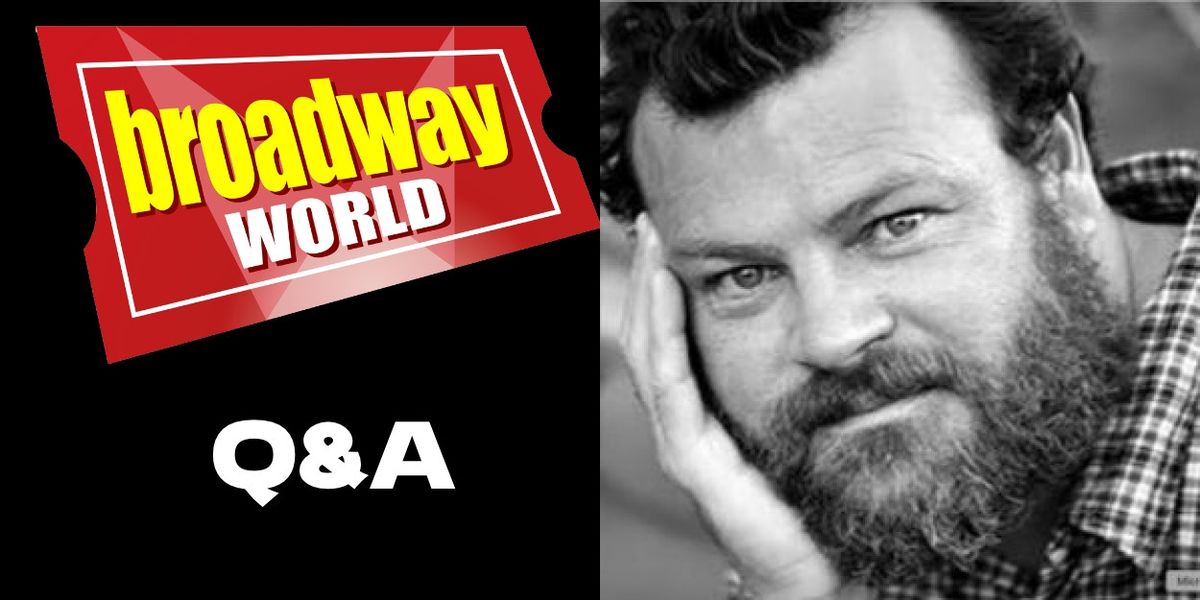
Leading the department is Robert Caisley, an internationally produced playwright whose plays have been performed across the United States, Canada, and the United Kingdom and translated into Italian, French, Estonian, Spanish, and Czech. A recipient of a 2015-16 Fellowship in the Performing Arts from the Idaho Commission on the Arts and the National Endowment for the Arts, Caisley is a three-time alum playwright of the National New Play Network. His play LUCKY ME enjoyed an NNPN Rolling World Premiere and later ran at Divadlo Ungelt in Prague, while his play HAPPY received productions across the country and internationally, including runs in Mexico City and Buenos Aires. His latest play is SNOW FEVER: A KARAOKE CHRISTMAS.
BroadwayWorld spoke with Caisley about how the program is built around the realities of a Working Theatre career, the Off-Campus Studio course that lets students earn credit for professional work in their own communities, and the individualized mentorship that anchors the distance experience.
What makes the University of Idaho's distance-based M.F.A. in Theatre Arts program uniquely suited for Working Theatre professionals who don't want to pause their careers to pursue an advanced degree?
Students have the flexibility to participate synchronously or asynchronously, whatever works best with their busy schedule, and they can earn academic credit for professional projects they are already working on in their communities. We support Working Theatre professionals' academic goals by connecting their work with our curriculum. Additionally, there are no residency requirements, so students can receive in-state tuition for their online classes without moving to Idaho. Our program is built around the reality of Working Theatre professionals. We understand that our students are busy teaching, writing, working on productions, and managing theatres in communities where they have planted roots. Rather than asking them to step away from their careers and communities, we've designed a program that lets them earn their M.F.A. while continuing the work they love. Students graduate with an advanced degree while continuing to build their careers, expand their professional networks, and deepen their artistic practice.
As Department Chair and a playwright whose work has been produced internationally, how does your own experience as a working artist inform the way the distance M.F.A. program is structured and delivered?
As a working playwright, I understand that careers in theatre rarely follow a traditional schedule. As theatre professionals, we balance rehearsals, productions, deadlines, and teaching responsibilities. Graduate school should support an artist's career, not interrupt it, so we've structured our program to be rigorous but adaptable. Students receive individualized mentorship and are guided about how to integrate their professional work into their coursework. I also know how valuable artistic communities and networks are, so we have worked hard to create a program that connects students with accomplished faculty, alumni, and peers across the country and the globe. Our First Bite series allows playwrights to hear an early draft of the play, and because we produce the series via Zoom, we are able to cast actors who meet the script's needs no matter where those actors are based. This virtual format also allows playwrights to invite attendees from across the country. We also provide regional readings of third year playwrights at professional venues like B Street Theatre in Sacramento, Phoenix Theatre in Indianapolis, and Iowa Stage.
Can you explain how the M.F.A. Off-Campus Studio course works in practice, and how students actually earn academic credit for the professional theatre work they're doing in their own communities?
The Off-Campus Studio is one of the most exciting parts of the distance program because we get to recognize the meaningful artistic work our students are doing everywhere, not just on our campus. Students work with their Major Professor to identify a project that aligns with their academic goals. This might be directing a production, designing a show, writing a new play or adaptation, dramaturging a production, performing, developing a curriculum, or more. Once the project is approved, students document their processes and reflect on their work. The result is an immersive learning experience that connects deeply with each student's career.
The program offers both synchronous and asynchronous learning options. How does that flexibility play out in day-to-day student life, and how do you ensure students still feel connected to a larger theatrical community?
Students in the M.F.A. program often have demanding schedules across multiple time zones. By offering both synchronous and asynchronous participation modes for our courses, students can participate in the way that supports their professional life without sacrificing the quality of their education. This flexibility does not mean students are isolated, however. Our distance M.F.A. cohort is robust, with dedicated learners and accomplished alumni. Students engage in many classes, critiques, lectures, and conversations with faculty and classmates. Our department is a tight-knit group of artists, learners, and scholars. Many of our students develop strong friendships with each other, even planning in-person M.F.A. meetups with peers in their region. These personal and professional bonds continue well beyond graduation.
With 49 of the 60 required credits being elective, how do you help students navigate that level of flexibility without losing focus on their professional and artistic goals?
Every student works closely with a major professor to develop an individualized course of study that reflects their interests and career aspirations. We also have regular portfolio and jury reviews throughout the program, which allows students and faculty to evaluate progress, assess goals, and refine processes. Major professors advise students every step of the way as they select courses and projects that support their artistic and professional aspirations. When applying, students select an emphasis area and generally take at least one course in that area each semester. Beyond that, students can branch out to explore new areas or secondary or tertiary emphases. We hope to produce well-rounded students who are ready to take their newly acquired knowledge and/or refined skills back into the field.
How does the Major Professor mentorship model work within the distance program, and what does that personalized guidance look like for a student who may be hundreds or thousands of miles away?
Major professors serve as an academic advisor and mentor throughout a student's time in the program. At the beginning of the program, they help students identify artistic, academic, and professional goals, and design an individualized course plan accordingly. Students meet regularly with their major professor through virtual meetings and receive detailed feedback on their creative work. Conversations are highly individualized to the student's ongoing projects.
Can you tell us more about the M.A. to M.F.A. Conversion option and who the ideal candidate for that pathway might be?
The M.A. to M.F.A. Conversion option is designed for students who have already received an M.A. or earned M.A. credits at another accredited institution. Students may transfer up to 20 credits, which allows them to complete their M.F.A. in two years instead of three (or four semesters instead of six). This is a great option for experienced professionals who have continued growing since earning their M.A. and now want the expanded opportunities that an M.F.A. can provide. Additionally, these credits are transferred as elective credits, which means we don't need to match individual courses from the transcript to our curriculum. It makes the process of transferring credits fast and easy.
What would you say to a theatre professional who is on the fence about whether now is the right time to pursue an M.F.A., and what does the University of Idaho distance program offer that they simply won't find anywhere else?
Many theatre artists assume they have to choose between either advancing their careers or earning a graduate degree. Our program gives you a third option: both. If you are already doing theatre work that you love, our program allows you to build that momentum instead of putting it on hold. You stay rooted in your community, continue developing your career, and earn your M.F.A. from a respected institution through personal mentorship and flexible curriculum. What sets our program apart is that we treat your professional artistic practice as an integral part of your education. In our program, you use your artistic life as the foundation for your academic pursuits. The flexibility, mentorship, and connection with professional work we offer is why so many theatre artists find our program to be a perfect fit.
The University of Idaho Department of Theatre Arts is part of the College of Letters, Arts and Social Sciences and is affiliated with the Oregon Shakespeare Festival, which sponsors the Rex Rabold Fellowship, and Boise Contemporary Theatre, which sponsors the Ari Keever Trajectory Fellowship. The distance-based M.F.A. in Theatre Arts is a 60-credit program that can be completed in three years, with in-state tuition (about $11,500) available to students who register only for online courses, regardless of location.
Love Theater in Boise? Join The Community!
Whether you've got past experience writing about theater or just starting, the BroadwayWorld Community offers a unique opportunity to become a champion for your local arts community, helping raise awareness of local offerings and adding another local voice to the conversation at a time arts coverage is shrinking in the press across the continent. Join us and become a pivotal part of the movement that celebrates and promotes the arts in the digital age.
Learn More
|
Ryan Hamilton: Making Good Time Morrison Center (1/22-1/22) |
|
Boise State Annual Holiday Concert Morrison Center (11/12-11/12) |
|
Boise State Symphonic Winds Morrison Center (11/15-11/15) |
|
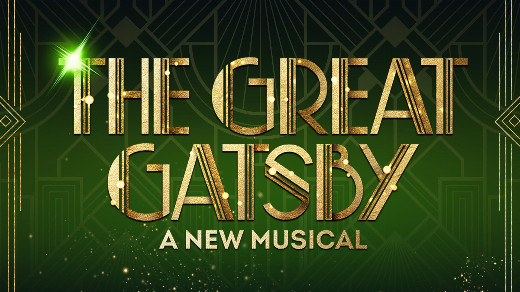
The Great Gatsby Morrison Center (4/20-4/25) |
|
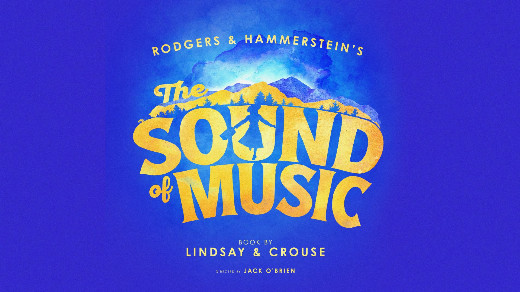
The Sound of Music Morrison Center (6/08-6/13) |
|
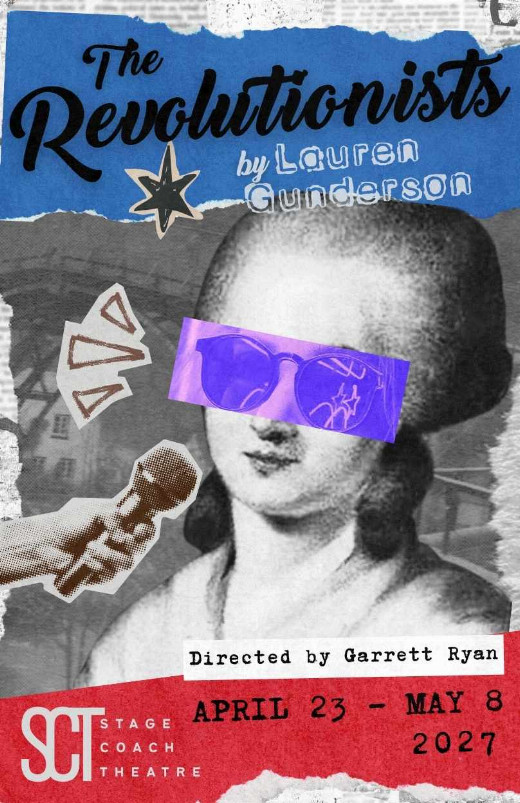
The Revolutionists Stage Coach Theatre (4/23-5/08) |

|
Rock of Ages Boise Little Theater (8/28-9/12) |

|
& Juliet Morrison Center (10/20-10/25) |
|
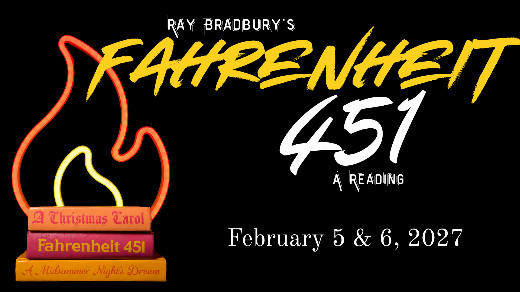
Fahrenheit 451: A Staged Reading Morrison Center – The Danny Peterson Theatre (2/05-2/06) |
|
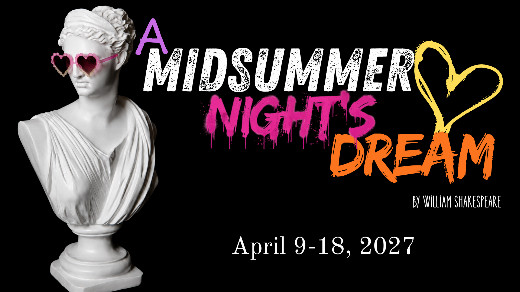
A Midsummer Night's Dream: By William Shakespeare Morrison Center – The Danny Peterson Theatre (4/09-4/18) |
