The Space Between: How Fan Yu Turns Architecture into Storytelling
Yu is a scenic designer whose work sits at the intersection of theatre, film, and live performance.
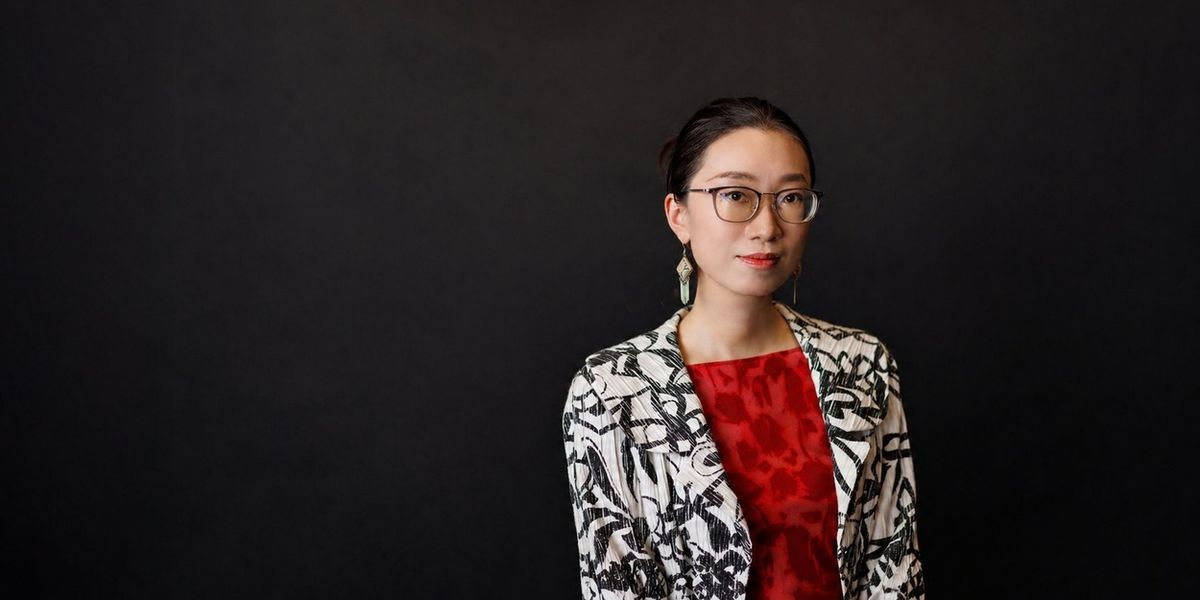
Written by Matthew Kayser
There is a particular kind of designer who thinks about space the way a writer thinks about language. Not just what it looks like, but what it means, and what it does to the people inside it. Fan Yu is that kind of designer.
Yu is a scenic designer whose work sits at the intersection of theatre, film, and live performance. She trained first as an architect in Hangzhou, China, earned her MFA in Design for Stage and Film from NYU, and has spent the years since building a practice that refuses to stay in one lane. Her projects range from theatrical productions to immersive shows to large-scale concert experiences, and she brings the same sensibility to all of them: space as something that holds memory, that carries weight, that tells a story on its own terms.
A Different Kind of Architecture
Growing up in Hangzhou, Yu was surrounded by the mechanics of visual storytelling. Her father worked in commercial filmmaking, and she absorbed, almost without realising it, the idea that a constructed environment could do things that words sometimes couldn't. She pursued that instinct through architecture, which gave her a rigorous foundation in how spaces work. But somewhere along the way, she started asking different questions.
The shift came partly through a book. During her undergraduate years, she encountered Gaston Bachelard's ‘The Poetics of Space’, a philosophical text that explores how our intimate, domestic spaces shape memory and imagination. It changed how she thought about what a room could be. She began to see space not just as something to be designed and inhabited, but as a vessel for inner life.
Then came Fellini.
Specifically, 8½. The film, with its layered movement between memory, fantasy, and waking life, opened something up for Yu. She developed a design project that studied the film's spatial qualities, which went on to win an international design award. More than that, it confirmed for her what she actually wanted to do. She wanted to build the kinds of worlds that 8½ created. Spaces that felt emotionally true even when they weren't quite real.
She came to New York to pursue that.
Learning to Think in Scenes
At NYU, Yu trained under Professor Paul Steinberg, whose influence shaped how she approaches a production. Rather than treating a set as a series of visual moments, she thinks about a show as a complete arc. Every scene feeds into the next. The scenery isn't decoration. It moves with the story, responds to shifts in tone and emotion, and sometimes tells the audience something the characters don't say out loud.
This is the kind of thinking that makes her a true creative collaborator for directors early in the process, before the big decisions are locked in. Her architectural background means she comes to conversations with precision. She has a strong sense of proportion, material, and structure, and she can hold a complex visual concept clearly enough to communicate it and adapt it when something changes. In production, things always change.
She has recently collaborated with Jason Ardizzone-West Studio and Loudbox on immersive shows and world-tour concert performances, where her scenic design background is being applied to immersive shows and large-scale concert performances. The work is physically ambitious and formally different from theatre, but the underlying question is the same: how do you design a space that makes people feel something?
Pedigree and the Weight of Representation
One of Yu's most meaningful recent projects was Pedigree, a short film about an Asian-American family in Flushing, New York. She served as production designer, and the film made its way to the 2025 Palm Springs International ShortFest. It also received the Spirit Award at the Brooklyn Film Festival.
For Yu, the film meant more than its recognition. It came from an Asian filmmaker team and told a story rooted in the particular texture of New York City, in the quiet pressures and everyday realities of immigrant life. She travelled to Palm Springs for the West Coast premiere and the Q&A that followed, and she felt proud of what the film represented: Asian and Asian-American stories finding space in the broader conversation of American cinema.
That sense of cultural rootedness is something she carries into her work generally. Her practice spans the United States and China, and increasingly Europe, and she has learned to find the emotional core of each project regardless of where it's made or what form it takes.
Dead Poets, Live Stages
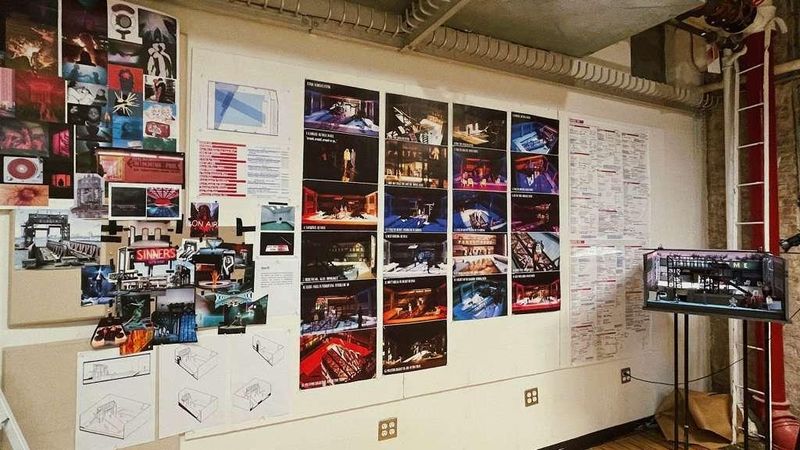
Her current project takes that cross-cultural dimension to a different scale entirely. Yu is designing the set for a touring theatrical production of Dead Poets Society, the stage adaptation of the film, which is planned to open at Beijing Poly Theatre before travelling to Shanghai, Hangzhou, Shenzhen, and Chengdu.
The material is a natural fit for her. The story is about freedom and authority, about young people pushing against systems that want to contain them, about the cost of dreaming in environments that don't leave room for it. Yu is not interested in building a literal school. She and the team are working toward something more metaphorical, a world that holds the ideas of the story as much as its physical setting.
It is the kind of challenge she finds genuinely exciting. How do you make a space feel both specific and universal? How do you create a world that can speak across cultures while still feeling personal to the audience?
The Language of Dreams
Fan Yu describes wanting her work to reach people across cultures, to move audiences beyond the boundaries of language. It is an ambitious thing to want, and it is also, in a way, the oldest ambition in theatre: to make something that means something to whoever is sitting in the room.
The worlds she builds are not literal. They are charged, poetic, slightly heightened versions of reality, spaces where memory and emotion have somewhere to live. Fellini called cinema the language of dreams. Yu has spent her career learning to speak it in three dimensions.
Learn more about Fan Yu's work at fanyudesign.cargo.site
Photo Credit: Fan Yu
Weekly top stories - unsubscribe anytime.
.jpg?format=auto&width=300)