EDINBURGH 2026: Interview: Fraser Scott and Olivia Caw on Common Tongue
Common Tongue is at the Fringe from 7 - 31 August
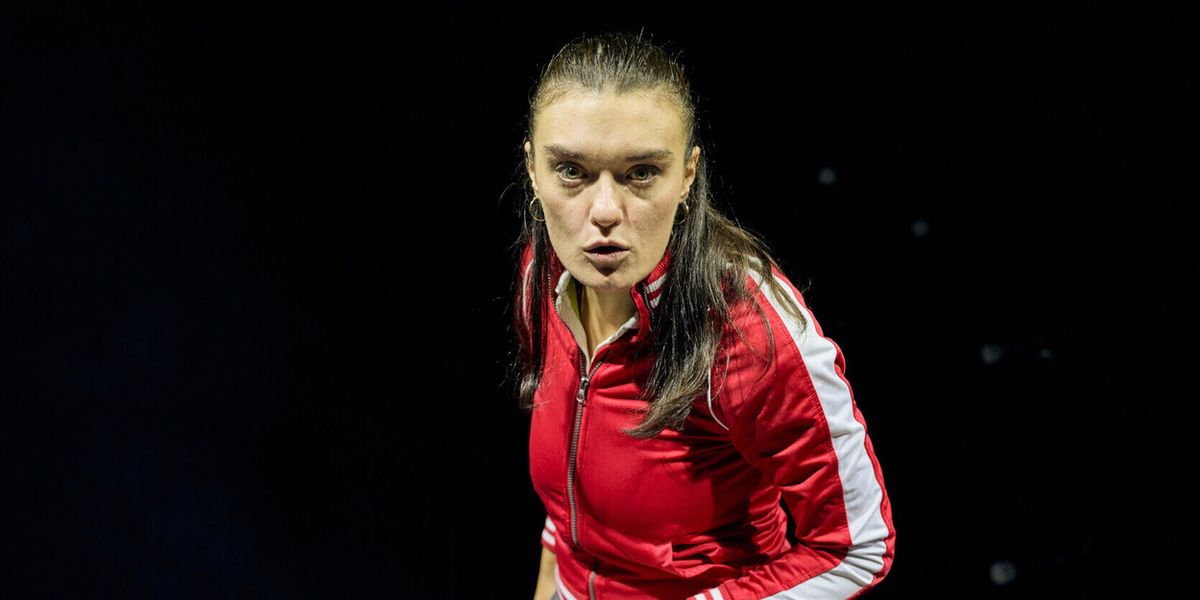
BroadwayWorld caught up with writer and director Fraser Scott and actor Olivia Caw to chat about bringing Common Tongue to the 2026 Edinburgh Festival Fringe.
Tell us a bit about Common Tongue.
Fraser: Common Tongue is a play about identity. It’s a play about understanding who we are and the way that we speak, specifically in Scotland. It tries to unpick this complicated relationship we have in Scotland and the malleability of the way that we speak and how that can change and shift as we grow.
Olivia: Everything about it is so special to me, and the fact that I’m getting to do it again is so special to me. I think it's one of those ones that when you see late-career performers, and they’re talking about certain things and going “this was a bookmark, this was a bookmark” - Common Tongue feels like that for me. I don’t know if I’ll ever be able to replicate the way I feel about it as a show, but how lucky I am to have that at this point.
Having done it before, the nature of the beast of the Fringe is that you’re going out for the first time or when I’ve done it in the past, I did PALS, which had been out before, but it was my first time doing the part and prior to that, Trainspotting was tried and tested. This is tried and tested but having taken it out in Scotland and knowing what it means to people, I just cannae wait for more people to get that feeling.
Why bring it to the Fringe?
Fraser: We did a tour last autumn around Scotland and it was a really brilliant tour where we got to go all across the country like Peebles and St Andrews and Paisley. We got to meet loads of different people and audiences. Something that was consistent throughout the tour was audiences hanging around after the show and wanting to speak to us and not just say well done but to share stories of what the show brought up for them or to share experiences. For me, taking it to the Fringe means we can reach more people with the show. It’s such a concentrated audience and diverse international audience in August. So its such an opportunity to bring the show that wide demographic of people.
Olivia: I think to reach more people. I think because of that response we had on tour and the response we had in Cumbernauld. I had someone come up to me after a show who had been living down south for about 25 years and had only recently come back up the road. A full-scale big manly man and his eyes were red and he was telling me how much the show meant to him. To have that experience again, I think the show does something where people didn’t even realise they wanted to address things that were in the show with such poignancy and “I’ve thought that so many times but I’ve never been able to articulate it” type of thing.
Why is it important to have Scottish voices at the Fringe?
Olivia: That’s the whole point isn’t it? I think that what we captured in Boston, that kind of reclamation of national identity without it having the smear of nationalism on a wider scale. It captures the reclamation of identity for young people and also just for people who are proud to be Scottish and want to show the world what it is to be Scottish, and surely the best place to do that is the Fringe.
How well do you think Scottish work is represented at the Fringe?
Fraser: I think its not too bad now. I think there is the benefit that you have in Scotland is that we are closer to Edinburgh than people who aren’t in Scotland. The travel and accommodation barrier that is so so high is generally less significant to Scottish acts. I think there is lots of Scottish work at the Fringe but I think that the thing that isn’t spoken around enough is that people talk about Edinburgh as a place that only exists in August. I think that’s the thing that is tricky rather than a lack of awareness about Scottish work. That city and country have a country that’s full of artists who make work the other 11 months of the year as well. It is an international festival and it is the biggest arts festival in the world and it’s also a Scottish festival. I think we don’t hear about that enough really.
What are some challenges of doing a full Fringe run?
Olivia: I’ll be knocking my pan in. Because I’m at the Scottish Storytelling Centre and I work just up the mile, I’ve got my not local local just round the corner from there. So that might prove a hurdle to get over, to not turn it into burning the candle at both ends.
We’re on at 2.45pm and when I was in Trainspotting people would make a day of it and be like “oh you were brilliant” and I’d be like, do you remember it?! Whereas with quarter to three it means people can come along and take it all in and do whatever they’re doing after it. One of the challenges will be getting bums on seats but its one that we’ll be open to having had the response that we have.
What does Olivia bring to the show?
Fraser: She kind of brings everything to it to be honest. When its a play for one actor, it does live or die on that actor which is a lot of pressure for anyone to to hold the audience for that time and to remember all that work. You’ve got no-one to bounce off of. Olivia joined the show really early on in the process, we started a development of Common Tongue in 2023 and Olivia was part of that and has stayed with the show ever since.
The play has kind of morphed around her in a really lovely way where she feels more like a collaborator on the play rather than a traditional actor/writer/director relationship. She carries it and in lots of ways has defined it which is really rewarding. What’s great about revisiting it with the two of us is that we’ve come back to it with a year of new life experience and we find new discoveries and different parts of the play resonate. Olivia is the key to the play really and the key to the audience experience. She’s the person who delivers the work and speaks directly to the audience. It couldn’t exist without her personally and her talent and skills as an actor as well.
What would you like audiences to take away from the show?
Fraser: There’s a big question in the play about how confident in ourselves we’re allowed to be. It’s a celebration of individuality I suppose and coming into your own and not being afraid of the unique little things that define who you are as a person. You are a product of your own life and I hope people feel a bit more confident to be themselves. The play gives people comfort in knowing that that feeling of being the odd one out or not quite fitting in is a really resonating experience and lots of people feel that way. Whilst it can be lonely, people don’t go through that alone. I think the play is also really funny so I hope people have a nice time. More than anything its a comedy and I just hope people have a really entertaining hour at the Fringe.
Olivia: Pride. The way that you felt about those videos that were coming out of Boston. That’s what Common Tongue makes people feel and if we can bottle that up and give it to people from all over the world- because its not just Scottish people who have watched our fans at the World Cup. And one of the most politicised World Cups. You don’t need to be Scottish to come and see it, it’s about pride in where you come from and holding onto that pride regardless of where you come from.
Common Tongue runs at the Fringe from 7 - 31 August with tickets available here
Photo credit: Peter Dibdin
Sign up for all the news on the Fall season, discounts & more...
.jpg?format=auto&width=300)