


Review: HOLY FOOL, Park Theatre
A bland and inconsistent exploration of the relationship between art and politics


|
|
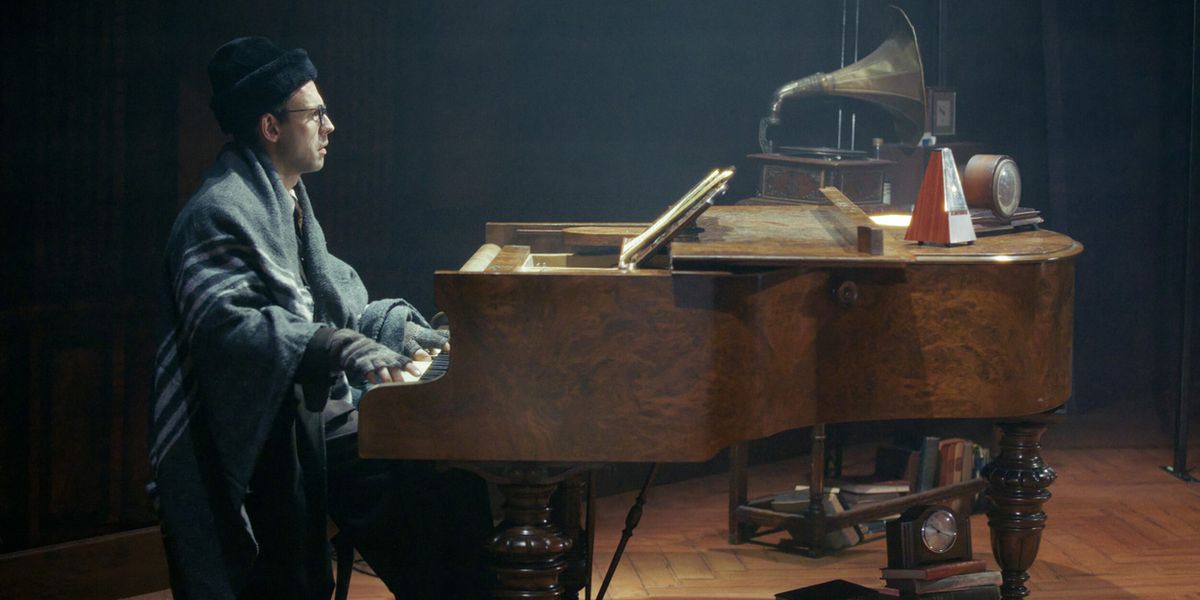

Rosalind Adler and Lea Sellers tackle the artistic consequences of tyranny in this sluggish, derivative, and uninteresting piece of theatre. Taking Dmitri Shostakovich’s relationship with Stalin’s regime as their protagonist, they try to weave a thought-provoking exploration of creativity and politics, but neglect to actually dive into what made this man intellectually appealing. Active in Petersburg at the height of Socialism, he toed the line between compliance and resistance, composing music in defiance of a system he could never believe in. Politically, psychologically, and morally, the topic is absolutely fascinating. The reality of Holy Fool is that this is a boring play, both dramatically and conceptually.
The writing is formulaic, to say the least. The dialogues revolve around a series of grandiose-sounding, overly-constructed one-liners that are perhaps meant to seem wise and quotable, but the rest is unconvincing. These phrases are offered with deliberate pathos by the (generally overacting) performers, just to make sure that the audience understands the significance of their pearls of wisdom. It’s a shame that their solemnity sticks out like a sore thumb.
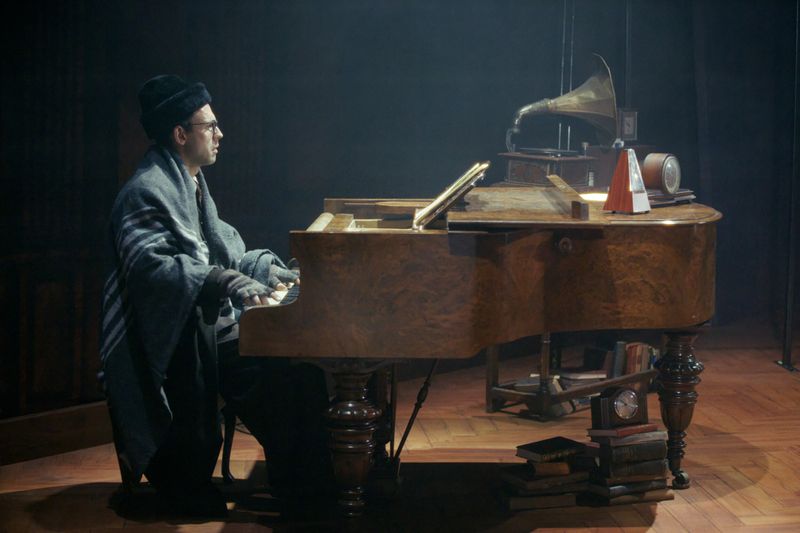
We are asked to take too much at face value. The necessary political information that supports the context is delivered through off-stage voiceovers (gossip, hearsay, other overheard conversations – all of them too artificial to be satisfactory) or through a few trope-y elements (a child parroting her teachings, directly explicatory exchanges). It has its educational turns, but it’s very dull and un-critical. The script also lacks the wit and sharpness that’s expected from something so invested in art.
Unfortunately, the insipidness of the production affects the tone and pace too. Kate Fahy directs without tension, leaning on the sound design (Julian Starr) to escalate the ambience. With the writing ambling between laziness and pretentiousness, the direction fails to infuse the project with substantial verve. The result is a mishmash of different issues that exacerbate the shortcomings of the narrative itself. Our crux is that it fixates on one idea and keeps reiterating it without excavating its nature, its fallout, or even its moral compromises.
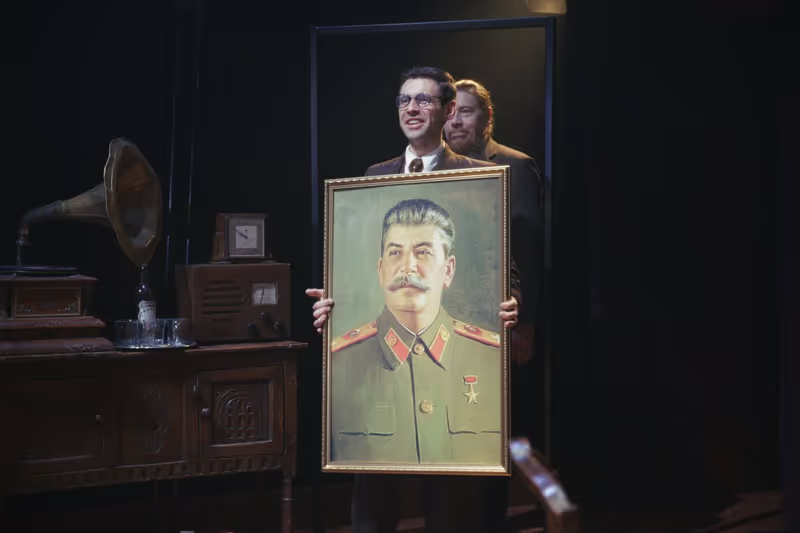
Shostakovich is meant to be a tortured soul, torn apart by the awful politics of the Soviet state and his desperate need for artistic freedom. His joining the Party should come at a visceral cost, but he simply comes off as a coward. We never fully root for him. The characters mention the sequestrations and the sentences, but Shostakovich never faces much danger. They tell, but don’t show, which becomes problematic when the stakes don’t rise accordingly. We get told that he disagrees with Stalin, but we don’t receive a critique or an alternative for what he believes.
The performances are a mixed bag, too. Benjamin O’Mahony is a strong lead, but the weaknesses of the script prevent him from digging deep into the complexities of his character. Jenna Augen is a bit shouty as Shostakovich’s wife Nina, but she’s the more well-rounded and outspoken of the couple. Where he is buzzy and affected, she is resolute and clever.
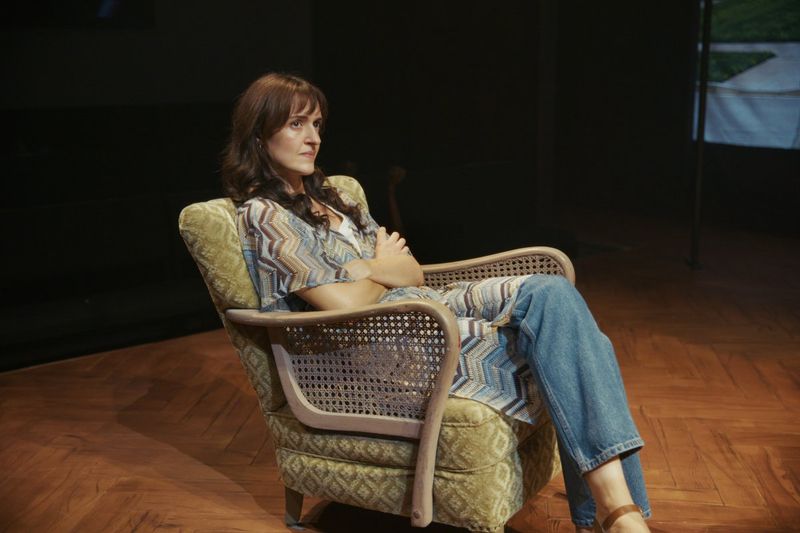
Their relationship is ultimately downplayed by a terrible misogynistic turn after her death, when Shostakovich reveals that his desire for a new wife is merely pragmatic rather than romantic. Phoebe Pryce and Fergus O’Donnell complete the cast with a number of roles, supporting the main duo. Pryce ends the journey exquisitely, completing the most interesting arc of the work. Yet, the inconsistencies and holes in her plot struggle to make it entirely convincing.
Covering 40 years of political and emotional turmoil in just over two hours is an ambitious feat that doesn’t pay off. Both spheres of interest are painted in strokes that are too broad to make sense up close. The play also thinks it’s funny, but the humour is certainly baffling. All in all, this show’s problems are too many for it to be relevant to the current landscape. Nothing that a thorough rewrite and some dramaturgical help won’t solve, but at this stage it’s disappointing. It’s pointless to write a political play if the politics are not meticulously analysed.
Holy Fool runs at the Park Theatre until 10 October
Photo Credits: Mark Douet

Sign up for all the news on the Fall season, discounts & more...
.jpg?format=auto&width=300)





Reader Reviews
To post a comment, you must register and login.