


Interview: Theatre Life with Trevor Nunn
The award winning director on directing STC's current production of The Score and more.
.gif)
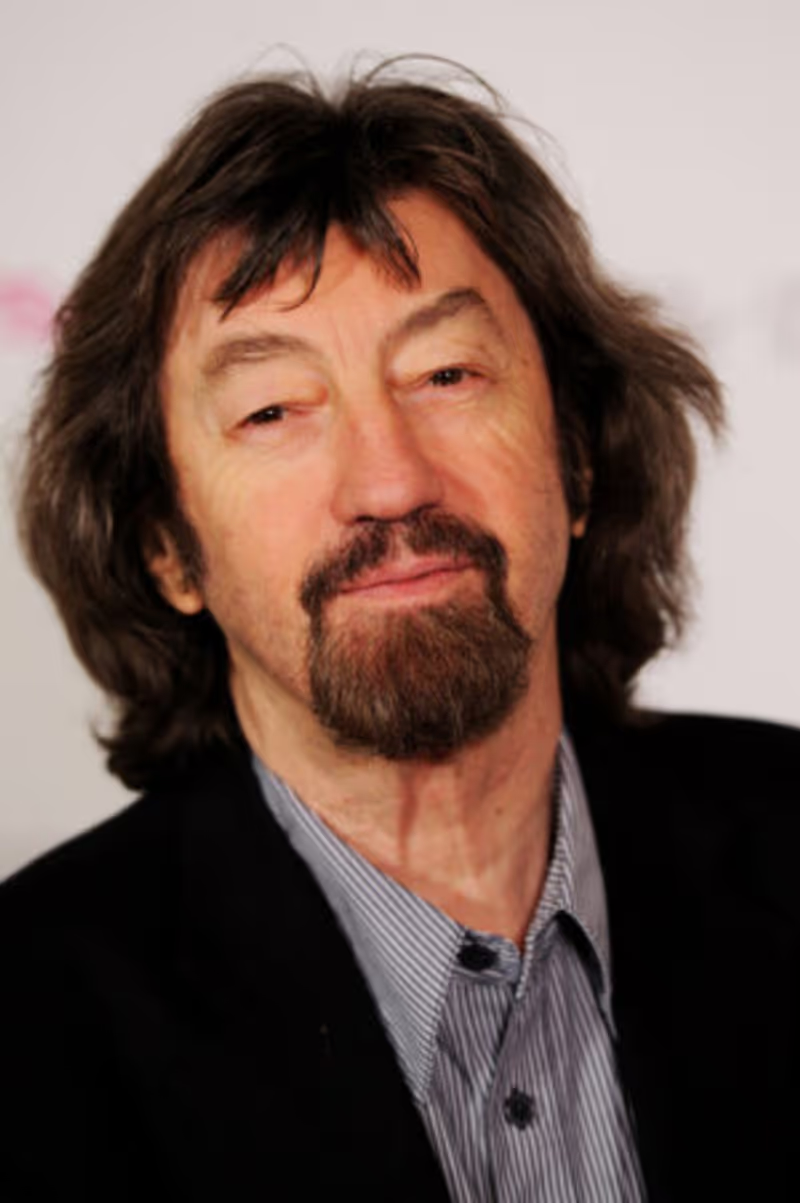
Today’s subject Trevor Nunn is most definitely one of the most versatile directors to ever work in the theatre. Through his long and distinguished career, he has helmed some of the biggest theatre events to ever hit the stage on both sides of the Atlantic. He is currently living his theatre life as the director The Score which is currently running at Shakespeare Theatre Company (STC) through October 25th at Harman Hall.
Trevor Nunn is probably best known as the director of two musicals that changed theatre all over the world. Cats and Les Misérables (co-director with John Caird) are two of the reasons the mega musical became such a force and paved the way for others like Miss Saigon.
Trevor’s career is not limited to those two shows by any means. For 18 years he was the Artistic Director of the esteemed Royal Shakespeare Company (RSC). Among his many accomplishments with the company was an eight and a half hour production of The Life and Adventures of Nicholas Nickleby. The production played Broadway twice and having seen it live, I can honestly say it was one of the best experiences I’ve ever had watching a show in over 50 years of theatre going. Trevor again co-directed with John Caird.
Some of his other Broadway and West End credits include Good, Amy’s View, Rock ‘N’ Roll, Starlight Express, Sunset Boulevard, Chess, The Coast of Utopia, The Baker’s Wife, and Arcadia.
On the even grander stage of opera, he has staged productions of Porgy and Bess, Così fan tutte, and Peter Grimes.
Trevor is one of the elite group of directors who has staged all 37 of Shakespeare’s plays.
He is the recipient of many Tony and Olivier awards plus countless other accolades. He had the honour of being knighted by Queen Elizabeth II in 2003.
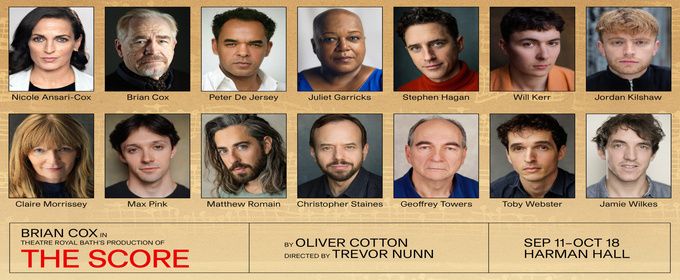
STC is known for presenting works that are helmed by artists from all over the world. Trevor Nunn’s work gracing the stage of Harman Hall with The Score is a huge win for the company and audiences. The Score is a true theatre event that you need to grab some seats for while it’s here. The privilege of watching a production helmed by Trevor Nunn just makes the experience even more enjoyable.
He is truly living his distinguished theatre life to the fullest.
Had you been interested in any other side of theatre before becoming a director?
My very first visit to the theatre was to the pantomime at the local Variety Theatre, the Ipswich Hippodrome. An expensive outing, which was altogether beyond the means of our family, but made possible because my sister had won a ‘colouring-in’ competition in the local newspaper and the prize was two tickets. Our parents decided that I should attend with my sister. I drank in the atmosphere, as I sat in the upholstered seats, looking at a plush red velvet curtain for the very first time. Then the orchestra started tuning up. It was intoxicating and life changing. I think from the moment that the overture started, I knew that I wanted to be involved somehow in this magical world.
As a teenager, I was lucky enough to audition and be given an acting job at our local repertory theatre, so aged 13, I was working in a professional company. But in the months between leaving school and going to college, and with the help of the local newspaper, I formed a youth theatre group and (of course) directed the first production. I thought I should start with something simple and straightforward … so the play I chose was Hamlet by William Shakespeare! From then on, the question about directing as a career was no longer ‘to be or not to be’ … but how soon can I start?
Where did you receive your training?
I suppose that, after Hamlet, my training ground was Cambridge University, to where I won a scholarship, and so where I was studying English Literature. There was no formal ‘Drama’ course, but there was a student-run theatre called the ADC, where I appeared in a couple of productions, but mainly directed. My fellow students at the time included friends like Ian McKellen, Derek Jacobi and Corin Redgrave, so it was a rich and fertile creative environment. We also did productions at the local professional theatre, the Cambridge Arts, where as well as plays, I also directed the famous Footlights Revue, putting fellow students John Cleese and Graham Chapman, along with Miriam Margolyes, together on stage for the first time!
After University, it was my good fortune to be awarded a training position for young directors, which took me to the Belgrade Theatre, Coventry. I assisted on some productions, but soon, was given main stage work to direct on my own, including large-scale productions such as The Caucasian Chalk Circle and Under Milk Wood. The city of Coventry happens to be located very close to Stratford-upon-Avon, then home to the newly formed Royal Shakespeare Company. So, I would regularly hitchhike over there to see as many productions as I possibly could. The best learning experience imaginable!
What would you consider to be the experience that changed everything for you careerwise?
While I was making the regular journey to Stratford to see productions by the newly formed Royal Shakespeare Company, it never occurred to me that anyone would be travelling in the opposite direction to see my shows in Coventry … but apparently they were. And so it was, that I received an invitation to go to a meeting with the great Peter Hall who was running the RSC. We clicked immediately and he offered me a job as an Assistant Director, with the promise that I would be able to direct my own main stage production within the first year. He was true to his word and so in 1966, I directed a Stratford main stage production of a play I had discovered, The Revenger’s Tragedy – part of the classical repertoire now, but at that point, a play entirely unknown and unperformed for over 300 years. Within the cast, I was blessed with RSC actors like Ian Richardson, Alan Howard and Norman Rodway, and thankfully, it was hailed as a major re-discovery, and it proved to be a big success.
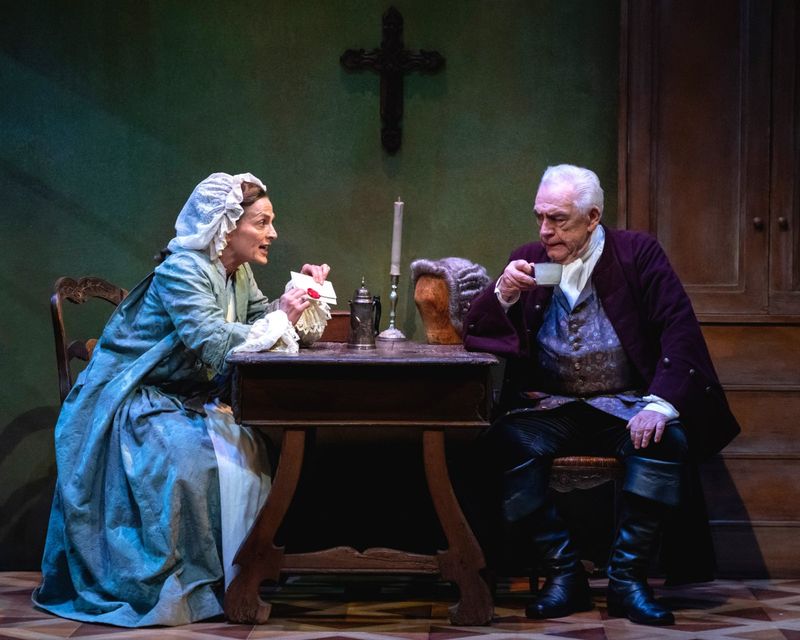
in STC's production of The Score.
Photo by Teresa Castracane.
What was it about The Score that made you say yes to directing it?
I had worked very happily with Oliver Cotton before, both as an actor and a writer. Brian Cox is an actor of genius, and having previously worked with him very happily (on the world premiere of Tom Stoppard’s Rock n Roll), I relished the opportunity to reunite. And the production of The Score was to be premiered by the daringly creative producer, Danny Moar, at the Theatre Royal Bath – a beautiful Georgian theatre, perfectly suited to the play. I love the music of Bach and was fascinated about the discussion of whether or not his inspiration was divine. But for sure, the gods of the theatre seemed to have aligned.
What were your thoughts about the script after you first read it?
I found Oliver Cotton’s play instantly fascinating. As a starting point, you have the genius of Johann Sebastian Bach and his sublime compositions. But then, there is so much to discover in his troubled relationship with Frederick the Great, through their conversations about art, war, and the source of inspiration.
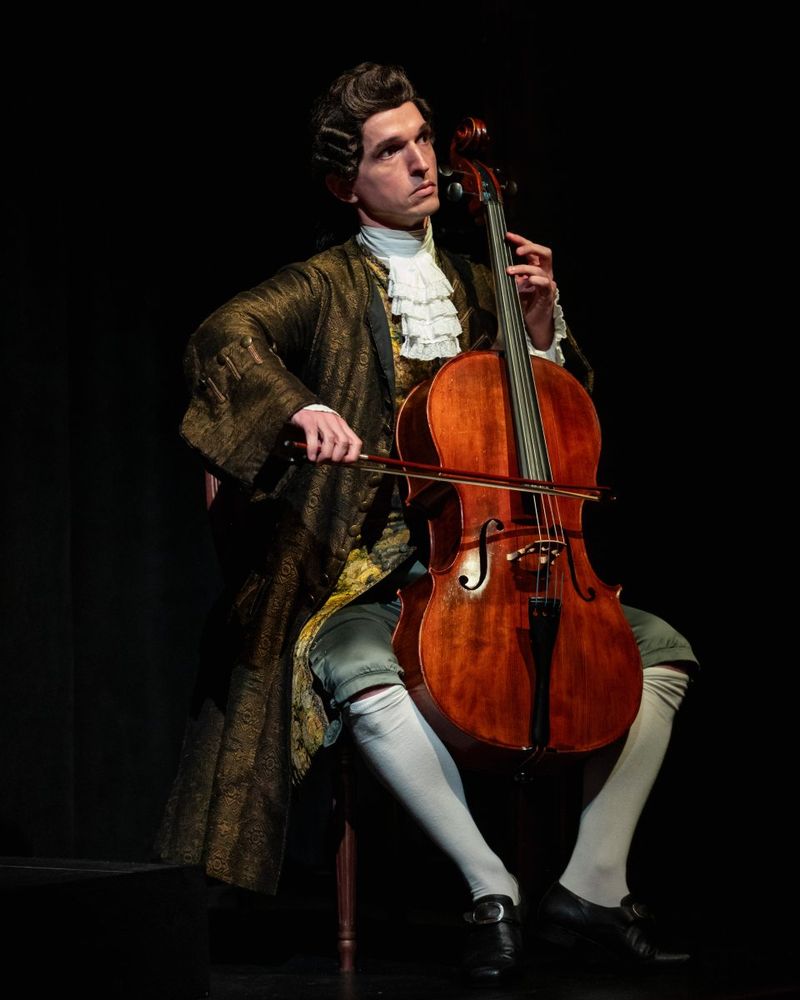
Photo by Teresa Castracane
What was the most interesting thing you learned about Bach while putting the show together?
I was fascinated to learn about Bach’s family, his home life, his local life (writing a Cantata each week for his Church) and about his son, Carl, who deserves fame in his own right.
You’ve been associated with some very large scale productions on Broadway and the West End. With the costs of producing a Broadway show now if Cats or Les Misérables were first being produced today, do you feel both shows could be able to be done the way they were when they first premiered?
I don’t know – but I would hope so. Cats was an idea that my friends and colleagues felt was destined to fail. “You’re doing a show, where all the characters are cats … cats that sing?” was the frequent enquiry, accompanied by much sniggering. Similarly, with Les Misérables, nobody could believe that we were doing a musical show with ‘miserable’ in the title!
On both of these projects, I was working alongside my longtime designer friend and colleague, the genius John Napier, who produced unique environments, the like of which had never been seen before (and possibly not since). Les Misérables received terrible reviews but the belief of our ebullient producer, Cameron Mackintosh, kept the show running until the public made it a word-of-mouth success to the extent that forty years later, it is still running today. Word of mouth triumphed over the judgement of the critics (not one of whom, to my knowledge, has ever since said, “OK, I got it wrong”!)
That said, both of these shows originated in London, and then transferred to Broadway. The costs of originating a show on Broadway are now staggeringly high … so maybe ‘opening London, moving to Broadway’ has to become a new normal?
You were the Artistic Director of the esteemed Royal Shakespeare Company (RSC) for eighteen years. What would you say was your greatest artistic achievement while helming that company?
I admit I am very proud of my tenure at the RSC, and I loved running that company. Having taken over from my mentor and friend Peter Hall, I was determined to continue his work, to establish the RSC as the foremost classical theatre company in the world. We had theatres in Stratford-upon-Avon and London and moved work regularly between the two. We established a residency in the city of Newcastle and toured our work to towns that didn’t have a theatre, working with schools, sports halls and gymnasiums, to make sure the work could be seen all over the country. We opened a small-scale space in Stratford called The Other Place, and the equivalent small space at The Donmar Warehouse in London. Then the Swan Theatre was created, where works by Shakespeare’s contemporaries could be presented, as a complementary space to the Stratford Main House. I employed an ensemble of actors, all on long-term contracts (minimum two years), so they would stay for multiple seasons of work, thus launching the careers of a generation of performers, and creating an RSC family.
On a personal level, it would be invidious to pick out individual highlights … but I suppose there are a couple of obvious choices. When I opened the small Other Place Theatre in Stratford, I chose to do a production of Macbeth, with Ian McKellen and Judi Dench in the leading roles. The theatre was tiny, so the production could be completely naturalistic and conversational, which audiences found terrifying but utterly thrilling. Another RSC benchmark would have to be the adaptation we did of the Charles Dickens’ novel The Life and Adventures of Nicholas Nickleby. It was epic in every sense of the word, being played in two parts, over eight hours, but audiences took it to their hearts, and every sold-out performance was greeted by cheering standing ovations, including at each interval. We opened in London, it went to Broadway (twice) and we toured America. It won the Tony Award in almost every category. So, it did OK.
What does the rest of 2026 and into 2027 hold in store for you work wise?
After our time in Washington, it’s back to London to start work on a very exciting new play project at the Marylebone Theatre, which I am greatly looking forward to. I hope to be back in America to work on a musical project early in 2027. I have now completed the joyous task of directing all of Shakespeare’s 37 plays, but his work remains my touchstone so I’m hoping that an offer I’ve had recently to work with William again will materialize!
Special thanks to Shakespeare Theatre Company's publicity goddess Heather C. Jackson for her assistance in coordinating this interview.
Theatre Life logo designed by Kevin Laughon.
Prefer BroadwayWorld in Google Search?
Add us as a preferred source so our stories show up more often in Top Stories and Google’s AI answers — for you.
Sign up for all the news on the Summer season, discounts & more...
|
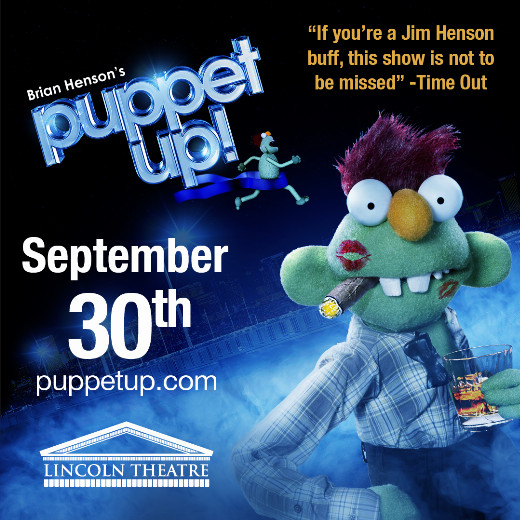
Brian Henson's Puppet Up! Lincoln Theatre (9/30-9/30) |
|
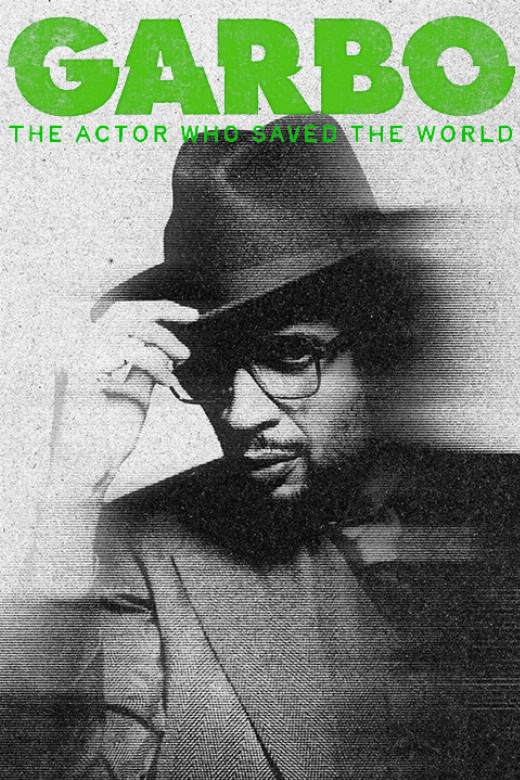
GARBO: EL ACTOR QUE SAVÓ AL MUNDO (Garbo: The Actor Who Saved The World) GALA Hispanic Theatre (9/03-9/27) |

|
Special Event: ARTS By George!: Jeff Goldblum and the Mildred Snitzer Orchestra Center for the Arts (10/03-10/03) |

|
The Second-Best School Shooting NextStop Theatre (9/17-10/11) |

|
Coming to America: An Immigrant Cabaret ExPats Theatre (9/30-10/18) |

|
Some Like It Hot Bernard Family Theatre, Olney Theatre Center (9/18-11/08) |
|
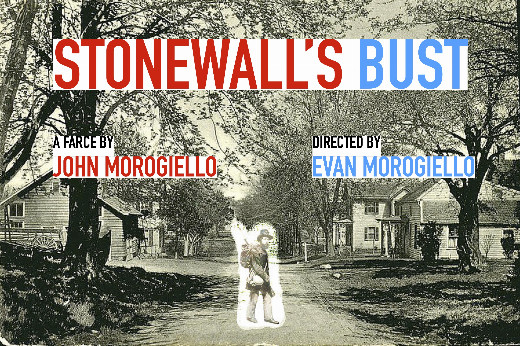
Stonewall's Bust The Writers Center (10/09-10/25) |

|
A Christmas Carol – 2026 Ford's Theatre (11/19-12/31) |
|
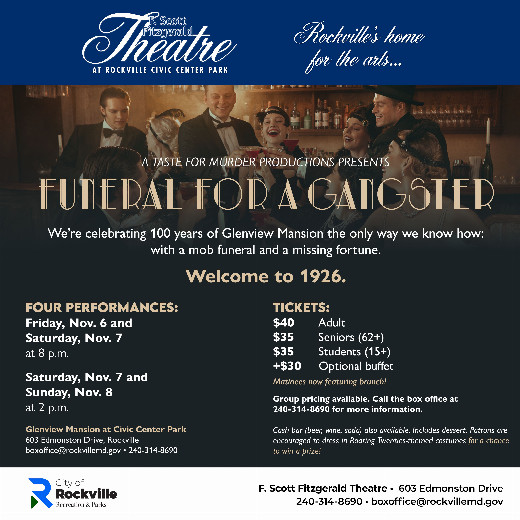
Murder at the Mansion presents "Funeral for a Gangster" Glenview Mansion (11/06-11/08) |

|
BAD KREYÒL Mosaic Theater Company (5/20-6/13) |
