Israeli Film Star Gera Sandler Joins Cast of Off-Broadway's RHINOCEROS
Distinguished Israeli actor, Gera Sandler, has joined the cast of the upcoming Yiddish world premiere of Eugene Ionesco's Rhinoceros in the role of Dudard.

Distinguished Israeli actor, Gera Sandler, has joined the cast of the upcoming Yiddish world premiere of Eugene Ionesco's Rhinoceros in the role of Dudard.

Yesterday, the cast of the Yiddish world premiere of Eugene Ionesco's Rhinoceros held its costume parade, the point in rehearsal where actors model their costumes for the director's approval.
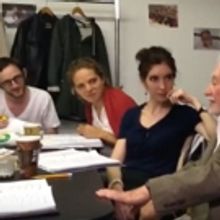
At the first rehearsal, director Moshe Yassur succinctly explained to the play's cast Ionesco's perception of Theatre of the Absurd, as documented in the video below! Called 'an allegory for our times' by The New York Times, Eugene Ionesco's Rhinoceros is generally cited as one of the main influence
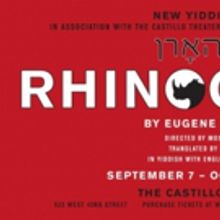
For its first production of the 2017-18 season, New Yiddish Rep will present the Yiddish world premiere of Rhinoceros by Eugene Ionesco.

For its first production of the 2017/2018 season, New Yiddish Rep will present the Yiddish world premiere of RHINOCEROS by Eugene Ionesco.
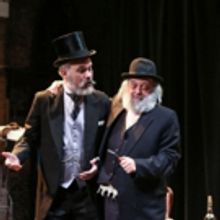
Making his theatrical debut as the scribe in the New Yiddish Rep's GOD OF VENGEANCE, real-life lawyer and ex-Hasid Eli Rosen told American Theater's Simi Horowitz that he believes in 'transparency': 'The only way to effect change is to shine a light on what goes on behind closed doors.