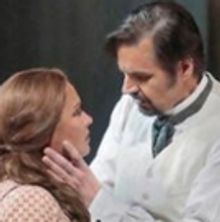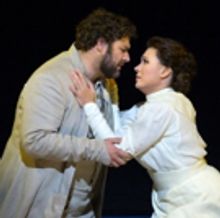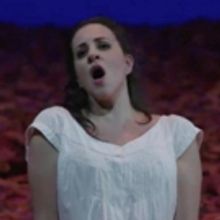
The Canadian Opera Company opens its 20182019 season with a stunning new production of Pyotr Ilyich Tchaikovsky's timeless cautionary tale, Eugene Onegin. The opera is based on the classic Russian novel-in-verse by Alexander Pushkin and tells the story of one of literature's most iconic anti-heroes. Onegin is the cynical product of an aimless dilettante life who quickly dismisses a heartfelt love letter from romantic Tatyana. However his casual cruelty comes back to haunt him years later, when karma rears its head and a fateful reunion turns the tables on proud Onegin. Eugene Onegin runs for eight performances on September 30, October 4, 10, 18, 20, 26, 30, November 3, 2018.

The Canadian Opera Company opens its 2018/2019 season with a stunning new production of Pyotr Ilyich Tchaikovsky's timeless cautionary tale, Eugene Onegin. The opera is based on the classic Russian novel-in-verse by Alexander Pushkin and tells the story of one of literature's most iconic anti-heroes. Onegin is the cynical product of an aimless dilettante life who quickly dismisses a heartfelt love letter from romantic Tatyana. However his casual cruelty comes back to haunt him years later, when karma rears its head and a fateful reunion turns the tables on proud Onegin. Eugene Onegin runs for eight performances on September 30, October 4, 10, 18, 20, 26, 30, November 3, 2018.
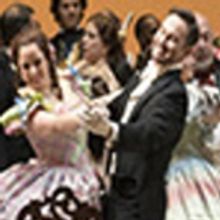
Anna Netrebko reprises one of her most acclaimed roles as Tatiana, the naive heroine of Tchaikovsky's opera, adapted from Pushkin's classic verse novel. Peter Mattei stars as the title character, who rejects Tatiana's love until it's too late. Eugene Onegin airs on Great Performances at the Met Sunday, August 13 at 12 p.m. on PBS (check local listings). (In New York, THIRTEEN will air the opera at 12:30 p.m.)
Anna Netrebko reprises one of her most acclaimed roles as Tatiana, the naive heroine of Tchaikovsky's opera, adapted from Pushkin's classic verse novel.
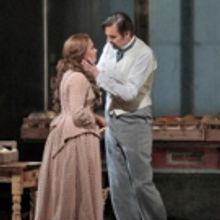
The Festival's theater offerings feature four North American premieres from the U.K., Syria, and Israel, challenging audiences to look backward and forward, while offering perspectives that confront assumptions about human nature.
Always looking for new worlds to conquer, Gioachino Rossini wrote GUILLAUME TELL in French, as Paris became the center of the opera world. Despite his successes there, this was to be his operatic swan song, a story glorifying a revolutionary character--with a message that resonated, loud and strong, at the performance the night after the troubling American election.

Gender-blind casting has arrived and we'd better get used to it. Correction: it seems we are getting used to it, viz the imminent revival of the Donmar's all-female Shakespeare trilogy. So the headline story of this Old Vic production is not that a woman is taking on the Everest north-face of a role formerly reserved for mature alpha males of the acting profession. The headline story of Glenda Jackson's Lear is that this Lear is magnificent, and its magnificence emanates directly from the text.
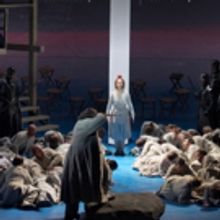
A new production of Rossini's Guillaume Tell, the composer's final opera, will open at the Met on October 18 in the first company performances of the ambitious historical epic in more than 80 years-and its first-ever Met performances in its original French. The new staging is directed by Pierre Audi, the incoming Artistic Director of the Park Avenue Armory and conducted by Met Principal Conductor Fabio Luisi. Rossini's opera tells the story of a Swiss revolutionary on a quest for freedom. Its famous "William Tell Overture" is one of the best-known and most performed pieces in the standard classical repertory, though the opera, which makes considerable demands on its stars, orchestra, and chorus, has rarely been presented in modern times. Gerald Finley will star in the title role, which he has made a specialty of in recent seasons, with Marina Rebeka as the Princess Mathilde; Bryan Hymel as her suitor Arnold; Maria Zifchak as Tell's wife Hedwige; Janai Brugger as their son Jemmy; Italian bass Marco Spotti in his Met debut as Walter Furst; Kwangchul Youn as Arnold's father Melcthal; and John Relyea as Gesler.
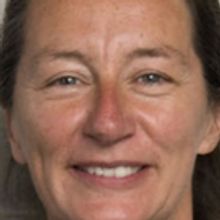
The latest instalment in our series showcasing Britain's best lighting designers focuses on the four-time Olivier and two-time Tony Award winner Paule Constable. She's worked on numerous landmark theatrical productions, including The Curious Incident of the Dog in the Night-Time, War Horse and Waves at the National Theatre and the RSC's Wolf Hall, as well as with leading opera and dance companies.
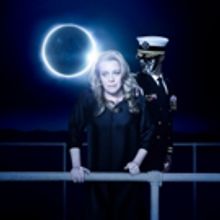
The Metropolitan Opera's 2016-17 season, the 50th anniversary of its home at Lincoln Center, will feature 225 opera performances of 26 operas in a varied repertory that ranges from 18th century masterpieces to one of the most acclaimed operas in recent years. Repertoire for the company's 132nd season will include the Met premiere of Finnish composer Kaija Saariaho's 2000 opera L'Amour de Loin, as well as new stagings of Wagner's Tristan und Isolde, Rossini's Guillaume Tell, Gounod's Romeo et Juliette, Dvo?ak's Rusalka, and Strauss's Der Rosenkavalier. A gala concert on May 7, 2017 will celebrate the 50th anniversary of the company's Lincoln Center location with performances by opera's leading stars honoring the Met's past and future. Ticket prices will not increase, remaining the same as in the current season, and audience development programs instituted by the company in recent years will continue.
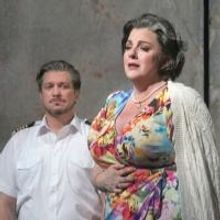
Only someone who arrived convinced of the opera's bias could have found the Met's premiere of the John Adams-Alice Goodman THE DEATH OF KLINGHOFFER to be anti-Semitic. On the other hand, that doesn't mean that it's even-handed.
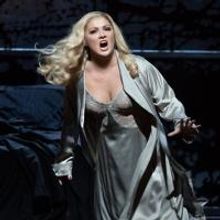
Ever since I heard Anna Netrebko's “Verdi” album last year, which highlighted excerpts from the operatic treatment of Shakespeare's MACBETH, I knew her Verdi was the real deal and couldn't wait for her to take on the full Lady Macbeth on stage. Her performances in the Adrian Noble production currently at the Met confirmed my best expectations--and then some.
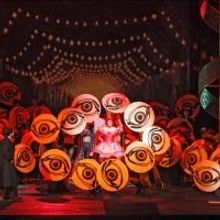
The Met: Live in HD, the Metropolitan Opera's award-winning series of live transmissions to more than 2,000 movie theaters in 65 countries around the world, will feature ten operas in the 2014-15 season, including all six new productions in the Met season. All ten performances, transmitted live from the Met stage, will feature the world's finest singers, conductors, and theatrical artists.
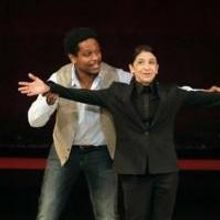
The United States premiere of the internationally acclaimed new work written and directed by Peter Brook and Marie-Helene Estienne, The Valley of Astonishment, featuring Kathryn Hunter (A Midsummer Night's Dream, Kafka's Monkey), Marcello Magni (Fragments), and Jared McNeill (The Suit), begins previews Sunday, September 14, at 7:30pm for an opening Thursday, September 18,at 7:30pm and a run through Sunday, October 5, at Theatre for a New Audience, Polonsky Shakespeare Center, 262 Ashland Place.
The Met: Live in HD, the Metropolitan Opera's award-winning series of live transmissions to more than 2,000 movie theaters in 65 countries around the world, will feature ten operas in the 2014-15 season, including all six new productions in the Met season. All ten performances, transmitted live from the Met stage, will feature the world's finest singers, conductors, and theatrical artists.
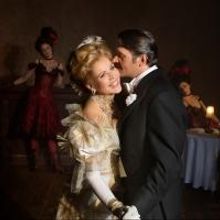
The Metropolitan Opera's 2014-15 season will feature 26 operas, three of them company premieres, in six new productions and 18 revivals showcasing the talents of the world's leading singers, conductors, and theater artists. The three operas that will have their first-ever Met performances, each staged by a director making his Met debut, are John Adams's The Death of Klinghoffer, conducted by David Robertson and directed by Tom Morris, opening October 20; Rossini's La Donna del Lago, conducted by Michele Mariotti and directed by Paul Curran, opening February 16, 2015; and Tchaikovsky's one-act opera Iolanta, conducted by Valery Gergiev and directed by Mariusz Treli?ski. Iolanta will be presented in a double bill with a new staging of Bartok's one-act Duke Bluebeard's Castle, also conducted by Gergiev and directed by Treli?ski.
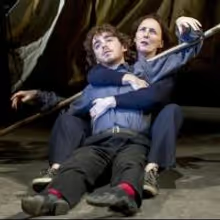
The Rime of the Ancient Mariner by Samuel Taylor Coleridge and directed by Phyllida Lloyd, composed by Mel Mercier, with lighting design by Jean Kalman and Mike Gunning, set design by Chloe Obolensky and choreography by Kim Brandstrup, will play the BAM Harvey Theater (651 Fulton St), tonight, December 10 - 22, 2013 as part of the Next Wave Festival.
Tonight, November 23, Deborah Warner's new production of Tchaikovsky's Eugene Onegin, which opened the current Met season, will return with a new cast in the central roles.
The inimitable Olivier Award winner and Tony Award nominee Fiona Shaw (Medea, 2002 Next Wave; Happy Days, 2008 Spring Season; John Gabriel Borkman, 2011 Spring Season) and dancer Daniel Hay-Gordon perform one of the best loved poems in the English language, Samuel Taylor Coleridge's epic The Rime of the Ancient Mariner, under the acclaimed direction of Phyllida Lloyd. This fiery, pared-down adaption of the 215-year-old tale tells of consequences paid while marooned at sea and of man's wanderings throughout the world in search of meaning.