


 Click for Tickets!
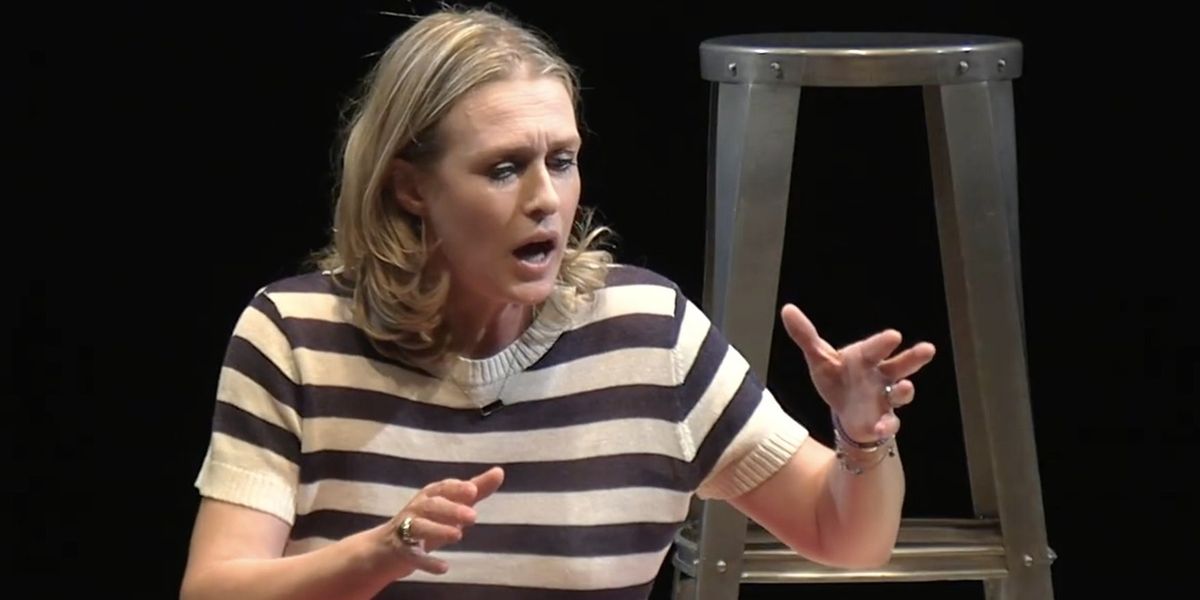
“It Ends With Guinea Pigs” opens this weekend in the Elysian’s intimate 40-seat Vault space. Playwright-performer Diana Gitelman takes the audience on a path that begins with a minor parenting problem, the care and feeding of two high‑maintenance guinea pigs, and then winds its way through grief, ancestral trauma, and transformation.
The French philosopher Roland Barthes described how a detail of a family photo can have a wounding effect on a viewer who knew the subject. He termed such a detail the “punctum” or the “accident that pricks.” For Barthes, a certain animation in the eyes of his mother in a snapshot seized him with recognition, opening up a world of memory and emotion for him as though he was transported back in time. For Diana Gitelman, the accident, the “punctum,” arrived in the form of guinea pigs that she begrudgingly gifted her daughter, who had been pleading for a pet. Guinea pigs are “so much work,” Gitelman says, and “they do nothing… they can’t do anything without me or someone. They die in a cage, and I don’t want them living in a cage with maggots.”
This seemingly oversized fear of hurting such small and dependent creatures becomes the hinge of the show. Gitelman explains that her play is inspired by the inner archeology she undertook to trace her anxious caretaking to a childhood pet she failed to protect: “How do I love? Did that one sliver in my childhood determine how I will take care of everyone I love because it was so traumatizing?”
The resulting performance is not stand-up comedy, despite the absurdity of having guinea pigs catalyze one’s deepest self-reflection. Nor does Gitelman describe her performance as a traditional memoir. As a first‑generation Russian Jewish (now Ukrainian, she jokes) immigrant, she describes how the show started as a stand-up routine and then outgrew the jokey-ness of that form as her story gathered narrative complexity.
Gitelman’s long‑time collaborator and director, Faline England, describes the tone of the work as a “confessional conversation” that resists sentimentality even as it moves the audience: “The show is a cathartic romp, because there is catharsis, and it is rompy and brazen and non‑sentimental… we experience her finding her way towards healing past traumas, embracing cultural identity and celebrating her perfectly imperfect life as an artist, wife and mom.”
Raised by immigrant parents, Gitelman tells her story through that lens. The guinea pigs, she says, pricked open parenting anxieties and then a deeper reckoning with intergenerational history and identity: “I’m a first-generation Russian Jew… that echoes in my show, because, as a writer, I always lead with that lens…”
The form of the performance is stripped down to a dramatic essence: one woman, alone on stage with one mic and one chair. The story is told in roughly 70 minutes with no intermission. No escape and no assistance. For Gitelman, that minimalism is a formal and existential challenge: “It’s terrifying… Why would I do this?… It’s so personal, I’m exposing myself.”
England points out that the piece refused to conform to a traditional dramatic arc of climax and resolution. The show’s dramatic tension follows what we, in theory class, would call “l’ecriture femme”: flowing copiously through its subject, allowing twists and turns along the way. England has identified that the story “moves on its own” through a three‑act structure. She says. “It’s Diana’s head… gloriously ordered chaos and genius.”
England foresees the story’s publication and future productions by other actors, even as Gitelman remains at its center for now. The two have workshopped the piece with overlapping circles of theater artists, TV/film people, and comedians, gradually shaping what a five-minute stand‑up set into a full evening with a hidden narrative that “suddenly reveals itself.”
What emerges is a portrait of a “frontline parent” and a self‑described “cycle breaker” trying to decide which inherited patterns to keep and which to shatter: “I’m hoping for permission. Permission for what you need, permission to be where you are… Sometimes I want to just permit myself to give myself grace. And my daughter's permission to give herself grace. And if I could just learn how to give my husband grace, we would really be cooking,” remarks Gitelman as she characteristically cuts her own profundity off with dry wit.
The show’s final sentiment captures its peculiar blend of absurdity and tenderness: “It goes to show you something can literally contribute nothing and still teach you everything. And that is worth loving.”

Sign up for all the news on the Fall season, discounts & more...

|
CLUB27 Jaxx Theatre (10/01-10/30) |

|
Crone Creed El Portal Theatre (9/30-10/17) |
|
Good Night, Oscar North Coast Repertory (9/16-10/11) |

|
A Killer Night in Studio City Vitello's (9/06-10/31) |

|
Catch Me If You Can Colony Theatre (9/17-10/18) |

|
Dinner with Friends Santa Monica Playhouse (9/26-9/27) |

|
Gershwin and the Golden Age The Soraya (10/11-10/11) |
|
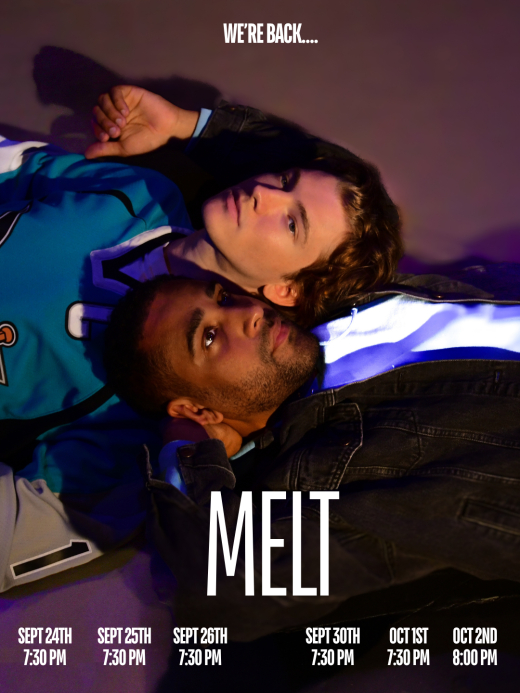
Melt : The Play The Marilyn Theatre at the Lee Strasberg Institute (9/24-10/02) |

|
New Works Festival Shoebox Theatre (9/11-9/26) |

|
Worthy The Un-Erasable Solo Festival - Willie Agee Playhouse (9/12-9/25) |
