


Interview: Rosie Webber on The Show That Got Away at The Greenroom 42
BEFORE AND AFTER A NYC DEBUT
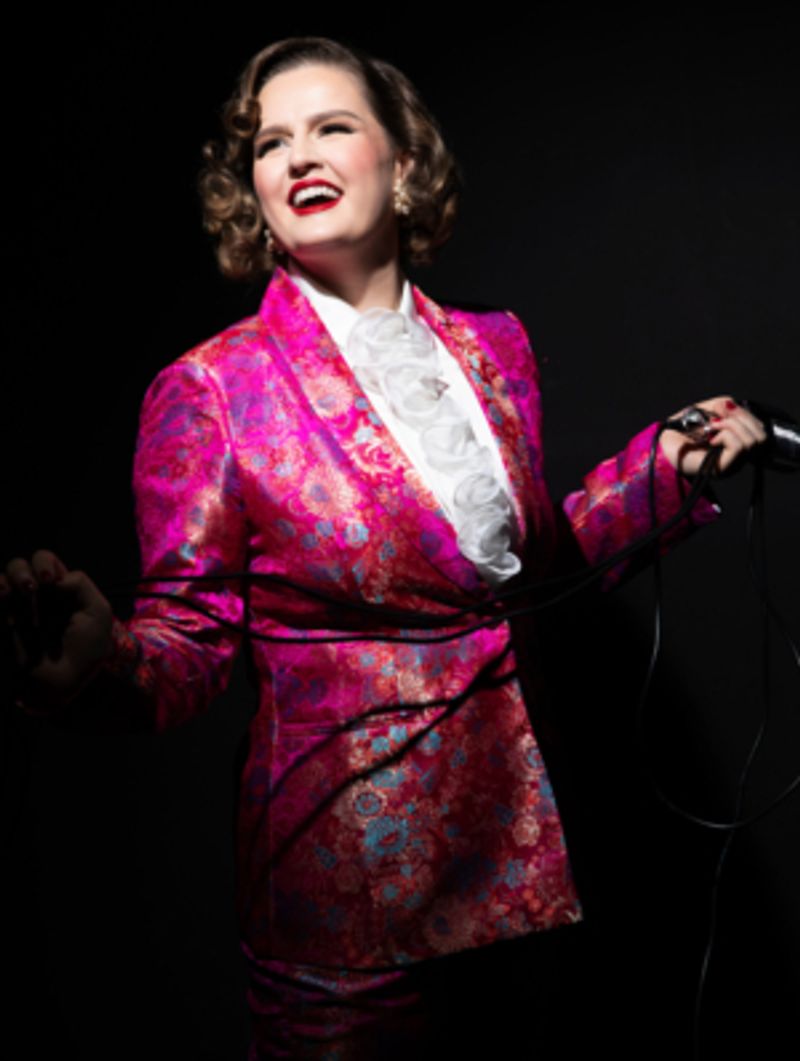
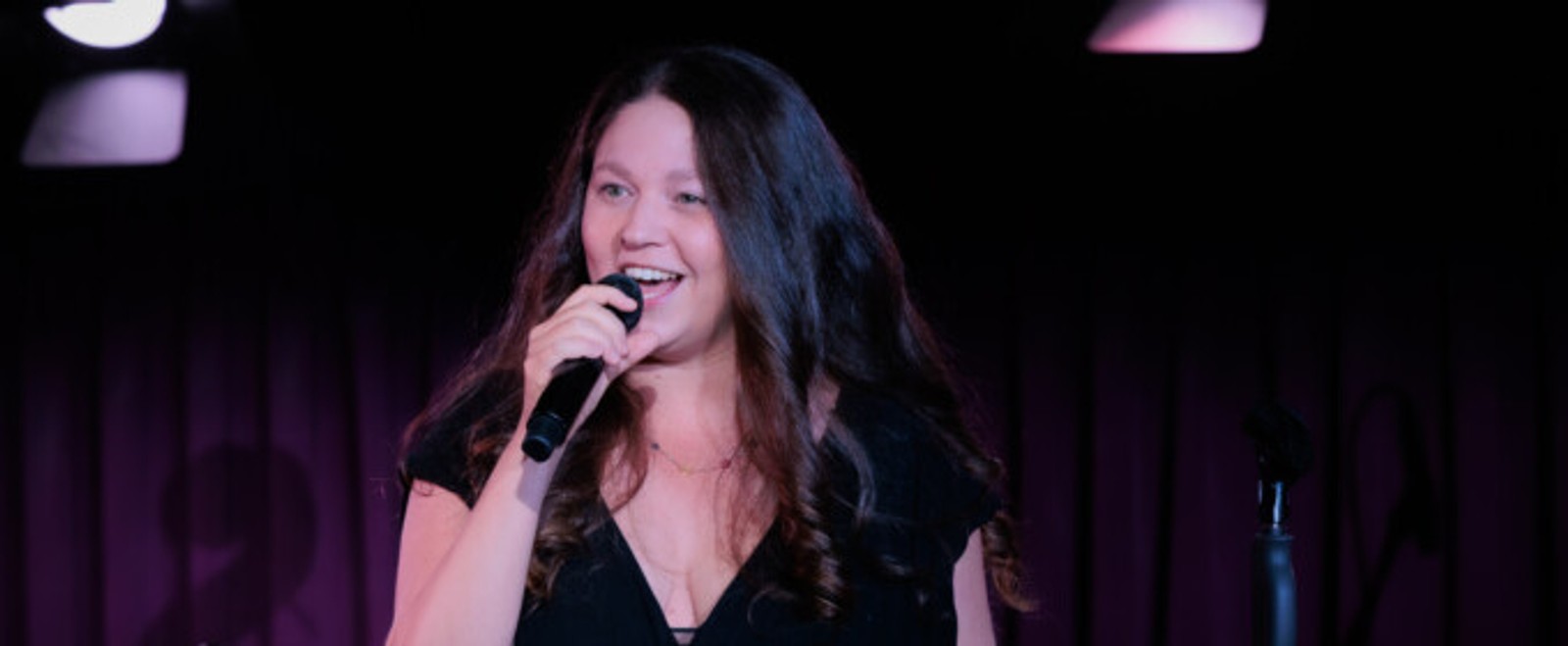
The week after Rosie Webber made her New York City debut as a cabaret artist at The Green Room 42, I spoke with her about life before and after her (as Judy Garland would say) marvelous performance.
At what point in your life did you realize you could channel Judy Garland?
I grew up listening to my mom sing. She sang to me and my sisters ever since I can remember. I started mimicking and copying her. I always adored Judy Garland but I never considered myself as someone who could sing like her. But when I started posting songs on TikTok, I’d sing covers of jazz songs, and people would comment that I sounded like Judy Garland. I took a look at some of her songs and leaned into her sound a bit, but her voice found me. I didn’t go looking for it. More favorable comments came in, and I began connecting to her journey and music.
How long were you singing on TikTok before the comparison began?
I started doing TikTok around 2020 during COVID when there was nothing else to do. Originally, I was singing a lot of Broadway songs. When I started posting jazz covers, that’s when I started hearing the comparisons. But what actually brought me to New York for my cabaret debut was when I started posting on Instagram only a few months ago.
You have around 50K followers. How did you build that? What hashtags were you using?
Hashtags like Judy Garland and impressions. I think the algorithm knows exactly what to do with that kind of specific content. And people doing impressions tend to be very popular on the internet. Though I don’t consider myself an impressionist, the hashtags helped me find my niche. Some people think they need to cast a wider net online, but what people want to find is someone who likes the same things they like. Being specific helps build a loyal, lasting audience. Once you have your niche, you can always build out from there.
Would you say Instagram proved to be more powerful than TikTok?
I also had the same number of followers on TikTok for years, and it never really manifested into anything. But when I reached around 10K followers on Instagram, that’s when I started getting bookings. It has moved so fast, I still haven’t fully grasped all that’s happening for me. It’s been a bit of a whirlwind, and I’m not sure I’ve yet come back down to earth. I’m feeling very overwhelmed, but in a good way.
When you have 50K followers, does that bring in big money?
You make around a penny per thousand views on TikTok, so you can make some money, but there are a lot of things in place to keep it down like “qualified views.” People who are making big money are influencers with brand deals. I’ve never made more than a couple bucks from TikTok. Instagram doesn’t pay per views. They’re set up slightly differently. There’s definitely money to be made in social media, but I’m not one of them. At least not yet.
What kind of brand would Judy Garland have? The only ones I can think of may not be appropriate to market.
I’ve been using this same microphone for a while, so maybe one day Neumann Microphones will reach out.
I guess the big payoff will be the outside gigs you'll get from your many video performances. Until the big money rolls in, do you have a survivor job that helps pay the bills?
I’m a School of Arts director and a teacher. I teach preschool through sixth grade. My performing and singing are just a side hustle.
Those youngsters are lucky to have your expertise. Were you also trained from an early age?
No, my mom was very particular in that she never wanted us to do formal training as kids. She would sing for me and my sisters and show us how to sing with pointers, but I wouldn’t consider it formal training. It was more like, “Sing out! Sing out louder!” But far from being a pushy stage mom. I never took voice lessons until college. She wanted us to learn how to sing on our own and find our own voices.
And then came Judy. And Patsy Cline too?
I played Patsy Cline in Ted Swindley’s Always Patsy Cline at my hometown theater, Theater Tuscaloosa. Coming from Alabama, I had a twang so capturing her voice felt more natural to me. I’d love to do a Patsy Cline show some time in the future.
Interesting that you connect with two women who had such talent but difficult lives.
I think it’s their resilience that I connect with. They both had a hard time but coupled with their music and bravery—it’s hard for me not to relate.
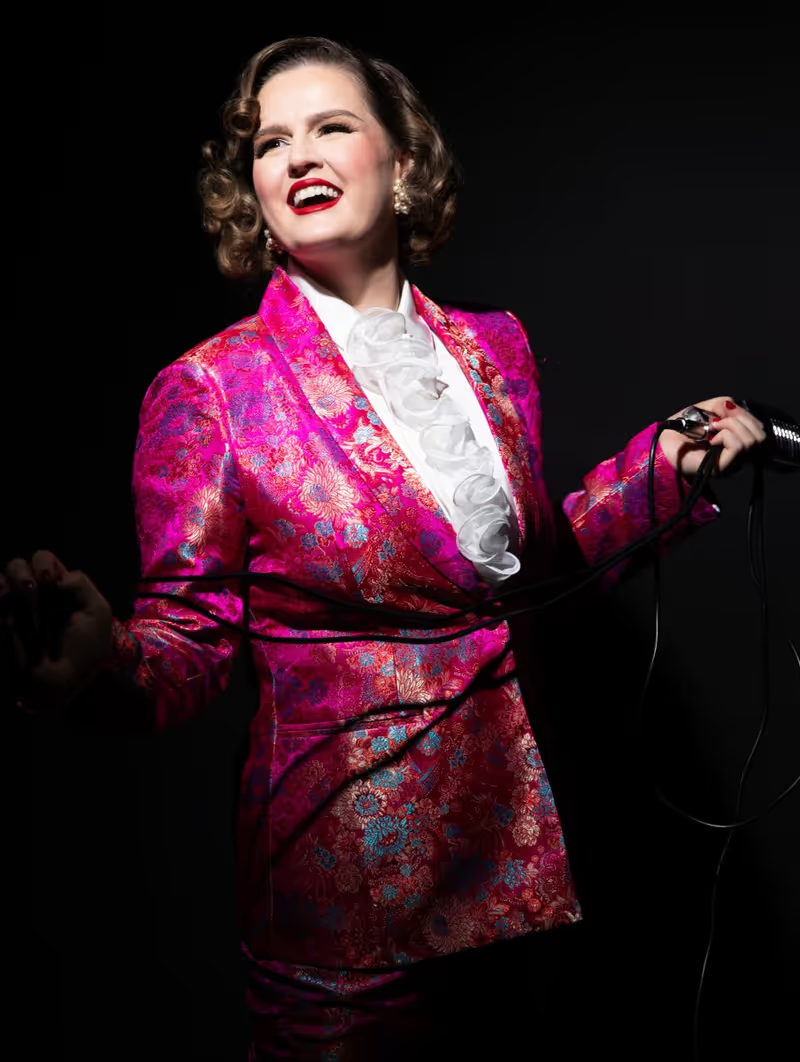
I admired how forthright you were in your cabaret about your own addiction with alcohol.
I think it’s important to put that context on both my story and Judy’s because when you’ve dealt with addiction, you know there’s a lot of hopelessness and pain. It gives me a perspective on their music and storytelling. As much as I wish I hadn’t gone through my own addiction, I am grateful in a way because it puts a different lens on my life and experiences.
Culminating with the Billie Eilish song “What Was I Made For?” mashed with “Over the Rainbow,” accompaning yourself on the piano, it was so touching and beautiful. Were you surprised at the extended applause from the audience?
It was very, very emotional for me because sharing something super personal, I feared that it would be too much—that I’d turn people off. But the fact that it resonated with so many was a relief. It was a moment that confirmed my struggles had a purpose.
Looking back, how long did you struggle with an addiction to alcohol?
I think it progressed over eight years. Alcoholism can turn at any moment. Anyone who drinks can become an alcoholic. It started as fun with friends at parties, and then it turned into getting through the next day. I was trying to treat depression and anxiety after being let go from performing on a cruise ship right out of college. For me, it just sort of snowballed. The alcohol caused the problem, and then the alcohol became the “solution” to the problem. But of course, it was never a solution. In the moment, it felt like medication, but alcoholism is very sneaky. It can sneak up on you. After eight years of it, I’ve been sober for two years now.
How did you conquer it?
I never really liked the twelve steps. It reminded me too much of the drinking. What helped me a lot was when I met my fiancé, Chris, because from day one, he has been super supportive and protective. Taking it one day at a time too. I never thought to myself, “you can never drink again.” I would just think, “you can’t drink today.” Before I knew it, six months had passed. Also, I checked myself into a rehabilitation center in California. I was treated so well at this place. When I left, I said, “Thank you for being so nice; I never want to be here again.” Seeing the reality of it in other people’s struggles also helped me see it clearly within myself. I get a choice in this struggle. When Chris and I were hired for a six-month gig in West Virginia, that was a great place for healing with all the mountains and countryside. Plus, I was singing at a very non-stressful job.
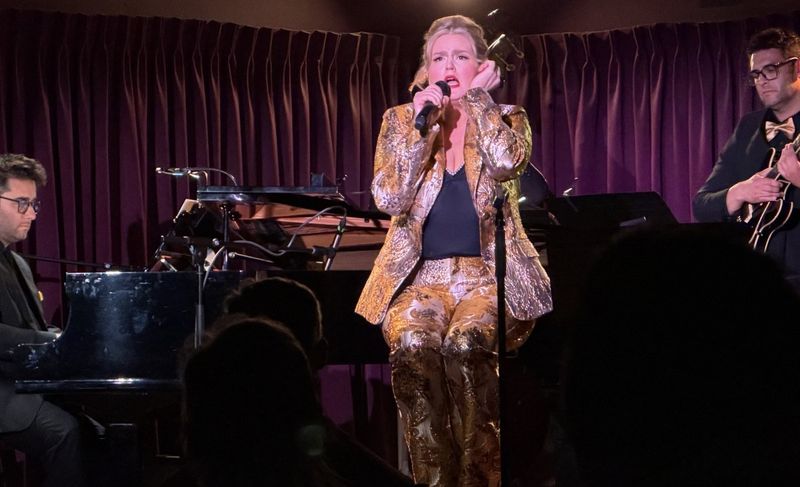
How did your New York City debut at The Green Room 42 come about?
Ben Rimalower, the director of programming, reached out in an email. The subject line read, “Rosie Webber at Green Room 42?” He had seen my videos on Instagram, and of course I jumped at the offer. We scheduled it far enough away so Chris and I could save and raise the money needed. We even moved into his parents’ place to help save. Danny Salles reached out as a writer/director, and we put the word out seeking a music director. Matt Baker responded. Truly, it all came from just the right people at the right time.
Anxiety-free?
Oh, gosh no! I didn’t live in New York; I didn’t know if anyone would come. But I believe in saying yes to opportunities. Taking a risk and saying yes has led to one of the best decisions of my life.
Living in southern California, with your director and musical director in New York, how did you rehearse and put together the show?
All via Zoom. Plus, I sent him pages of written material about my life. Danny took what made sense to him, and we tossed around a million songs. That was the hardest part for me. With so many wonderful songs, finalizing a set list for seventy-five minutes or less was hard.
And the arrangements for the four musicians?
I did some of the arranging, and Kyle Newmaster arranged a few pieces. I spent a lot of time on getting the sheet music just right.
Was this your first time in New York City?
I lived there for a few months, auditioning, just after the first cruise ship debacle following college. I got into the second national tour of A Gentleman’s Guide to Love and Murder, which was one of the greatest experiences of my life. I was also in New York for rehearsals of the national tour Fiddler on the Roof. And my college was only an hour away so I visited from time to time. But I’ve never lived there long-term or done any formal performances.
What was the biggest surprise from your debut performance?
I was terrified and I don’t use the word lightly. It’s very different from being in the ensemble of a tour. I think what surprised me the most was once I stepped out and saw faces in the crowd, they seemed so warm and happy to be there, my nerves and anxiety just melted away. Once I locked eyes with the audience, it became a joyful experience.
For us all. I’ve never seen five standing ovations in a single cabaret performance.
Okay, that was my biggest surprise! I didn’t know what to do. I was just standing there. It felt surreal. Like I was seeing things from the audience perspective. Questioning my own imposter syndrome thoughts—did I deserve this? But then a little voice in my head came to the rescue and said, “Rosie, you’ve worked hard for this and you’ve overcome a lot—let yourself have this moment and be grateful.
The songs you sang outside of Judy’s repertoire were very special. With “Vincent” (Starry Starry Night) about Vincent Van Gogh in Judy’s voice, I heard it in a completely new way. What other songs have you done that are far from Judy’s songbook but worked really well with her voice?
We’ve done Judy Garland singing “Stairway to Heaven.” That was a stretch. But when you listen to it through Judy’s lens, it takes on a whole new meaning. Another one was the “American Dad” and the “Family Guy” theme songs. I’m a huge fan of Seth MacFarlane and his music. Also, “Goodbye Yellow Brick Road.” And we did a cover of The Smiths’ “Please.” The lyric, “Please, please, please let me get what I want this time”—when you hear words like that with Judy’s voice, it took on a whole new life.
One of my favorites is your video of Judy singing Radiohead’s “Creep.” That one had a track in the background with Chris playing along. Who creates the back-up tracks?
I make the backing tracks, either playing the piano or I’m creating midi instruments. That one had strings and horns, I believe, and Chris played some of his own music.
I hope you two continue to collaborate musically. The song the two of you wrote (“All About You”) was one of the cabaret’s highlights. When you announced it, I thought to myself, “How brave to sing an original with all these American Songbook classics.” But the up-tempo, jazzy number won us over.
I know that feeling when someone says, “I’m going to do an original,” and everybody silently groans. But it was a risk worth taking. It felt very personal and showed a different side of me—mainly that I’m passionate about songwriting. And I was able to feature Chris because he’s been such a vital part of my whole story and the show. What’s so great about Chris is how similar we are in saying, “yes.” He’s really a blues and rock guitarist, so with Judy’s repertoire, he said yes and has grown to love it. And he has shown me some great stuff I’m excited to work on. We inspire each other.
Congrats on your engagement. I wonder if you two are planning to be a career couple or do you expect to have your very own little Liza, Lorna, and Joey someday?
I think, first, we’re going to get married. We’ve talked about kids, and when the right time comes along, I think that would be great. We’ll have a musical family to be sure.
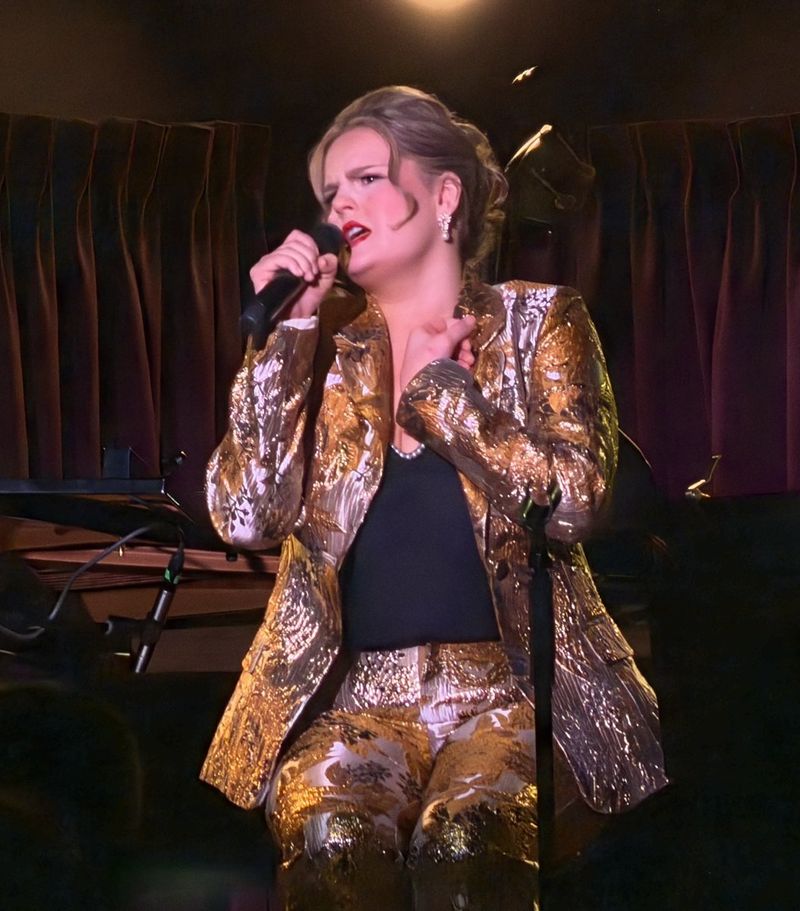
In the future, will you want to sing your way or is Judy your way now? Meaning, is Judy a voice you turn on and off?
I think Judy has been a way for me to find my voice and my people. But I can adapt to whatever is needed. I don’t see myself singing that era of music in any other way. But if someday I want to do a Heart tribute, I’m up for it. I’m lucky I have a lot of different colors to my voice. I look forward to branching out to different genres and playing with different sounds. But right now, I am just really loving the emotional connection that I have with Judy’s music. It brings out a part of my soul, not just a part of my voice.
Because of your theater training and the two tours you’ve done—and now making a name for yourself, do you hope theater may call you back to the stage?
I would love that. It’s just about waiting for the right material to come along. And keeping myself adaptable and always truthful in whatever I’m doing. Whether it’s a Judy Garland song or “Barracuda” by Heart, I am singing it through my truth and experiences. I am hopeful that’s what will help me have a lasting career in many different facets. Just honoring the material and bringing my life experiences and truth to my performance.
Yes, brava, let truth win out in the end—in cabaret and in life.
Learn more about Rosie at https://www.rosiewebber.com/
Find more upcoming shows at the Green Room 42 here.
Sign up for all the news on the Summer season, discounts & more...

|
The Doctor Will See You Now (Live EP Recording) The Cutting Room (9/21-9/21) |
|
|
Jensen Freeman: Neon Nights Laurie Beechman Theatre (9/26-9/26) |
|
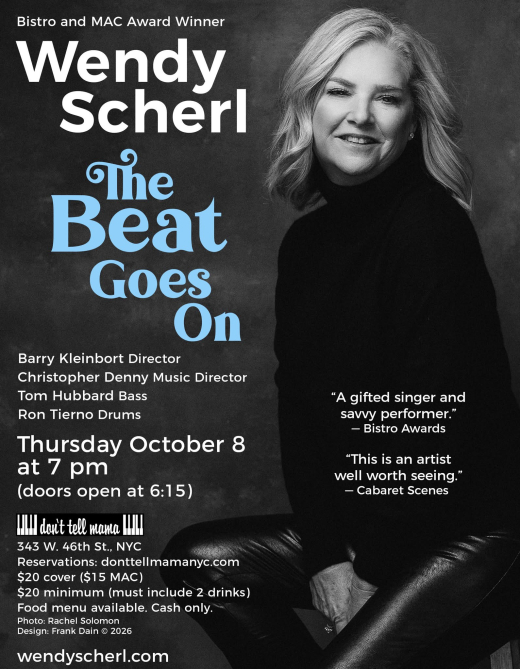
The Beat Goes On Don't Tell Mama (10/08-10/08) |
|
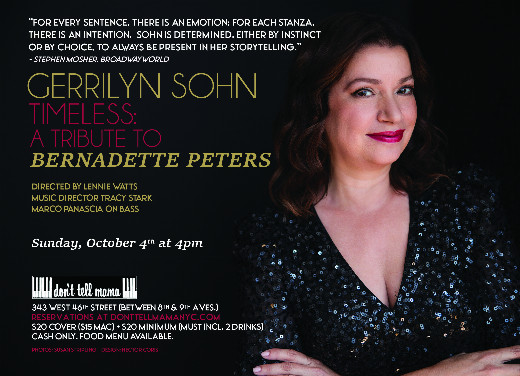
Timeless: A Tribute to Bernadette Peters Don't Tell Mama (10/04-10/04) |

|
54 Sings Princesses vs. Villains Part 2 54 Below (10/23-10/23) |

|
54 Sings Stevie Nicks 54 Below (11/05-11/05) |

|
The New York Pops Underground 54 Below (10/05-10/05) |

|
Brandie Inez Sutton: Miss Sutton, Live! 54 Below (10/08-10/08) |
|
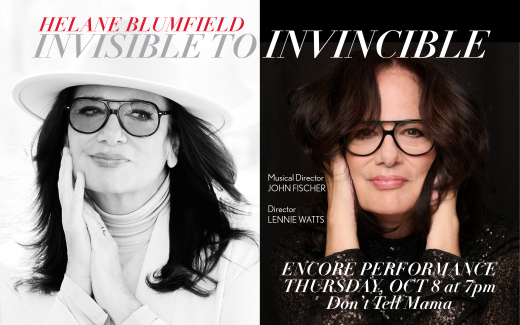
Helane Blumfield: Invisible to Invincible Don't Tell Mama (10/08-10/08) PHOTOS |

|
Lea Salonga 54 Below (12/02-12/02) |
