



Season 2, Episode 5: Behind every summer is a community that keeps Fire Island alive. This episode explores the history of the beloved Pines Pantry through the eyes of its iconic Pantry Girls, alongside the volunteer firefighters of The Pines and Cherry Grove who protect the island from fires, hurricanes, beach erosion, and an uncertain future.
Review: SAN DIEGO OPERA'S PRODUCTION OF RIGOLETTO at San Diego Civic Center Theater
A Dark Opera Features Spectacular Arias
By: Ron Bierman
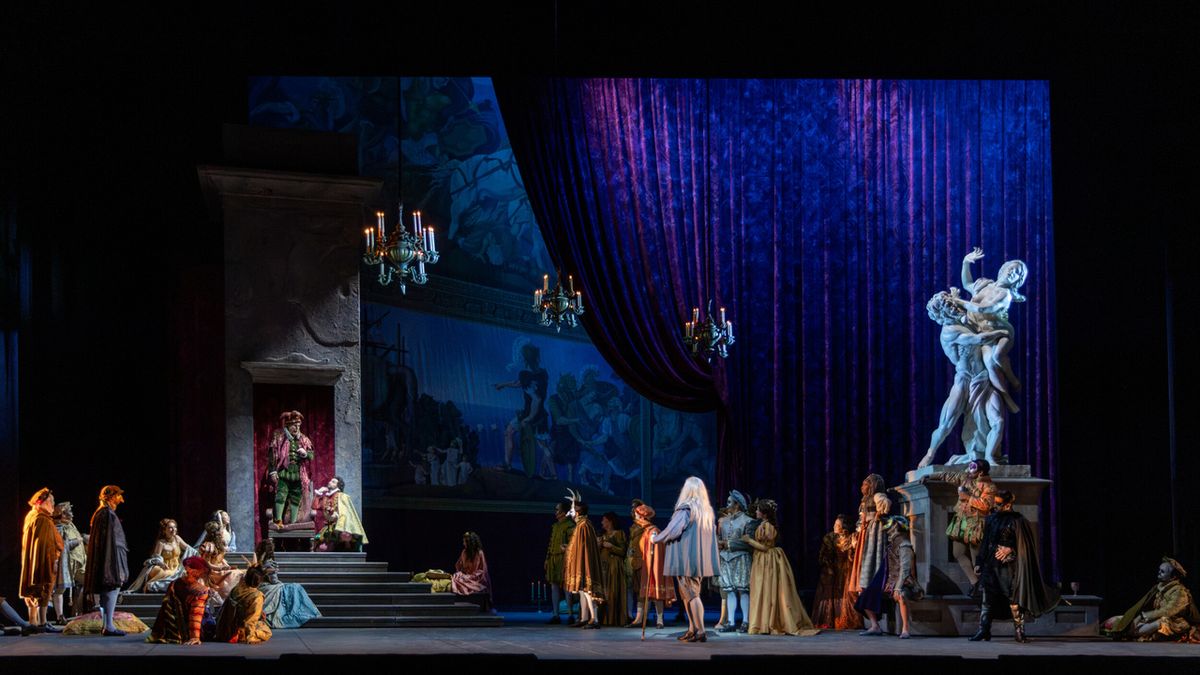
Verdi’s score for Rigoletto is a masterpiece. I just wish knowing where Francesco Maria Piave’s libretto was headed didn’t give me this creepy feeling from foreboding overture to crushing end. Other than Rigoletto’s painfully naïve daughter Gilda, there isn’t a single character who doesn’t remind me to stay out of dark alleys.
San Diego Symphony musicians under Yves Abel out did themselves throughout the performance. The overture with its intimations of a future Verdi requiem set the mood. But, spoiled by the Jacobs Music Center, the muddied sound of the overture’s loudest moments had me looking forward to planned acoustical improvements in the civic center hall.
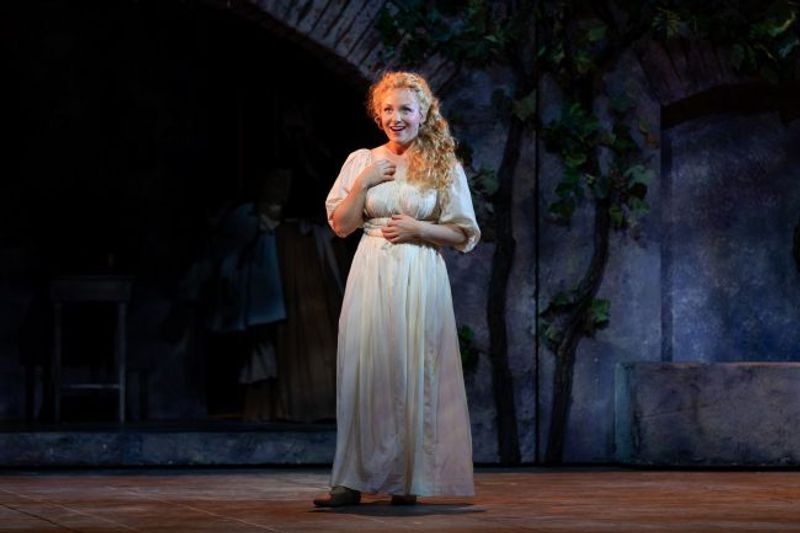
Soprano Madison Eleanor was outstanding as Gilda. She has an agile voice of exceptionally delicate beauty. Her surprisingly effortless glide with increasing power to the loftiest notes of her best-known arias were production highlights. She nailed the landing in “Caro nome” with a display of sparkling coloratura gymnastics.
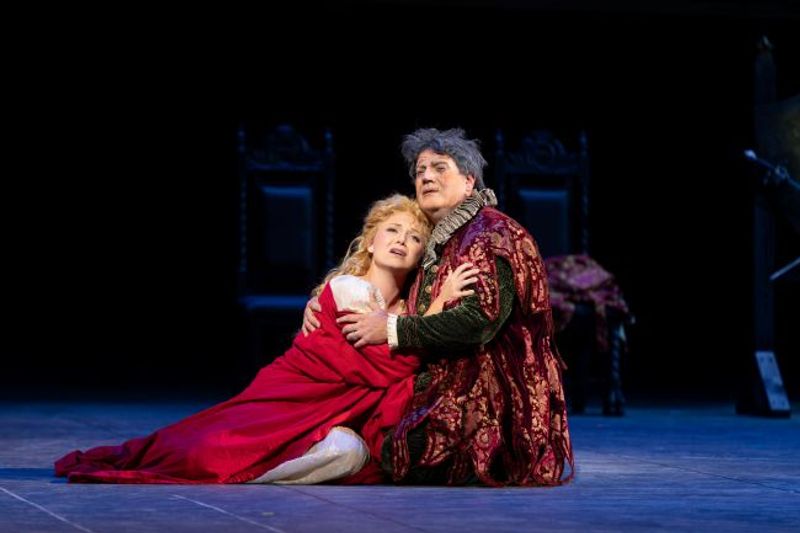
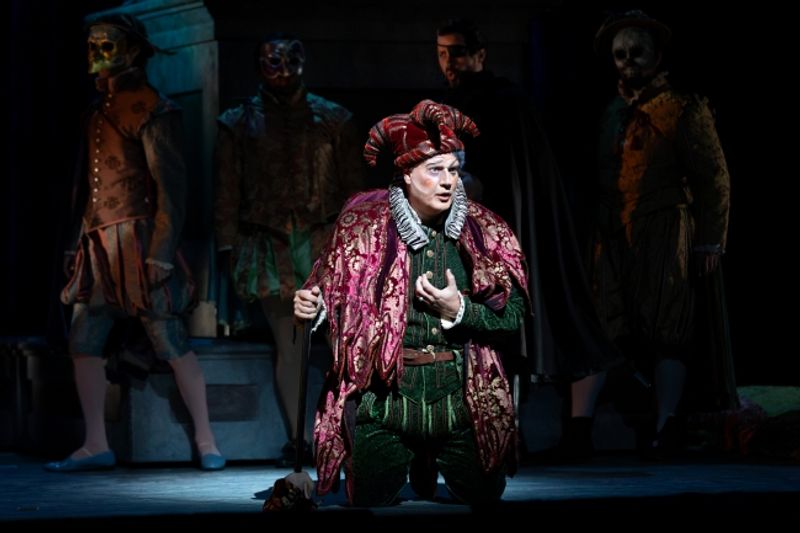
Bass Baritone Michael Chioldi blended well with Leonard in both voice and mood as Rigoletto, her father and a jester in the court of the roguish Duke of Mantua.
That was also true of Tenor José Simerilla Romero who sang the duke, although his smooth pleasing tenor all but disappeared in louder passages while Leonard’s higher-pitched voice dominated. That was especially true when conductor Yves Abel let his accompanying San Diego Symphony musicians loose on Verdi’s powerful brass and kettle drum passages.
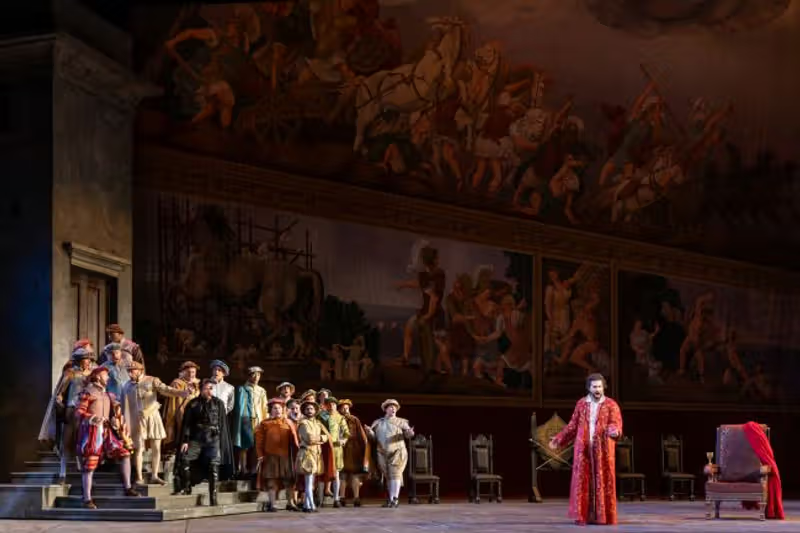
Romero took an appropriately light-hearted approach to the opera’s best-known aria "La donna è mobile," but the climatic last note was a bit less than convincing on this evening.
The sinister and amoral assassin Sparafucile, as played by the imposing Bass-Baritone Peixin Chen, is the character I’d least like to meet in the aforementioned alley. Perfect for the role.
Mezzo-Soprano Guadalupe Paz played the assassin’s snare, his seductive sister Maddalena who joins Gilda, the count and Rigoletto in the stunning quartet “Bella figlia dell’amore” (Beautiful daughter of love) of the final act.
Baritone Joel Balzun sang with authority as Count Monterone who cursed the count for seducing his daughter and Rigoletto for his mockery.
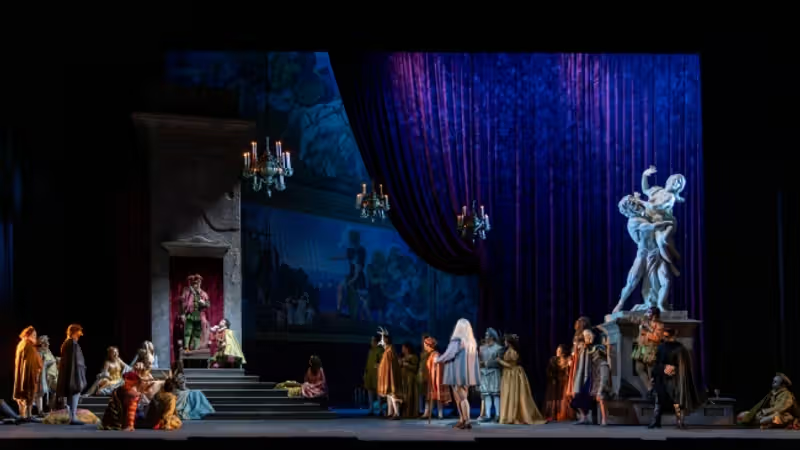
Verdi’s opera has seen quite a variety of interpretations. It was based on a Victor Hugo Play which was originally banned because it depicted a French king as a debauched womanizer. Verdi and Piave changed king to count to evade censorship, and their staging prevailed for a century.
In the middle of the 20th century, directors began to offer radically different approaches. The count gave way to a New York mafia don, Mussolini, the disgraced Italian prime minister Berlusconi, and a Vegas singer modelled after Sinatra paired with a Don Rickles. It’s even been set on the Planet of the Apes.
Director Christopher Mattaliano stayed with the spirit of the original and had the benefit of effective period costumes designed by Jane Greenwood and the company’s own impressive set. The set changes significantly as the plot heads to a final scene at the assassin’s B&B, an inn with a suspicious lack of reviews on travel sites.
The company’s chorus under Bruce Stasnya is a consistent plus for San Diego Opera performances for both its dependable singing and as a source of extras to fill the stage with movement and energy, as Mattaliano did here.
Director Michael Cavanagh also depended on tradition in San Diego Opera’s 2019 production of Rigoletto, with two major differences in his characters. On the minus side he added gratuitous violence and gruesome murder scenes.
But that was offset by greater sympathy for mixed motives. The duke in particular was a more interesting character. Instead of an evil noble simply taking advantage of his position, he was an attractive and amusing rogue who depended on his charm to seduce. Still morally reprehensible, but more entertaining on a stage, if not real life.
The review is of the October 24 performance
Photo credit Karli Cadel
Broadway news in your inbox
Weekly top stories - unsubscribe anytime.
Weekly top stories - unsubscribe anytime.
Reader Reviews
To post a comment, you must register and login.