


Review: LE MARIAGE DE FIGARO at Theatre Royal Du Parc
LE MARIAGE DE FIGARO at Théâtre Royal du Parc Delivers a Rarely Seen Level of Craft
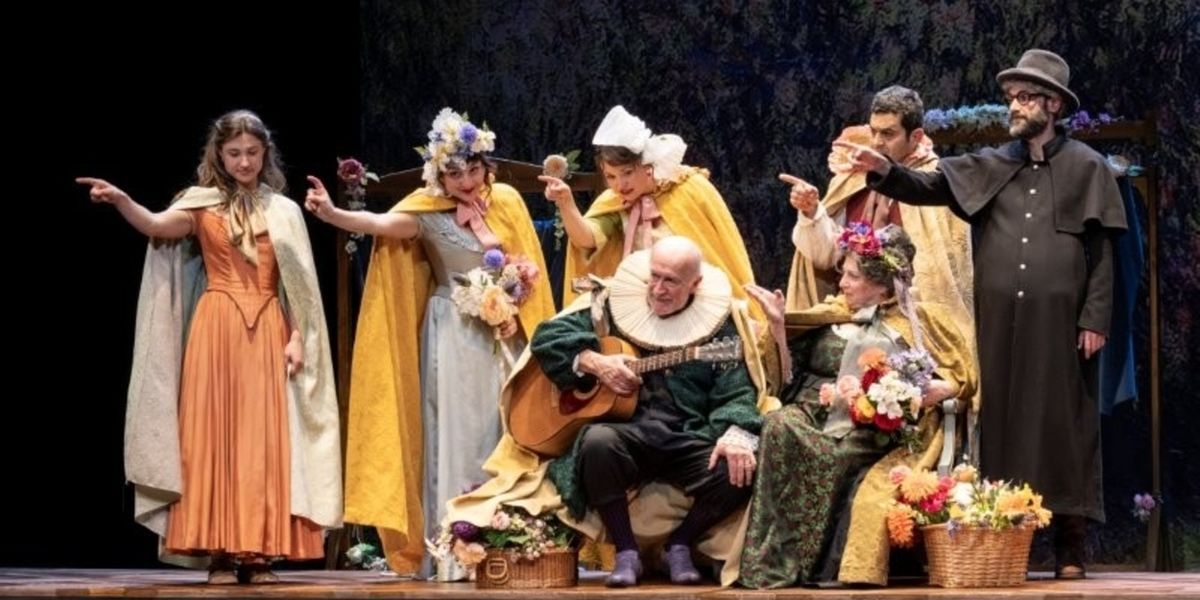
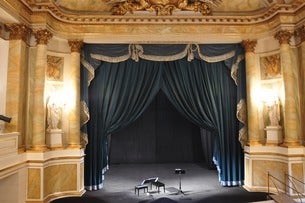
There are venues that host theater, and then there are venues that remind you what theater is. Théâtre Royal du Parc belongs to the second category. In a world of slick modern buildings and a near religious obsession with minimalism, walking into this space feels like entering a forgotten age. It’s a small architectural jewel, marked by time and polished by generations of audiences. You don’t just see it, you smell theater.
That sense of tradition isn’t only visual. It’s also operational, in the best way. The 15, 10, and 5 minute announcements, the foyer bell before the beginning, and the sheer punctuality felt almost shocking. The start time was 20:15, and it started at 20:15. That’s rare in Belgium, yet Théâtre du Parc proves it’s completely possible to keep that standard and, just as importantly, to educate the audience to respect it. Nobody was late, most likely because they knew the doors would close. It’s standard practice on Broadway or the West End. Here, it felt like a small triumph.
Then comes the play itself. The Marriage of Figaro is Beaumarchais, and it feels and sounds like Beaumarchais. That’s both its strength and its challenge. Modern audiences might struggle with the long monologues and the many two and three character scenes that drift into philosophical and societal questions in a prose driven way. I’ll be honest, I needed at least 30 minutes to adapt to a completely different rhythm and style than what we’re used to today. That’s an uncomfortable truth. The dramaturgy that felt natural in the Age of Enlightenment doesn’t always land instantly in 2026. Themes, though, are another story, because the human machinery underneath the language still turns.
The actors are the reason it turns so well here, because they’re doing the heavy lifting, and they do it with confidence.
Félix Vannoorenberghe gives an extremely sincere and layered Figaro, moving through a wide emotional range without ever losing the character’s spine. By the end of the evening, you walk out thinking, yes, that was Figaro. Even if the text can feel dated at times, his acting blends classical technique with a modern realism that keeps the lines fresh and alive.
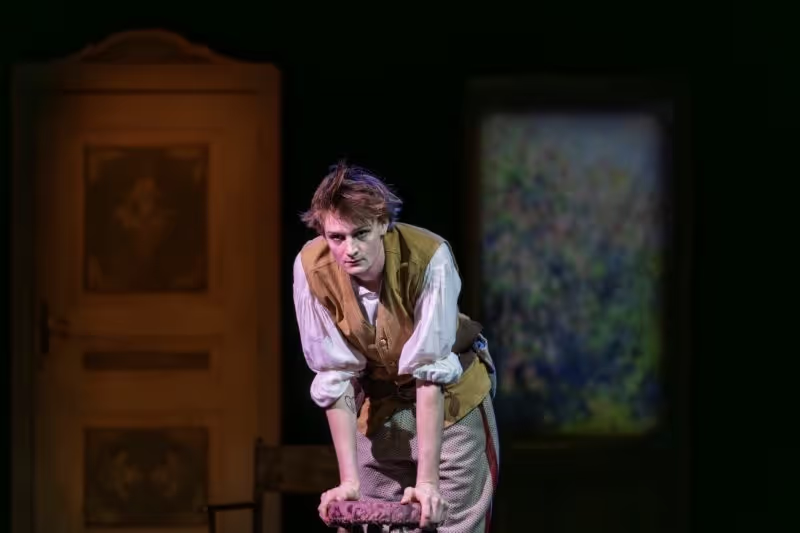
Elfée Durşen’s Suzanne is energetic and sharply present. Her delivery recalls the classical precision of the Comédie Française, and it anchors a dynamic, believable Suzanne. The only visual detail that slightly distracted me was her visible tattoos, which didn’t feel like they belonged in this particular world.
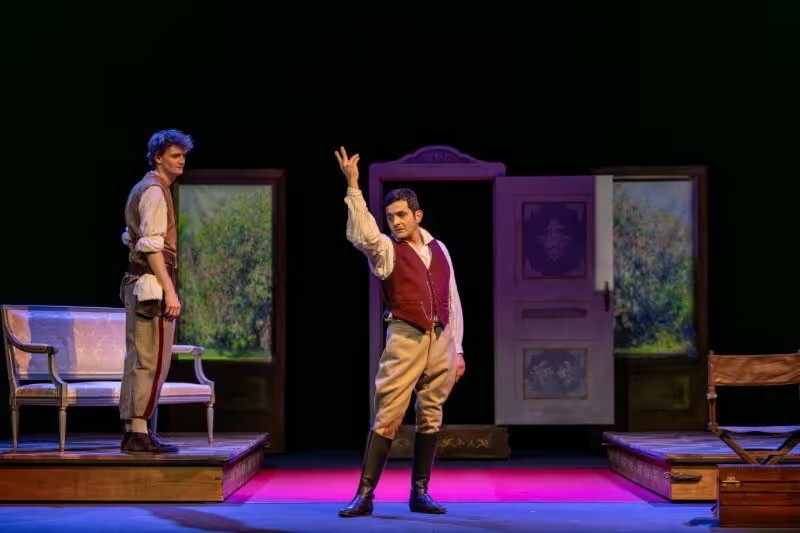
Laurent Capelluto’s Count Almaviva is, in my view, the highlight of the show. He creates an Almaviva I haven’t seen quite like this before. He’s comical, intelligent, stupid, and dangerous, all at the same time. Capelluto’s experience in theater and his film career are evident in the control and layering of his choices. It’s a bold, fresh, and courageous portrayal, and it’s pure comedy material.
Laure Voglaire’s Countess is layered, charismatic, and energetic, which is exactly what the role needs to avoid becoming a decorative victim. The supporting cast matches the principals’ level, with special mention to Pascale Vyvère’s dynamic and charismatic Marceline, and to Luc Van Grunderbeeck, who brings comic relief with a nostalgic De Funès like spirit.
Visually, the production is both practical and painterly. As the curtain rises, we see a cleverly efficient set, a small podium, two doors, a piano, a few chairs, and a rotation of props. Two large cloths fill the space and give depth without clutter. Claire Farah’s set design respects the period, yet it feels fresh, pastel toned, and inventive. Scene changes are quick and creative, and the space gets carved and reshaped with clarity.
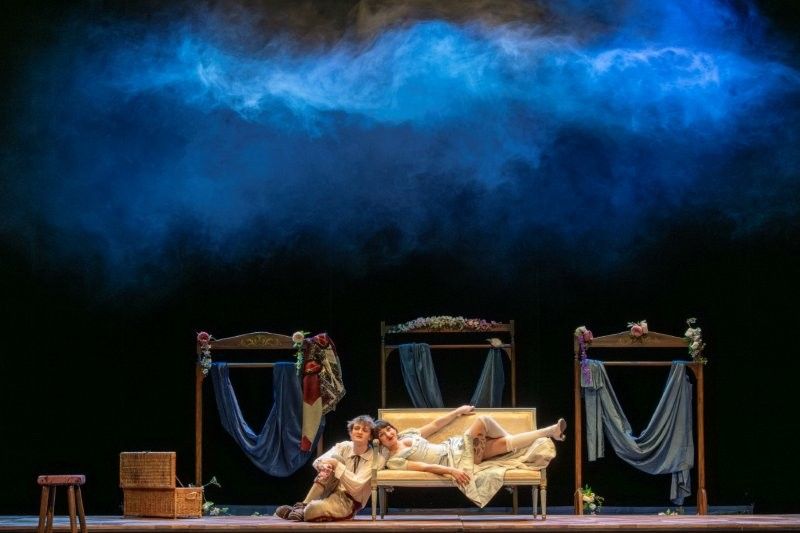
Xavier Lauwers’ lighting design is consistently beautiful. Not once do the characters disappear into shadow, yet the design moves between intimacy and a fully lit stage without losing contour, depth, or contrast. Many scenes genuinely read like paintings, which suits the stylized nature of the play.
Music is handled in an unusually smart way. Rather than forcing original composition into a world built so classically, Thierry Cammaert builds a collage that stays coherent through orchestration, live instrumentation, and careful placement. Piano, classical guitar, accordions, maracas, it all makes sense within the production’s fabric. The one choice that didn’t fully fit for me was Brahms’ Hungarian Dance No. 5, mainly because its embedded folkloric character pulls the palette too far east from France. Still, for audience members who don’t carry that association, it functions as energetic transition material.
Several live musical moments also do something essential, they keep the audience’s attention locked during scene shifts. By the time a song ends, you haven’t even noticed the set moving, and you’re already in a new environment. Highlights include a sung duet between Suzanne and the Countess accompanied only by piano, the duet between Chérubin and Fanchette that brings sweet, light, comic lyricism to the end of Act 1, and a beautiful re orchestration of Those Were The Days for two live accordions played by Elfée Durşen and Laure Voglaire early in Act 2. That moment had the audience clapping in rhythm. There’s also a guitar piece played by Luc Van Grunderbeeck from one of the audience boxes, a staging choice that strengthens the connection between stage and house in a play where the fourth wall gets broken repeatedly. The wedding chorus, sung by the characters and accompanied by Basile on classical guitar, lands especially well, and it’s comically punctuated by Almaviva’s reactions.
Chandra Vellut’s costumes complete the picture. They’re beautiful, richly textured, and they carry a lived in patina that makes the world feel inhabited rather than dressed. The fabrics are exquisite, and the splashes of color integrate perfectly into the production’s painting like aesthetic.
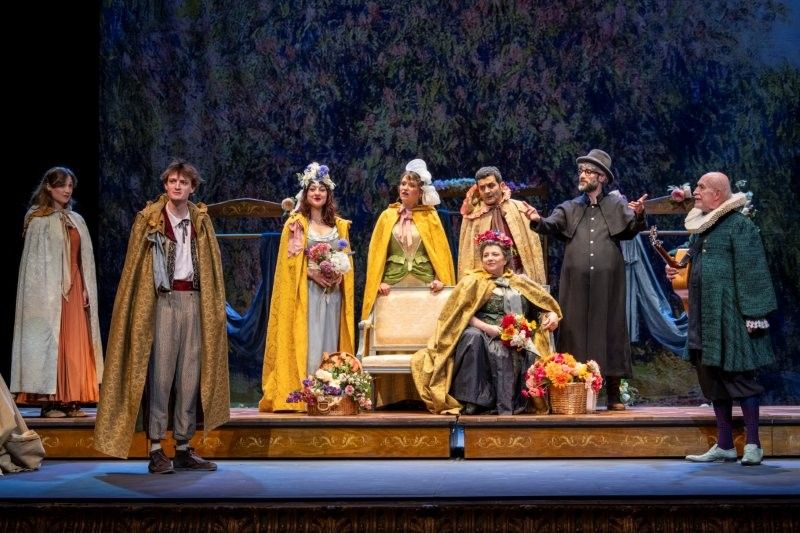
Dominique Serron’s staging is smart, fresh, and respectful of the original. The pacing is handled with care, which matters enormously in a text like this. Her experience with the Infini Théâtre, that she founded and runs, is visible in the clarity of the concept and the way she keeps the evening moving while still letting the language breathe.
Overall, this is a strong production that absolutely meets the expectations of a Théâtre du Parc evening. It’s classical without feeling old, and it’s playful without losing precision.
Rating: 9/10 - You Can't Miss This!
Photo Credits: Aude Vanlathem

Love Theater in Belgium? Join The Community!
Whether you've got past experience writing about theater or just starting, the BroadwayWorld Community offers a unique opportunity to become a champion for your local arts community, helping raise awareness of local offerings and adding another local voice to the conversation at a time arts coverage is shrinking in the press across the continent. Join us and become a pivotal part of the movement that celebrates and promotes the arts in the digital age.
Learn MoreSign up for all the news on the Fall season, discounts & more...

|
Jeanne d''Arc by the Glen Lambrecht Ballet Capitole Gent (12/01-12/01) |
|
Bernard Werber - V.I.E. Cirque Royal (1/23-1/23) |
|
Vrienden voor het Leven Trixxo Theater Hasselt (4/25-4/25) |

|
Covertramp, Hommage à Supertramp Théâtre Royal (12/02-12/02) |
|
The Music of Hans Zimmer & Williams Stadsschouwburg Antwerpen (11/18-11/18) |
|
LE ROI SOLEIL FOREST NATIONAL (3/20-3/20) |

|
Golden Eye Stadsschouwburg Antwerpen (6/12-6/12) |
|
Piaf ! Le Spectacle Theatre Du Parc (2/03-2/03) |

|
Krezip Stadsschouwburg Antwerpen (10/23-10/23) |
|
Sofia Belabbes Cirque Royal (4/07-4/07) |

Reader Reviews
To post a comment, you must register and login.