


Review: BARTLEBY / LA VOIX HUMAINE at Opéra Royal De Wallonie Liège
Thrilling Double Excellency of Theatre and Music
I didn’t know what to expect walking into this double bill. I was ready to be surprised. It delivered, and then it kept going.
BARTLEBY begins with a tease. The curtain only rises a little, just enough to show feet. Expressive. Unexpected and intriguing from the first second. When it finally lifts, Vincent Lemaire’s set reveals itself in clean, minimal lines, white bricks, a black table, black chairs, and a bust. It’s atemporal, and still you feel the lawyer’s office in your bones.
Vincent Boussard’s staging and blocking are the reason the piece breathes so well. The actors are in constant motion, and the space keeps shifting. It becomes a kind of perpetuum mobile that only stops on the moments that matter. Scene changes are handled with a brilliantly simple device. Each time the curtain drops, stage directions are projected onto it, while you glimpse the set moving behind. It’s elegant, it’s funny, and it keeps the storytelling sharp.
.jpg?format=auto&width=1400)
Karen Kamensek conducts the Opéra Royal de Wallonie-Liège Orchestra with a wonderfully vivid dramatic instinct. Benoît Mernier’s music lays a filmic net underneath the voices, wave after wave, sometimes comic, sometimes eerie, sometimes quietly haunting. The pit supports every turn, and the sound can pivot from absurdity to unease in a second. The lighting, signed by Vincent Boussard and Silvia Vacca, is superb. It cuts the space with precision and highlights exactly what each moment needs. Everything is organic in a surreal world.
.jpg?format=auto&width=1400)
The cast is excellent. Edward Nelson’s Bartleby builds his arc with a strange gravity, present and somewhere else at the same time. Patrizia Ciofi gives the Lawyer real introspective depth, and she keeps the arc alive even when the world around her turns chaotic. Damien Pass as Turkey and Santiago Bürgi as Nippers are a gift, their escalations are energetic, comedic, strange, and completely assumed. Gustave Harmegnies, as Ginger Nut, threads through the machine with perfect timing, and Bruno Silva Resende’s Guard adds a darker edge to the universe, layered, cynical, and quietly dangerous.
.jpg?format=auto&width=1400)
Then comes the visual sequence that’s hard to describe, because it feels like a dream you don’t want to wake up from. Somewhere between a garden and a tomb, the stage becomes a surreal painting, projected waves, an orange moon hanging above the set, a floating shirt, and a mirror floor reflecting Bartleby’s movement over the water. It’s haunting, beautiful and it’s also paired with some of the score’s most striking music.
Another highlight lands like a moving comic book. Bartleby on the ledge. Nippers hanging upside down. The street world below, stacked in levels and depth. The ensemble sounds great here too, and the use of space is genuinely thrilling.
.jpg?format=auto&width=1400)
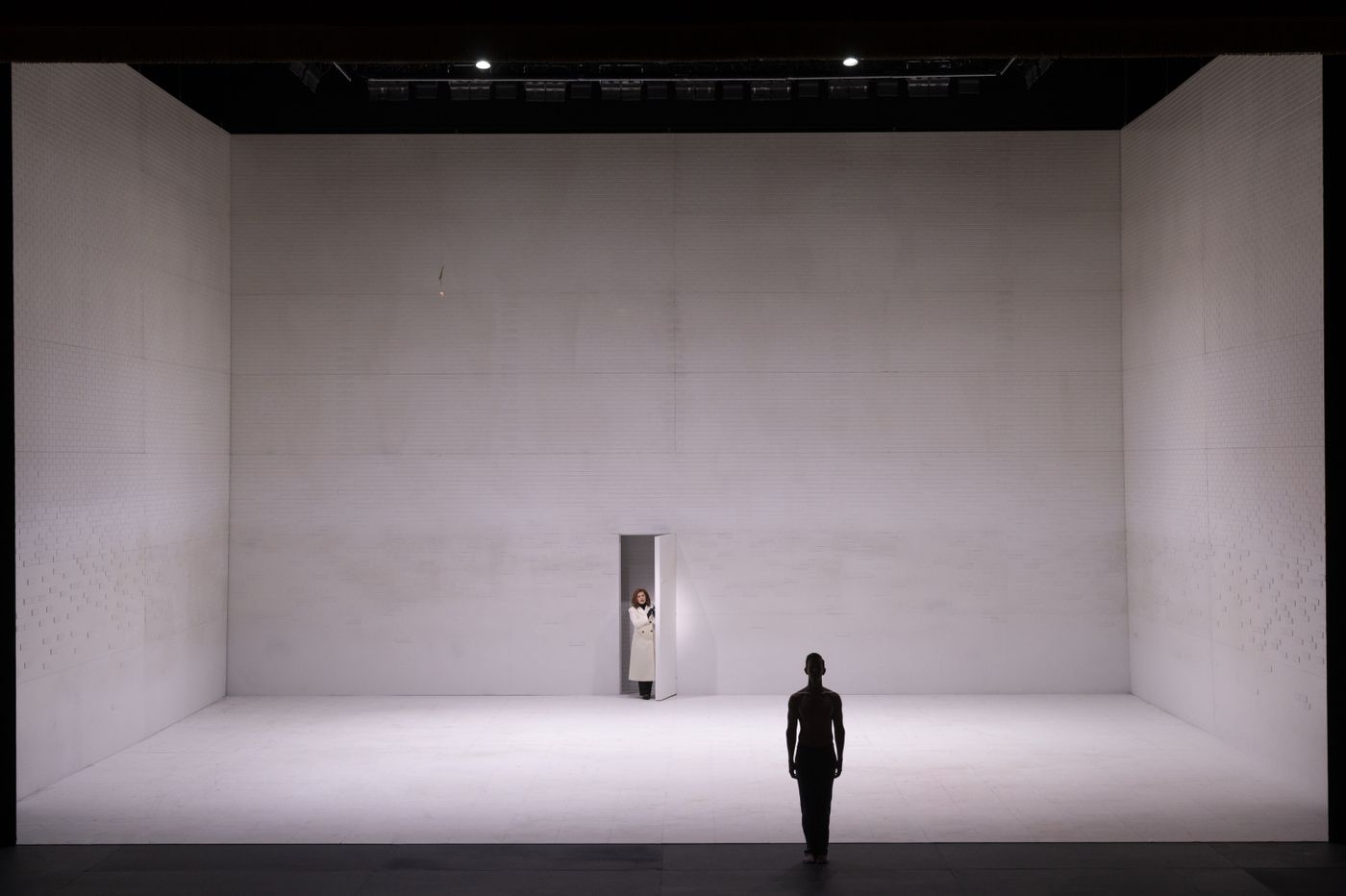
The final images are simple, and they hit a chord. The stage turns huge and white, and it instantly reads as the blank, meaningless space of an asylum. When it ended, my first instinct was immediate and very clear. I wanted to see it again from the top, right away.
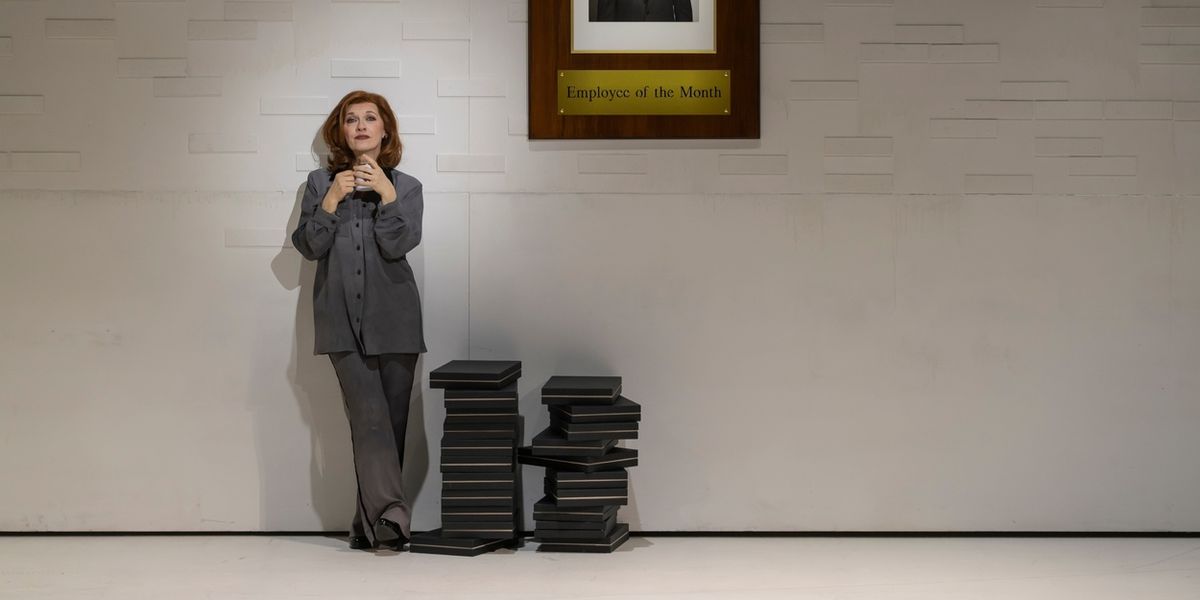
LA VOIX HUMAINE raises the emotional temperature even further. The curtain rises on a very modern apartment, pillows on the ground, and a body lying on the bed. Anna Caterina Antonacci is absolutely astonishing. She doesn’t just sing. She acts with sound. Spoken fragments, sung notes, distorted colours, sudden shifts in pressure, everything feels intentional, and everything feels true.
.jpg?format=auto&width=1400)
Boussard’s central choice here is genius. She isn’t speaking on the telephone. She’s speaking to her lover, dead on the bed. That changes everything, instantly. The text becomes tragic in a deeper way, because the conversation is no longer with absence. It’s with grief that has nowhere to go. When she picks up a glass and uses it like a phone, the staging turns even darker. You understand, with total clarity, that her mind has slipped. Laurent D’Elia’s presence in the room sharpens that psychological frame, and it keeps the air tense.
Poulenc’s music becomes terrifyingly logical in this version. It moves from one mental state to another, lyrical, aggressive, minimal, rich, light, sinister. Kamensek follows those turns with precision, and the orchestra colours the space like the electric connections of a live nervous system. The further the piece goes, the more it feels like a psychological thriller, and it moves you profoundly because it never begs for emotion. It earns it.
This double bill is a rare achievement. It’s inventive, alive, and staged with real courage.
Final rating: 9.5/10 (Strongly recommended for anyone who wants opera that feels cinematic, daring, and deeply theatrical).
Photo Credits: J. Berger ORW Liège
Love Theater in Belgium? Join The Community!
Whether you've got past experience writing about theater or just starting, the BroadwayWorld Community offers a unique opportunity to become a champion for your local arts community, helping raise awareness of local offerings and adding another local voice to the conversation at a time arts coverage is shrinking in the press across the continent. Join us and become a pivotal part of the movement that celebrates and promotes the arts in the digital age.
Learn More
|
Piaf ! Le Spectacle Theatre Du Parc (2/03-2/03) |

|
Natalia, the Christmas Experience Capitole Gent (12/11-12/11) |
|
Laura Tesoro in Koor Stadsschouwburg Antwerpen (9/06-9/06) |
|
Night Fever a tribute to the BEE GEES - Nights on Broadway Capitole Gent (2/26-2/26) |
|
|
Mathieu Stepson Cirque Royal (1/20-1/20) |

|
L’expérience Théâtrale Theatre Du Parc (10/17-10/17) |
|
Bohemian Rhapsody Capitole Gent (3/21-3/21) |

|
Dana Winner Kerstconcert Trixxo Theater Hasselt (12/26-12/26) |
|
The Music of Hans Zimmer & Williams Capitole Gent (11/21-11/21) |
|
Night Fever a tribute to the BEE GEES - Nights on Broadway Stadsschouwburg Antwerpen (2/27-2/27) |
Reader Reviews
To post a comment, you must register and login.