


Interview: Gordon Bovinet, Vienna's Old Deuteronomy, Visits THE JELLICLE BALL
Europe's first Old Deuteronomy visits Jellicle Ball.
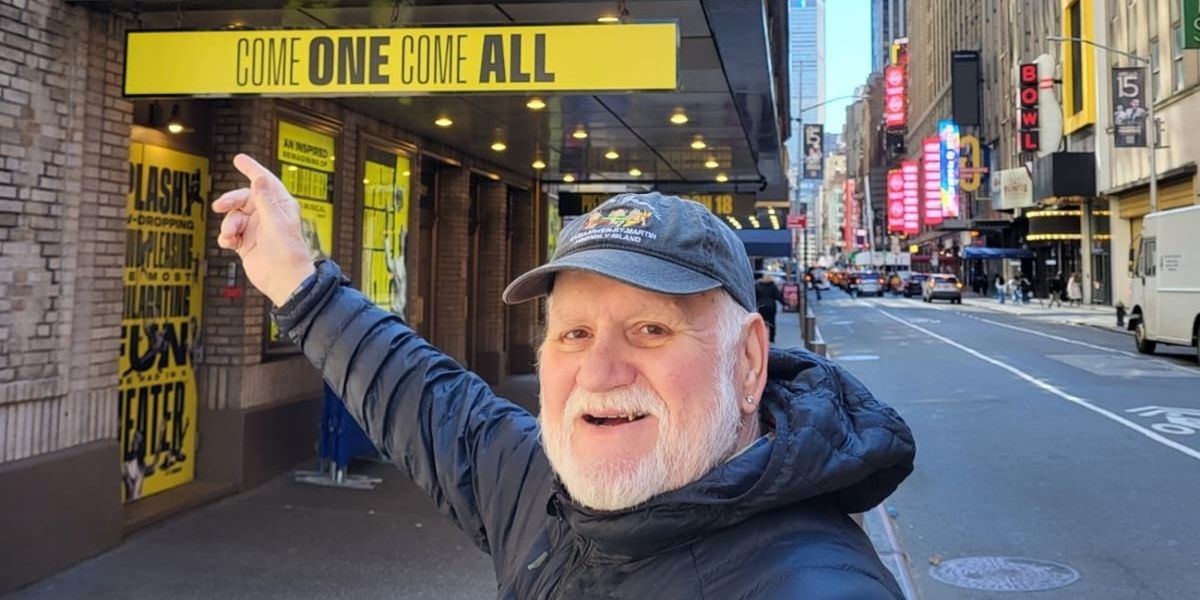
Gordon Bovinet has had long and storied career in Musical Theater, Opera and as one of the most in-demand vocal coaches in Europe. He is in town this week to celebrate his 80th birthday and to take in a performance of the show that launched his career: CATS – or in this case: CATS: JELLICLE BALL!
The very first European (non-UK) production of Cats was in Vienna (1983). The production was a landmark in many many ways and far more influential than most people realize. Vienna marked the first time the show was performed in a language other than English. The German translation by Michael Kunze became the template for many later European productions. This was a huge risk—Cats is built on the rhythms and wordplay of T. S. Eliot—yet it proved the show could travel globally. It changed the entire staging model of the show. The London and Broadway productions were famously “in-the-round” immersive experiences. Vienna was the first to move Cats onto a traditional proscenium stage. This forced choreographer/director Gillian Lynne to rethink the entire show visually—and that proscenium format became the standard for most future productions worldwide. It helped launch the modern German-language musical industry.
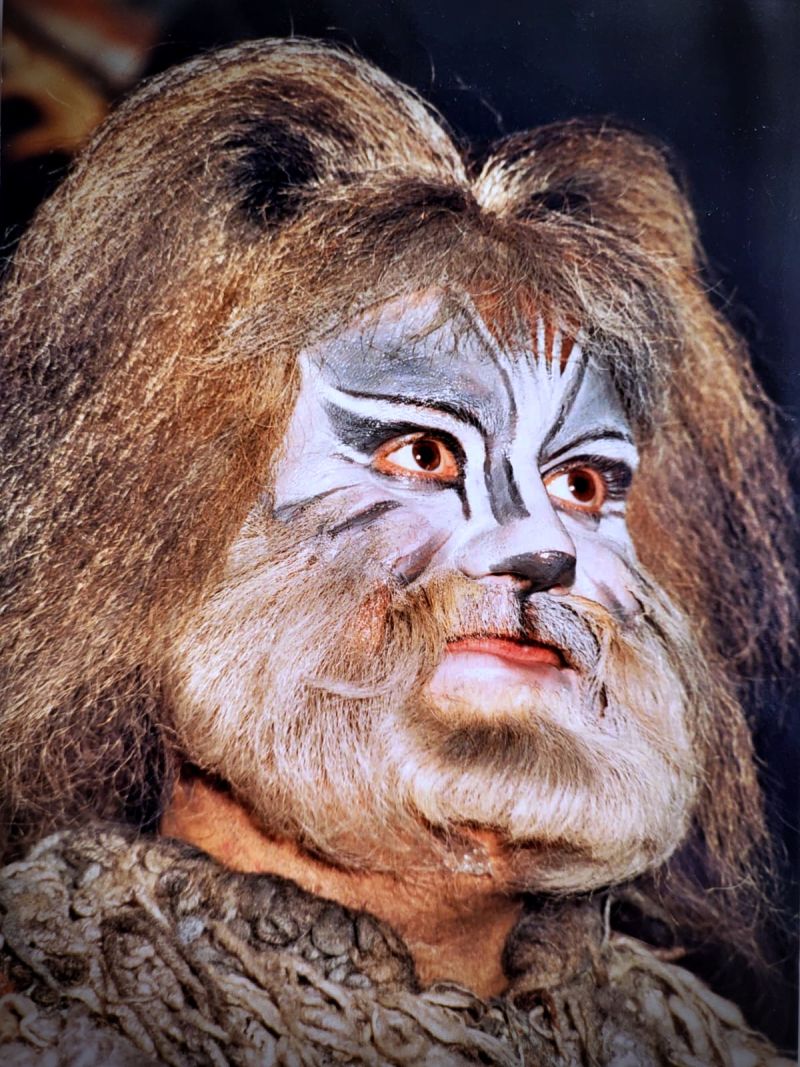 Gordon, you were the first Old Deuteronomy in CATS in Vienna—an iconic role in an iconic production. When you think back to that moment, what did the role represent to you artistically and personally at that point in your life?
It was the highpoint of a 25 year carreer, not every artist gets to quit at the top and I was able to do that after a 7 year run from 1983-1990. Three of my colleagues of the Vienna production became international musical theater stars:
Ute Lemper, Steve Barton: orig. Raoul in "Phantom" in London and on Broadway, later created the lead inJim Steinman and Roman Polanski's "Dance of the Vampires" which is running in Europe for almost 30 years. Pia Douwes who then created the role of "Elisabeth", the most successful European musical and was also "Velma" in "Chicago" on Broadway. Since CATS I was part of a new musical theater school in Vienna. I came to Vienna for CATS and I have stayed for my husband Michael Staringer. We are now the longest running production I have ever been in. My private singing studio helps me keep up with what's going on in the musical theater scene.
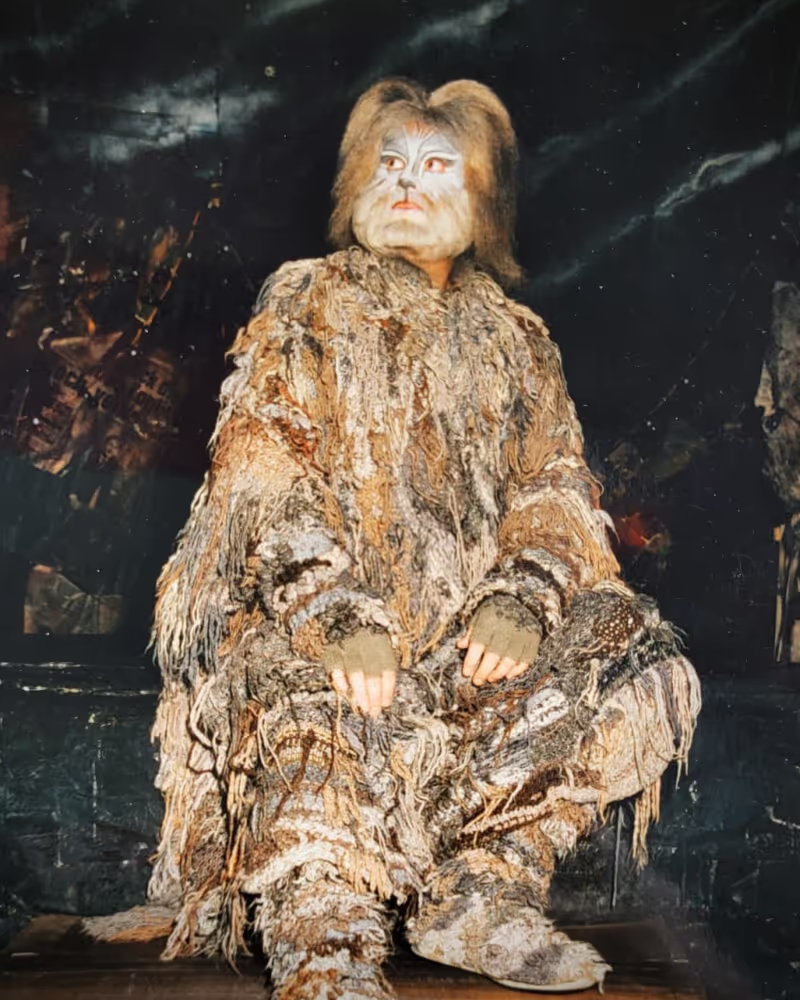
Old Deuteronomy carries a kind of quiet authority and spiritual gravitas. How did you approach shaping that presence on stage, and did your interpretation evolve over the course of your run?
Most of my carreer I had done this type of character, so putting on a cat suit was not that different.
Vienna has such a rich musical and theatrical tradition. How did performing CATS there—particularly as its European premiere—feel different from what you imagine the experience might have been in London or New York?
Vienna was the last production to have a full orchestra playing the score. That certainly felt different. Speaking of New York. I had auditioned to be the understudy on Broadway and at the end of the day I was told that agents were submitting clients and I had to wait until that was done until I got the job. As it was I didn't but the dance captain T. Michael Reed remembered me and asked me to ask for Gyllian Lynne when she was in NY looking for a Rum Tum Tugger for the Vienna production. I was sitting in a chair outside the rehearsal hall with all these young men who were auditioning for Tugger. One looked at me questioningly and said "Ah, Old Deut!" After my audition Gyllian turned to a woman sitting beside her and said "take him to the hallway and give him a contract".
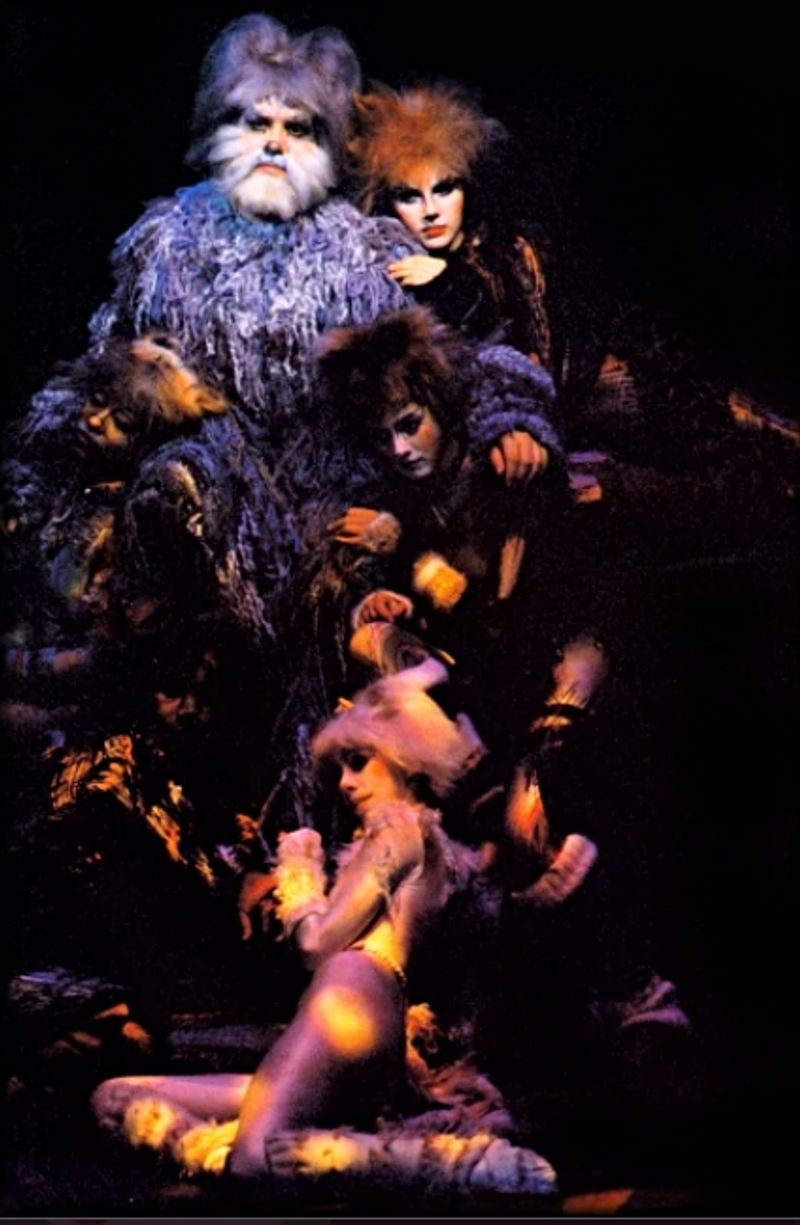 Now, at 80, you’re returning to New York to see CATS: The Jellicle Ball. What emotions come up as you prepare to encounter the piece again, this time from the audience rather than the stage?
I am trying to go to the show with no expectations. I will just enjoy it for what it has become
Musical theatre—and CATS itself—has evolved significantly over the decades. What are you most curious to see in this new staging, and what do you hope has remained unchanged at its core?
I am trying not to have any opinions about what I am to see but I am very interested to see André De Shields interpretation of the role
You began your career in opera - how did that shape your approach to musical theater and musical theater singing?
I never thought of musical theater or opera as something different, I viewed them as just singing. The conductor Paul Gemingiani who discovered me at an Evita audition when asked what the three most important things were in an audition said, "Sing beautifully, sing beautifully,and sing beautifully"
I personally tried to show my high notes which were my speciality. The last note of my song "The Addressing of Cats" (Wie spricht man eine Katze an) is a high b. I was the first one to do that.
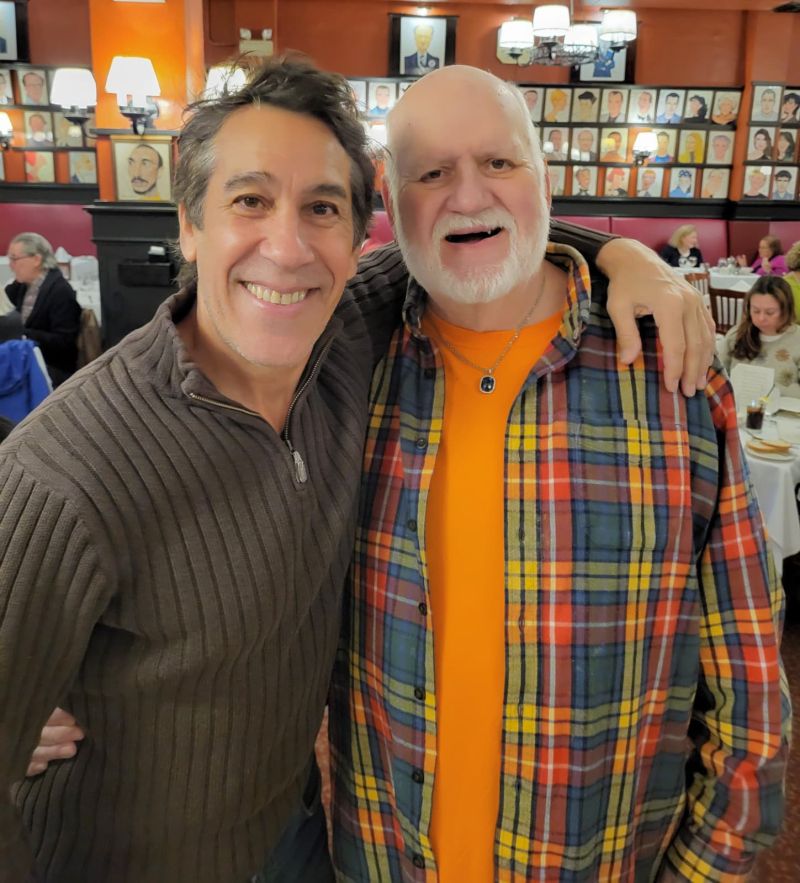
the original Pouncival in Vienna.
Looking back over your career, where does Old Deuteronomy sit in your personal canon of roles? Did it leave a lasting imprint on how you approached performance—or even how you understood storytelling?
It certainly was the highlight of my carrer. But having done 49 musicals and 8 operas I certainly was influenced by those that I worked with before: Douglas Fairbanks Jr., Don Ameche, John Raitt, Sid Cesar, Yul Brunner, Ethel Merman, Carol Lawrence, Roberta Peters and George Hearn who left me with this advice: the mark of a true professional is to do the same performance every night, but make the audience feel it's the first time.
The Vienna production wasn’t just a translation—it was a reinvention. It proved Cats could work outside the English language. It established the export model for megamusicals. It reshaped staging conventions. It helped build an entire continental musical theatre industry. In many ways, Vienna is where Cats stopped being a British hit and became a global phenomenon.
BroadwayWorld wishes to thank Gordon for chatting with us and sharing his thoughts on this legendary work and its evolution – and wishes him a very happy birthday!
Erhalten Sie Broadway-News auf WhatsApp
Erhalten Sie aktuelle Nachrichten, exklusive Berichte und Theaterupdates direkt in der App.

Sign up for all the news on the Fall season, discounts & more...
|
Ladies of Bond Das Vindobona (9/18-4/16) |

|
Santa Baby Das Vindobona (11/27-12/10) |
|
Season of Desire: Ein Wiener Skandal Das Vindobona (10/16-2/19) |
