A Complete Guide To William Shakespeare's 38 Plays: Tragedies, Comedies, And More
Shakespeare wrote about 38 plays between 1590 and 1616.
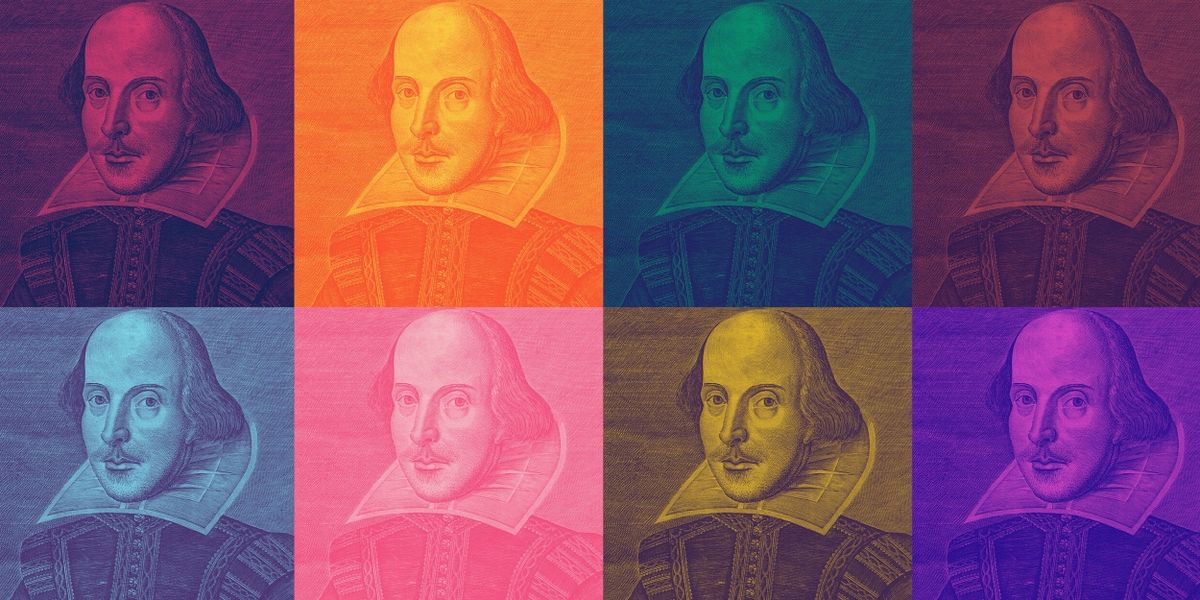
Looking to brush up on your Shakespeare after hearing about his writing prowess? Or you want to relive moments from some of his amazing and expressive works? Whatever may be your reason, you can rest assured that you're at the right place.
Indeed, the plays of William Shakespeare were written over 400 years ago. Nonetheless, they continue to be evergreen, enthralling readers and theater enthusiasts alike.
Ready to dive right into the Shakespearean world? Let's be your guide into insights and genuine appreciation for the enduring brilliance of this Bard's literary legacy.
About William Shakespeare (April 26, 1564 - April 23, 1616)
William Shakespeare, often called England's national poet and widely regarded as the greatest English playwright, led a life shrouded in mystery and yet filled with artistic brilliance. Born in Stratford-upon-Avon, England, Shakespeare's early life is relatively undocumented, sparking numerous debates and theories among scholars.
He likely attended the local grammar school, where he gained a foundational education in Latin and classical literature. In 1582, Shakespeare got married to Anne Hathaway, and they had three children: Susanna, and twins Hamnet, and Judith.
Shakespeare's career as a playwright began in London during the late 16th century, where he became associated with the renowned theater company, the Lord Chamberlain's Men, later known as the King's Men.
His works span a wide range of genres, from romantic comedies like "A Midsummer Night's Dream" to tragedies such as "Hamlet" and "Macbeth." Shakespeare's ability to delve into the complexities of the human condition, his mastery of language, and his deep understanding of human psychology continue to captivate audiences across the globe.
Despite his profound influence on literature and theater, much about Shakespeare's personal life remains enigmatic, contributing to his enduring allure and fascination.
Renowned as the greatest writer in English history, Shakespeare wrote about 38 plays in his lifetime, including a few collaborations with other playwrights. He also penned 154 sonnets, 3 long narrative poems, and numerous narrative poems. They were written and circulated throughout the 1590s.
However, the first dramatist edition of William Shakespeare's collection of sonnets was published on May 20, 1609, by a publisher named Thomas Thorpe, in a quarto called “Shake-speare's sonnets.”
William Shakespeare's plays were written in early modern English Language and have been translated into all major living languages. His plays may not have been poetry source materials. Nonetheless, he created masterpieces, drawing heavily from classical literature, existing poems, and historical chronicles.
He converted these materials and adapted them into promising plays, frequently referencing Holinshed's “Chronicles” for English history, Ovid's “Metamorphoses” for mythology, and Plutarch's “Lives” for Roman plays. William Shakespeare's First Folio was published in 1623. Since then, it has been expanded and revised multiple times.
Shakespeare's Plays by Category
Below are all the plays of William Shakespeare, split into their befitting categories.
The Tragedies
1. Antony and Cleopatra
William Shakespeare's epic, tragic love story play builds up in the ancient world, the post-Roman Empire chaotic era. Mark Antony, one of Rome's recognized rulers, alongside Octavius and Lepidus, falls deeply in love with Cleopatra, the captivating queen of Egypt.
Antony later leaves Rome and sets out for Egypt with Cleopatra's charm and Egyptian opulence acting as his compass and sense of reason. This develops into a dramatic, love-intense, and messy scenario.
Rome is in an uproar with worries ringing loud that Antony would lose his influence and position to the power-hungry Octavius. What does Antony do? He gets married to Octavia (Octavius' sister) to strengthen ties, but still has his eyes and heart set on Cleopatra. Meanwhile, Cleopatra's heart longs for Antony, as she believes her old age won't be dull with him by her side.
Octavius and Antony lock horns in a big battle at Actium. As fate will have it, Antony loses the fight. And then, an iconic scene comes to play. Cleopatra assumes Antony is dead and kills herself with an asp. Antony, realizing Cleopatra is dead, falls on his sword and takes his life. Octavius comes on top, amidst all of this, as he ends Antony's love story and gets more powerful with one fight.
Last seen on Broadway in 1952, starring Laurence Olivier and Vivien Leigh.
2. Coriolanus
Coriolanus is recognized as one of the plays of William Shakespeare that passes as tough and gritty. This play is set in ancient Rome and centers around Caius Marcius Coriolanus, a brave and proud military guy who lives and breathes honor and war.
Coriolanus wins mightily in a battle (this is where he gets the name Coriolanus). However, he feels nothing for the plebeians (common people). Rome wants him in the position of consul, but he declines because he doesn't like voting for people. The people's reps (the tribune) get the crowd to turn their backs against him, and Coriolanus gets exiled.
Coriolanus moves on to join forces with the Volscians (Rome's sworn enemies), and convinces Aufidius, their leader, to wage war on Rome. His mother, Verturia, and wife, Volumni, plead with Coriolanus to reconsider his attack on Rome. The pleas get through to Coriolanus, and he decides against attacking the city. The Volscians and Aufidius were not having it. They turn on Coriolanus and get him killed.
Last seen on Broadway in 1938, starring Erford Gage.
3. Cymbeline
Talk about twists, turns, and a kind of happy ending type of William Shakespeare's play, and you'll get served Cymbeline as your perfect answer. Cymbeline is the British King. He's against the potential union of his daughter Imogen and Posthumus (a lowly guy Cymbeline dislikes). Instead, he tries to convince Imogen to marry Clothian, a suitor he's drawn to.
Iacomo, a baddie, tricks Posthumus into betting on the likelihood of Imogen's unfaithfulness to him. Iacomo cunningly proves Imogen cheated after sneaking into her room to steal a bracelet as proof. This gets on Posthumus nerves. Imogen pleads not guilty and decides to run away in the guise of a boy; now her back is against the wall.
In the meantime, Rome invades Britain. The Brits come out on top. And ultimately, the truth comes out that Imogen was never unfaithful, and Iacomo was just being evil. As expected, Posthumus and Imogen reunite.
Last seen on Broadway in 2007, starring John Collum, Martha Plimpton, and Phylicia Rashad.
4. Hamlet
Hamlet is one of Shakespeare's iconic tragedies that has existential vibes, madness, and vengeance infused in bits. Hamlet, Denmark's prince, loses his father (King Hamlet). His mom, Gertrude, moves on to marry the new king, Uncle Claudius. This turn of events gets Hamlet angry, and grief becomes a thing.
Hamlet's father's ghost informs him that Claudius killed him and spurs him on to avenge his death. With his mind set on plotting Claudius's death, he pretends to be mad and pushes Ophelia, his love interest, away.
Finally, Hamlet gets blood-stained hands. He kills Ophelia's dad, Polonius, mistaken him for Claudius. Ophelia loses it and dies as a result. Laertes, son of Polonius, is out for revenge on Hamlet. Claudius schemes with him. Sword fights ensue, poisoning occurs, and death inevitably kicks in. Claudius, Gertrude, Hamlet, and Laertes all breathe their last.
Last seen on Broadway in 2009, starring Jude Law and Gugu Mbatha-Raw.
5. Julius Caesar
Julius Caesar is popularly known for being one of the first plays to be performed at the Globe in 1599. Rome is booming, and Julius Caesar's fame is widespread, as he is loved by the people.
However, the senators ain't having any of it and sort to kill him. Cassius, one of the bitter senators, convinces Caesar's friend, Brutus, to buy into their idea. Caesar is warned about what lies ahead by a soothsayer, but turns a deaf ear to the warning. Brutus comes onboard and conspires with the senators to unalive Caesar. They stabbed Julius Caesar about 33 times in the Senate.
Last seen on Broadway in 205, starring Denzel Washington, Colm Feore, and Jessica Hecht.
6. King Lear
This is one of the darkest and most intense tragedies ever written by Shakespeare. King Lear, advanced in age, decides it's high time he splits his Kingdom between his daughters, Goneril (the eldest), Regan (the middle one), and Cordelia (the youngest).
Before doing this, he decides to ask which of them loves him the most. Goneril and Rehan replies flatter him to the point that it felt like music to his ears, and he gifts them a land. Cordelia's reply doesn't have the same effect, and she receives no land.
Fast forward, and King Lear is humbled after he got betrayed by Goneril and Regan. This action leaves him homeless and hanging out to dry in the storm. Eventually, lady's Luck smiles at King Lear as Cordelia comes to his rescue. In the meantime, Edmund, the illegitimate son of the Earl of Gloucester, plots and triggers a chaotic situation. In the end, Cordelia is killed, and King Lear also dies.
Last seen on Broadway in 2019, starring Glenda Jackson, Pedro Pascal, Ruth Wilson and Elizabeth Marvel.
7. Macbeth
James VI of Scotland ascended the English throne and became King James I of England in 1603. During this time, London comes alive with many taking an interest in Scottish-related activities.
Shakespeare was no different, as he referred to Scottish history for his work of art. Stories of violence and traitors who took counsel from wizards and witches were a recurring theme, aligning with King James's standpoint on a link between witchcraft and treason. This births Macbeth, as one Shakespeare's legendary plays.
This Macbeth play depicts a man who kills to sit on the throne, with suspense built around teasing questions that gets answered with the unraveling of each scene. Macbeth transcends generations with its evergreen message. One where a hero or adored individual partakes in evil and bears the brunt for his actions. The blurred lines between Macbeth's evil act and his opposition's goodness, and the new approach to gender and witchcraft make this an intriguing watch or read.
Last seen on Broadway in 2022, starring Daniel Craig and Ruth Negga.
8. Othello
This Shakespeare's play centers around jealousy and trust. Othello, a Moorish general in Venice, is married to a Venetian lady named Desdemona, the daughter of Brabantio.
Their marriage kicks off with elopement and mutual feelings, but it ends with jealousy, rage, and death. Love should have conquered all in this couple's love story, but it wasn't to be, especially when Iago — who goes all out to bring Othello to ruin — comes into the picture.
With Iago's false claims about Desdemona's unfaithfulness in marriage, Othello loses grip of himself, verbally and physically assaulting Desdemona until he kills her. Now, after Desdemona dies at his hands, the truth hits Othello in the face that she's innocent all along, and Iago was an evil schemer all along. Consequently, Othello kills himself, too, instead of carrying the guilt for life.
Last seen on Broadway in 2025, starring Denzel Washington and Jake Gyllenhaal.
9. Romeo and Juliet
Romeo and Juliet is an iconic Shakespeare's play that left footprints in the sands of time and gave unforgettable memories to theatre lovers. This tragic love story revolves around two lovers, Romeo (from the Montagues' family) and Juliet (from the Capulets' family).
Faced with family disapproval, thanks to the blood feud existing between both families, Romeo and Juliet decide to secretly marry with the aid of Friar Lawrence. Juliet's cousin, Tybalt, duels Romeo and dies while at it. This leads to Romeo being banished.
Meanwhile, Juliet feigns death to avoid getting married to Paris. Sadly, Romeo thinks she's dead and takes his life. When Juliet wakes up, she finds Romeo lying lifeless, and couldn't bear the sight. As a result, she kills herself.
Last seen on Broadway in 2024, starring Kit Connor and Rachel Zegler.
10. Timon of Athens
Timon of Athens may not steal the headlines like most on this list, but it makes a good impression. Timon is a filthy rich Athenian, well-known for throwing epic parties.
He's the people's favourite and super helpful. However, at one point, his finances hit rock bottom. His friends abandon him. There and then, it hits him that humans are fake. On discovering this side of humans, he becomes antisocial and unfriendly, keeping his distance from the world.
Last seen on Broadway in 1993, starring Brian Bedford.
11. Titus Andronicus
This tragic Roman play has Shake-speare's name written all over it. Set in Rome, Titus, a model Roman, who had led 21 out of his 25 sons to their death during Rome's war, stabs one of his remaining sons to death because of what he perceived as unfaithfulness to Rome.
A death sentence is later imposed on 2 of his 3 remaining sons. It gets even worse when his daughter is raped and disfigured. This leads to Titus shifting his attention to the family he has left.
12. Troilus and Cressida
This play was set during the Trojan War era, with Shakespeare drawing inspiration from the Greek poet Homer, whose legendary poems The Odyssey and The Iliad revolve around the war and its effects. He also takes a leaf out of Geoffrey Chaucer's books, The Canterbury Tales and Troilus and Criseyde (the standout romance of the Trojan war.
Last seen on Broadway in 1956, starring Rosemary Harris and Jeremy Brett.
The Comedies
13. All's Well That Ends Well
All's Well That Ends Well is mostly referred to as a “problem play” because it infuses elements of comedy and drama in a captivating way. The play introduces us to Helena, a smart and strong-willed young lady — a ward of the Countess of Roussillon.
Bertram is sent on an errand to the French court, and Helena follows him. On getting to the court, she heals the king who's been sick with a treasured in-house remedy. Her reward? Choose any man from the King's courtiers as your husband. Without thinking twice, she points in the direction of Bertram.
However, Bertram doesn't see the upside of getting married to her because of his respected status. She's nowhere close to his social class. On their wedding night, Bertram flees to war, leaving Helena behind. He sends her a letter demanding that she get pregnant and obtain his family ring.
Determined to make this relationship work, Helena heads to Florence, where Bertram is involved in a war. She cleverly sets a plan in motion, and with the help of Diana, a nice Italian girl, she obtains Bertram's ring and is pregnant with his child. Ultimately, Bertram gets to love Helena.
Last seen on Broadway in 1983.
14. As You Like It
As You Like It is one of Shakespeare's endearing comedies. Right there, in the French countryside, is Rosalind, the daughter of the dethroned Duke. She's banished from the French court by her uncle, Duke Frederick, and makes her way to the Forest of Arden with Celia, her cousin, and Touchstone, the court's jester.
Once in the forest, Rosalind (putting on the disguise of a boy with the name Ganymede) meets Orland,o who is running away from a “my-elder-brother-was-mean-to-me” situation.
Orlando has a thing for Rosalind. However, Rosalind (in the guise of Ganymede) helps him get over his love for Rosalind without realizing he's conversing with the real Rosalind (under the disguise). Celia also falls for Oliver, Orlando's jerk brother who's becoming a better person.
Last seen on Broadway in 1987.
15. The Comedy of Errors
This farcical Shakespeare's play takes us to Ephesus and ushers us into a world where the spotlight shines on two sets of identical twins — Antipholus of Ephesus and Antipholus of Syracuse (the brothers), and their servants, Dromio of Ephesus and Dromio of Syracuse.
Both Antipholus of Syracuse and his servant, Dromio of Syracuse, step into Ephesus in search of their long-lost twin brothers. It gets confusing for most people that they meet on the way, with many mistaking them for their identical twins, resident in Ephesus.
Suddenly, it becomes a show of identity crises, mistaken identities, and slapstick humour. Amidst all of the chaos, comedy, and laudable wordplay, everyone's identity falls into alignment, and the twins get back together with their long-lost family.
Last seen on Broadway in 1987.
16. Love's Labour's Lost
This play was said to have been presented to her Highness on the English throne, Queen Elizabeth I, around 1597 - 1598. Full of wit and wordplay, this play is a testament to Shakespeare's brilliance. Amusing and entertaining are adjectives that give you an insight into what Love's Labour's Lost has in store for viewers.
Set in Navarre, King Ferdinand and his friends — Berowne, D'Artagnan-esque, and Longaville — vow to give themselves to studying and withdraw from women for three years. Do they stick to the plan?
Not for long, as they lose track of their vows after encountering the Princess of France and her ladies — Katharine, Maria, and Rosaline — during a diplomatic visit. And so the love train begins! Each man to their love interest among the ladies. But then, they went over the top to show their love. This leads to the ladies giving them the impression that they need to tighten up their love game.
Last seen on Broadway in 1953.
17. Measure for Measure
This is one of the problem plays by Shakespeare that leads to many raised eyebrows due to its complex and dark nature. It all begins in Vienna, where the ruler, Duke Vincentio, runs away, giving the reins of power to Angelo.
During this period, Angelo imposes an existing but inactive law: the death penalty for pre-marital sex. As a result, Claudio gets arrested for impregnating his fiancée. His sister, Isabella, pleads for his freedom.
Angelo gives listening ears, but at a costly price — go to bed with Angelo in exchange for your brother's freedom. Isabella doesn't buy the idea, but then she comes up with a trick to disguise herself as a friar to deceive Angelo. And Angelo's rejected fiancée, Mariana, takes the place of Isabella in Angelo's bed, and it gets messy. At long last, Angelo's evil deeds come to light.
Last seen on Broadway in 1973, starring Kevin Kline and Patti LuPone.
18. The Merchant of Venice
The Merchant of Venice is one of William Shakespeare's masterpieces. Set in Venice, this play features a nobleman named Bassanio, who intends to make his feelings known to Portia, the rich heiress. He needs some money to make this happen and reaches out to Antonio, his friend, who is a merchant, for a loan.
Unfortunately, Antonio's ships are lost at sea at the time, meaning he's broke and couldn't be of help. Next move? They reach out to Shylock, a Jewish moneylender, to get the loan. Shylock says yes to the loan but includes a repayment condition, allowing him to take a pound of Antonio's flesh if they can't repay the money.
To win Portia's hand, suitors are expected to pick from three chests or caskets (gold, silver, lead). Bassanio makes the right choice (lead) and gets his woman.
Last seen on Broadway in 2010, starring Al Pacino, Lily Rabe and Jesse L. Martin.
19. The Merry Wives of Windsor
Full of laughs and silly business, The Merry Wives of Windsor doesn't disappoint. The play is set in the heart of Windsor, where Sir John Falstaff attempts to hit the big time twice. He sends similar letters to two married women, Mistress Page and Mistress Ford (also known as the Merry Wives).
This audacious move by Sir John Falstaff doesn't sit well with them. As a result, they team up to trick him. First, he's invited to Mistress Ford's house, where he gets hidden in a laundry basket and dumped in the Thames.
Next trick up their sleeves sees Sir John Falstaff lured to a witchy meetup in Windsor Park. On arrival, he encounters spirits (townsfolk in disguise unbeknownst to him) that scare the living daylight out of him.
Also, there's an ongoing subplot featuring George Ford, Mistress Ford's jealous husband, and Anne, Mistress Page's daughter, who's got a lineup of suitors. Ultimately, this play cracks everyone up with Falstaff ending up with a wet butt, and the Merry Wives coming out as the victors.
Last seen on Broadway in 1938.
20. A Midsummer Night's Dream
Filled with wordplays and whimsical expressions, this is truly a William Shakespeare magical comedy special. Featuring multiple plotlines woven together, this play takes center stage in the woods outside Athens.
The play revolves around different people at different times. One, the lovers (Hermia and Lysander) Vs. Egeus (Hermia's dad), who intends to get her married to Demetrius, who's of interest to Helena (Hermia's friend). To prevent the imposed marriage, these doting lovers (Hermia and Lysander) flee to give their love story wings to fly and seek refuge in the woods.
Two: the Fae scenario involving King Oberon and Queen Titania, as they fight over a kid. In an attempt to tilt the odds in his favor, King Oberon reaches out to Puck, the master of mischief, to place Queen Titania under his spell.
Three: the players made up of bumbling actors, spearheaded by Bottom, are rehearsing a silly play (Pyramid and Thisbe), which they end up successfully delivering at the Duke's wedding.
Four: Puck's chaotic situation where he wrongly uses a “love potion” on Lysander that makes him fall deeply in love with Helena instead of Hermia and makes Queen Titania fall head over heels in love with Bottom, who's putting on an ass's head.
It gets wild in the woods with lovers chasing each other, confused, Queen Titania caught in a love web with Ass-Head Bottom, and Puck's magic tricks leading to more mix-ups.
Ultimately, Puck rectified the love mess he created. Lysander got back with Hermia, and Demetrius fell for Helena. Also, King Oberon and Queen Titania made up after the kid tussle.
Last seen on Broadway in 1996, starring Desmond Barrit, Daniel Evans, and Emily Raymond.
21. Much Ado About Nothing
This Shakespeare's witty, rom-com play is nothing but an absolute delight. Little surprise it's one of the most performed Shakespeare's comedies. Two different love stories occur at different times.
Claudio and Hero fall for each other almost immediately after they cross paths. However, an outsider named Don John breaks their happiness. Also, Benedick and Beatrice stay apart from each other due to mutual antagonism and pride until other parties come into the picture to fix their love story.
Coming back to Broadway in 2026, satrring Tom Hiddleston and Hayley Atwell.
22. Pericles, Prince of Tyre
Pericles, the Prince of Tyre, puts his life on the line to win the heart of a princess, but discovers she's involved in an incestuous relationship with her father and moves away for safety. He later meets Thaisa, the Pentapolis princess, and marries her. However, Thaisa dies later during childbirth, leaving the child named Marina, in the arms of her father.
This play moves from one disastrous scene to another until Marina grows up and rescues her father from despair. This reunion between Pericles and Marina makes for good viewing. It gets even better once the reveal happens — Thaisa is alive. The whole family reunites, and Pericles becomes the King, ultimately.
23. The Taming of the Shrew
This wild, witty play, as the name suggests, is all about taming the shrew. Padua has got two sisters — The sweet Bianca and the outspoken, fiery Katerina (Kathy, the shrew).
On one hand, Bianca has multiple suitors, and on the other hand, Kathy, acting all bossy, has repelled many from coming for her hand in marriage. Their dad, Baptista, wants Kathy to get married, and he doesn't hide this. He also emphasizes that Bianca won't get married until Kathy ties the knot.
Amidst the back and forth, a weird, rich dude named Petruchio comes into the picture and offers to take Kathy, thanks to his wild master plan for taming her. The plan? It involves depriving her of food and sleep, psyching her out, and gaslighting her. She plays along for a bit until she submits, which was kind of a head-scratcher for viewers.
Last seen on Broadway in 1957 starring Barbara Lord and Pernell Roberts.
24. The Tempest
This was the last play Shakespeare wrote without any collaboration. This swan-song play introduced us to Prospero, the previous Duke of Milan, who was dethroned by his unfaithful brother, Antonio, and the King of Naples, Alonso. Exiled on an island for 12 years, Prospero finds solace in his daughter, Miranda, the monster, Caliban, and the spirit, Ariel.
When Prospero realizes a storm has hit a nearby town and his enemies are caught in it, he exerts his power on them via Ariel and other spirits. While Prospero may come across as heroic, certain actions of his suggest otherwise. One such scenario is enslaving Caliban to satisfy his revenge appetite. However, the dust settles when Miranda gets engaged to Alonso's son, Ferdinand, the Prince of Naples.
Last seen on Broadway in 1995, starring Patrick Stewart.
25. Twelfth Night
This love-tangled play has a distinct infusion of hilarious moments. The twelfth night draws its title from the end of the Christmas season, representing the twelfth night after Christmas. It revolves around love and power.
Olivia, the Countess, a family woman, catches the eye of Duke Orsino, the Count. Her other potential suitors are her high-minded steward and Sir Andrew Aguecheek. This play introduces us to the twins, Viola and Sebastian, who are shipwrecked in Illyria and assume the other has drowned.
Viola put on the disguise of a male and identifies with the masculine name, Cesario. As a result, she gets the opportunity to work for Duke Orsino, an admirer of Olivia. Duke Orsino sends an envoy to Olivia, which includes Viola (disguised as Cesario). Olivia falls in love with Cesario (Viola).
The play gets complicated when Sebastian comes into the picture, and Olivia marries him, thinking it's Cesario. This leads to Viola coming out clean on her identity as Cesario. Fortunately, it's still a happy ending. Olivia gets to be Sebastian, and Orsino falls in love with Viola.
Last seen on Broadway in 2013, starring Mark Rylance, Stephen Fry, and Samuel Barnett.
26. The Two Gentlemen of Verona
This Shakespeare's intriguing comedy features two boys, Valentin and Proteus, who are leaving home for the first time and heading to the court to learn the acts of the perfect gentleman. Proteus has an existing crush on Julia.
Now in the court, they both get distracted by their attraction to Sylvia, the ruler's daughter. Valentine doesn't fit the bill of the ideal man for Sylvia, as he's mentally dense. Nonetheless, Sylvia feels drawn to him.
But not for long, as Valentine is caught and banished after an unsuccessful attempt to elope with Sylvia. Proteus yearns for Sylvia's deeply to the point he loses interest in Julia, but still, all he gets is scorn from Sylvia.
Ultimately, Sylvia goes looking for the banished Valentine, Proteus, not willing to let Sylvia follow suit, and Julia follows Proteus all the way.
Last seen on Broadway in 1958.
27. The Two Noble Kinsmen
This is William Shakespeare's last notable, collaborative play, and it's co-written with John Fletcher. This twisty play features Palamon and Arcite, who are Theban knights and tightly-knit friends, loyal to King Creon, who lost a battle to Theseus, Duke of Athens. They get thrown into the Athens prison by Duke Theseus.
While in prison, they catch a glimpse of Emilia, the sister of the Duchess of Athens, through a window. Like love at first sight, they both fall for her. This marks the beginning of their rivalry, as they become eager to fight to the death to win her heart, even though she didn't know they existed. Duke Theseus gets a whiff of what's happening and decides they both compete for her. After which, the loser will be executed.
28. The Winter's Tale
King Leontes of Sicily assumes his wife, Hermione, is cheating with his brother, Polixenes. Out of jealousy, Leontes imprisons Hermione, and she “supposedly” dies. Perdita, daughter of King Leontes and Hermione, grows up, abandoning her father's orders.
16 years later, Florizel, the son of Polixenes, falls in love with Perdita without any idea she has royal blood. This play has a happy ending, as Hermione comes alive from what is thought to be a statue. Leontes repents, and the family reunites.
Last seen on Broadway in 1946.
The Histories
29. Henry IV, Part I
This William Shakespeare's epic, rowdy play about rebellion introduces us to King Henry. The heart of this play is family ties, with King Henry IV and Prince Hal forming one major father-son pair. King Henry is dejected because Prince Hal has a dissolute lifestyle.
The next father-son pair shines the spotlight on Hotspur and his father, the Earl of Northumberland. King Henry wishes Hotspur were his soon. In the meantime, Hal enters a quasi-father-son relationship with the infamous knight, Sir John Falstaff.
More family-related action showcases King Henry's pronouncement of Mortimer (Hotspur's brother-in-law) as a traitor whom he will not ransom. The fight for Mortimer leads to Hotspur declaring war on King Henry.
Last seen on Broadway in 2004, starring Kevin Kline, Ethan Hawke, Michael Hayden, and Audra McDonald.
30. Henry IV, Part II
This sequel has element repetitions from the previous body of work. Nonetheless, it opens its doors to other characters that weren't in the former, including Silence, Shallow, and Shallow's household. Henry IV, Part II brings Prince Hal into focus again, as he consorts with the witty Sir John Falstaff and other tavern dwellers.
This play again puts on stage Henry IV’s son, Prince Hal, who continues to conceal his potential greatness by consorting with tavern dwellers, including the witty Sir John Falstaff. Falstaff attempts to find favour, and Hal detests him.
Last seen on Broadway in
31. Henry V
Henry V is William Shakespeare's most popular war play. It features the story of the English victorious encounter over the French at Agincourt. A part of this play magnifies war, particularly with the choruses and King Henry's speeches spurring the troops on as they head to battle.
Surprisingly, the bishop's scheme for a war to occur that will lead to the postponement of a bill that would impose on the church the weight of paying a certain tax. We also see soldiers looking forward to the likely profits they will obtain due to the conflict. The speeches uttered by King Henry and his nobles give more than enough away, with multiple frightening references to the human cost of war.
Last seen on Broadway in 1969, starring Len Cariou.
32. Henry VI, Part I
Henry VI, Part I is one of Shakespeare's early plays that caught the eye. A boy king named sits on the English throne. The invincible Talbot takes charge of the English cause in France.
On the other hand, Joan of Arc (Joan La Pucelle), who was chosen captain of the French, suggests she's the Virgin Mary's hand-picked saviour of France. However, in the books of the English, she's perceived as a sensual witch.
A number of the English nobles back in England were quarreling amongst themselves. Now, once they set foot in France, almost all of them request permission to lock horns with each other. Talbot and his only son don't come out victorious; the English bring themselves to ruin by attacking each other.
Last seen on Broadway in 1946.
33. Henry VI, Part II
The Duke of Gloucester, Lord Protector of England and the most influential person in the kingdom, is murdered and sent to the great beyond after his wife goes into exile. And the next person to meet an unfortunate fate is the Duke of Suffolk, the queen's lover and ruler of England via association with her.
It comes to light that the Duke of Suffolk conspired with the conspired with Winchester's cardinal to kill the Duke of Gloucester. As a result, he's banished and assassinated. The aftermath leads to the cardinal's death, triggered by his guilt and the blood on his hands.
Ultimately, King Henry's weakness is tied to these unfortunate events. Prioritizing spiritual consideration, he leaves others in his quest for power. At this point, his freedom is hanging by a thread as both the Duke of York and Jack Cade rebel against him. Suspense builds up as the Wars of the Roses — a conflict scene between the red rose or King Henry, of the house of Lancaster, and the white rose of the Duke of York — begins, leaving us uncertain about King Henry's father.
34. Henry VI, Part III
Henry VI, Part III ushers viewers into the scuffle between two military forces — Lancastrians and Yorkists — for the English crown, with both going at it. It goes right down to the wire.
The struggle between these two families dates back to the reign of Richard II. 50 years later, during the rulership of Henry VI, it evolved into a civil war. In Henry VI, Part III, King Henry's lengthy reign becomes sporadic as his cousin, Richard, Duke of York, has his eyes set on the crown, and his son Edward periodically succeeds in seizing it.
The crown goes back and forth between Edward IV and Henry VI, with characters like the Duke of Gloucester, Earl of Warwick, Queen Margaret, and Richard stealing the attention at different intervals.
The Earl of Warwick endorsed challenging Henry VI, until Henry won him over. Queen Margaret assembles an army in England and later takes charge of one from France, in unsuccessful attempts to get her son, Prince Edward, on the throne. In the history books, Prince Edward's death ruined Queen Margaret. Richard, the Duke of Gloucester, draws attention, as he's good-looking, energetic, and self-aware. He's hurt because of his deformed nature, merciless, and stone-hearted.
35. Henry VIII
The monarchy finds itself in a critical situation. A clash ensues between the noblemen, with Lord Chancellor Cardinal Wolsey, well-known for taxing and pushing people to become rebels. Witnesses presented by Wolsey against the Duke of Buckingham make claims that the Duke has plans set in motion to take over the throne. The Duke of Buckingham is innocent, yet he still dies.
Also, King Henry has no heir. However, after crossing paths with the charming Anne Bullen, he invalidates his existing marriage to Katherine, the mother of his only daughter. Meanwhile, Katherine continues to be a voice for the people, and she also has her noses up on the witnesses against the Duke of Buckingham and expressively maintains her stance on her conduct as King Henry's wife.
Last seen on Broadway in 1946.
36. King John
The struggle for the English crown is on — it is cutthroat and cold-blooded. Right at the heart of it all is the savage King John, the younger brother of the late Richard I. His fiercest competitor is his nephew, Arthur, backed by the Duke of Austria and the King of France.
Arthur gets caught in John's webs, with John plotting ways to torment him. This development (Arthur's capture) presents Louis, the Dauphin of France, with an opportunity to get his hands on King John's crown. Nobles affiliated with King John backed Louis all the way. Unknown to them, Louis has other plans, as he intends to betray them.
Surprisingly, the spotlight shifts to who happens to be the hero of this play, Sir Richard Plantagenet, the bastard son of Richard I. Sir Richard Plantagenet has a burning desire for war, but still recognizes the voice of his effective conscience and speaks with sharpness.
Last seen on Broadway in 1915.
37. Richard II
Richard II ushers us into a significant power tussle between Richard II and his cousin, Henry Bolingbroke. In this case, Richard is the lawful king, the rightful heir to the throne, succeeding his grandfather, King Edward III, prior to the death of his father, Edward, the Black Prince. Regardless, Richard II is perceived by many individuals as a tyrant. He manipulates his subjects and exiles Bolingbroke for six years.
Richard II goes on to lay claim to the property and title that Bolingbroke rightfully owned, threatening the kingdom's order and structure. Bolingbroke, not willing to fold his hands while things played out, returned with an army backed by both commoners and nobles who had experienced first-hand oppression by Richard.
This marks the beginning of the conflict between Bolingbroke's army and the sacred kingship traditions that support the isolated but were now sympathetically tending towards Richard.
Last seen on Broadway in
38. Richard III
Richard, Duke of Gloucester, is power-hungry. He puts on his hat of manipulation and goes all out to acquire power. Richard's brother, King Edward IV, kicks the bucket. And voila, an opportunity to take over opens up! Richard smacks his lips on realizing this.
He kills his brother, Clarence, and takes him out of the picture. After which, he conquers the woman Clarence's heart longs for. He takes his place on the throne by hook or by crook, assassinating and executing everyone who stood in his way.
Last seen on Broadway in 1956, starring John Neville and John Greenwood.
Shakespeare's Plays by the Year
NOTE: The exact order of publication/performance of Shakespeare's plays is often disputed, but the list below represents a general consensus based on public information.
- Henry VI Part I (1589–1590)
- Henry VI Part II (1590–1591)
- Henry VI Part III (1590–1591)
- Richard III (1592–1593)
- The Comedy of Errors (1592–1593)
- Titus Andronicus (1593–1594)
- The Taming of the Shrew (1593–1594)
- The Two Gentlemen of Verona (1594–1595)
- Love’s Labour’s Lost (1594–1595)
- Romeo and Juliet (1594–1595)
- Richard II (1595–1596)
- A Midsummer Night’s Dream (1595–1596)
- King John (1596–1597)
- The Merchant of Venice (1596–1597)
- Henry IV Part I (1597–1598)
- Henry IV Part II (1597–1598)
- Much Ado About Nothing (1598–1599)
- Henry V (1598–1599)
- Julius Caesar (1599–1600)
- As You Like It (1599–1600)
- Twelfth Night (1599–1600)
- Hamlet (1600–1601)
- The Merry Wives of Windsor (1600–1601)
- Troilus and Cressida (1601–1602)
- All’s Well That Ends Well (1602–1603)
- Measure for Measure (1604–1605)
- Othello (1604–1605)
- King Lear (1605–1606)
- Macbeth (1605–1606)
- Antony and Cleopatra (1606–1607)
- Coriolanus (1607–1608)
- Timon of Athens (1607–1608)
- Pericles (1608–1609)
- Cymbeline (1609–1610)
- The Winter’s Tale (1610–1611)
- The Tempest (1611–1612)
- Henry VIII (1612–1613)
- The Two Noble Kinsmen (1612–1613)
Shakespeare's Longest Plays
1. Hamlet (4030 lines)
2. Coriolanus (3824 lines)
3. Cymbeline (3753 lines)
4. Richard III (3718 lines)
5. Antony and Cleopatra (3573 lines)
Shakespeare's Shortest Plays
1. The Comedy of Errors (1785 lines)
2. A Midsummer Night's Dream (2165 lines)
3. The Two Gentlemen of Verona (2233 lines)
4. The Tempest (2274 lines)
5. Pericles (2464 lines)
The Plays of William Shakespeare (FAQ)
1. Which Shakespearean character has the most lines?
'Hamlet' in Hamlet has the most lines of all of Shakespeare's characters at 1495 lines.
2. How many words did Shakespeare write?
According to OpenSourceShakespeare, Shakespeare’s complete works consist of 884,421 words.
3. What are Shakespeare's most famous quotes?
There are many! Check out these 50 quotes about love, 30 quotes about life, 30 quotes about death, and 30 quotes about nature.
4. Are Shakespeare's plays public domain?
Yes, all of Shakespeare's plays are in the public domain, which means that they can be performed without paying licensing fees. All you have to do is visit a few external links hosting some of these Shakespeare plays to access and bring them to life.
5. What is Shakespeare's greatest play?
Determining Shakespeare's greatest play is subjective and often depends on personal preference. However, many critics and scholars consider Hamlet to be one of Shakespeare's greatest works due to its complex characters, intricate plot, and profound exploration of themes such as madness, revenge, and the meaning of life. Other contenders for Shakespeare's greatest play include King Lear, Macbeth, Othello, and Romeo and Juliet, among others.