


Review: BBC PROMS: KORNGOLD'S VIOLIN CONCERTO, Royal Albert Hall
Soloist Alena Baeva excels the composer's most challenging work
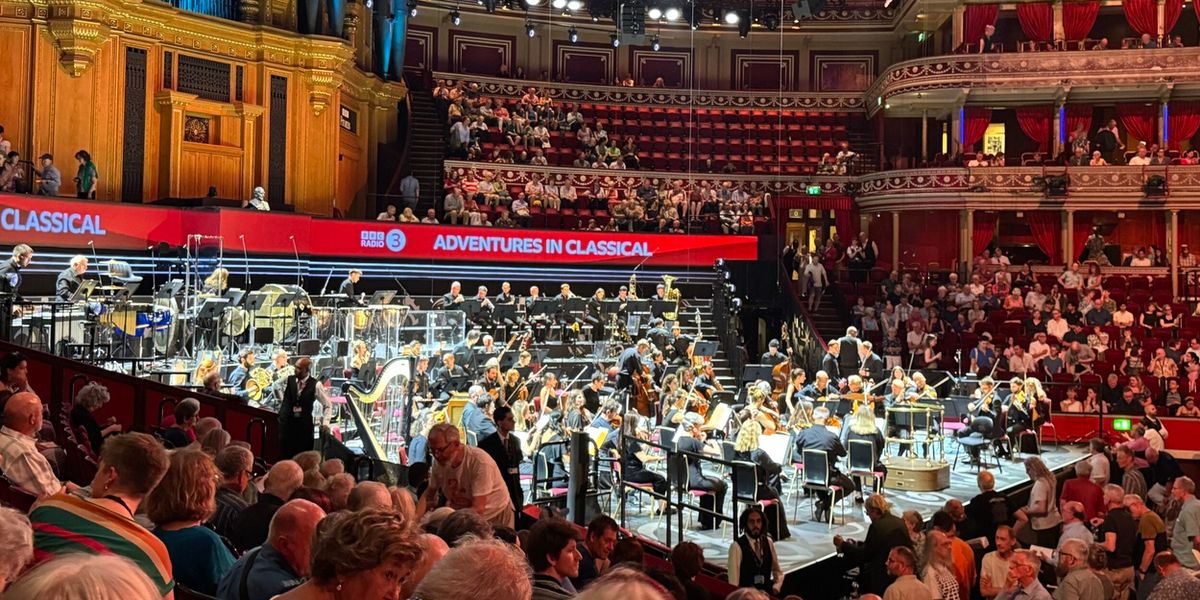

There was a distinctly cinematic feel to last night's Prom, Korngold's Violin Concerto, which also featured Prokofiev’s "Symphony No. 5" and Dobrinka Tabakova’s "Orpheus’ Comet". Delyana Lazarova conducted the BBC Scottish Symphony Orchestra through an animated and beautifully realised evening of music.
Beginning the evening was Tabakova’s exhilarating "Orpheus’ Comet", a five minute toccata based on the opening fanfare of Monteverdi's 1607 opera "Orfeo". It is an imaginative concept, with the Monteverdi references only appearing towards the end. Horns create a buzzing sound which invigorates the whole orchestra. Interestingly, research suggests that the Orpheus legend came in Book IV of Virgil's Georgics, which began with a study of the life of bees. This busy-ness continues throughout the piece, culminating in a triumphant finale. Tabakova herself was in the audience, accepting the enthusiastic applause with good humour.
Follwing this was Korngold's "Violin Concerto". This unapologetically romantic creation is a sweeping realisation of Korngold's melding of classical with this cinematic influences he gained from his extensive work in Hollywood. Korngold famouly refused to compose classical work while Hitler was in power (having been exiled to America and his own music banned during the war). This work was his first after the fall of Hitler and is a triumph of hope, love and beauty. If you listen to the score for the 1937 Warner Brothers’ classic, Another Dawn, composed by Korngold, you cannot help but wonder what came first.
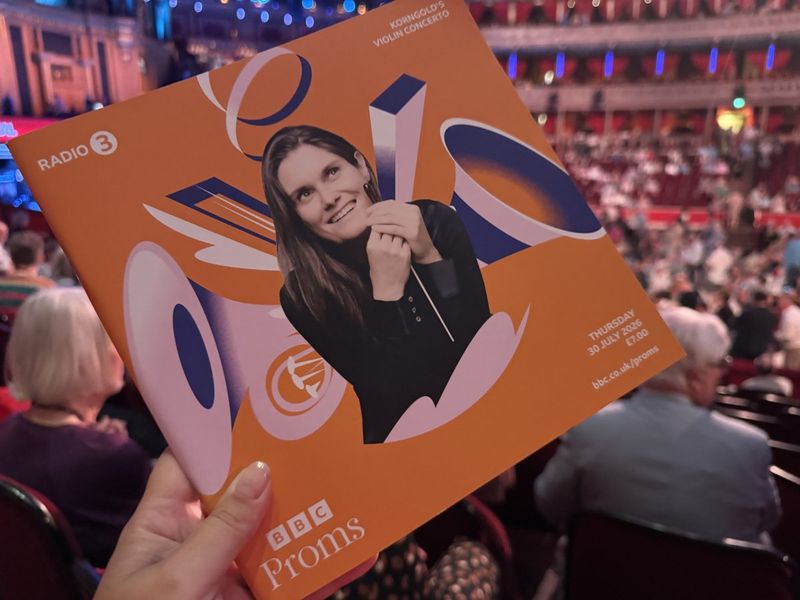
This piece is a challenge for the most accomplished violin soloist, but Alena Baeva rose to the challenge magnificently. Baeva herself calls some of the work "on the edge of playability", but showed huge technical capability, as well as deep knowledge of the piece, making nimble work of the virtuoso showpiece. Her playing is intuitive, but also profound, with an inherent musicality that is captivating to watch and hear.
The string section made the most of the lush score and cinematic expansiveness. The whole orchestra leant into the more lyrical elements of the second movement and then the rollicking, rousing quality that propels the final movement forward so briskly.
Prokofiev’s lyrical "Symphony No. 5" was written at the height of World War II, Prokofiev famously described it as “a hymn to free and happy Man, to his mighty powers, his pure and noble spirit”. The four movements all show a sweeping lyric quality that is not seen in his other, more mechanical Soviet work. There is a sense of gravitas to the first movement, beautifully realised by the whole orchestra. This contrasts hugely with the frantic, manic energy of the second movement, moving to the soaring heartbreak of the third. The fourth begins with a lightness of touch, moving to the the electrifying anf triumphant conclusion. The piece must also be a dream to perform for the percussion section, who relished the crashing cymbals and rolling drums in the piece
Conductor Delyana Lazarova and the BBC Scottish Symphony Orchestra showed vitality and huge energy, balanced with nuance and delicate phrasing throughout the evening. Lazarova conducted with fluidity and huge expression. And how lovely it is to see a conductor clearly enjoying every single minute of a performance.
The BBC Proms continues at the Royal Albert Hall until 12 September
Photo Credits: Aliya Al-Hassan
Sign up for all the news on the Summer season, discounts & more...






Reader Reviews
To post a comment, you must register and login.