


Review: AMERICAN SYMPHONY ORCHESTRA PRESENTS 'DER FREISCHÜTZ' at Carnegie Hall
One Night Only concert performance of a rarely performed work.
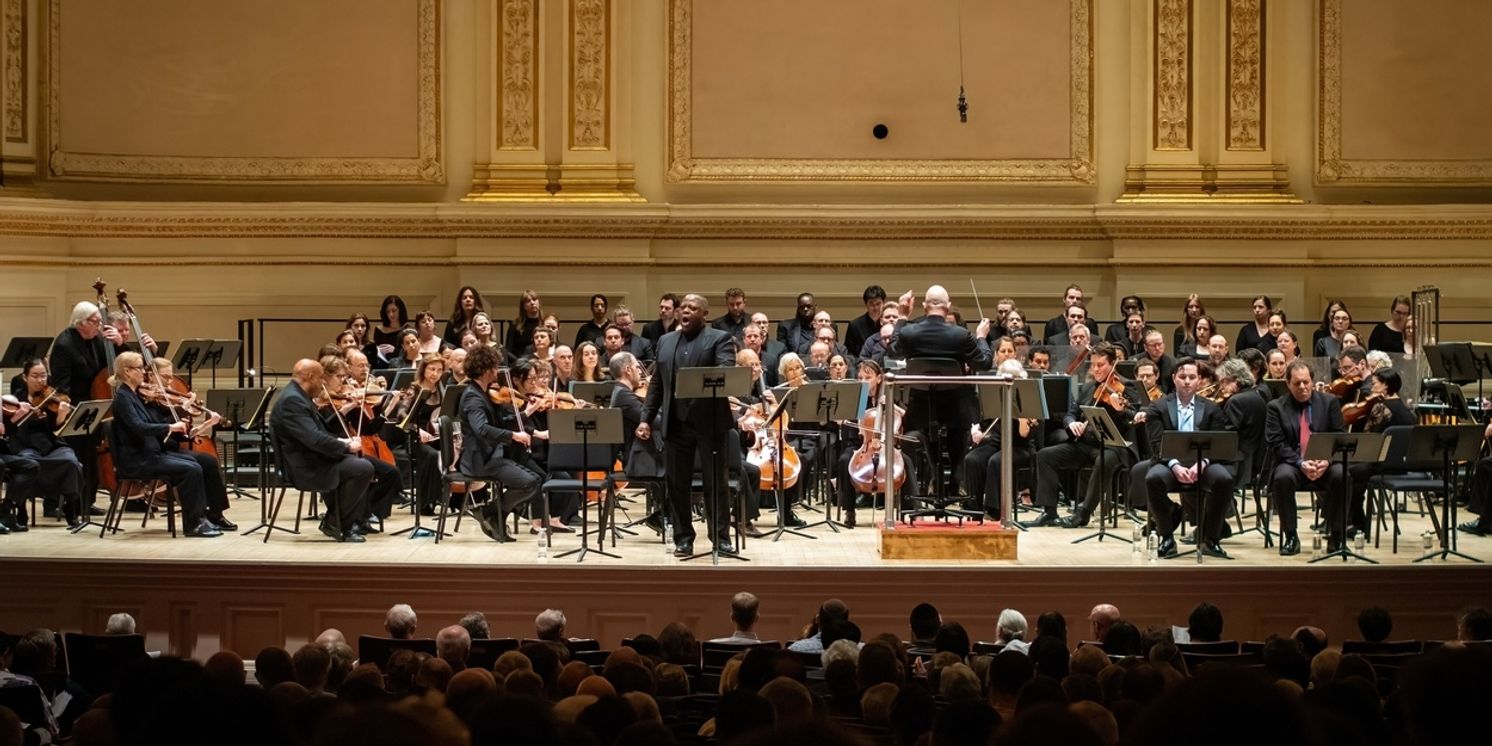
Leon Botstein has a special aptitude for finding under-appreciated and rarely (if ever) performed works for orchestra. While it must be understood that not everything committed to paper by any composer is a jewel of perfection, many have been perhaps unjustifiably neglected. It takes intensive, dedicated research to find them and air them out to the public so we may judge for ourselves. Dr. Botstein is expert at doing this.
Dr. Botstein has done this time and again, with composers such as Richard Strauss, William Grant Still, Arnold Schoenberg, and Bohuslav Martinu among many others. Recently, his American Symphony Orchestra performed a concert version of the opera “Der Freischütz” at Carnegie Hall along with the Bard Festival Chorale. The 1821 work by Carl Maria von Weber (with assistance from Hector Berlioz) is a lengthy piece, clocking in at almost three hours. The time flew by as Weber took an inherently unlikable and convoluted story and set it to some beautiful music. In fact, in his pre-concert talk Botstein told the audience that “there isn’t an attractive person on stage” but there is completely wonderful music to tell the story. Botstein has a droll yet erudite way of addressing an audience that was the highlight of the evening. If he gives the pre-concert lecture, an attendee would be wise to attend!
The opera is really a Singspiel with much spoken dialog, but Berlioz’ contribution was to turn a great deal of it into recitative to give the piece a more operatic style.
The Overture is frequently played as a stand-alone piece and the capable American Symphony Orchestra performed it with the intensity it demands. Although the orchestra sometimes momentarily overwhelmed the Bard Festival Chorale, on the whole it was well-balanced with the singers. Among the elegant and thoughtfully chosen soloists, As "Max", Freddie Ballentine’s tenor rang out with authority and humanity. None of the soloists French diction was as precise as it could have been but was still understandable. The other soloists were Nicole Chevalier (Agathe),Alfred Walker (Gaspard), Cadie Bryan (Annette), Joo Won Kang (Prince Ottokar)Philip Cokorinos(Kuono), Adam Partridge (Killian) Jason Zacher (The Hermit), and Jonathan Guss (The Huntsman).
According to nineteenth century opera protocols, there had to be a ballet somewhere in the piece. Berlioz interpolated one of Weber’s most famous piano compositions into Act Two. In order to fulfill the requirement to its obligatory length, “L’invitation à la Valse” plus tunes from Weber’s Oberon and Preciosa also ensured that most of the music in the opera was indeed by Weber. Berlioz was most adamant about this fact.
This problematic piece has not been given much exposure in the recent past, quite likely because of its myriad difficulties. Leon Botstein, his American Symphony Orchestra and Bard Festival Chorale, along with his excellent soloists, made a fair case for enjoyable listening to its eclectic and interesting score.
Reader Reviews
Videos