


Photos: PROOF Welcomes Project Healthy Minds for Discussion on Mental Health in the Arts
Ayo Edebiri, Don Cheadle, Adrienne Warren, Jin Ha and Project Healthy Minds CEO Phillip Schermer discussed grief, mental health, representation, and vulnerability.


|
|
On Tuesday, July 7, Project Healthy Minds, the official Hero Impact Partner of the Pulitzer Prize- and Tony Award-winning Broadway revival of Proof, hosted a special post-show conversation at Booth Theatre featuring Emmy winner Ayo Edebiri, Golden Globe winner Don Cheadle, Tony Award winner Adrienne Warren, Grammy Award nominee Jin Ha, and Project Healthy Minds CEO and founder Phillip Schermer. Check out photos of the discussion below.
Moderated by Chris Murphy of Vanity Fair, the discussion explored the production's themes of grief, inheritance, genius, and mental illness, while highlighting the importance of accessible mental health care and authentic conversations around emotional well-being.
Reflecting on the emotional demands of performing Proof eight times a week, Cheadle spoke about the importance of self-care for actors.
"The safety of the text, your scene partners, the director and the playwright give you the freedom to really go there," Cheadle said. "But your body doesn't know you're just acting... your endocrine system, your muscles, your physicality are all responding as though it's real. That's why finding a process to decompress and take care of yourself is so important."
Edebiri echoed those sentiments, describing stage acting as "an athleticism" shaped by the unique energy every audience brings.
"Every audience brings something different into the room, and we're in this physical feedback loop together," she said. "I had to learn to give myself time after each performance to sit with everything my body had taken in."
The panel also explored the role empathy plays both within Proof and beyond it. Cheadle noted that one of the play's enduring strengths is its refusal to offer easy answers.
"Everyone, from their perspective, is right," he said. "The play challenges us to question how we see one another, how we underestimate people or misunderstand them, and whether we can give others the same grace we hope to receive ourselves."
Edebiri reflected on the importance of simply listening rather than trying to solve every problem.
"One of my biggest takeaways has been the power of simply being present with people and listening," she said. "We don't always have to fix everything or decide who's right and who's wrong... Sometimes there's just listening, being together, and giving ourselves space to think."
The conversation also focused on removing barriers to mental health care. Schermer shared that approximately 65 million Americans are living with mental health conditions, while roughly 60 percent receive no care.
"The two biggest barriers are stigma and simply not knowing where to find care," Schermer said. "Every time we partner with artists and role models... we see the same thing: when people they admire talk openly about mental health, it inspires others to seek help."
Cheadle added that Proof ultimately offers hope despite its painful subject matter.
"People miss each other constantly, but it ultimately lands on a grace note where you feel maybe something can come out of all the trauma," he said. "Having tools and knowing where to turn for help makes all the difference."
Schermer also reflected on Cheadle's earlier work in 1-800-273-8255, the hit song by Logic whose music video starred Cheadle and coincided with one of the largest spikes in calls to the National Suicide Prevention
Photo Credit: Dominique Oliveto on behalf of Project Healthy Minds
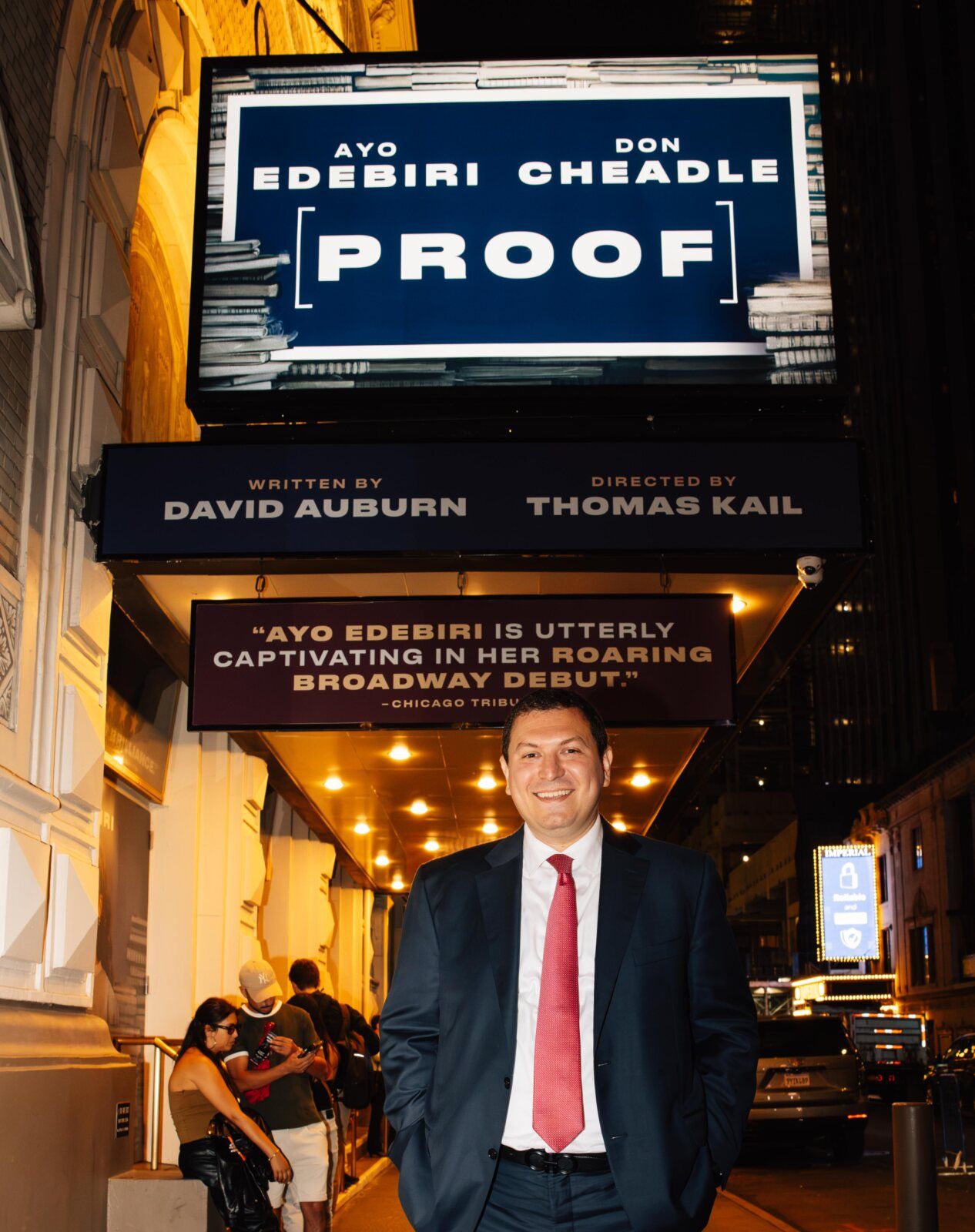
Project Healthy Minds at Proof on Broadway

Project Healthy Minds at Proof on Broadway

Project Healthy Minds at Proof on Broadway

Project Healthy Minds at Proof on Broadway

Project Healthy Minds at Proof on Broadway

Sign up for all the news on the Fall season, discounts & more...


.png?format=auto&width=365)




