Interview: Robert Petkoff of MOULIN ROUGE! at Salle Wilfred Pelletier, Place Des Arts
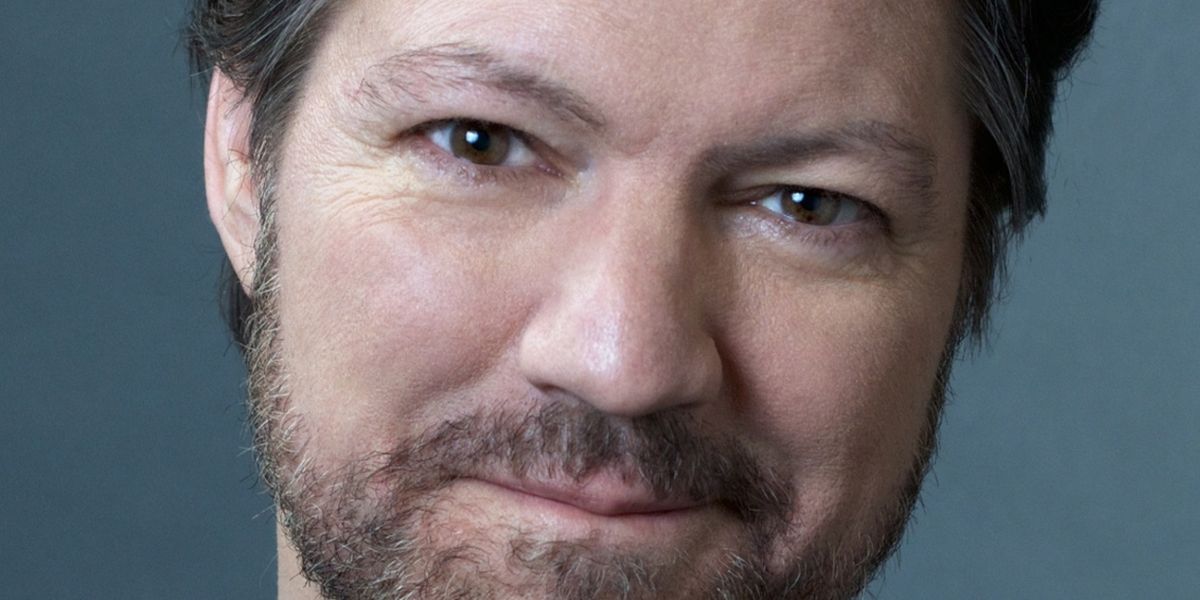
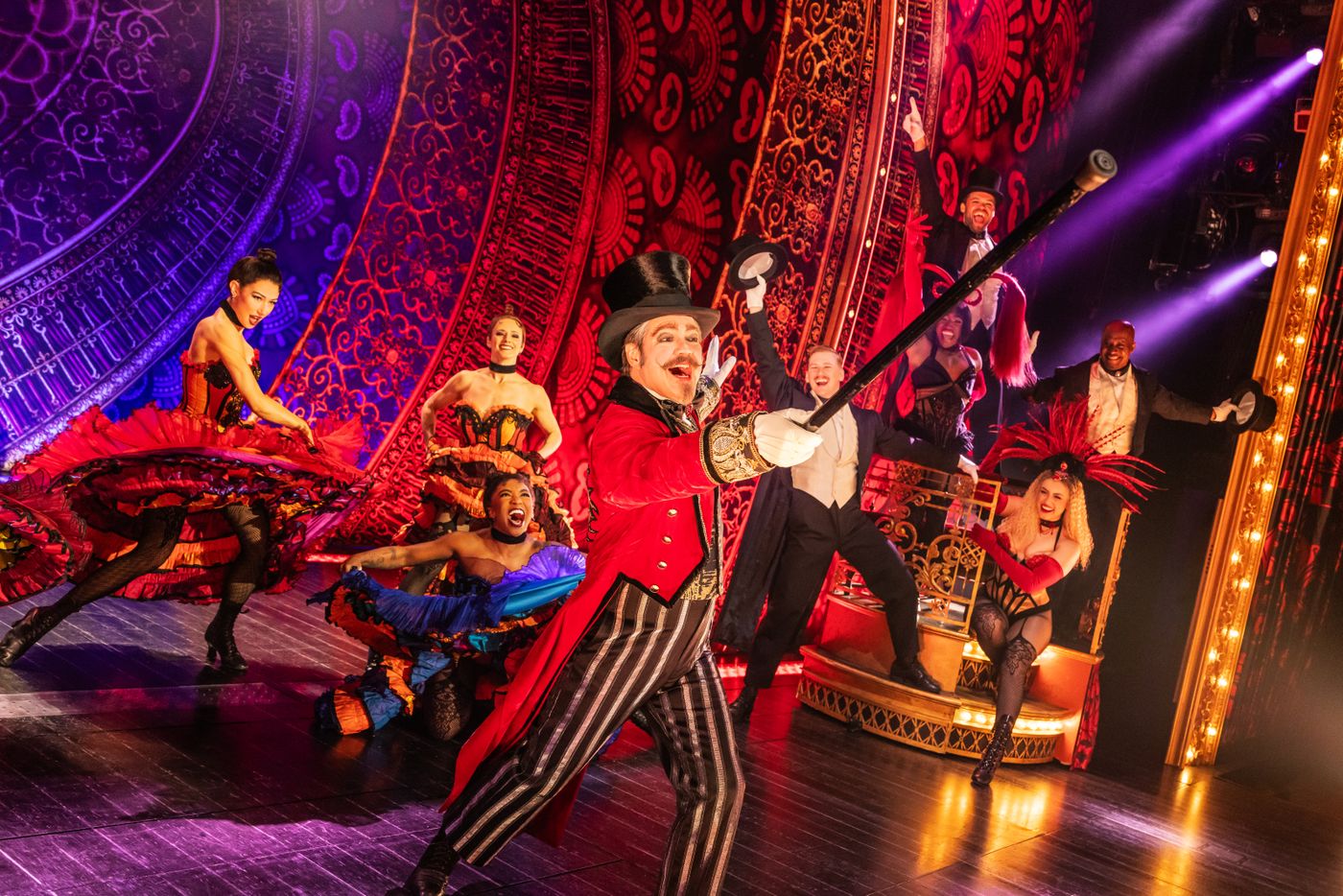
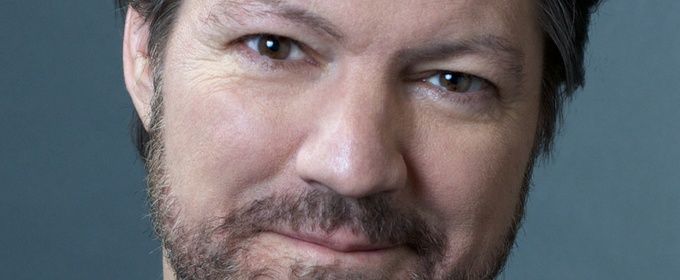
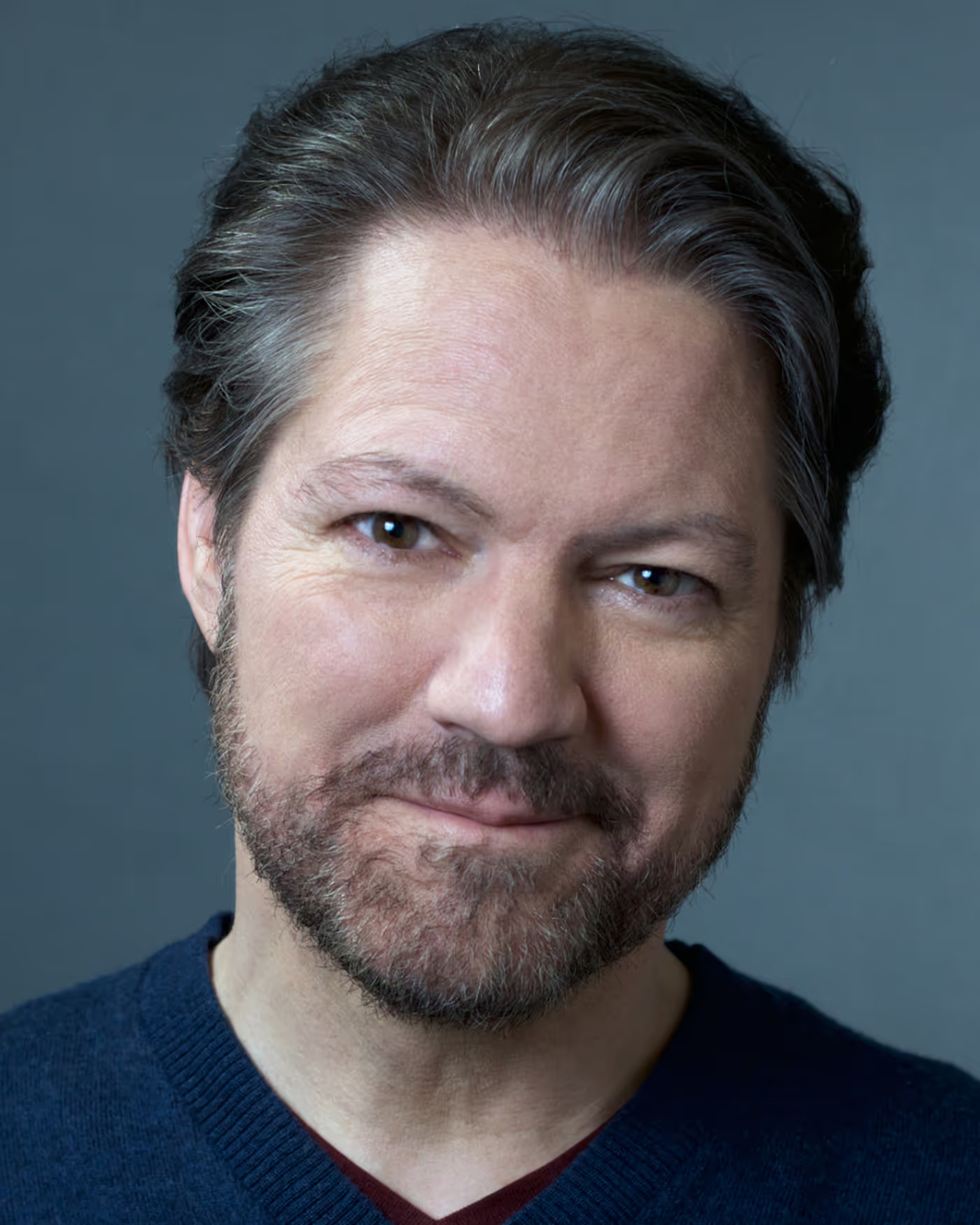 Robert Petkoff has had tremendous success on Broadway, the West End and regionally along with film and television. He is also an award winning audio book narrator! I had the chance to chat with Petkoff just prior to MOULIN ROUGE! landing in Montreal, where it will run at Salle Wilfred-Pelletier, Places des Arts, 175 Rue Sainte-Catherine O, Montréal, QC H2X 1Y9 from June 9-14, 2026.
Tell me a little bit about your journey into the arts.
I was in high school and I was doing some plays, just for fun. I wasn't taking it very seriously. But I had a teacher, Dan Martinkus, who saw something in me. He really pointed me in the direction of perhaps doing this as a career. When I graduated from Illinois State University I stayed in Chicago working with the Illinois Shakespeare Festival and Chicago Shakespeare Theatre. I got a TV pilot and then went to LA. I was there for about five years. I met the woman that I married out there. She lived in New York, so I moved to New York and it was the greatest thing that I ever did, because my whole career changed. I never looked back. I’ve been now in New York about 34 years.
Your pivot from Shakespeare to musical theatre is so interesting. Can you share a little bit about that shift?
It’s so strange. Something I never expected. I had done musicals in high school and I did a couple musicals in college, then I got out and just never did musicals. I didn't train my voice, I didn't do anything like that and Shakespeare is my first love. I love using language as an actor. I think there's something really wonderful about it. I will say it is one of the things that really helps support the character of Harold Zidler because he's got a lot of language. The way he uses language is Shakespearean at times.
Someone who had worked with me in college contacted me 15 years later and said, “I'm directing Sunday in the Park with George and I'm wondering if you think you could sing that. I'm coming to New York and I would love to see you.” I thought, “oh God, I sing in the shower, but I don’t…I haven't trained at all.
But we met, I sang, and he said, “yeah, yeah, I want you for that role.” It was ironically at the Chicago Shakespeare Theatre. I loved it, I loved singing on stage, There are very few things like it in any of the arts. I played Hamlet, and I can do “to be or not to be,” and the audience sits there and listens. They may respond, they may be feeling something, but the immediate reaction to singing on stage, the sounds people make, not just the applause, but the sound, the expression of their joy or their grief or whatever is so visceral and immediate that I thought, “oh, I really like this.”
I went back to New York and I said to my agent, I'd like to audition for musicals now. I think the third audition I had was for the revival of FIDDLER ON THE ROOF on Broadway and I got that job. It just sort of went from there. I balanced it, you know, I'll do straight plays and Shakespeare, with musicals. 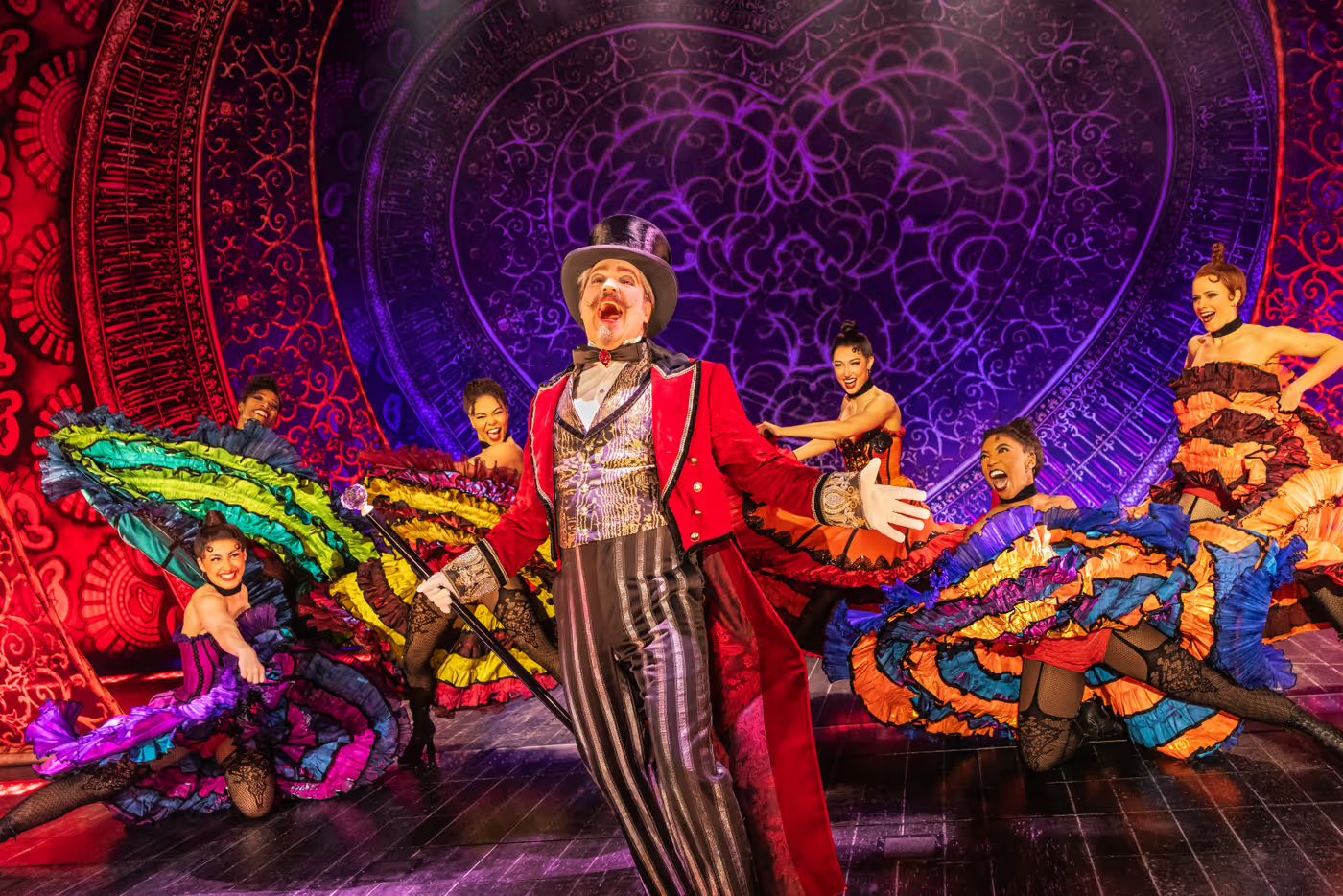
I left that show, FIDDLER ON THE ROOF, after a year and like three months to go back to Chicago Shakespeare Theatre, because I got an offer to play the role of Mercutio, [In ROMEO AND JULIET] which was a dream role for me, with the same director that 10 years before had directed me as Romeo at the Hartford stage, Mark Lamos. I had seen that he was directing that production at Chicago Shakespeare and I sent him an email, giving him a hard time saying, “how could you even think of directing the show again, after we defined it for an age? He laughed and said,” you want to come play Mercutio?” And I said, “oh my god, yes.”
Shakespeare has been a foundational experience for me for my entire career and also because I narrate audiobooks now. It's a huge thing that I do and that is directly informed from Shakespeare. The phrasing, the use of language, being able to parse a difficult sentence and make it clear to the ear. It's one thing to read it on a page and maybe go back over a sentence a couple of times if you didn't quite get it, but with an audiobook, you have to get it the first time you hear it. So as a narrator, I have to be able to express it. I have done a lot of books where thought, “my God, if I had never done Shakespeare, I can't imagine how I would make this clear to a listener right now.” David Foster Wallace jumps to mind. A very, very wonderful writer and obtuse and obscure at times in his reference. The phrasing he uses is nearly impossible to express vocally unless you have some sort of ability, which language that Shakespeare gave me.
What are some of the differences between doing live theatre and reading audiobooks characters?
 So many people listen to audiobooks now while driving or while doing housework or just while relaxing. I've heard people say “listening to a book is not reading” and it's not the same as reading, but you're still getting a story told to you, rather than consuming a story on your own. There are people who for whom reading is difficult. For them, an audio book allows them to enjoy a story or nonfiction in a way that they might not ever have done on their own. They might have started a book once or twice and said, “I just can't get through this thing.” But you put it on with a good narrator, and suddenly you're just in the room with somebody who's telling you the story. And that's my approach, especially with nonfiction. I always ask myself, “who am I saying this to?” Whenever you're playing a character, you are playing an objective, you're playing an intention, and you're saying, “I am talking to this person on stage because I want to get this from them.” With an audiobook, to me, I think of it in the same terms.
“Why am I trying to tell you this story? What do I want you to get from this?” You want it to be personal. I think what it's done in that way, of course, it's so much more engaging. Narrating has been wonderful because there are tons of books that I would never have chosen for myself that are chosen for me. I get hired to do it. And over and over, I'm like, “wow, I never would have picked up that book.” But I am so glad that I got to narrate that book because it's fascinating to me.
I know you've worked on the West End you've worked on Broadway. A question that I hear asked all the time is what would you say is the biggest difference between working on the West End and working on Broadway?
You know, I think the work ethic is the same. I think actors approach a musical or a play in pretty much the same way. I think universally, right? You have a basic idea. Whether your technique is based out of method or any number of techniques, the objective is always the same. “I want to lie. really well in front of a group of people, so that they believe I'm telling the truth.” We just have to be really good liars and add of course the complexity that we have to communicate with the people on stage in a way that's authentic. Obviously, financially, there's a big difference in that the West End doesn't pay on the same rate as Broadway does. .jpg?format=auto&width=1400123)
I would say what I'm envious about for the actors on the West End is that London is the center of film, television, and theatre in one place. There's a great respect that film and television gives to theatre there. You see actors seamlessly moving between film and the stage. There's more accommodation made for people who are maybe doing a TV show, but they could go do the play at night, For years here the standard was always film and television in Los Angeles, theatre’s in New York, and you have to really make a conscious choice of where you want to live to pursue the kind of career you wanted. It’s bled a lot now with self-taping. I can be in New York and I can audition for something anywhere.
There's a weird sense from casting and from others that British actors are better trained. They're more serious about their craft. I think there are university programs all over the United States that prove that wrong. There are people that are going to these universities that are taking acting very seriously. There are programs that are putting out phenomenal musical theatre performers as well as straight-up actors. So, I hate that there's this belief that the British actor is superior to an American actor.
I do think that perhaps it is easier for British actor to do an American accent or an Australian actor to do an American accent than it is for us to do an Australian or a British accent convincingly. I believe it's because of television and media. British and Australian actors often watched American programs over and over as kids. They’re able to pick up how to pronounce certain things, how to do the rhythms of an accent. Whereas we didn't watch a lot of British television as kids. Now, of course, if you're watching Game of Thrones, there’s more of that bleeding over now. I think that younger people are going to be better at doing a convincing English accent. Of course, an English accent changes by whatever block you live on. So it's funny when an actor goes, “oh, I do an English accent.” Which one? And it's the same as an English actor saying, “I do an American accent” You're like, “which one? Are you talking about North Carolina? Are you talking about Chicago? Are you talking about California?”
I have to touch on TANTALUS. [The 10 hour, epic world premiere production, directed by Sir Peter Hall] There is a documentary out there for people to check out. But if you could give me three words about your experience what would they be?
Amazing, excruciating, life-changing. It was a thing I participated in that made me finally understand Dickens “t was the best of times, it was the worst of times,” you know? We rehearsed for six months which is a long time to spend with people. It’s a long time to spend having artistic disagreements about things, but it was an extraordinary experience. So it was the best of times. I've never done anything like it. Life changing in that it led to other things. It led to me acting on the West End, which was a dream of mine.
To work with Sir Peter Hall and of course because of my Shakespeare experience, John Barton. I had watched John Barton's series PLAYING SHAKESPEARE on PBS and was enthralled as a young actor. There was a day in rehearsal where they said, “Robert, today you and John are just going go into this small rehearsal room and you're going to work on verse.” And I thought, “oh my God, this is a dream come true.” I mean, as I watched PLAYING SHAKESPEARE, I thought, “oh, I want to be in that room. I want to do that.” And here I was doing that. Then someone produced another, more modern version of the PLAYING SHAKESPEARE series and John asked me to participate in it. They shot some things in Denver, where we were rehearsing. Then they went to New York and shot some things there. I got to participate in that. There were so many things about that experience that were dreams come true.
And then like I said, the excruciating part was just having strong artistic disagreements about certain things and realizing that there are times in life, when as an artist, you're going to have to compromise. You know, we always think of the artist saying, “no, no, I paint what I paint and the world be damned.” And that's fine if you're a painter. But when you're in theatre, you're a collaborative artist. It is one of the most primary differences in theatre and film and performing arts. Unless you're doing a one person show. And even then you've got a director, usually. But you're always collaborating. So there were disagreements with artistic choices, but I had to eventually say, “how do you make this work?” Even though you don't like it at all and you don't want to do it, how do you make it work for you in a way that you can do it, performance after performance? And so it required me to grow up a little bit as an actor and face that reality that you're not compromising your artistic vision. You're sharing the artistic vision with someone else's vision. And the two of you have to come to an agreement. And the ultimate arbiter in theatre is the theatre director. So you can advocate for what you want. You can argue and explain why you want to do things the way you do. But at the end, the director is going to say, “this is how we need to tell the story in a unified way.” That's the most important thing, I think. We all have to agree on the story we're telling. Otherwise, an audience is going to be confused. I've seen productions where I can tell you didn't all agree. Some of you are playing with a very broad style. Some of you are playing very realistically. And it is not cohesive. And now I'm confused as to what the world is that I'm supposed to be buying into.
I'm looking at your resumé. I'm looking at RAGTIME and I'm looking at FUN HOME and I'm looking at MOULIN ROUGE! and what an eclectic trio of characters you played and are currently playing. What would be your top three dream roles that you have yet to play?
That's hard. I think about this sometimes. But I always think I've been so lucky because I've played so many of my dream roles. You know, I got to play Sweeney Todd, I got to play George, Hamlet, Romeo, Mercutio. When I think the first thing that comes to mind is I never got to play Macbeth. That’s a role
that I think would be great to play. I'm coming up on an age where I would love to play King Lear. That's a big one. It's funny because what doesn't jump to mind is musicals.When I was a younger actor, I wanted to play Don Quixote in MAN OF LA MANCHA. But the world has moved to the point where we all agree, I think we all agree, that a white actor shouldn't be playing this Hispanic character. Even though he's Spanish, so it's a bit of a different argument. I think we all say, “hey, let's accept that that's not something that you're necessarily gonna do.” It's funny to me that I immediately jumped to Shakespeare. I think Macbeth and King Lear. I still would love maybe a shot at maybe Brutus and Julius Caesar. Roles that are very challenging and very rewarding. I think that would be exciting. The career I've had so far has allowed me so many milestones. It's allowed me so many of the things that I dreamed of. I've been a very fortunate actor and I know luck is a huge part of this career. I know so many talented actors who haven't had the same luck that I've had. People who I thought could easily play this role or that role, but they weren't in the room. They weren’t on the list of people to be seen for that role. I’ve been fortunate to have Experiences like working in TANTALUS that led to Peter Hall saying, ‘come over and do this play with Judy Dench and Emily Blunt on the West End.”
There's a great phrase that an older actor said to me that I took to heart. It was “stop auditioning to be an actor. You are an actor. When you walk in that room, you're auditioning for that role and that role only. You're not trying to prove whether you should be an actor or not. You already are. You have to accept that. And it will give you a confidence as you walk in.” Bryan Cranston famously talked about how it all went differently for him when he started to realize that his job was just to, in an audition, go in and come up with the best idea he could find for the character that he was auditioning for. I walk in the room, I say, “here's what I'm gonna do with this part” and then the rest is out of my hands. It’s not my job anymore. I can walk away and say, “okay, well, hey, I did my best and you just chose a different flavor.” That is not saying you're not a good actor. It's just saying this is not your job. Maybe they wanted someone taller or wanted someone with deeper voice. Whatever random thing it is. Those things helped me when those big disappointments came. Even at this age, when something you really want doesn't go your way. You're like, “ah, man, that hurts. It stinks.” But it doesn’t end my day. It doesn't ruin my life. It just makes you go, “I'm sad right now. I’m gonna be sad today.” And I get to be and that's the great thing. I don't get to mope about it for a week, that's dumb. There's a lot of gratitude that I practice when I have those rejections, I'm able to go,”hey, look at these things you got. Yeah, you didn't get this thing, but look at all the things you did get.” That's really helpful.
MOULIN ROUGE!
When: June 9 - June 14, 2026
Where: Salle Wilfred-Pelletier, Places des Arts, 175 Rue Sainte-Catherine O, Montréal
Tickets are on sale at the Place des Arts box office
By phone 1.866.842.2112
Get yours online: placedesarts.com evenko.ca
PERFORMANCE SCHEDULE
June 9 - 14 at 7:30 p.m.
June 13 - 14 at 1 p.m.
Enter a world of splendor and romance, of eye-popping excess, of glitz, grandeur, and glory! A world where Bohemians and aristocrats rub elbows and revel in electrifying enchantment.
Welcome to Moulin Rouge! The Musical!
Baz Luhrmann’s revolutionary film comes to life onstage, remixed in a new musical mash-up extravaganza. Directed by Tony Award winner Alex Timbers, Moulin Rouge! The Musical is a theatrical celebration of Truth, Beauty, Freedom, and — above all — Love. With a book by Tony Award winner John Logan; music supervision, orchestrations, and arrangements by Tony Award winner Justin Levine; and choreography by Tony Award winner Sonya Tayeh, Moulin Rouge! is more than a musical — it is a state of mind.
A Letter From Baz Luhrmann
Moulin Rouge! the movie was an attempt to reinvent the movie-musical. It’s not a stretch that my desire to do this germinated in the tiny country town where I grew up. There, we had a gas station, a farm, but we also had a local cinema and a small black-and-white television with only one channel, onto which they dumped old movies and musicals. I grew up on these films, and though many of them are now considered classics, at that time in the 1970s, they were sort of disregarded and disrespected. Later, as I grew up in the theater and in film, I studied realism, Brecht and Artaud; I was a great devotee of Coppola, Scorsese, Fellini, and Bergman; but still I never lost my love for the musical form. What I found so interesting was that each epoch or era had its own musical language.
Once I started to make movies, I became obsessed with finding a musical language that could work for now. As someone who had loved musicals from childhood, I wanted to see them live again. So in making Moulin Rouge!, I set out with my collaborators to reinvent an old form. What I found was fundamental to all these films is that they aren’t psychological dramas. They’re not trying to hide the plot; it’s obvious. The art form is how you reveal that plot, heightening emotion through visual language devices and, most of all, the music. Once I started to collaborate with Craig Pearce on the story, we took a primary myth, that of Orpheus, which the audience could instinctively recognize, and set this myth in the 1890s Belle Époque, in the Bohemian environment of Montmartre, a period that reflected our own, full of invention, massive change, and on the eve of a whole new epoch. Throughout the journey, there were moments when people in the industry who I genuinely respect truly believed that the musical could never be popular again. Now it’s uplifting that more than 15 years later, the movie-musical is an important part of the cinema-going experience again.
When it came to bringing Moulin Rouge! the movie to the stage, I knew I wasn’t the right person to reinterpret something I made years ago. Because, in fact, there’s now a whole generation of younger artists who have a purer relationship with the work than I do. I feared I might be inclined to protect every choice that was made in the original work as if it were somehow sacred, but that is the antithesis of art. Any good story needs to be interpreted in different places, in different ways, for different times. Recoded, if you like. So I made the conscious decision to hand the work over and, instead of being the birther, to become something of an uncle to the project.
I saw a show done by the very talented Alex Timbers, and in it, I saw a little bit of influence in the way I was telling stories on film, both ironic and heartfelt, challenging to the audience in its rhythms, outrageous, and yet at the same time, very respectful of we funny old humans. From the get-go, Alex — along with a team that included book writer John Logan, choreographer Sonya Tayeh, set designer Derek McLane, Costume Designer Catherine Zuber, and a musical crew headed by Justin Levine — wanted to go way, way out on a limb in terms of the interpretation and started to make choices that some people might guess that I, and some fans of the original, would find sacrilegious, adding new songs alongside many of the original hits from the movie, and rearranging plot. In its original, cinematic form, we had been careful to heighten Moulin Rouge! in its plotting and visual language, to give it a theatricality that could counteract the film medium’s inherent movement toward realism. Whereas in the theater, of course, it’s already theatrical! And so the choice that Alex, John, and the rest of the team made to ground the story more, to perhaps find more psychological depth, was really kind of daring. It made me think back to when I wanted to take a beloved work, something Shakespearean or a classic opera, and make strong choices with it, only to have people rail against what I was trying to do. So all I could do is have faith in these gifted creatives.
It was one of the more thrilling things in my recent experiences to discover that the preposterous conceit of Moulin Rouge! had not only survived, but flourished! Once more, a Bohemian poet made his way to the underworld, and when he opened his mouth to convey his genius through poetry, all manner of popular music poured forth in remixes and mash-ups of songs we all know. This new theatrical production absolutely honors the movie, but finds a new life that is exciting and vital for this audience in this time. What was so uplifting was that in the end, audiences connected with the show in such an electrifying way. I’d never had that experience before. Something that I’d been intimately involved in creating was now living new and fresh without me at the center of its process. I personally can’t wait for summer to come, so that I can enjoy the show purely as an audience member, and take all my friends and family along to the Moulin Rouge!
Production photos: ©Matthew Murphy and Evan Zimmerman for MurphyMade
|
Ménopause, la parodie musicale Cabaret du Casino de Montreal (10/31-10/31) |
|
Le Fantome Dans La Machine Théâtre Manuvie (3/04-3/04) |
|
Doja Cat Centre Bell (11/27-11/27) |

|
Lama: D''aventures en aventures Cabaret du Casino de Montreal (10/17-10/17) |
|
La Cage Aux Folles Cabaret du Casino de Montreal (9/25-9/26) |
|
Sweeney Todd: the Demon Barber of Fleet Street Centaur Theatre (8/22-8/29) |
|
Not Dead Yet! - John Cleese and the Holy Grail at 50 L'Olympia (10/08-10/08) |

|
Cathy Gauthier - Humaine L'Olympia (2/24-2/24) |
|
|
Boulevard Pérusse Théâtre Manuvie (12/08-12/08) |
|
Tout Sur Le Sexe Théâtre Manuvie (8/20-8/21) |