
Interview: Co-Writer/Director Rodrigo García of CARLOTA: ALHAJERO DE SECRETOS
Presented by Latino Theatre Company at The Los Angeles Theatre Center
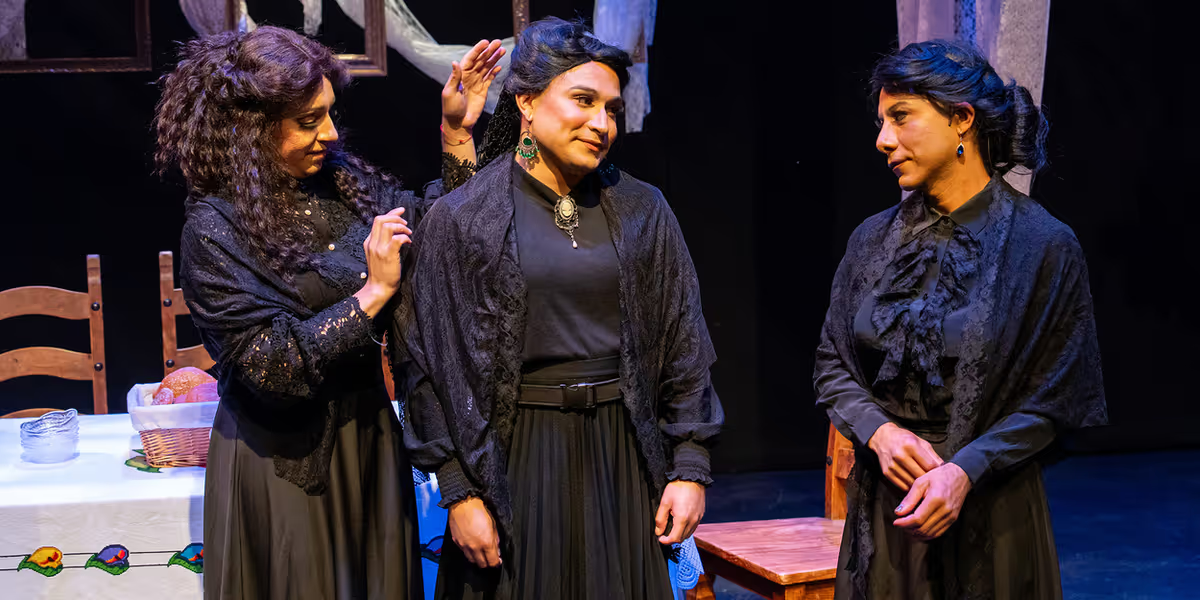
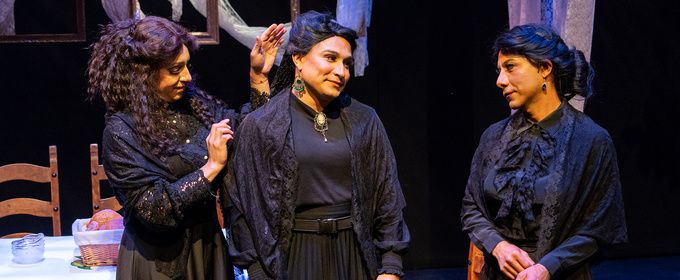
Latino Theater Company welcomes the return of San Jose-based LGBTQ+ ensemble Teatro Alebrijes with Carlota: Alhajero de Secretos (Carlota: Jewelry Box of Secrets), a bold reimagining of Federico García Lorca’s The House of Bernarda Alba that was one of the highlights of Latino Theater Company’s 2024 Encuentro Latinx theater festival. Co-written and co-directed by Rodrigo García and Ugho Badú, the production runs May 2 through May 24 at The Los Angeles Theatre Center. All performances are presented in Spanish with English supertitles.
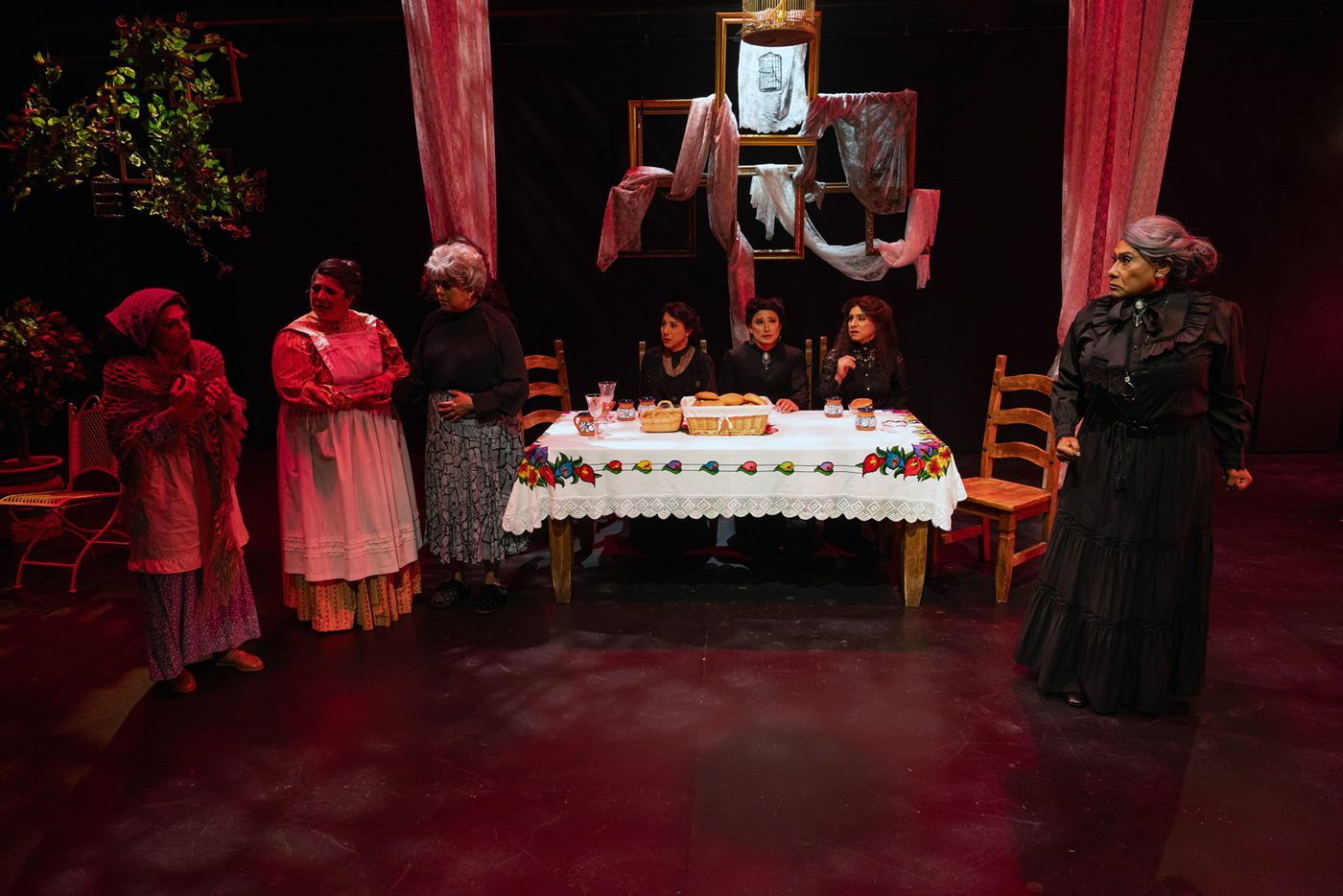
Part melodrama and part comedy, Carlota: Alhajero de Secretos is all corazón. The play takes place inside the home of Carlota and her three daughters where time seems to have stood still. But their cloistered world is suddenly shaken when the youngest daughter encounters a handsome stranger in town for his father’s funeral. What follows is a cascade of revelations as long-buried secrets emerge - like precious jewels hidden inside a jewelry box. Echoing the themes of Lorca’s play, in which he examines the abuse of power within a rigid, puritanical household, Carlota offers a sharp and often humorous critique of a moral code that suppresses desire in the name of respectability - a “righteousness” that often proves more hypocritical than virtuous.
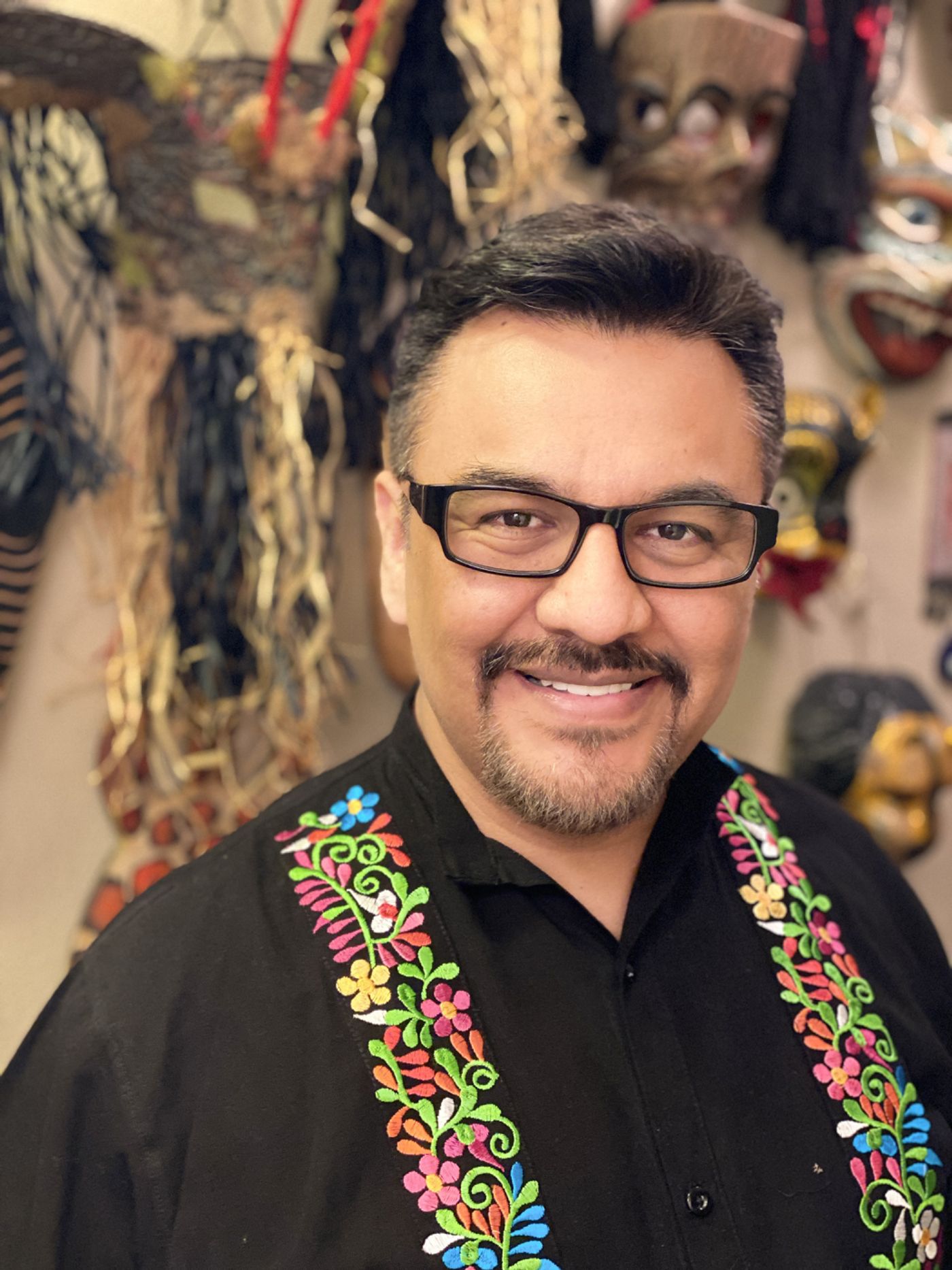
I spoke with Co-writer/Co-director Rodrigo García (pictured, courtesy of the artist) about the play and his vision for it.
Thanks for speaking with me, Rodrigo. What drew you to reimagine Federico García Lorca’s The House of Bernarda Alba for contemporary audiences through Carlota: Alhajero de Secretos?
It all started with a personal fascination with Lorca’s writing, that weaves passion and courage in threads of sublime poetry; and then a desire to perform his play “La Casa de Bernarda Alba” but not having all the actors to do it. So, I thought, why don’t I write our own version that fits the members of our ensemble, and make it our own. Reimagining the original classic allowed us to examine abuse of power within a rigid, puritanical society while injecting the narrative with the vibrancy of the queer Latinx experience.
.jpg?format=auto&width=1400)
“Carlota: Alhajero de Secretos” production photos courtesy of Teatro Alebrijes
The play blends melodrama and comedy. How did you find the balance between humor and the more serious themes of repression and control?
At Teatro Alebrijes we like to use humor to tell our stories; we believe that humor is a conduit to build bridges of communication and solidarity. When people smile together, an invisible bond is created, even if ephemeral, but a bond, nonetheless. So, when writing Carlota we couldn’t imagine it any other way. We had to have humor so the audience could get closer to the characters and empathize with their story. Humor is a staple in our plays. In Carlota, we use humor to critique rigid moral codes that historically suppressed desires in the name of “respectability.”
You have described the story as being “all corazón.” What does that idea mean to you in terms of both writing and directing the piece?
It means that we wanted to approach it with sincerity and compassion. We wanted to allow the characters to find their own liberation, whatever that might be. In terms of the directing, we wanted to portray characters and places that could be recognizable for people. So the audience could say “she's like my tia or my abuela” or “the house, it looks like the one at my grandma's house.”
.jpg?format=auto&width=1400)
The metaphor of a jewelry box filled with secrets is central to the play. How did that image shape the structure and unfolding of the story?
There's a line in the play where Soledad, Carlota's companion friend, tells Dolores, Carlota's older sister, “Carlota is a gem of everlasting shine” and Dolores responds, “yes, a gem hidden in her own jewelry box.” In the original, Bernarda imposes eight years of absolute mourning, sealing her house from the world. In Carlota, this “cloistered world” is reimagined as a “jewelry box” of secrets. Instead of the secrets leading only to tragedy, their revelation — as the opening of the box — is treated as a reclamation of identity and “corazón.”
.jpg?format=auto&width=1400)
This version critiques rigid moral codes and the suppression of desire. How do you see those themes resonating with audiences today?
We are currently living in a society where there's a group of people who have an alleged interest in rescuing so-called family values, and it feels like we are going backwards instead of moving forward. Our Carlota, like Lorca's Bernarda, represents that oppressive society that silences their children in favor of “what's right” to her. Carlota represents absolute power and social oppression within the domestic sphere, and we also see the double standard of that same oppressive system. All that seems current to me.
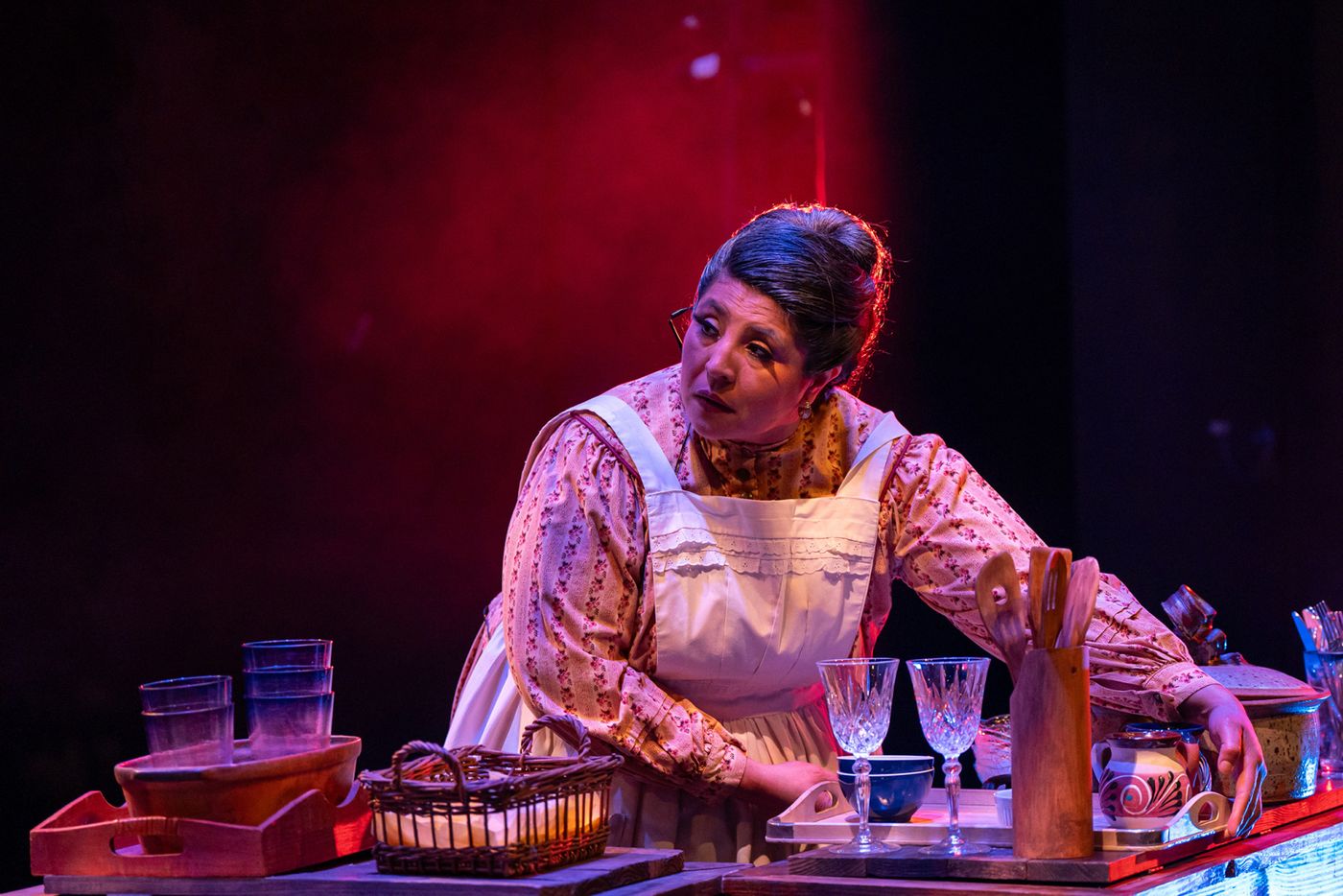
The casting includes men performing women’s roles in a non-drag context. How did you guide the actors to approach these characters with dignity and authenticity?
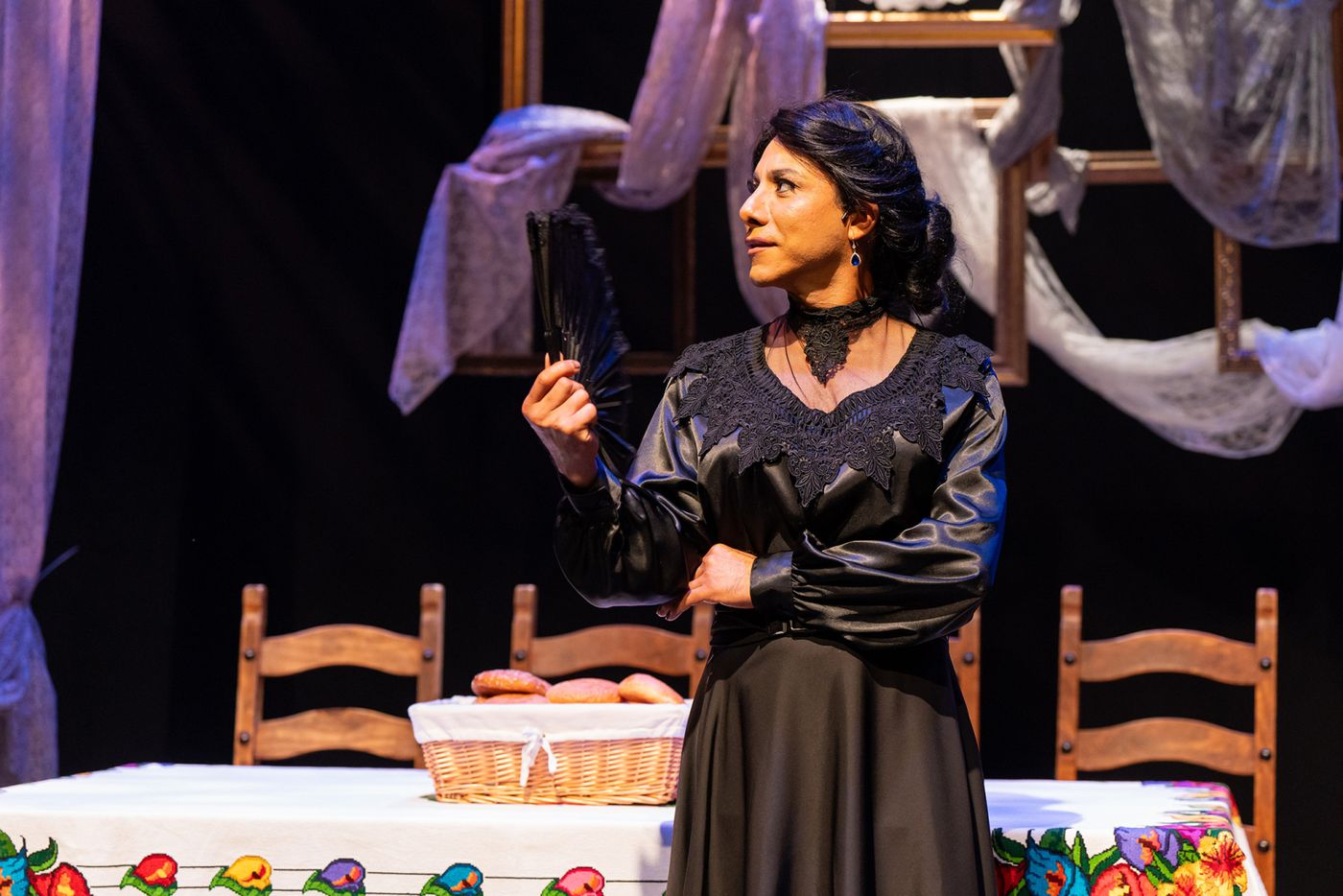
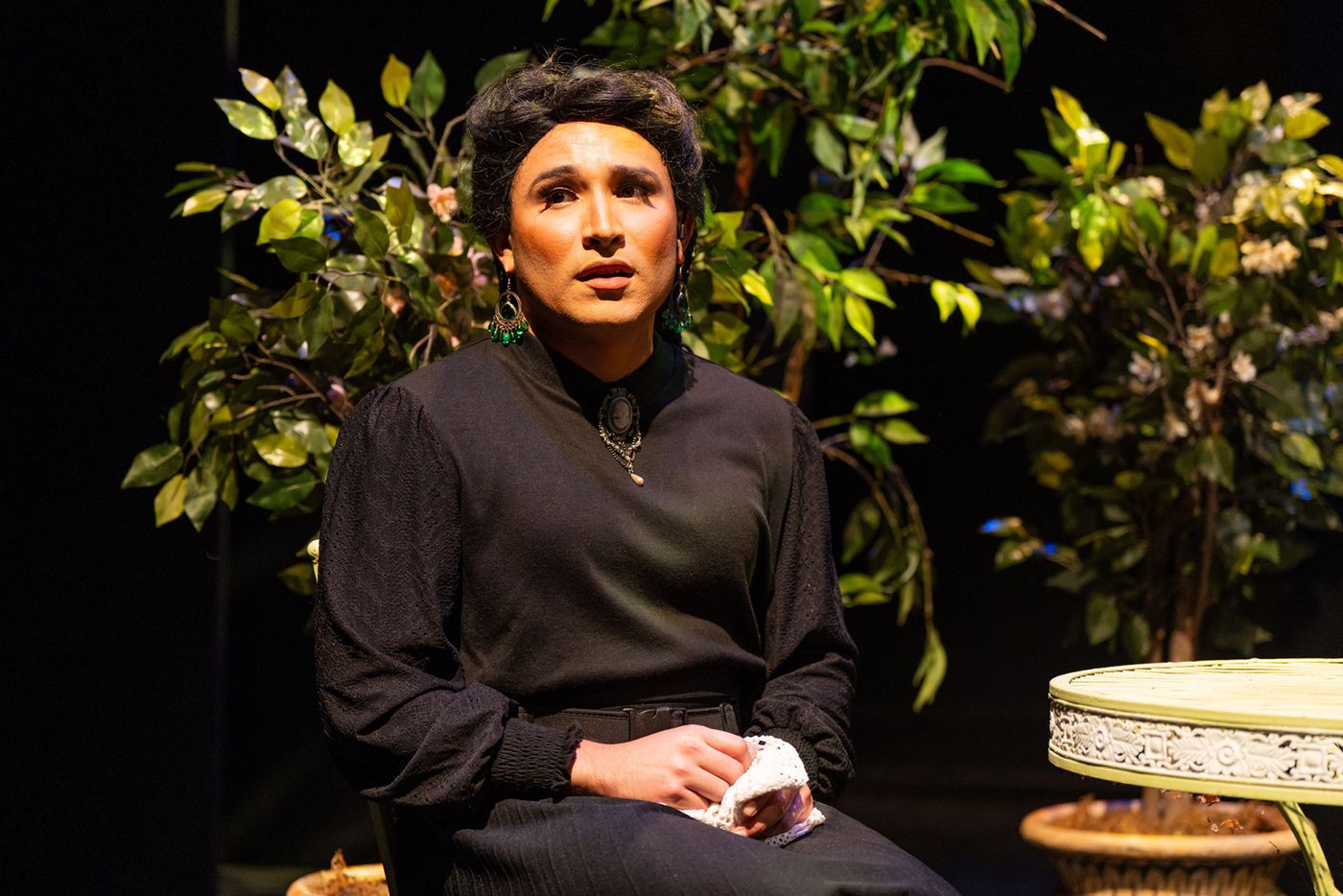
This part has been the most challenging and the most rewarding at the same time. We wanted to portray women with respect and in a dignified way, so we focused on the subtleties of femininity aiming for gender verisimilitude as opposed to using an exaggerated, campy style to critique or play with the concept of gender itself. The women in our lives and our female colleagues played an important role in helping us stay away from stereotypes so we could create characters that are hilarious and deeply human.
As both co-writer and co-director, how do you navigate the collaboration process, especially when shaping a reinterpretation of a well-known work?
With trust and care for each other's creativity. In the process there were some differences but that helped us to not rush any decisions but to take time to carefully examine our approach.
Teatro Alebrijes has a distinct voice as an LGBTQ+ ensemble. How did that identity influence your approach to this adaptation?
Our identity acts as the central lens of this adaptation. We prioritize cultural preservation, community dignity, and humorous subversion. We also departed from the original by introducing a character that suggests a queer partnership into the matriarchal structure, reframing the household not just as a place for female isolation, but as a site where queer relationships have long existed in the shadows.
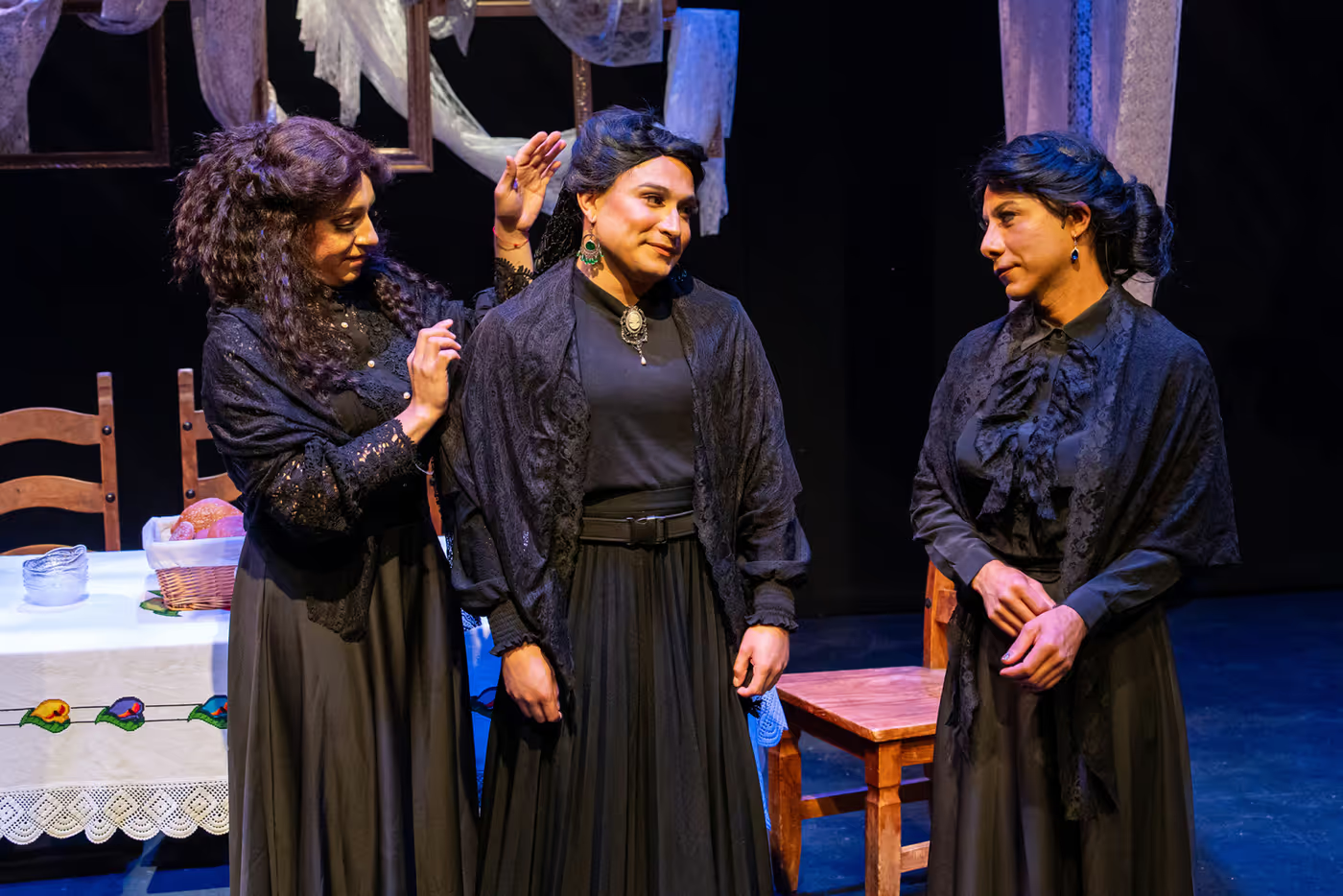
Featured in the cast are Ugho Badú, Janvier Berber-Acosta, Adrian Campos, Ricardo Cortés, Sergio Dávila, Jose Martinez, Carolina Perez and Yatzil Ruiz. Have you worked with any of them previously?
Yes, everyone except Yatzil Ruiz and Ricardo Cortes are veterans of Teatro Alebrijes and have been part of the ensemble for years — although we have worked with the new members in a few projects outside of Teatro Alebrijes already. Our previous experience working together has helped us develop trust and a strong bond as an ensemble.
The play is performed in Spanish with English supertitles. How do you think language and cultural specificity impact the audience’s experience of the story?
Performing in Spanish allows us to capture the rhythm, melodrama, and humor inherent in the Bolero—the musical and emotional heartbeat of the play. Some concepts, especially the specific “sass” and wordplay of queer Latinx culture, don’t translate perfectly into English. Keeping the Spanish dialogue ensures that the primary audience (the Latinx community who speaks Spanish) feels a sense of home and recognition, seeing their private domestic language dignified on stage. The use of Spanish with English supertitles ensures that the play's cultural soul remains intact while inviting a broader community into a specifically Latinx world.
After presenting the piece at the Encuentro Latinx theater festival, what changes or discoveries have shaped this current production?
A major discovery from the festival was the power of “dignified humor.” The current production has refined how it approaches the three daughters—Mari Fer, Mari Pepa, and Mari Tere—ensuring they are portrayed not as caricatures of their afflictions (like non-stop sweating, narcolepsy or kleptomania), but as deeply human figures whose physical reactions are visceral responses to their environment.
Is there anything else you would like to add about yourself or the play?
We are extremely grateful to Jose Luis Valenzuela and Evelina Fernandez for this opportunity to perform our play in the Latino Theater Company's home, where we have received an abundance of love from all the staff, technicians, and the audience. We look forward to sharing this production with everyone in Los Angeles and beyond.
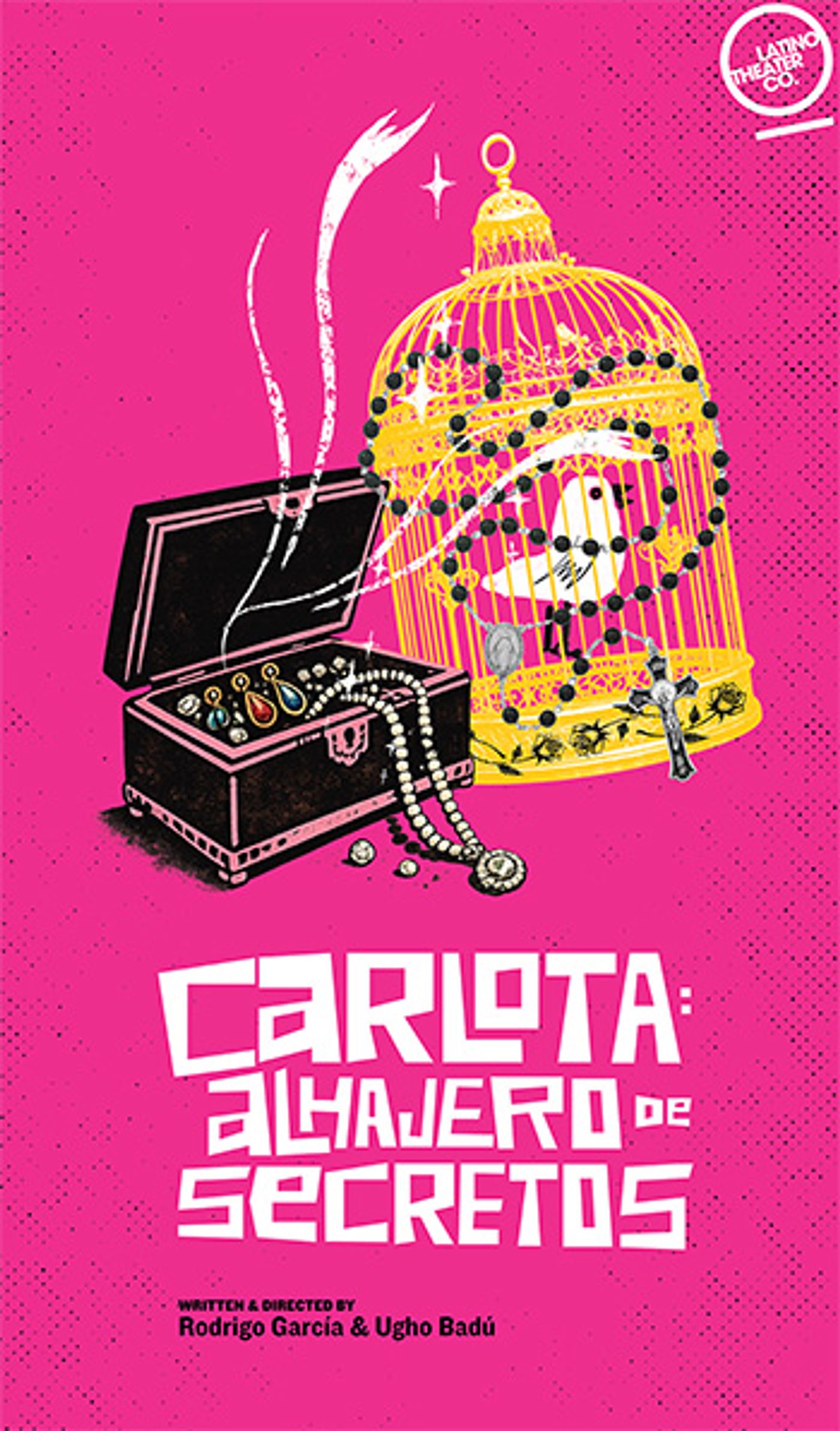
Carlota: Alhajero de Secretos opens on Saturday, May 2 at 8 p.m., with performances thereafter on Thursdays, Fridays and Saturdays at 8 p.m. and Sundays at 2 p.m. through May 24. Two preview performances take place on Thursday, April 23 and Friday, April 24, each at 8 p.m. Tickets range from $10 to previews and for all Thursday performances to $48 on Fridays, Saturdays and Sundays, except students and seniors, who pay only $24, and opening night (May 2) which is $75 and includes a post-performance reception.
The Los Angeles Theatre Center is located at 514 S. Spring St., Los Angeles, CA 90013. Parking is available for $8 with box office validation at Los Angeles Garage Associate Parking structure, 545 S. Main St., Los Angeles, CA 90013 (between 5th and 6th Streets, just behind the theater). For more information and to purchase tickets, call (213) 489-0994 or go to latinotheaterco.org.