
Brewing Something New: The Common Ground and the Next Generation of Theatre Makers
Sometimes all it takes is a conversation, a connection, and a cup of coffee.
Brewing Something New: The Common Ground and the Next Generation of Theatre Makers
New works are the lifeblood of the theatre. While audiences often flock to familiar titles and beloved classics, it is original stories that keep the art form evolving, giving voice to new perspectives and creating opportunities for emerging artists to leave their mark. Few recent productions embody that spirit more fully than The Common Ground, an original play by young playwrights Maddie Holdway and Adam Lucas.
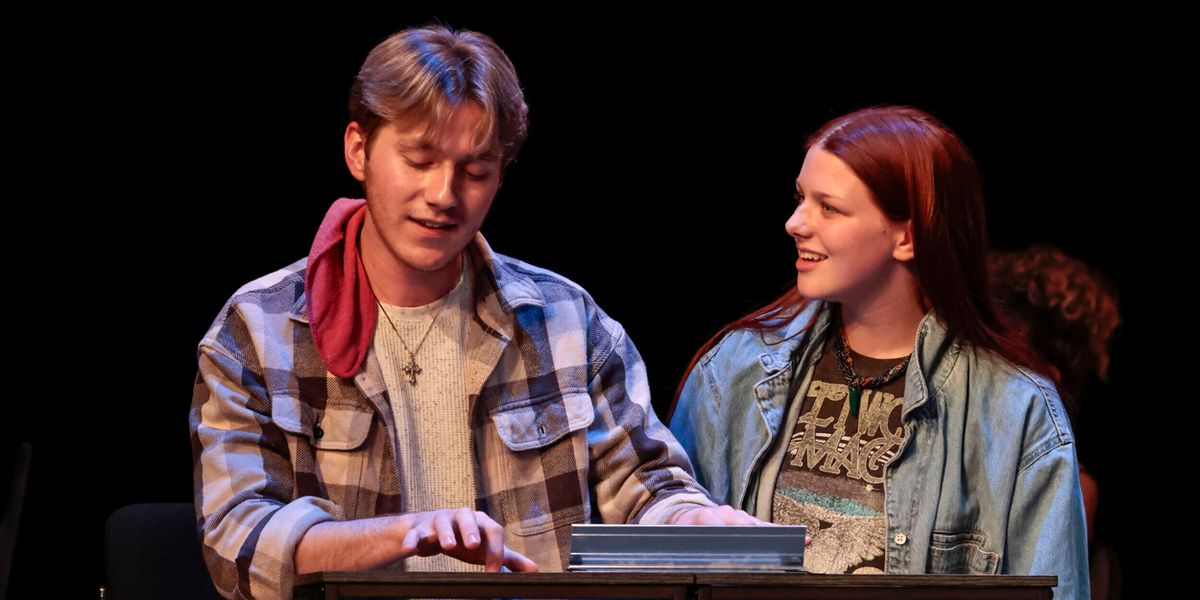
Fresh off winning the Best Audience Choice Award at the Squeaky Wheel Fringe Festival, The Common Ground continues to prove that intimate storytelling and authentic voices can resonate deeply with audiences. Set entirely within the walls of a suburban coffee shop, the one-act play follows Blair, portrayed by Rue Brown, a young woman struggling to rebuild her life after an earth-shattering loss. Through moments of grief, humor, connection, and hope, Blair slowly discovers that moving forward is not about taking giant leaps—it is about finding the strength to take one step, and one cup of coffee, at a time.
Though the story centers on Blair's journey, she is surrounded by a cast of characters who help shape her path. Timothy Penberthy plays Jamie, Josh Ogline portrays Artie, Makena Benson takes on the role of Adelle, and Morgan Kessler rounds out the ensemble as Rachel. Together, they create a world that feels both deeply personal and remarkably familiar.
The production itself embraces simplicity. There are no scene changes throughout the 60-minute performance. The coffee shop remains the focal point from beginning to end, serving as both a physical location and a symbolic gathering place where lives intersect. Director Blake Walton made a deliberate choice to keep all of the actors on stage throughout the performance. When characters are not actively involved in a scene, they remain frozen in one of the four corners of the stage, waiting just outside the action.
Walton believes this approach helps reinforce the play's central idea.
"The common ground was the center of the stage where the action takes place," he explained.
The script unfolds in an episodic fashion, moving through a series of short scenes connected by fluid transitions. Rather than hiding those transitions, Walton leaned into them. Blue lighting remains present throughout much of the production, allowing audiences to witness the movement between scenes while maintaining the momentum of the storytelling.
"The scenes are shorter," Walton said, "but we relied on that as a more cinematic show in nature."
For Walton, modern audiences are more than capable of following that style of storytelling.
"Audiences are savvy," he noted, describing the format as an exciting opportunity for young playwrights to experiment with structure and pacing.
The play itself has undergone a significant evolution. Holdway and Lucas spent roughly a year writing the script before entering a two-year workshop and development process. The show premiered last June at the Tampa Fringe Festival, but the version audiences see today is the result of countless revisions, rewrites, and discoveries along the way.
Lucas recalled that the show changed dramatically during its development.
"When it was performed in Tampa, it had gone from a two-act play to a one-act," he said. "From there, it continued to be revised into its current form."
The creative team has no intention of stopping there. Even after festival success and audience recognition, they continue to refine the script, looking for ways to strengthen both the story and its emotional impact.
One of the most significant discoveries during that process involved the play's central relationships. Walton noted that while the themes of grief and healing were always present, the story's romantic arc became increasingly important as the script matured.
"As it developed, I knew it needed the arc of the love story," Walton said. "The theme was there, but it was less central. It's Blair's story, but there were other elements that needed to be developed."
That growth has allowed the play to explore grief from multiple angles. Walton was particularly interested in how younger writers approach a topic as universal and difficult as loss.
"I wanted to be sure that how young writers deal with death was an issue they were able to grapple with," he explained.
For Brown's character, that means experiencing the full emotional spectrum of grief. Blair's journey touches on all five stages, giving audiences a deeply human portrait of someone trying to find solid ground after tragedy.
Despite the emotional themes, the creators emphasize that the story itself is entirely fictional. While some of the characters may resemble people the writers have encountered throughout their lives, the events of the play are not based on specific personal experiences.
What is personal, however, is the passion behind the project.
As emerging artists, Holdway and Lucas represent a generation of theatre makers determined to create stories for their peers. Walton describes The Common Ground as a show by young people, for young people—particularly those navigating the uncertainties, relationships, and challenges of their twenties.
That focus gives the play a contemporary voice while still addressing themes that resonate across generations. Grief, connection, healing, and hope are experiences that transcend age, even as the play speaks directly to the realities of modern young adulthood.
The production also benefited from strong community support. The team credits Fed's Backyard Theatre for providing rehearsal space during the development process, an invaluable resource for artists working to bring a new piece of theatre to life.
As for what's next, the creative team's ambitions extend far beyond festival stages. Their ultimate goal is to continue developing the script with hopes of one day bringing it to New York. They are also exploring possibilities for publication and licensing, allowing theatres and actors elsewhere to discover the work.
More than anything, they simply want others to experience the story.
The dream is not only for audiences to connect with The Common Ground, but for actors across the country to eventually perform it and fall in love with it themselves.
In an era when producing new work can be both financially and creatively challenging, The Common Ground serves as a reminder of why Original Theatre matters. It showcases the voices of emerging playwrights, embraces inventive storytelling, and demonstrates that some of the most meaningful journeys can unfold in the most ordinary of places.
Sometimes all it takes is a conversation, a connection, and a cup of coffee.
Photo Credit: Sorcha Augustine

|
Lady Disdain Asolo Repertory Theatre (6/06-6/27) |

|
A Motown Christmas Westcoast Black Theatre Troupe (12/02-1/03) |

|
A Motown Revue with the Soul Sensations Manatee Performing Arts Center (2/09-2/13) |

|
Arsenic and Old Lace Manatee Performing Arts Center (9/03-9/13) |

|
Who's Afraid of Virginia Woolf? Manatee Performing Arts Center (4/08-4/18) |
|
Songbirds of the Seventies Florida Studio Theatre (7/07-9/06) |
|
Paddy O'Furniture Manatee Performing Arts Center (3/16-3/16) |
|
2026 Modern Works Festival Urbanite Theatre (9/17-9/27) |

|
Out of Bounds Florida Studio Theatre (8/08-9/19) |

|
Sophisticated Ladies Westcoast Black Theatre Troupe (10/14-11/22) |