
Interview: 'I Wanted It So Much!': Katherine Pearce on Community, Empathy, And Manchester Spirit in EVEN THESE THINGS
'It's important to remember where we came from, the journeys that people made to be here and how those cities were built'
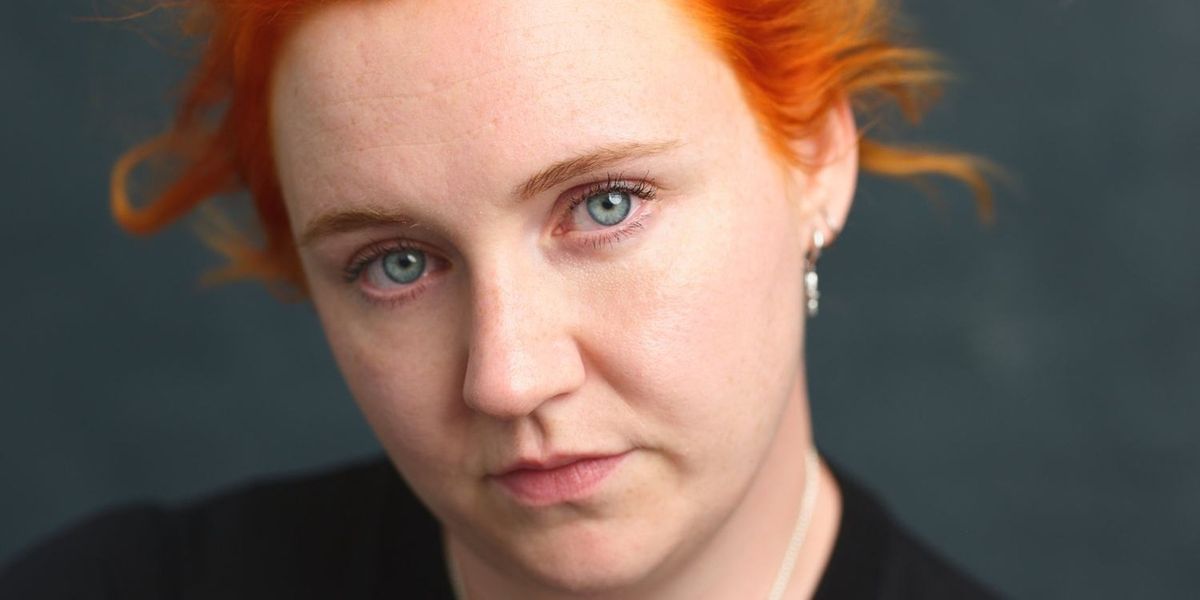
Even These Things, written by Rory Mullarkey, recently had its world premiere at the Royal Exchange Theatre. The play takes a look at three different years - 1846, 1996 and 2026 - and explores both Manchester and Ireland, with the final performance taking place on the 30th anniversary of the devastating IRA bomb in the heart of Manchester.
Recently, we had the chance to speak with Katherine Pearce about playing Jenny in Even These Things. We discussed how she first got started in the world of theatre, what it has been like to perform the show at the Royal Exchange Theatre and the importance of community.
What made you want to be a part of Even These Things?
When it was pitched to me as a play about Manchester, I was originally dubious about it. I was like, “Oh, I'm not sure,” because I'm not from Manchester - I'm from that area. I thought if it has a really strong sense of identity, someone from Manchester is going to find out that I'm not from Manchester, and there's going to be a bit of controversy about it! But when I read it . . . I’ve never read anything like it.
It started off with this very strong, Irish immigrant voice, and it was so clear. I was like, “Hang on, I thought this was supposed to be a play about Manchester!” The more I moved through it, and how beautifully it was written, and how it was three different styles all in one, I was like, “Oh gosh, I have to audition for this,” because Jenny felt very close to who I was. Half of my family is Northern Irish, and it just felt like the right fit. And then I found out that one, it was Rory Mullarkey, whose writing I'm a big fan of, and James Macdonald [Director], who is an absolute legend! I've had a lot of older actresses in dressing rooms be like, “If you ever get the chance to work with James Macdonald, you must take the opportunity,” so it was an absolute no-brainer. I was really nervous for the audition, because I wanted it so much! But luckily, it worked out, and I'm really pleased that it did!
Can you tell us a bit about Even These Things and the role that you play, Jenny?
The play is set in three different timelines - 1846, 1996 and 2026. My character, Jenny, comes in in the last part, 2026. I meet an Irish woman in an actual park in Manchester called Angel Meadows, which is very historic. It used to be the Irish Quarter and was described by Friedrich Engels as “hell on earth,” but now it's really beautiful.
Jenny is returning back to Manchester after a personal tragedy, and is figuring out where she belongs, and how this new period of life is going to look. This random woman that she meets in Angel Meadows talks her through it as she's going through an emotional thing, and she comes out the other side changed. Like all good plays, they go in one way and come out another. Jenny acts as a bit of an everyman and a conduit for the people of Manchester. A lot of them will have Irish heritage, and go away and come back.
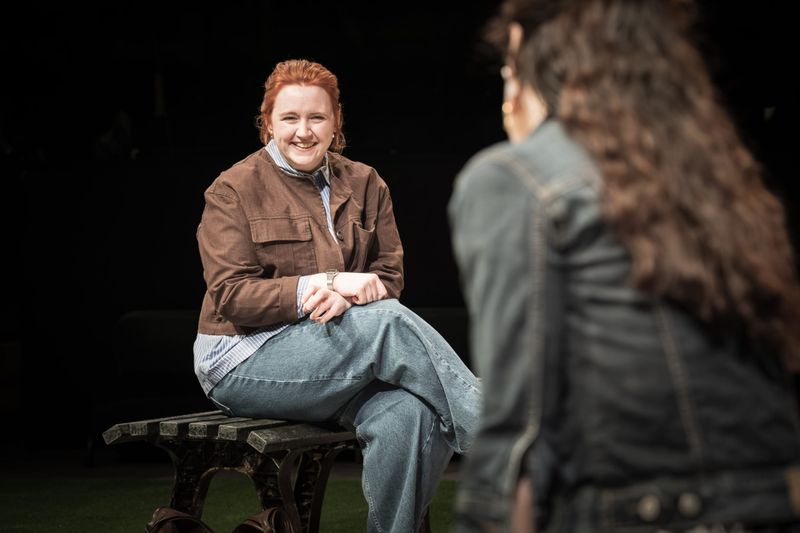
Photo Credit: Courtesy of the Royal Exchange Theatre
And what was the rehearsal process like for a show that's set in three different time periods?
I didn't have a lot to do with the first act! Elaine [Cassidy] and James would rehearse that in the morning, and then in the afternoon I would come in and do the 2026 period. That was very gentle and amazing. I can understand why actresses and actors love to work with James, because he really does lock into who you are as a person. It very much is the way I was trained at Welsh College, actually! It's the character filtered through you. I always find that with Welsh College actors, you tend to get a very truthful performance, whereas in other places, they think about fully transforming themselves into character. There's no right or wrong, and it's amazing watching somebody fully transform, but it felt like what James was doing for me and Elaine was pulling out bits of ourselves to fit what Rory is saying.
So I would rehearse in the afternoon with Elaine, and then in the evening, that's when the community cast would come in. There's over 100 of them, and four different children's choirs that alternate. There's two teams, Team Super Sonic and Team Wonder Wall - very Manchester! And the logistics of it were mental, but we had two really great associate directors, Katie Greenall and Sadie Mears. They did a big chart with all kinds of stuff on it that allowed all of that to happen! The theatre handled it incredibly well, and the community cast themselves were amazing.
There are people within the community cast that were there on the day of the bomb that had family involved. James Macdonald himself, he was in Manchester when the bomb went off. He was working at the theatre in his twenties. The sound designer, Ian [Dickinson], he was driving home from the theatre. The designer, Laura [Hopkins], she was in Manchester. A lot of the team around it remember it, so it was very important for them to be the focus. It wasn't really about my performance, it was about giving them the floor, because that's the most important bit.
You've been at the Royal Exchange for previous shows as well. What is it like working in a space like that?
I mentioned that I had a great drama teacher called Carole Shinkfield, and I just went to a normal state high school. We hardly got any funding. Because I came from a low-income background, I was on the Gifted and Talented programme for the borough of St Helens, and they managed to get some money together and take us to the theatre. That theatre that used to be in the library, that was half in the round, and then Bolton Octagon was in the round. The first times I went to the theatre, I just thought theatre was in the round! I just thought that's how people did it. So I've always found it a really easy space to work in.
I find it a really lovely space, because if you do it right, it's just as interesting to watch the side of someone's face, their back or their foot, because you can't be anything other than truthful. If you're pretending, they smell it and then they disengage - you just have to be who you are. I find it really freeing rather than restricting!
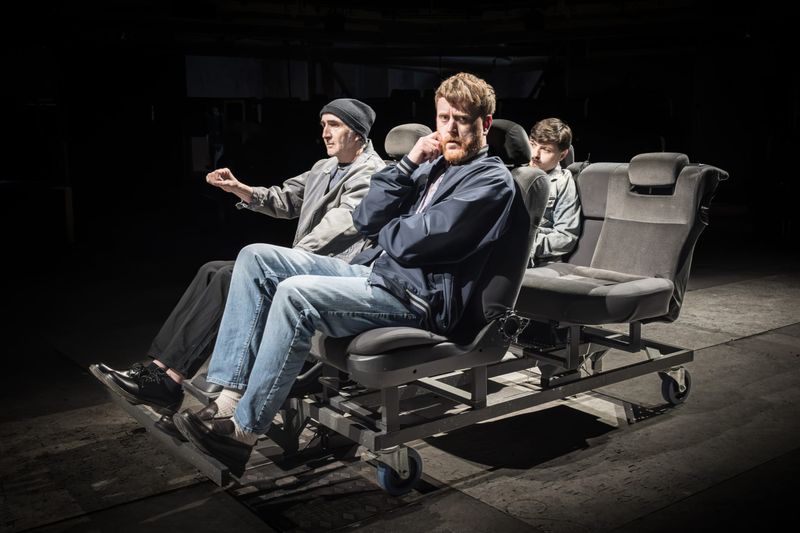
Photo Credit: Courtesy of the Royal Exchange Theatre
What is it like working with the community performers, especially with a show that touches so directly on the city?
You could probably be forgiven thinking, “Gosh, that must be difficult,” because you think that people whose acting isn't their career choice may not take it as seriously or may not care as much, but that has not been my experience at all.
There's a complete freedom in it, and a purity that they're here because they love Manchester and they love the theatre. They saw this as an opportunity to be on a stage when they wouldn't usually be. So their commitment, just for the love of it, without being paid, it's really infectious. It's really hard sometimes, as a woman, to get caught up in this industry - the way you look, your size and how people see you, and trying not to be typecast. But actually, being beside them reconnects you with why you like it in the first place - the love of pretending to be something different, being on stage,and loving that adrenaline. It has been wonderful. They have been incredible. You would never know that they hadn't trained for three years like I did.
The final performance is going to be on the 30th anniversary of the bombing. You were saying the creative team and others were in the city when it happened. How do you balance keeping mental and emotional health safe while getting into these deeper topics?
We've all been very open and very honest about it. The play itself, we go all the way up until the bomb goes off. There is the sound, but there is none of the aftermath. You only hear about the aftermath in the context of the third part, which is set now, so that's thirty years after. The theatre has been really great with handling those discussions, and people have shared what they wanted to share. All of the information has been handled really carefully.
In this day and age, I hope everybody is aware enough that the way we move past collective traumatic events like that is by talking about them. We cannot pretend that they didn't happen, that they didn't mean anything. You have to talk about it in order to move past it, and that is what the play is really about. Talking about the stuff helps it move forward. Some people think we shouldn't be talking about these things, and we shouldn't be putting on plays about them, but I don't think that's right. I think you have to do it. It's important to talk about it, and that's the whole point of the play.
What do you hope audiences take away from Even These Things?
In this era of isolation - in terms of our phones, televisions, politics and that kind of thing - I hope that people come away with a reminder of how important community is and how important it is to find that chosen family, especially when there are things like this that happen.
It’s so important for everybody's emotional well-being to rely on people and help other people out. Manchester is so like that! You can't walk from one end to the other without somebody going, “Alright? Where you going?” So, what I want people to come away from is a reminder that the community is here if you need it. When everyone works together, when everyone looks out for each other, it benefits everybody. And, like America, we are a nation built on immigrants, and it's important to acknowledge that in a time of dividedness like this, it's important to remember where we came from, the journeys that people made to be here and how those cities were built.
And finally, how would you describe Even These Things in one word?
Magic, like an old magic of the earth, because it feels like there is so much history in it that has been pulled up through this one place and channeled into different things, but actually, the story is the same. It's all cyclical, and that is incredibly clever of Rory. He's amazing.
Even These Things runs until 15 June at the Royal Exchange Theatre
Weekly top stories - unsubscribe anytime.
.jpg?format=auto&width=300)