


Review: CHICAGO at the Kennedy Center
A fine touring company gives us the old razzle dazzle
 Click for Tickets!
When the original production of Chicago opened on Broadway in 1975, its subtitle read “A Musical Vaudeville.” And as distinctively Bob Fosse-style as it was (and is in this excellent touring production of the 1996 revival), Chicago has always been a slight history of vaudeville. Integrated among his jazz hands, isolation, and pelvic thrusts are Susie-Qs and Buffaloes and the Charleston and fan dancing and Eddie Cantor's choreography during “If You Knew Susie.” When Billy Flynn (Max Cervantes) asks the audience, “Is Everybody Happy?” he quotes Ted Lewis' catchphrase from the bandstand between numbers. And when Velma Kelly (Claire Marshall) greets the house with “Hello Sucker,” old timers in the 1975 audience would have recognized how Texas Guinan welcomed patrons to her Manhattan speakeasy. You can take the phrase “a musical vaudeville” out of the program, but you can't take the vaudeville out of Chicago. Fosse grew up there and performed in his teens in what was left of vaudeville after the Depression, movies, and radio got through with it: it's just a noisy hall where there's a nightly brawl/and all that jazz.
Orchestrator Ralph Burns and Dance Music Arranger Peter Howard ensured in 1975 that the sound of John Kander's score authentically reflects the way theatre music sounded in the 1920s when Chicago takes place. The musical was inspired by a lady journalist whose beat was the courthouse and whose dated job title was “sob sister.” Maurine Dallas Watkins in her 1926 play, also entitled Chicago, observed that women on trial were treated very differently from men who'd committed the same crime. It was a boldly modern and eternally cynical take on the role and impact that publicity and celebrity have on facts. Fosse and Fred Ebb kept that notion when they turned her play into their musical. And now Gregory Butler and David Hyslop maintain the revival's choreography and direction (originally by Ann Reinking and Walter Bobbie) so that what audiences will see at the Opera House through April 5 authentically represents the 1996 revival of Chicago, still running on Broadway 11,500 or so performances since it won 5 Tony awards. (The original production won one Tony of the 12 for which it was nominated because—A Chorus Line.)
Ellie Roddy's outstanding portrayal of Roxie Hart reveals the evolution of a rising criminal in Chicago's world of alternative facts. Roxie starts out as an unhappy, directionless girl and winds up an unhappy, determined (and successful) woman. By the time Roddy's Roxie joins Marshall's Velma for “Nowadays” and the “Hot Honey Rag,” the duo has buried their rivalries and become the double act Velma dreamed they'd be back when they were still in jail (“I Can't Do It Alone”). Their support system while incarcerated, a trio of twisted enablers if there ever was one, have separately strengthened Velma and Roxie to play juries so they can play vaudeville houses. (Life is a cabaret, old chum; same decade, different Kander and Ebb.) Ileana Kirven, dominant as Matron "Mama" Morton, schools them on how to place bribes effectively (“When You're Good to Mama”); J. Clanton, sensational as sob sister and mezzo-soprano Mary Sunshine, provides tutorials on what the public wants from women which merges with what yellow journalists want from women in order to sell more newspapers; (Mary Sunshine is what she is—she is her own special creation.) And Cervantes' Billy Flynn, the lawyer who knows how to razzle dazzle juries into acquitting guilty women, acts out every detail of what they should do during their trials—a bit stronger as an actor than as a singer, but, as Cervantes' character sings, “how can they hear the truth above the roar.”
Marc Christopher endearingly plays Amos Hart, Roxie's much-abused husband, with tenderness and outstanding musicality. And speaking of musicality, the onstage band sounds like the 10-piece group of instrumentalists they are rather than some over-miked recording blasting through a speaker the size of Montana (OK, Illinois). Someone may have finally figured out how to operate the Opera House sound system; Andy Chen not only conducts, he aids and abets the actors; honorable mention for trombone and banjo by Landon Gaddis and Aaron Kan.
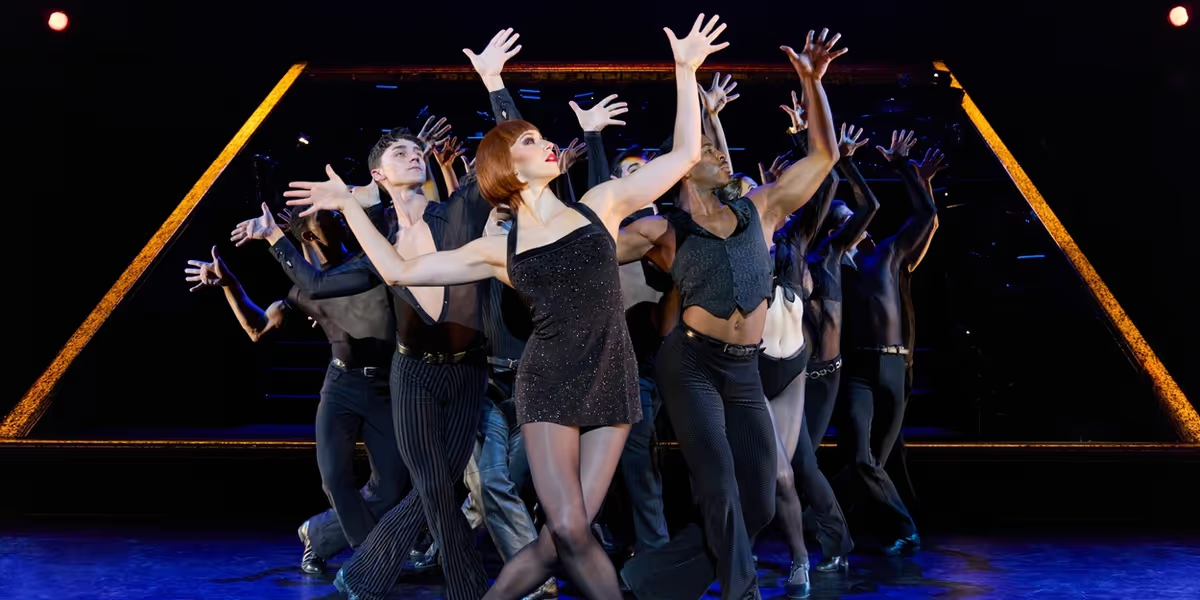
One particular staging choice Bobbie made 30 years ago really challenges the dancers beyond the given challenge that is Fosse's choreography. The onstage band takes up of a lot of space and is placed pretty far downstage; the amount of floor actually available for the dancers to fill is wide enough for sure, but not very deep. So they have to be excellent in a constrained space, and excellent this troupe of dancers is.
In addition to being a beautifully conserved rendition of Fosse, Kander, and Ebb's 50-year-old work, Chicago is 2.5 hours of entertaining fun. And the 100 year-old concept of how absolute celebrity corrupts absolutely seems as pertinent now as it did during the Roaring Twenties: show 'em the first rate sorcerer you are/long as you keep 'em way off balance/how can they spot you got no talents/razzle dazzle 'em and they'll make you a star.
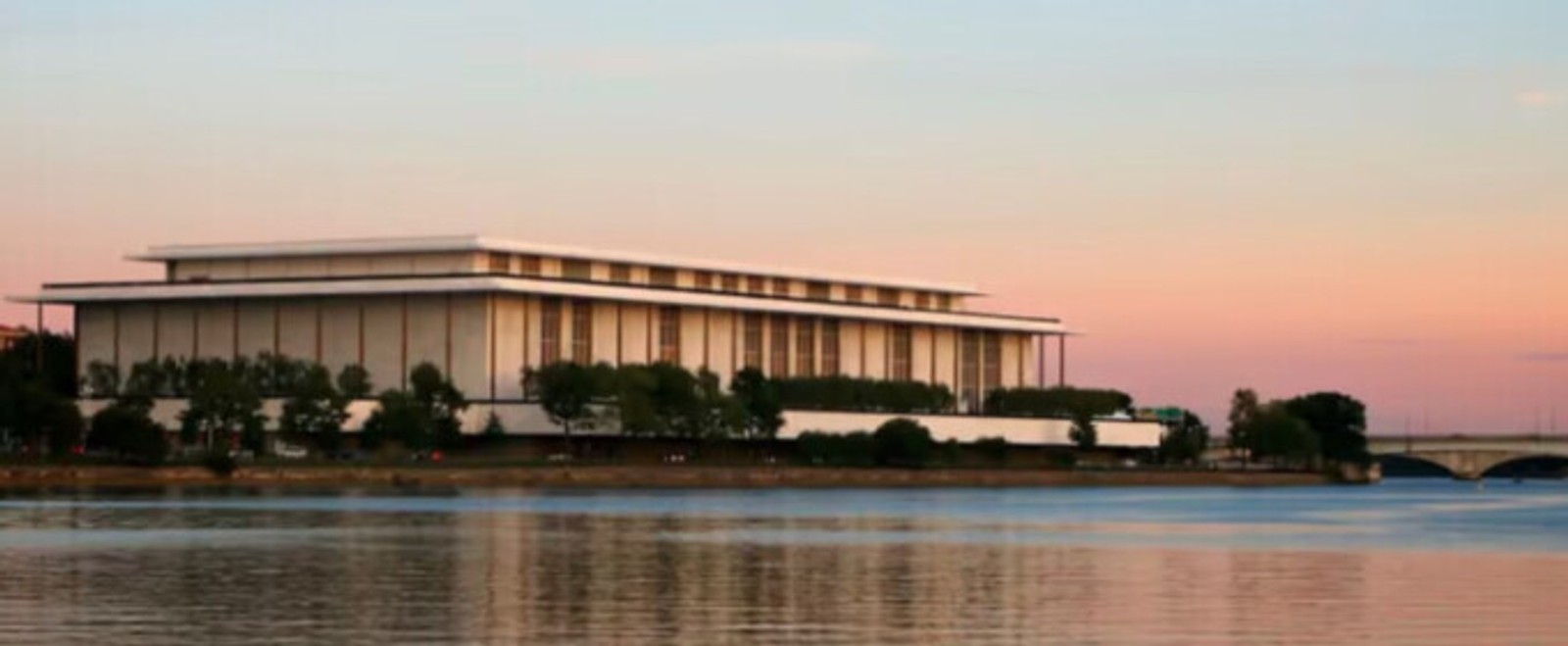
(Photo by Jeremy Daniel of Claire Marshall and the cast; The Opera House at the Kennedy Center is located at 2700 F Street NW, Washington, DC.)
Sign up for all the news on the Fall season, discounts & more...
|
Brian Henson's Puppet Up! Lincoln Theatre (9/30-9/30) |
|
GARBO: EL ACTOR QUE SAVÓ AL MUNDO (Garbo: The Actor Who Saved The World) GALA Hispanic Theatre (9/03-9/27) |

|
Mr. Burns: A Post-Electric Play Clarice Smith Performing Arts Center (10/09-10/18) |

|
Special Event: ARTS By George!: Jeff Goldblum and the Mildred Snitzer Orchestra Center for the Arts (10/03-10/03) |
|
The Second-Best School Shooting NextStop Theatre (9/17-10/11) |

|
Coming to America: An Immigrant Cabaret ExPats Theatre (9/30-10/18) |

|
Some Like It Hot Bernard Family Theatre, Olney Theatre Center (9/18-11/08) |
|
Stonewall's Bust The Writers Center (10/09-10/25) |
|
Rockville Little Theatre presents "Lettice & Lovage" F. Scott Fitzgerald Theatre (1/29-2/07) |
|
The Dinner Detective Murder Mystery Dinner Show The Dinner Detective Washington DC (9/26-9/26) |

Reader Reviews
To post a comment, you must register and login.