


BWW Q&A: John Wilson Talks PRAYER FOR THE FRENCH REPUBLIC at New Jewish Theatre
The actor, fight choreographer, and Director of Cultural Arts at the J on why this French-Jewish family's story is really everybody's story.
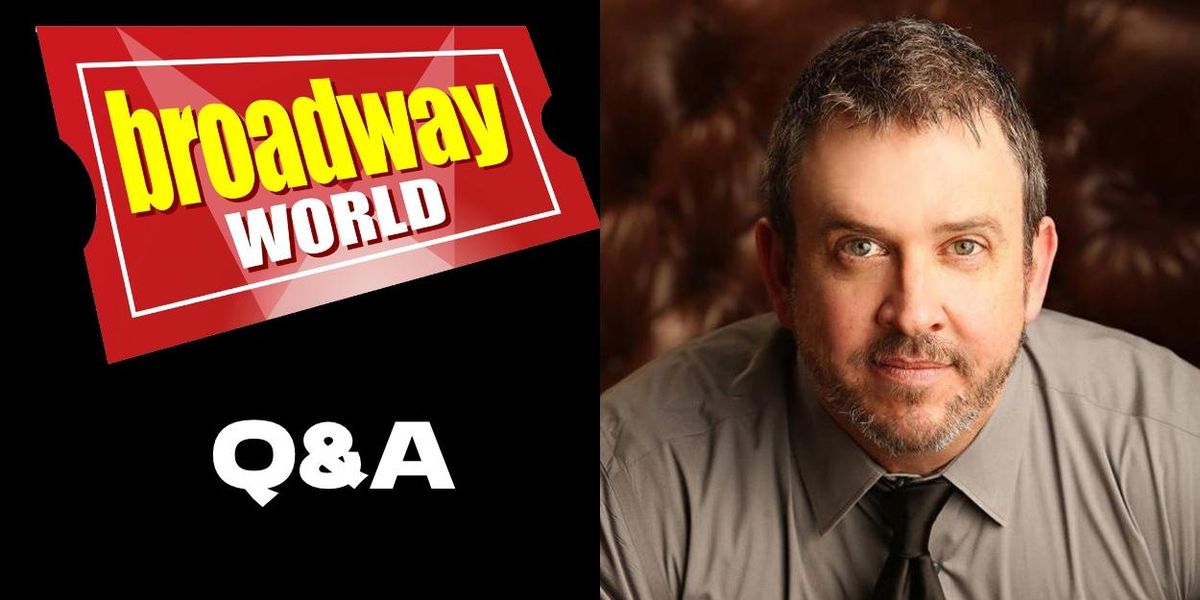
 Click for Tickets!
After two decades shaping young performers as chair of the Theatre and Dance Department at the University of Central Missouri, John Wilson has built a reputation as one of the region's most versatile theater artists — actor, fight choreographer, dialect coach, and educator all at once.
Now he brings that wealth of experience to the New Jewish Theatre's production of Joshua Harmon's acclaimed Prayer for the French Republic, where he steps into the role of Patrick, a narrator who threads five generations of a French-Jewish family's reckoning with fear, belonging, and survival.
Fresh off a St. Louis Theatre Circle nomination for his work in NJT's Baskerville, Wilson sat down with us to talk about what draws him to a character who lives between worlds, why a play about antisemitism in Paris speaks to everyone, and what it means to perform at the very institution where he shows up to work every day.
John Wilson recently made his St. Louis acting debut with the New Jewish Theatre in Ken Ludwig's Baskerville, for which he received a St. Louis Theatre Circle nomination for Outstanding Supporting Performer in a Comedy. He taught performance courses for 20 years while chairing the Department of Theatre and Dance at the University of Central Missouri. He was the fight director in residence for the Kansas City Repertory Theatre for a decade and has over 50 acting credits in commercials, films, television and on stage. He is the current on camera and voice over spokesperson for Communication Federal Credit Union out of Oklahoma City. Wilson is the Director of Cultural Arts at the J and has provided dialect coaching and fight and intimacy direction for 6 previous NJT productions.
Can you discuss how you prepared for your role as Patrick in Prayer for the French Republic?
Preparation is always multi-layered. It's that typical investigation of what does the playwright say about your character; what do other characters say about your character; what do you say about yourself, and what do you literally DO in the play? All those are investigative clues that help you start your construct. But with Patrick, there's a unique question that has to be answered: "Why?" Why is Patrick telling this story? Why is this important to him? Why is he sharing these facts, and not others? From what time referent is he telling it? From what point of view? It's complicated! Patrick has a "Tom vibe" from the Glass Menagerie. On the surface it seems kind of simple, but he's very complex.
What attracted you to the character of Patrick and the script of Prayer for the French Republic?
The biggest attraction to this part and this play is relevancy. This is a very big story that asks big questions. It's an intellectual, emotional, geopolitical and ideological challenge for our audience. They'll be asked to absorb, contemplate and decide where they fall in the spectrum of the issues discussed. But the flip side of that coin, is that it's a very personal, relational and relatable story. It will draw the audience in. They'll be invested. And it will make them laugh! It's very funny! And as an actor, it's always rewarding to be part of a story like this. On a completely different level, working with NJT and under Rebekah Scallet's direction is a joy and privilege.
How does your character Patrick contribute to the overall narrative of the play?
Patrick grounds the audience is substantive context. He sets the scene for multiple eras of history that have ramifications on his own family, on the Jewish lived experience throughout generations, and on the world at large. He doesn't tell you how to feel, but you certainly know how he feels about what he's sharing, and I think that serves as a guidepost for the audience; whether that's coming across in his multiple monologues to the audience or when he's entered into a scene and is engaging with his family.
How do you navigate the challenge of playing a character that moves in and out of the story's reality?
I don't think moving in and out of the narrator role is as challenging as it might first appear from a "character" standpoint. Ultimately, whether speaking directly to the audience or in a heated debate with a family member, Patrick is still searching for and grappling with the concepts of truth, identity, justice and what it means to belong and be part of a family with an historical target on its back. In that context, the sense of what Patrick is "playing" or "doing", regardless to whom he's speaking, and how I'm navigating those differences as an actor is negligible. Now, ask me what it's like to prepare a 2 and a half page monologue vs. the exchange of dialogue during scenes, and we've got a lot of different challenges to speak of!
How do you think non-Jewish audiences will connect with the story of a Jewish family in Paris?
What's so great about all of NJT's work is that, though we are telling stories through a Jewish lens, these stories' impact is universal and evergreen. It always comes down to the human experience. In that regard, though Prayer For The French Republic is about a Jewish family in Paris, the topics of identity, discrimination, belonging, family, and legacy affect us all as human beings. It's a very human story.
What element of the story do you think will surprise audiences most?
Hmm... tough question. Everyone's different, and I think there will be multiple parts of the play that affect different people in different ways. People might be surprised at how much they relate to this play and its relevance in 2026. They also might be surprised at how bold and opinionated some characters are on very controversial topics. I love that. I think the play forces you to make a strong decision as to your own personal point of view. And I think there's value in that.
Why must audiences come and see the show?
With its Tony nominations and the brilliance of playwright Joshua Harmon, you already know you’re in for a compelling night of theatre. But what makes this play truly special is the journey it takes you on; one filled with deep emotion and thought-provoking questions. It’s more than a performance; it’s an experience that invites the audience to reflect, to feel, and to connect. As Patrick says of his great-grandmother Irma, we are each “one small person facing the giant forces of history.” And in 2026, that sentiment feels more resonant than ever.
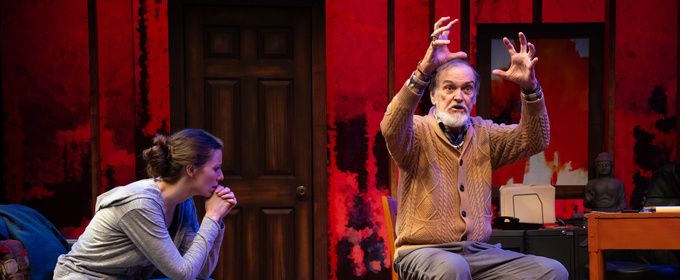
Sign up for all the news on the Fall season, discounts & more...

|
Alex Edelman’s Just for Us New Jewish Theatre (NJT) (10/01-10/18) |

|
Come From Away Kirkwood Pac (9/18-10/18) |

|
Wicked Fox Theatre (5/12-5/30) |
|
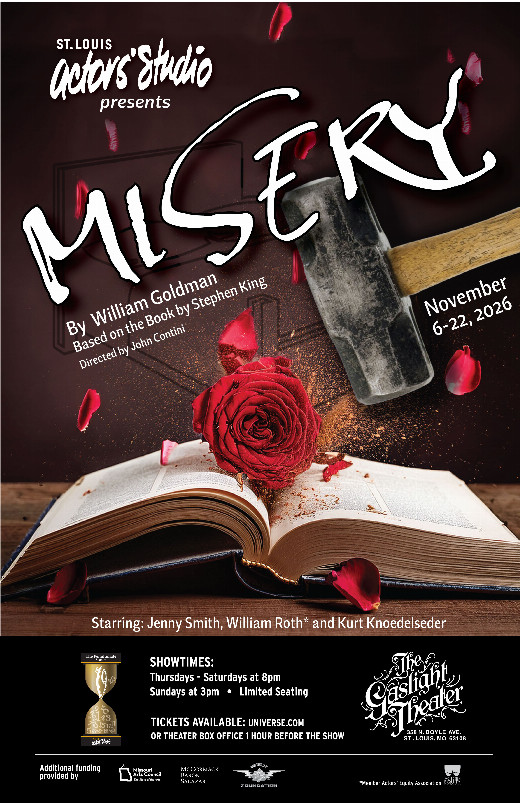
Misery Gaslight (11/06-11/22) |
|
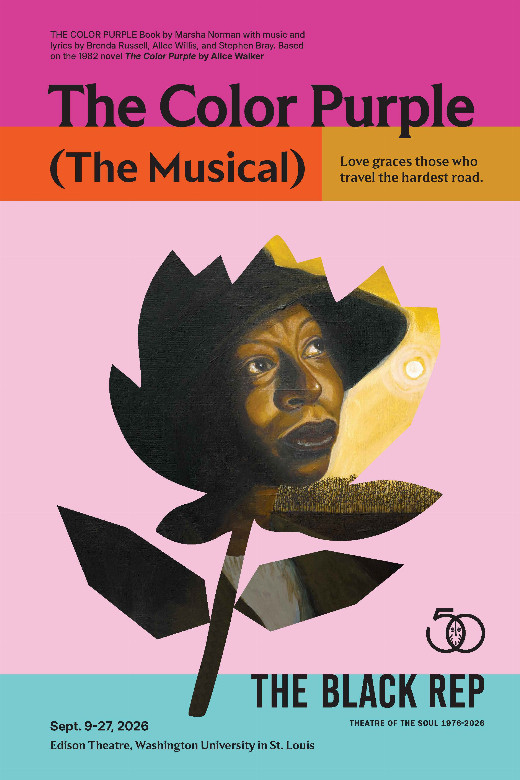
The Color Purple (The Musical) The St. Louis Black Repertory Company (9/09-9/27) |

|
Dawn Weber Kirkwood Performing Arts Center (10/06-10/06) |

|
Alex Edelman's Just for Us New Jewish Theatre (NJT) (10/01-10/18) |
|
The Book of Mormon (Non-Equity) Fox Theatre (2/02-2/07) |
|
|
The Book of Mormon (Non-Equity) The Fabulous Fox Theatre (2/02-2/07) |

|
The Nutcracker COCA - Catherine B. Berges Theatre (12/11-12/13) |
