

The Wallis Will Host DANCING WITH BOB: Rauschenberg, Brown & Cunningham in May
Four performances will take place May 7, 8 and 9.
 Click for Tickets
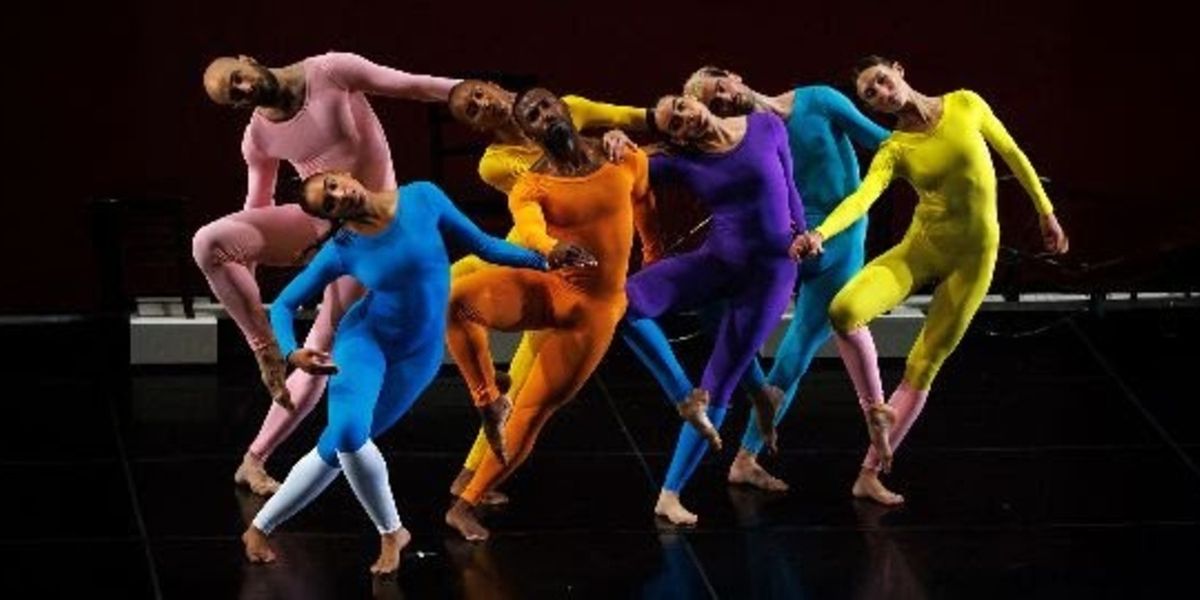
Witness another side of artist Robert Rauschenberg in Dancing with Bob: Rauschenberg, Brown & Cunningham Onstage, a tribute marking the centennial of the American iconoclastic visionary artist to be performed for four performances Thursday, May 7 to Saturday, May 9 at the Wallis Annenberg Center for the Performing Arts. Presented by The Wallis, Trisha Brown Dance Company in collaboration with the Merce Cunningham Trust, it celebrates Rauschenberg's enduring artistic legacy.
While Rauschenberg is known for his visual art and sculptures, he was also an avid cross-disciplinary collaborator—most frequently with choreographic legends Trisha Brown and Merce Cunningham. Together, these three figures revolutionized dance, sound, and visual art. While widely recognized for his groundbreaking contributions to visual art, Rauschenberg also played a significant role in the performing arts—both as a performer and as a designer for choreographers over several decades. Among the many dance artists with which he collaborated, his most frequent and notable partnerships were with Merce Cunningham and Trisha Brown.
For this occasion, Trisha Brown Dance Company (TBDC) will unite the work of these two iconic 20th-century artists in an evening of dance featuring “visual presentations” designed by Rauschenberg.
Gia Kourlas said in her New York Times review, “Dancing With Bob is more than a theme for a program. It's a portal to see an artist's imagination in all of its intelligent absurdity. When inside of it, a choreographer can carve out a dance adventure as Brown and Cunningham, six years apart, once did.”
Audiences will see two of these dance masterworks. Cunningham's comedic piece Travelogue was created with John Cage and Rauschenberg in 1977 and has remained largely unseen by the public since 1979. This vaudevillian pièce de résistance showcases dancers in playful, absurd exchanges—deadpan, yet brilliantly expressive. Cunningham's episodic dances are set on a stage that gradually builds set and costumes with fans, tin cans, banners, flags, and chiffon scarves.
Travelogue is performed to John Cage's piece Telephone and Bird, a score that has been adapted for smartphones by Adam Tendler. Three musicians, Mike Steele from Trisha Brown Dance Company and University of Minnesota School of Music students Aarush Bothra and Koki Sato, will take turns playing bird calls and dialing telephone numbers with automated voice messaging systems that yield a variety of responses. What they'll play (and how loud, how long, etc.) is determined by a random number generator. These randomized, automated responses overlap at times, creating a unique, improvised, and irreproducible performance over its 33-minute runtime.
In Brown's beloved Set and Reset, the seductively fluid movement juxtaposed with the unpredictable geometric style has become a hallmark of her work. Hailed by the New York Times as “unmistakably Miss Brown at her most tantalizing, deconstructing a choreographic practice. The choreography ripples with hypnotic, fluid energy to a bewitching electronic score by Laurie Anderson.”
Brian Seibert wrote in The New York Times, “The program offers a keyhole view into a time, long gone, when concert dance was near the starry center of some of the most exciting developments in American art. In the years when Rauschenberg was breaking out as one of the most influential artists in the world, that influence extended into American dance. And it flowed in the opposite direction, too, as he folded his theatrical work back into his solo practice.”
Seibert continued, “Rauschenberg started working with Merce Cunningham and the philosopher-musician John Cage, [in 1952 at Black Mountain College]. They all participated in Theater Piece No. 1, now considered the first Happening. Cage (who organized it) lectured, Cunningham danced and Rauschenberg played a phonograph. Some of his self-explanatory White Paintings hung from the rafters. The White Paintings, Cage would later say, were an inspiration for his paradigmatic composition 4'33, which invites an audience to listen to the music of silence and incidental sounds for four minutes and 33 seconds. Rauschenberg, in turn, would credit Cage with giving him permission to follow his impulses.”
“Rauschenberg didn't just contribute designs. He toured with the company, traveling from gig to gig and playing Scrabble in the Volkswagen bus that became part of Cage-Cunningham lore. Even as Rauschenberg's reputation and remuneration rocketed past the company's, he stayed faithful.
He would leave the tour, attend a glamorous gallery opening of his work in New York and then fly in to sweep the stage and set the lights for the next show.”
Rauschenberg wrote in 1982, “Working with both Trisha Brown and Laurie Anderson will be one of the most unique theatrical challenges in my career. None of us are into extravagant spectacles. We all three are singularly used to our self-made one man shows, which always include space and economy as part of the aesthetics. I am well aware of the independence of each artist. The risk and expertise rely on what kind of room we make for each other. No one could be more curious about this than I am.”
Seibert continued, “For the first two minutes of Set and Reset (1983), all we see is Rauschenberg's set; two pyramids flanking a rectangle, reflective surfaces for prismatic projections of newsreel footage and NASA films. Then all that rises to float over Brown and her dancers, who walk on a wall, ripple in complexly looping currents and embody ideas of visibility and invisibility in Rauschenberg's translucent silk-screened costumes.”
Unlike Cunningham and his collaborators, Brown and Rauschenberg worked closely together all through the creative process. Beyond designing and composing music for some works, he was the president of her board, a funder, and an older-brother source of security and confidence. They talked all the time. Over the course of five decades, the two worked intimately on a wide variety of projects that equally influenced, challenged, and inspired each other's creative processes. Their collaboration put dance and art on equal footing.
Labeled by The New York Times as the “innovative high priestess of postmodernist dance,” Trisha Brown is part of a lineage of artists who saw dance performance not as a siloed form, but as a conversation between set, sound, and movement. Her decades-long collaboration with painter and multidisciplinary artist Robert Rauschenberg illustrates her commitment to deep artistic collaboration across mediums.
Brown and Rauschenberg met when Judson Dance Theater (JDT) was established in the early 1960s. JDT was a collective of people who, through their collaboration, challenged artistic assumptions and questioned authority. At Judson, visual artists like Rauschenberg began to cross disciplines and experiment with performance. “We were a village,” Trisha Brown said reflecting on this time, “a collective. We didn't have any of that judgmental kind of behavior and that allowed people to be very creative.”
With the creation of her dance company in 1970, Trisha Brown was one of the most acclaimed and influential choreographers of her time. Since Brown's passing in 2017, Trisha Brown Dance Company has continued its commitment to artistic experimentation and cross-disciplinary dialogue. Since 2022, TBDC has expanded its mission to include new commissions from artists inspired by Brown's legacy.
Christine Jowers interviewed Carolyn Lucas, longtime former TBDC dancer and currently the company's associate artistic director, for Dance Enthusiast, “Bob just loved dancers. I always felt like he loved dance more than anybody I had ever met. And he was so in love with Trisha's movement and her work. He thought we were all great, and he let us know it. One senses from the outside that Rauschenberg and Brown could be described as two artists who completed each other's sentences. They certainly admired one another. Rauschenberg felt able to work with Brown because she 'thought like a painter.'”
The New Yorker said, "Trisha Brown's choreography, as embodied by her remarkable company, operates at the intersection of intellectual inquiry and visceral sensation. Their performances are not merely displays of physical prowess but rather profound explorations of movement's inherent logic and its capacity to reveal the hidden poetry within the everyday."

Sign up for all the news on the Fall season, discounts & more...
|
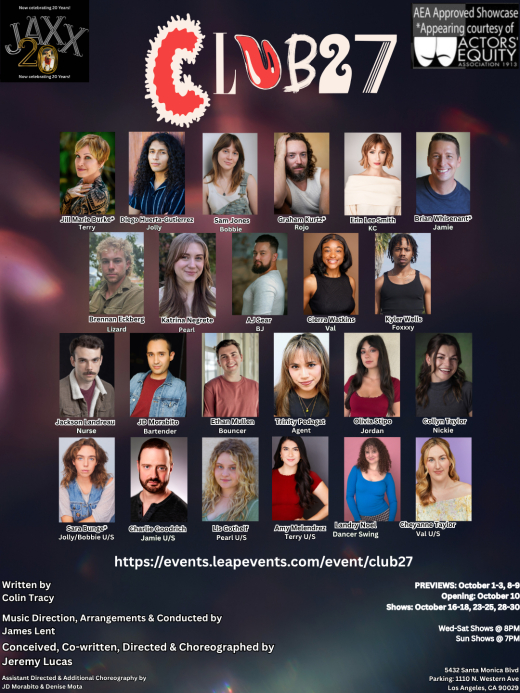
CLUB27 Jaxx Theatre (10/01-10/30) |

|
The Cottage North Coast Repertory (10/28-11/22) |

|
Woof Odyssey Theatre (10/03-11/08) |
|
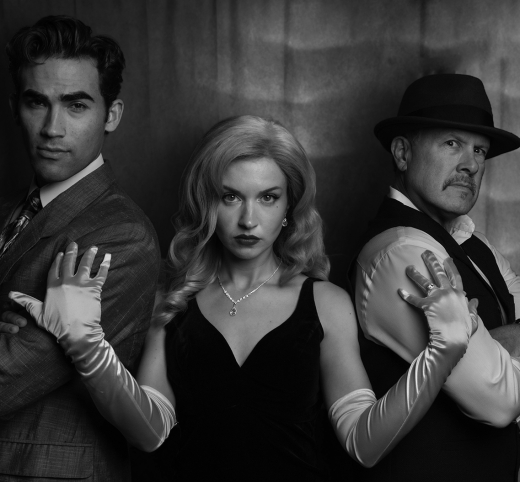
A Killer Night in Studio City Vitello's (9/06-10/31) |

|
Adam Pascal Feinstein's at the Nikko (10/23-10/24) |
|
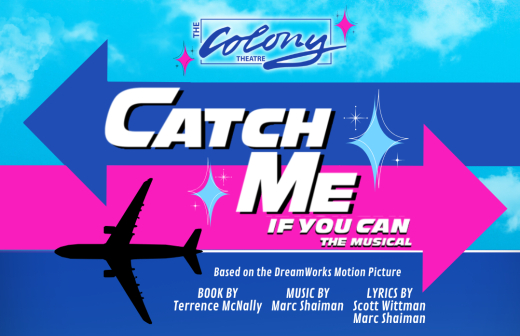
Catch Me If You Can Colony Theatre (9/17-10/18) |

|
EVITA Valverde Annex (10/17-10/25) |

|
Dear Evan Hansen La Mirada Theatre for the Performing Arts (10/30-11/22) |

|
TST's 13th 10-Minute Play Festival Towne Street Theatre (10/03-11/01) |

|
#TheSocialMediaPlay La Mirada Theatre for the Performing Arts (5/06-5/06) |
