


Interview: Producing Artistic Director Jada Suzanne Dixon On Curious Theatre Company's Season 29 at Cleo Parker Robinson Dance
The four-time True West Award recipient discusses a historic partnership between two Denver cultural institutions.
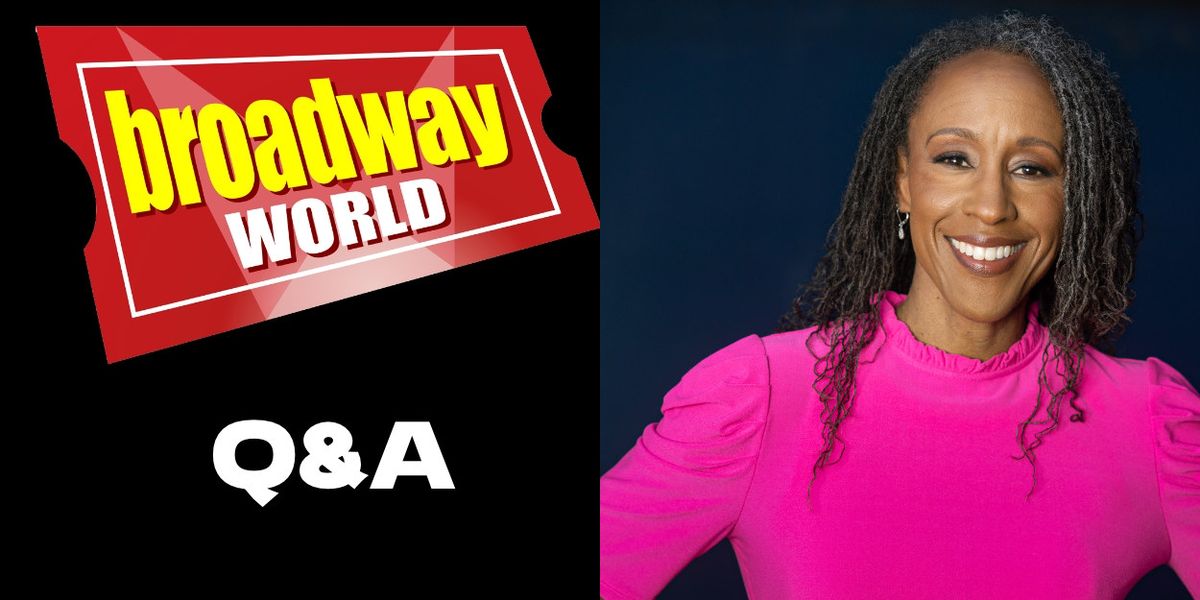
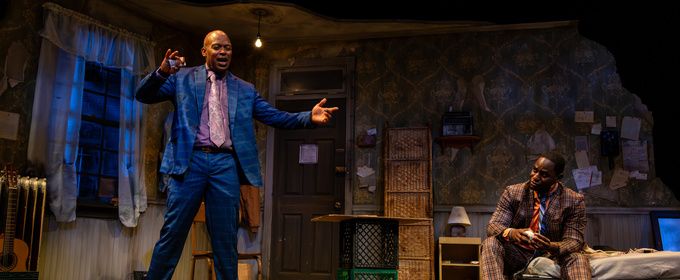
Curious Theatre Company is producing its 29th season in residence at Cleo Parker Robinson Dance's Historic Shorter AME building while its longtime home at 1080 Acoma undergoes a planned renovation. The historic partnership brings together two enduring Denver cultural organizations, and Season 29 features three regional premieres alongside a modern classic: TOPDOG/UNDERDOG by Suzan-Lori Parks, ONE OF THE GOOD ONES by Gloria Calderón Kellett, MARJORIE PRIME by Jordan Harrison, and PURPOSE by Branden Jacobs-Jenkins.
For Producing Artistic Director Jada Suzanne Dixon, the residency carries profound personal significance. An actress, director, and playwright whose work has been seen across Colorado stages, Dixon danced at Cleo Parker Robinson Dance as a child and credits the program with shaping her storytelling. Her directing credits include CULLUD WATTAH, AMERICAN SON, AMERIKIN, and POTUS at Curious, THE ROYALE at BETC, and STICK FLY at the Arvada Center. A four-time True West Award recipient, she was named 2022 Colorado Theatre Person of the Year.
The connection runs even deeper: Dixon's father, former Denver City Councilman Bill Roberts, played a role alongside civic leader Rachel Noel in helping CPRD secure the Historic Shorter AME building as its home in the late 1980s.
BroadwayWorld spoke with Dixon about what it means to return to the space that shaped her as an artist, the family legacy woven into this residency, and the question at the heart of Season 29: who are we to each other?
What does it mean to you personally to be producing Season 29 at Cleo Parker Robinson Dance, given your history with the organization as a young dancer?
Producing Curious Theatre Company's 29th Season at Cleo Parker Robinson Dance feels deeply personal and, in many ways, like coming full circle. I was a young dancer at CPRD, so it is a company that has been part of my story for a very long time. There's also a beautiful connection through my father, who was a supportive figure in helping CPRD secure and establish its home at Historic Shorter AME. So to now be leading Curious into that same space feels incredibly meaningful. I'm thinking a lot about legacy, how the spaces and people who shape us early in our lives continue to influence where we go and what we build. CPRD gave me an early experience of what it means for art to be rooted in community. Now, I get to bring Curious into that same environment and continue that tradition in a new way. It feels less like we are simply borrowing a space for a season and more like we are stepping into a place that already has a meaningful connection to my family, my artistic journey, and the history of Denver's arts community.
How did your early experiences studying dance at Cleo Parker Robinson Dance shape your approach to storytelling and directing theatre?
My early experiences studying dance at Cleo Parker Robinson Dance taught me that storytelling doesn't begin with words, it begins with the body. Dance taught me to pay attention to rhythm, space, gesture, breath, and the relationship between people in a room. Those lessons have stayed with me throughout my career as an actor and director. As a director, I'm always thinking about what is happening underneath the text. What is the body telling us? What happens when someone enters a room? Where is the tension held? How does an audience experience the story physically and emotionally, not just intellectually? CPRD also gave me an early understanding of the power of ensemble and community. There is something about making art with your whole body and alongside other people that creates a particular kind of trust and connection. I think that has deeply influenced the way I work with actors. I want the room to feel alive, collaborative, and fearless. In many ways, dance taught me to see theatre as more than a series of spoken words. It taught me to listen for the rhythm of a story, and I still direct from that place.
Can you talk about how this partnership between Curious Theatre Company and Cleo Parker Robinson Dance came together, and what made it feel like the right fit for Season 29?
The partnership came together out of both necessity and opportunity. Curious recently entered into a sale-leaseback of our longtime home at 1080 Acoma, which meant that for Season 29 we needed to find a temporary home while the building undergoes its next chapter. But we didn't want to simply find a space, we wanted to find a partner. Cleo Parker Robinson Dance felt like an especially meaningful fit. There is a shared belief in the power of art to bring people together, engage communities, and create experiences that matter beyond the stage. And, of course, there is a very personal connection for me, having studied dance at CPRD as a young person and having my father play a supportive role in helping CPRD establish its home at Historic Shorter AME. So while the sale-leaseback created the practical reason for us to look elsewhere, the partnership with CPRD feels much bigger than a temporary venue arrangement. It brings two Denver arts organizations with deep histories of community engagement into the same space, and it gives Curious the opportunity to be part of the life and energy of Historic Shorter AME. For Season 29, which asks the question, "Who are we to each other?", that feels particularly resonant. We're literally asking ourselves what it means to share space, build relationships, and be part of a larger artistic community. CPRD felt like the right home for that exploration.
What do you see as the broader significance of two long-standing Denver cultural institutions joining forces in this way?
I think there is something really powerful about two long-standing Denver cultural institutions choosing to share space and support one another. Both Curious Theatre Company and Cleo Parker Robinson Dance have deep roots in this city, but we come from different artistic traditions. Bringing those traditions together creates an opportunity to expand what we each mean by community, audience, and artistic practice. For me, it also speaks to the importance of cultural institutions recognizing that we are part of a larger ecosystem. We don't have to operate in silos or see one another as competitors for audiences, artists, or resources. We can share knowledge, space, relationships, and audiences, and in doing so, strengthen the cultural landscape of Denver as a whole. There is also something especially meaningful about doing this at Historic Shorter AME. This is a space with tremendous history and significance, and CPRD has been a vital part of Denver's cultural identity for decades. For Curious to enter that space is an opportunity to listen, learn, and contribute while honoring what has come before us. Ultimately, I hope this partnership reminds people that the arts are strongest when we take care of one another. We are stronger together than we are apart, and I think this collaboration is a beautiful example of what that can look like in practice.
Your father, former city councilman Bill Roberts, was involved in helping CPRD secure the Historic Shorter AME building. How does that family connection add another layer of meaning to this residency?
It adds an incredibly meaningful layer of family history to this residency. My father, former Denver City Councilman Bill Roberts, played an important behind-the-scenes role in helping Cleo Parker Robinson secure Historic Shorter AME as its home in the late 1980s. Alongside civic leader Rachel Noel, he advocated for the preservation of the building and helped make possible the long-term lease that allowed Cleo and her organization to establish itself there. My father cared deeply about community, civil rights, and the preservation of Black history and culture in Denver. He understood that protecting a physical space could also mean protecting the stories, traditions, and possibilities that live within that space. His work to help CPRD establish itself at Historic Shorter AME was part of that larger commitment. So there is something incredibly moving for me about returning to this building, not only as someone who studied at CPRD as a young dancer, but now as the artistic leader of another Denver arts organization. My father helped create the conditions for CPRD to have a home here. CPRD helped shape me as an artist. And now Curious is getting to make theatre in this historic space. I think a lot about the idea of legacy. My father was working to make sure this building remained a place where culture and community could thrive. Decades later, I have the privilege of being part of that story in a different way. It feels like a reminder that the work we do in the arts can have a much longer life than we ever get to see, and that sometimes we are carrying forward work that our parents and our communities began long before we understood its significance.
How will the Historic Shorter AME building's unique space and history influence the way the Season 29 productions are staged and experienced by audiences?
Historic Shorter AME has a presence that you can't ignore, and I don't think we should try to. The building carries history, memory, faith, activism, and community. When audiences walk into that space, they are entering somewhere that has held generations of people and stories before us. That inevitably changes how theatre is experienced. For Curious, it gives us an opportunity to think differently about how we stage the work and how we invite audiences into it. We are not simply putting our productions into a different theatre; we are creating theatre in a space that already has its own story and its own relationship with the community. That creates an interesting tension and, I think, a beautiful opportunity for the productions to feel more immediate and intimate. It also asks us to be thoughtful about the history we are entering. We want to honor the significance of Historic Shorter AME and the legacy of Cleo Parker Robinson Dance while still allowing each production to have its own artistic identity. The architecture and character of the building will inevitably become part of the audience's experience, sometimes consciously and sometimes subconsciously. And that feels particularly appropriate for Season 29. Our season asks, "Who are we to each other?" Producing these stories in a building so deeply connected to Denver's history and community gives that question another dimension. The audience isn't just watching a story; they are experiencing it together in a place that has been a gathering space for generations. I think that makes the act of coming together for theatre feel especially meaningful.
What was your curatorial vision behind the four plays chosen for Season 29, and what do you hope audiences take away from the season as a whole?
The curatorial question behind Season 29 is simple, but I think it's one of the hardest questions we can ask: Who are we to each other? I wanted these four plays to approach that question from very different angles. TOPDOG/UNDERDOG asks us to look at family, identity, power, and the bonds that can both hold us together and tear us apart. ONE OF THE GOOD ONES examines how we understand ourselves within our families and communities, and what happens when our ideas about who we are are challenged. PURPOSE asks us to wrestle with legacy, activism, responsibility, and what it means to inherit a movement while trying to determine what comes next. And MARJORIE PRIME takes us into questions of memory, technology, grief, and what we are willing to do to maintain our connections to the people we love. They are very different plays, but each one asks us to look at our relationships, to family, to community, to history, to our own identities, and ultimately to one another. I also wanted Season 29 to be a season that feels alive and varied. Four plays gives us four very different theatrical experiences, but there is a conversation happening between them. I hope audiences leave each production with questions rather than easy answers. I want them to laugh, wrestle, disagree, recognize themselves, see someone else's experience differently, and hopefully walk out of the theatre a little more curious about the people around them. At its heart, that is what Curious has always tried to do: use contemporary theatre to create a space where we can examine the world we are living in, and our place within it. For me, Season 29 is an invitation to come together and ask, honestly and without easy answers: Who are we to each other, and what do we owe one another?
Season 29 includes both a Pulitzer Prize-winning classic in TOPDOG/UNDERDOG and three regional premieres. How do you balance honoring established works while championing new voices?
For me, it's not really a choice between honoring established work and championing new voices. I'm interested in what happens when we put the two in conversation with each other. TOPDOG/UNDERDOG is an extraordinary piece of American theatre, and Suzan-Lori Parks' work continues to feel urgent. A great play can change over time because we change as audiences and as a society. Revisiting an established work allows us to ask new questions of it and to see what it has to say to us now. At the same time, one of the things that makes Curious distinctive is our commitment to contemporary playwrights and new work. Three regional premieres give our audiences the opportunity to encounter stories and voices that may be unfamiliar to them. There is an excitement and a responsibility in being part of the early life of a play, helping introduce it to a community and creating space for audiences to engage with a writer's work for the first time. I also think there is something important about having both in the same season. The established work gives us a point of connection to the theatrical canon, while the new work asks us to consider where that canon is going next and whose stories are being added to it. Ultimately, I want Curious to be a theatre where audiences don't know exactly what they are going to encounter, but they trust that whatever we put on our stage will give them something worth wrestling with. Whether a play was written decades ago or is being seen in Denver for the first time, the question for me is always the same: Why does this story need to be told here, and why does it need to be told now?
Why must audiences come and check out this season of shows?
Because this season is going to make you feel something, and hopefully make you think about something you didn't expect to think about. Season 29 is a chance to experience Curious in a completely new environment at Historic Shorter AME, while still getting what audiences have come to expect from us: bold storytelling, extraordinary artists, and plays that aren't afraid to ask difficult questions. These four productions are wildly different from one another, but they all invite us to look more closely at ourselves, our relationships, our communities, and the world we are creating together. And I think there is something special about experiencing theatre right now. We are living in a time when it is very easy to retreat into our own corners. Theatre asks us to do the opposite. It asks us to sit next to strangers, listen to a story together, laugh together, wrestle with uncomfortable ideas together, and maybe walk out seeing something, or someone, just a little differently. Plus, we're making theatre in a building with an incredible history, and there is something really exciting about experiencing Curious in that space for the first time. So come curious. Come ready to laugh. Come ready to be challenged. Come ready to have a conversation afterward. You might love every play. You might wrestle with one. You might completely disagree with another. That's the point. We want to give you something to talk about when you leave the theatre.
Curious Theatre Company is a Denver-based professional theatre dedicated to producing provocative, socially relevant work that fosters dialogue, connection, and community. Season 29 is produced in residence at Cleo Parker Robinson Dance's Historic Shorter AME building, with Curious set to return to its renovated home at 1080 Acoma for its 30th season. For updates on Season 29 performances, tickets, and the renovation timeline, visit CuriousTheatre.org.
Prefer BroadwayWorld in Google Search?
Add us as a preferred source so our stories show up more often in Top Stories and Google’s AI answers — for you.
Sign up for all the news on the Fall season, discounts & more...
|
bogfriends Singleton Theatre (1/15-2/21) PHOTOS |
![Boulder Ballet presents [In] Human in Colorado](https://cloudimages.broadwayworld.com/regionalshows/nd6aa9b5ae42e5a.jpg)
|
Boulder Ballet presents [In] Human Rocky Mountain Repertory Theatre (10/10-10/10) |
|
HYPNAGOGIA: A Modern Lilith Folktale and Circus Adventure Elaine Wolf Theatre (10/09-10/11) |

|
Hold On To Your Butts DCPA Cabaret (9/16-10/04) |
|
mike. – Mike Stud Red Rocks Amphitheatre (11/14-11/14) |
|
BOOP! The Betty Boop Musical Buell Theatre (3/09-3/21) PHOTOS |
|
Center for Musical Arts Free Faculty Concert Center for Musical Arts (11/01-11/01) |
|
Pianist Jean-Baptiste Doulcet at Center for Musical Arts Center for Musical Arts (10/02-10/02) |
|
Little Shop of Horrors 40th Anniversary Tour with Ellen Greene (the Original Audrey) Paramount Theatre (9/23-9/23) |
|
The Snowy Day & Other Stories PACE Center (10/06-10/06) |
