


Review: Fall for Dance, in Retrospect
Fall for Dance's dynamic final program excavates what the festival—and consequently, dance itself—has been and is becoming.
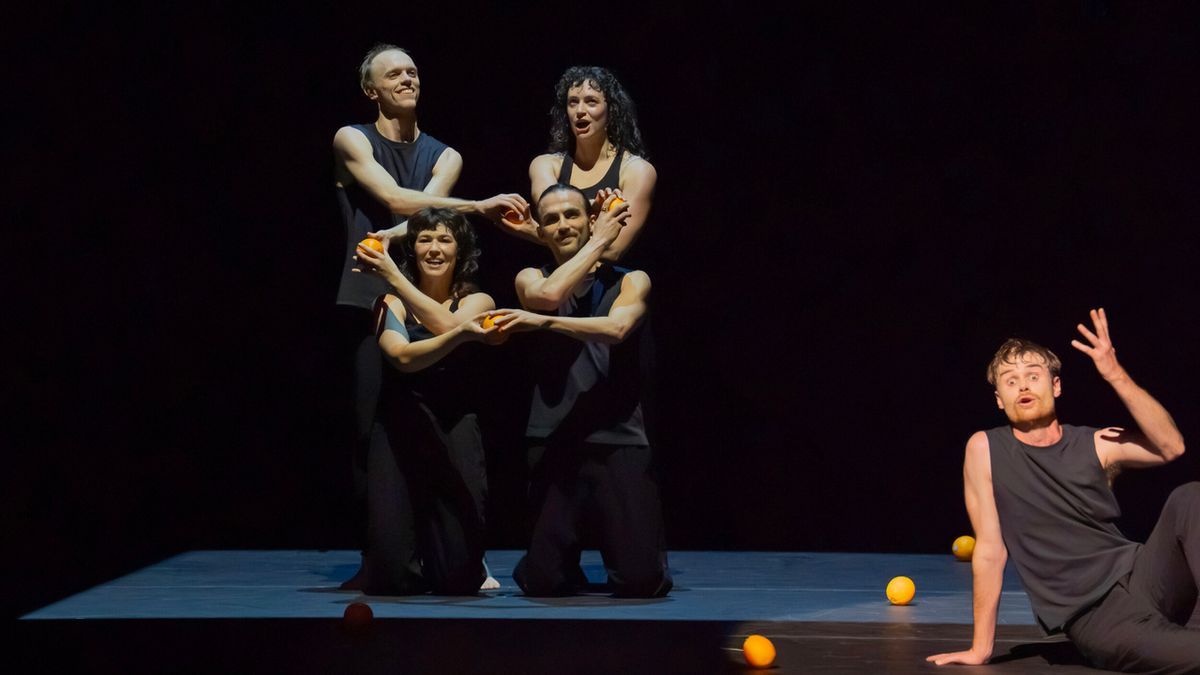
The Australian theatre collective Pony Cam’s world premiere "kinda like that" begins with a question: what is Fall for Dance, anyway? Now in its 23rd iteration, the City Center festival’s stated purpose is to highlight the world’s best choreographers, companies, and dancers, offering both the dance hungry and dance curious a smorgasbord of styles.
For the most part, these artists’ reputation precedes them. Not so with Pony Cam—the five-member collective is embedded in the world of experimental, immersive theatre, not dance. Yet their outsider status makes them perfectly suited to excavate what the festival—and consequently, dance itself—has been and is becoming. They are archivist-entertainers: in preparation, they reviewed the 472 dance works presented in the 22 preceding shows. They took note of what showed up, and what kept showing up. Then they pieced it all together.
“Everything you’re about to see has happened on this stage before,” declares Claire Bird. A carousel of choreographers’ names appear on the screen, and the group imitates their style. Often, the references are legible. Increasingly, they bleed into each other. It becomes hard to parse where one maker stops and another begins, but that’s the point. “Someone does something, someone does it again, and it changes a little,” Bird says of the Fall for Dance archives. Dance is accretive—it’s impossible to set a single movement without referencing everyone who did it before you—and even the most solitary-seeming choreographers are collaborating with the past.
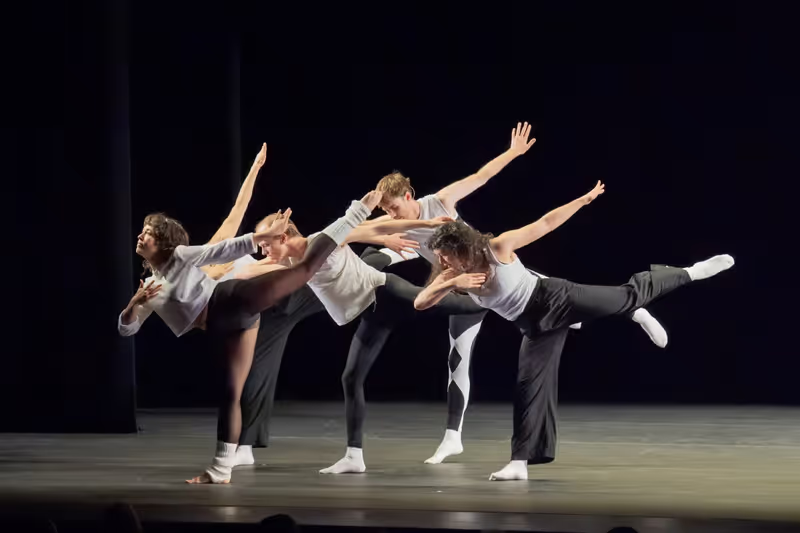
"kinda like that" is as much a delightful romp through dance history as an ode to it. The collective pokes fun at the festival’s aesthetic preoccupations—so many shirtless dancers! so many variations on Bach’s Goldberg variations!—and in doing so, trace the echoes that connect different generations of movers and apparently disparate styles. They recreate moments from the festival’s most iconic dances—flying off chairs in canon (Naharin), juggling (Gandini), dying in a swanlike fashion (Fokine). They’re less interested in faithful restagings than in evoking what critic Arlene Croce called dance’s “afterimage”: what stays with us after a dance has ended. What does it mean to remember a dance, privately and together? Thoughtfully and unpretentiously, Pony Cam shows us that these memories can be found in the Fall for Dance archives, but they are just as vivid and real in the minds of everyone who’s witnessed these shows and in the bodies of everyone who’s danced them.
Unable to find footage of one dance—Eiko and Koma’s "Snow" (1999)—they offer up an afterimage: excerpts of critic Jack Anderson’s poetic New York Times review of the performance, recited to falling snow. Disappointingly, in a work so concerned with memory, they do not cite Anderson by name. Yet "Snow" comes to life, even in the absence of dancers. The traces left behind form a choreography of their own.
I couldn’t help but note these traces in the dances that followed: Alexei Ratmansky’s "Roses from the South (Three Waltzes for Toby)" performed by Miami City Ballet, and Stephanie Lake’s "Seven Days," performed by the Australian Ballet. Organized into seven different iterations of the same dance, "Seven Days" is performed, hilariously, to the Goldberg Variations, and half of its dancers are shirtless. As the sun (a mesmerizing, glowing searchlight designed by Bosco Shaw) rises—infusing the piece with an almost sacred aura—each iteration adopts a new movement idiom.
While these classically trained dancers’ shapeshifting skills are impressive—Adam Elmes’ leggy elasticity is frankly jaw-dropping—what’s truly compelling is each dancer’s ability to make the movement their own. The result is a propulsive display of precision and control tempered by the unpredictability of the dancers’ own creative impulses.
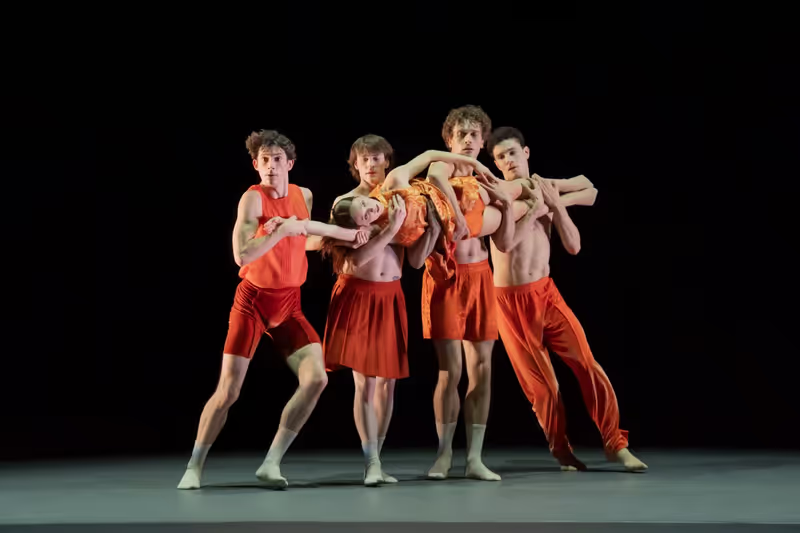
Though less on the nose, Ratmansky’s "Roses from the South" similarly reverberates with echoes of dances past. The dance toys with our expectations of what a classical waltz can and should look like: there are women clad in princess-like dresses; there is classical music (Strauss); there is buoyant, gliding dancing, easy and appealing to watch. So far so good. Then the men enter, and rather than partnering the women, they spin, lift, and throw one another. They are powerful and strong, but they are also tender—holding hands, sharing embraces—revealing a level of sensitivity and emotional depth rarely available in men’s ballet.
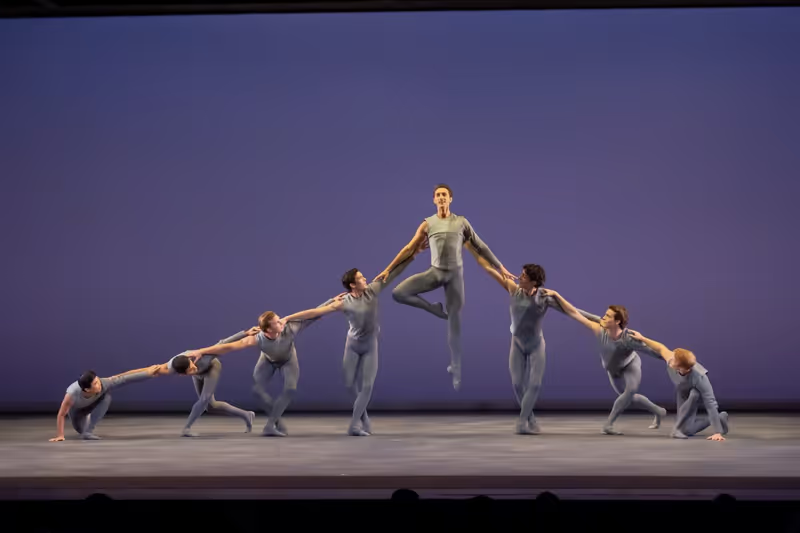
Pedestrian gestures abound—at one point, Macarena Giménez playfully shimmies at her partner—but they aren’t just played for laughs. They’re a nod to the fact that even classical ballet can’t be kept separate from the world around it. These collisions between the polished world of ballet and a messier reality pile up in the final waltz: one dancer “passes out,” another loses track of her partner, who’s found meditating in the corner. It’s a more absurd version of Jerome Robbins’ Mistake Waltz (1956), though just as charming.
Then the curtain closes, and just like that, another Fall for Dance festival enters the archives. I cling tight to its afterimage, both fleeting and enduring.
New York City Center is located at 131 West 55th Street, New York, NY 10019. For tickets to upcoming performances at the Center, please visit Home | New York City Center.
See more BroadwayWorld in Google
Our stories show up more often in Top Stories and Google’s AI answers.
Breaking Broadway alerts by text
Get the biggest stories sent straight to your phone.
Sign up for all the news on the Fall season, discounts & more...

Reader Reviews
To post a comment, you must register and login.