What Broadway Leaders Don't Say - But I Learned As A Fellow
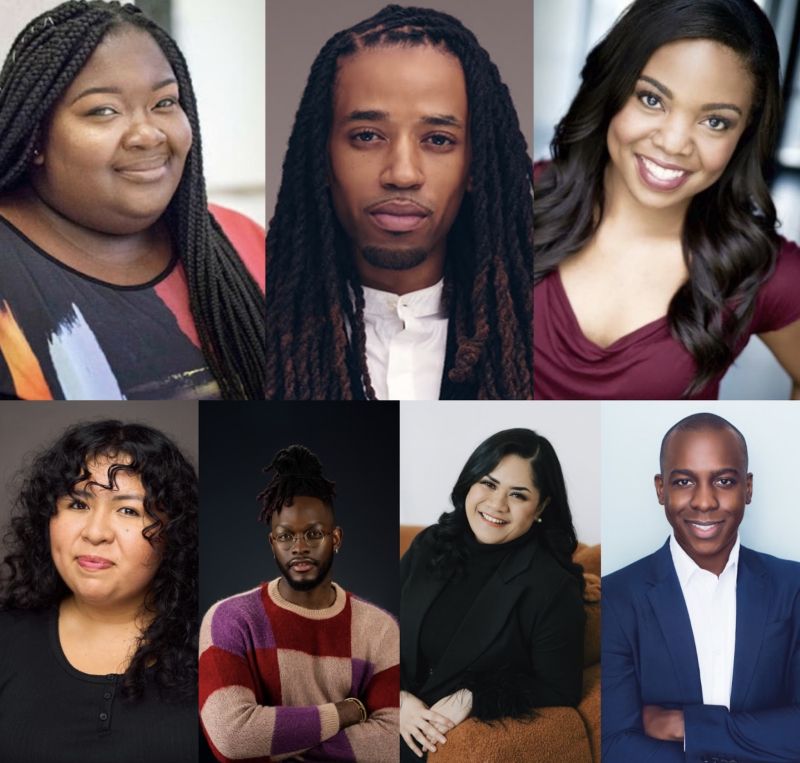
I spoke with several fellows: Eric Emauni, Brandi Knox, Brissa Lopez, Irvin Mason Jr., Pua Patu-Tanielu, and Lamar Richardson.
I’ll never forget the thoughts swirling around in my head after I was interviewed: “Did I answer that question right?” and “Will I get it?” On June 23, 2022, I opened an email letting me know I had been selected as a Prince Fellow with additional support from The Theatre Leadership Project. The Prince Fellowship honors the legacy of Broadway legend Harold Prince and is designed to support the development of emerging creative theatrical producers.
At the time, I had been teaching theater for over a decade in the Washington, D.C., area. I founded my own production company, SoulFLY Theatre Society, in 2010, independently producing numerous stage shows and films, and had just begun producing new media content during the pandemic. I was awarded Best Director at the Urban Film Festival, nominated by colleagues and students for the Excellence in Theatre Education Tony Award, and deepened my understanding of commercial producing as part of the 2022 Theatre Producers of Color cohort. I was looking for the next step to expand my reach and strengthen my work as a creative producer, and the Prince Fellowship stood out.
I was excited. This was a blessing. As an educator, I always tell my students to dream big and pursue those dreams, and in this moment, I was practicing what I preached.
The next three years I spent navigating the Broadway space in New York City were a rollercoaster. What keeps this machine running are the producers, general managers, stage managers, company managers, and directors. Without their dedication, the curtain simply doesn’t rise.
Many fellowship programs help emerging leaders learn the craft and business of theater, in both nonprofit and commercial spaces. For this article, I spoke with several fellows: Eric Emauni (Prince Fellow ‘24/25), Brandi Knox (The Theatre Leadership Project ‘21–23), Brissa Lopez (Cody Renard Richards Scholarship Program ‘25), Irvin Mason Jr. (Drama League Stage Directing Fellowship ‘24–26), Pua Patu-Tanielu (Rising Stars Fellowship Program ‘25), and Lamar Richardson (Front Row Productions Fellowship ‘22), about five things Broadway leaders don’t often say but that we learned as fellows.
Socioeconomic Status Shapes Your Entry Point
Once I accepted the fellowship, I sent my resignation email, heartbreakingly said goodbye to my students, leaned on the support of my family and friends, and even cried with my goddaughter because we were inseparable and now had to part ways. I set off to learn and chase my Broadway dreams, only to quickly realize that the hustle and bustle of the city was nothing compared to Broadway’s financial demands, and I wasn’t in a place to compete on equal footing.
Eric Emauni, who has participated in fellowships with Harlem Stage, National Black Theatre, AKA, The Broadway League, and most recently became the first Black man awarded The Prince Fellowship with additional support from The Theatre Leadership Project, reflected on his own journey into the industry. He explained that he came into Broadway without wealth, connections, or support: “I moved to New York by myself to go to grad school and knew no one. Had no connections, nothing. So in the 10 years that I have been in New York, my trajectory has been exactly what I have tried to tailor-make it to be, because I knew I had to come in with the gas on the floor. In the 10 years that have occurred, sure, my access to certain spaces has changed. My privilege has changed. My access to resources has changed. But socioeconomically, I'm still at the bottom of the barrel. It became very clear to me who’s able to make money in this business.”
Pua Patu-Tanielu, 2025 recipient of the Rising Stars Fellowship through The Broadway League, learned a lot during her weekly sessions with producers and theatre makers. She noticed that most Broadway leaders entered the industry from very different circumstances. She recalled a creative development session with two female producers, saying, “Both of them had married into money. It was clear to me that if I wanted to be a lead producer on Broadway and be very well respected like the great producers that are present now, that I would have to work my ass off and would have to sacrifice having a family, essentially, because there was only one woman who had a family who came and spoke with us. And she said that the industry is not kind to women, and they're not kind to mothers. And so I knew that I would have to choose. I would also need to either have access to money or know people with money. And I don't have that.”
Pua believes that fellowship programs should include leaders who have struggled and still built careers so participants can relate more deeply. She offered, “My advice for fellowship founders is to also bring in people who have struggled and still have built a career so that participants can resonate more with them or, you know, connect with them more, because it was hard for me.”
While socioeconomic status clearly shapes your entry point, it is critical for marginalized groups to enter and claim space in the industry. Preparation and strategizing before and during entry are key. Lamar Richardson, 2022 recipient of The Front Row Productions Fellowship, echoed this, emphasizing the financial realities of being a commercial producer. He noted that for someone without generational wealth or existing support, entering the field can be risky. “I do think there needs to be significant savings or an easing into the career field, but still retaining some kind of supplementary work elsewhere, whether that is full-time, part-time, or contract. People have to be comfortable with the fact that it can take a long time for you to get back any of the money you invest in yourself and your career, if you do at all, especially as a producer. People coming from marginalized communities and disparate socioeconomic statuses face a barrier to entry in terms of sustainability here. To best set yourself up for success, you would want to be somewhere financially where you could sustain a couple of months, if not years, of not making any money.”
Broadway Is a Business — and Business Realities Affect the Art
When searching for the fellowship program that felt like the best fit for me, one quote from Hal Prince on the Prince Fellowship website caught my attention: “The philosophy is that which is good for the art form is good for the business. The Fellowship emphasizes that the creative producer’s role is to be the instigator, the collaborator, and the leader who gets art on the stage and to the public.” Cue lightbulb. I was living and breathing this work, and I felt strongly that mentorship, coursework, and hands-on immersion in commercial producing would deepen my understanding and practice. It did just that.
Irvin Mason Jr., the current recipient of the 2024–2026 Drama League Stage Directing Fellowship, reflected, “I already had a good sense of where I was as an artist, but what I was missing was the connection to the industry and really seeing how this industry works. As a director, it’s important to understand how to produce a show, how an artistic director puts a season together, and what it means to be part of American theater. I was looking for a hands-on experience, and I got that and more from this fellowship.”
Brissa Lopez, a scholar in the 2025 Cody Renard Richards Scholarship Program, felt similarly: “We became scholars and every month did Zoom sessions where people from different disciplines would come in, talk to us about the industry, pose questions about how we could better the industry, and have conversations within our cohort. Sometimes it was with people outside the scholarship program, sometimes it was Cody or other program leaders.”
For all of us, these courses, Zoom sessions, mentor meetings, and hands-on experiences enriched our understanding of the industry. But alongside the learning came a broader perspective: a bird’s-eye view of how the business operates and how deeply it affects the art.
Lamar Richardson reflected, “I always thought art would come first, but it’s so much more business-driven. It’s about the product, commercial viability, and the key players on your creative team. Who’s backing you, in terms of co-producers or investors? It’s very much like sales. Coming from real estate, I saw the same through line. You’re packaging and selling. My actor brain wants everything to be artistic, but my producer brain learned quickly that artistic vision isn’t enough, and that was a big wake-up call for me.”
The real estate aspect is a major part of forging through the Broadway model, and it lingered in my thoughts as I navigated the space. Broadway is a real estate business first. Ticket prices are high because rent and labor costs are high, and the work on stage has to appeal to ticket buyers. The ticket buyers who are most often targeted are those who can afford the price point, which means the art being produced tends to cater to their tastes.
Brandi Knox, who began her General Management career through support from The Theatre Leadership Project Fellowship and worked hands-on Broadway shows during her time at ShowTown Theatricals, added, “The maintainability of theater means making sure we can put butts in seats. If you don’t know how to reach certain audiences because you aren’t diverse yourself, we will never get there. Broadway is very old school and stuck in its ways in a lot of aspects.”
Eric Emauni emphasized the importance of diversifying both the work and the audience to keep art strong despite the financial realities of the business. “Considering the makeup of New York and the audiences we’re trying to attract, post-pandemic tourism, and the cultural gumbo of not just the city but the world, if you’re not doing work that speaks to the masses, that is innovative and culturally relevant, you’ll have a problem. If we look at shows that are still successful, Hamilton, Lion King, Wicked, these works succeeded because they were innovative, culturally diverse, and offered something new to audiences craving to be seen and heard.”
Hal’s philosophy is right: what’s good for the art is good for the business. Broadway must reconnect with why this art form exists in the first place: to be of service to people. All people. The art should not suffer, and communities should not be overlooked simply because they are not centered in the stories on stage or cannot afford the price of admission. Diversity in audiences should help shape, inform, and strengthen the business model itself.
The Fullness of Who You Are Can Be a Liability
Another reason I was drawn to the Prince Fellowship was the legacy of Hal Prince himself. Prince was a director, producer, and co-conceiver of many musicals in the American musical theatre canon. He directed and produced Cabaret, which was such an inspiration to this DC girl who dreamed of a similar trajectory. I walked into my fellowship fully aware that I was a multihyphenate artist, and I intended to use everything I learned to inform the richness of my artistry.
What made the Prince Fellowship especially meaningful was the opportunity to take Theatre Management and Producing MFA classes at Columbia University. As I sat in those classes learning the Broadway business model and seeing what it takes to move a musical from development to a Broadway stage, I realized I wanted to expand even further. Not only did I want to support the work I had pitched to gain entry into the fellowship, but as a writer and director I felt it would be remiss not to take advantage of all the coursework offered at an illustrious institution like Columbia.
What a benefit it would have been to take one of the MFA directing classes to strengthen my directing practice and the American Musical Theatre Writing class to inform my writing of a new musical. That idea, however, wasn’t received particularly well by advisors, as producing was why I was there and what I was expected to focus on.
“I feel like Broadway in particular is very siloed. I'll never forget,” Lamar Richardson confides, “literally having dinner with a Broadway investor and saying that my goal was to be both a successful actor and producer, and they laughed in my face. I will never forget it, literally laughed in my face, like, who do you think you are to be able to do that? And it just lives with me rent-free because it just shows that people are so unwilling to accept people for who they are. And they place limitations on you based on their own limitations or fears or their own experiences.”
Oddly enough, the majority of the fellows in this piece are multidisciplinary artists. Brissa is a playwright and producer, Eric is a producer and writer, Brandi is an actor and general manager, and Pua doesn’t consider herself multidisciplinary but has an acting background. Our lived experience in the Broadway landscape, attempting to practice the fullness of our artistry, is often met with opposition.
Brissa recalled a conversation she had with Broadway director Whitney White while participating in the Cody Renard Richards Scholarship Program. “I had a really great conversation with Whitney White who talked about being a multi-hyphenate and how she often would go into these rooms being her full self, but at that time the industry wasn't really ready for a director, actor, playwright, producer. It wasn't until she was able to level up as a director that people finally were like, oh, Whitney White is this amazing multi-hyphenate. And that really resonated with me as a producer, playwright.”
It’s not that multi-hyphenates don’t exist on Broadway. They do. Look at Whitney White, Lin-Manuel Miranda, Jordan E. Cooper, and more. It just feels harder to stand in that identity when the landscape often forces you to choose one.
Pua Patu-Tanielu believes that skepticism toward multi-hyphenate artists is rooted in the industry’s own fears. “I feel like our industry is not into people doing all of it. And I think that's like a fear of, if you're doing all of it, you can't be great at one thing, but I don't think that's true. I think people just don't believe that one person can do it all. The playwright, lyricist, the producer, and the star of the show all in one? People don’t believe it. I honestly think that's an ego thing because there should be no reason as to why we don't make space for multi-hyphenates.”
Through his company, Iconic Vizion Productions, Eric is creating that space. “I'm a producer, I can general manage my show also, and I can probably be writing it. And I know how to do all of those things in quality fashion. I know how to be a generative artist, I know how to be a business mind, and I know how to draft contracts and talk to people. There hasn't, there is not a space that I have occupied that has been able to honor all three of those things. That doesn't exist. I am going to change that through my company.”
In a similar vein, I am cut from an Audre Lorde cloth. When she said, “even if you are afraid, do it anyway,” I took that to heart. Even when the pushback was real, I persisted. Alongside a hefty Theatre Management and Producing course load, I also took American Musical Theatre Writing. By the end of the year-long academic curriculum, I completed the Columbia coursework as a stronger and more expansive artist, without compromising any of my responsibilities. I also began writing a new musical. In an industry that often treats the fullness of artists as a liability, it’s important for the multidisciplinary artist to choose to treat it as your strength.
You’ll Feel Alone Before You Find Your Tribe
Irvin found that his fellowship with The Drama League required him to stand firmly on his own. “There's not a lot of handholding,” Irvin Mason Jr. says frankly. “It's like the Drama League and the fellowship put me in the room and it was my job to seal the deal, to make sure the door stayed open behind me, you know, like it didn't close. Just kind of tossed in the deep end and learning how to swim. So it was really up to me to make sure that people saw me.”
This level of independence and navigating the industry largely on your own, even with the support of a fellowship, is common.
Lamar Richardson reflects, “You come into these industries with all these expectations and ideas of what actually happens and what you should look forward to. But I was really surprised to see how independent this path is. You're an independent contractor, you're an entrepreneur, a CEO, and you have or don't have whatever you set yourself up for. If you're not the one to reach out to someone for a meeting, you're not going to get offered one. If you're not the one to take initiative and say you want to join X show that's coming to Broadway, no one's going to be checking for you. So it was really interesting for me to see what I thought would be a big grand welcome because of the headlines and all these things that come when you get the fellowship. It really was more like, “Here's the fellowship, now go.”
Though this experience can feel lonely, like being stranded at sea trying to tread water, somewhere along the journey you realize you’re closer to shore than you thought. The tribe you begin to build, through connections and by nurturing meaningful relationships, starts to reveal itself.
Brissa Lopez emphasizes the importance of cultivating those relationships. “Following up with those connections, whether it's somebody who came in and did a guest speaking engagement or someone you were connected with one-on-one through your program, following up and creating genuine connections is what ultimately is going to lead to a successful life, really, because people want to invest in people that they feel care for them.”
Lamar admitted that building those relationships can be difficult but ultimately rewarding. He’s grateful for the connection he built with Broadway producer Tom Kirdahy, which led him to joining the lead producing team for the revival of Ragtime at Lincoln Center. “I sat with him and said, ‘Hey Tom, I'm really interested in moving up to the lead producer level now. And I know you have Ragtime coming in. Would there be a possibility to join you all?’ And he saw me, heard me, took it back to the team and everyone agreed because they had all worked with me previously as well. And they said yes. There are the faithful few who are actually doing that work to help usher in the next generation.”
Eric Emauni found his mentorship with Wicked producer David Stone to be just as impactful. “I’ve had close to 20 ‘mentors’ through the years and I know that maybe five of those have taken that relationship seriously. David Stone is one of the few who has shown up, supported my needs, invested time in knowing me and my work, and has been very intentional. I trust his opinions and know I can go to him for real advice. Stay near those people who offer you genuine support and aren’t engaged with you merely for show.”
Similar moments of mentorship continued to shape my own journey. After completing the coursework at Columbia, I had the privilege of working in the P3 Productions office, where Pua currently serves as Associate Producer. Ben Holtzman, Sammy Lopez, and Fiona Rudin welcomed me into their office, which felt like home during the final two years of the fellowship program. It was in the P3 office that I was able to have a hands-on Broadway producing experience. Sammy Lopez, specifically, made room for me. He heard me, he saw me, and that type of mentorship remedied any feelings of loneliness and gave me room to bloom.
Pua uplifted Sammy and the Rising Stars cohort as her tribe during her fellowship journey. “Sammy Lopez takes the position of a mentor for me. He essentially was guiding me throughout the program. But in terms of support that I received, it was really from the cohort that I had. Like there were ten of us, and we're made up of general managers, producers, theater owners, tour bookers. So we all came from different backgrounds and because of that we were able to support each other in a way that, you know, a lot of people in the industry, it takes a lot of work to be able to create a group of people or find your people where you can trust wholeheartedly. And the program gave me that.”
Brissa echoed that sentiment. “What I loved about the Cody Renard Scholarship Program is that it was a fellowship run by POCs and for POCs and it made the environment so safe. The mentorship that I received from Cody, honestly the one-on-one sessions that we had, being able to speak on my future goals, to feel represented by the leadership, to be able to come to them with my honest thoughts, I think it only made me a stronger creative.”
Building your tribe while persevering through the loneliness is key. And even the biggest names in the industry are still just human beings.
“All these people who were artistic directors and leaders who held power at their institutions and later became my mentors during my fellowship,” Irvin recounts, “I realized they were actually people. A lot of them were in the same place I was five, ten, even fifteen years ago. It was so beautiful to take off that layer of expecting a certain type of person and realizing that they too, like me, at their core, are artists.”
In the end, that realization becomes the bridge from feeling alone in the room to realizing the room is full of artists just trying to find their way, too.
Longevity Is the Unspoken Anxiety
So what’s next? What happens after the fellowship?
Brandi Knox began to realize that her progression in the industry as a General Manager had become stagnant. “I was pretty much in an assistant role for my time at Showtown. And I went into the experience not expecting much, but as time went along, I expected to move up further than I actually did. And it sort of became stagnant and pretty obvious that I wasn't going to excel further than what I had. And that's when I decided to venture on. I just didn't progress past the assistant level.”
Brandi has since been focusing on her acting career and most recently appeared in Come From Away at Paper Mill Playhouse.
As Irvin’s fellowship nears its close, he admits he’s a bit nervous. “I'm trying to figure out what after my fellowship looks like. I feel like that's everyone in the fellowship spot. Strictly going into being a freelance director, there's a certain number of shows I need to do a year to be able to survive if I do not want a secondary job. And realistically, I have to work a certain number of shows to make ends meet so I can just live. I am in a place in my career right now where I’m battling what I want to do artistically and what's going to make me happy versus what logistically is going to make sure that I can survive as a human being. And that intersection is hard.”
This hits home for me, as I am currently where Irvin is headed. My fellowship ended last year, and I am now freelancing, fighting to make ends meet while cultivating the art I seek to share.
“Broadway leaders are not hiring emerging directors right off the bat to direct their shows,” Irvin admits sadly. “What we fail to understand is that Broadway leaders aren’t just like, ‘Hey, direct my show.’ They're also trusting you, putting a wager on you, and believing that you are going to produce something that gives them a return. And nine times out of ten they’re going to trust someone who has the experience and the variety or has a proven track record before they would take a bet on a new director.”
That’s a tough pill to swallow after all the fellows in this piece have not only completed their programs successfully, but have also done internships, earned both undergraduate and graduate degrees, independently spearheaded projects, built their résumés, and started companies of their own. What will it take to be trusted by Broadway leaders?
Pua Patu-Tanielu is grateful to have already had a job before participating in the Rising Stars Fellowship, but shared that members of her cohort are still fighting for employment. “I think that the industry is going in a way where we are providing a lot of opportunities for early and mid-career professionals. But there's not a next step after that. Like, I know people from my fellowship program who no longer have jobs, who are looking for jobs. We have the programs, but they're not really helping us diversify and also expand our workforce. It's almost as if it's cosmetic for the industry.”
Even with employment, Pua finds herself wrestling with what longevity on Broadway looks like for her. “I don’t know. I'm still figuring this all out. Reality is starting to kick in and passion can only take you so far. And I want things in my life. Like I want to be a mother and have a stable family. So that's where I'm like, I don't know if theater is gonna be my end all be all.”
I’ve found that once inside the Broadway space, people can forget that theatre, and the entertainment industry as a whole, is wide and vast. Broadway is a microcosm, but the grandeur of that microcosm often keeps people in a bubble.
During his fellowship, Irvin realized this vastness in theatre across the country. “I think being from the Virgin Islands, a very small island, my only view of theatre was the Tony’s. Like the Tony’s is what I used to watch. I was like, oh, theater can only happen in New York City. And for me, the fellowship really forced me to think outside of what New York theater meant and how regional theater is also important. For people who are stuck in the bubble of the Broadway landscape, I would encourage them to expand beyond that. There's beautiful things happening in other parts of the world.”
As Brissa finishes up her Theatre Management and Producing MFA at Columbia while working for theatre and film producer Cindy Tolan, she has been inspired to venture into film as well. “Working with Cindy has opened a door into the film world that I’ve become really enchanted with. I’m especially inspired by how Cindy has been able to move between theatre and film—something very few producers have done successfully. I actually don’t live in reality—I can’t. I have to live in dreams in order to make them happen. I don’t think anyone in theatre feels complete certainty about sustainability, but having my vision makes things feel more feasible.”
What has been comforting to realize is the sojourning that Eric Emauni, Lamar Richardson, and I are all doing as creative producers despite the anxiety that comes when thinking about longevity.
“Broadway is a space that is really unlike most other things,” Eric infers. “There's not a way for you to predict what success will be. There's not a way for you to predict what piece of work will be successful or to predict how audiences will engage with something like it. Everything is kind of up in the air and you have to be so malleable in producing, being able to shift to multiple spaces. No one knows all of the things. No one has all of the answers. There is not a one-size-fits-all in creating and developing the work.”
Eric is amplifying that work and equitable practices through his company, Iconic Visionz Productions.
Though Lamar Richardson is a two-time Tony Award winner, he doesn’t want to limit himself to Broadway’s twenty-mile radius. “We founded Ivy Lion Productions to champion fresh, diverse voices and to really give voice to underserved communities and stories that represent the global audience. I really believe that I'm a disruptor. I'm not interested in being limited by the limitations and parameters placed on me or Ivy Lion by systems that are in place. A lot of times people have their own taste and preferences that they'll try to push onto you and I don't subscribe to it at all. I won't be limited to Broadway only because it's limited real estate in terms of available theaters and the long waitlist to get anything mounted. I'm also very interested in expanding. I’ve already done The Hunger Games in London this past season. There are screen opportunities across television and film, and there are other mediums to explore to accomplish the same thing. I believe there has to be a holistic vision for storytelling and for sharing your artistry and creative lens with the world.”
Though I wasn’t immediately hired after my fellowship, I left with a wealth of knowledge to pour into my company, SoulFLY Theatre Society, and into my work as an artist. I came in with the accolades from exploring a wide range of artistic mediums, and I left with the assurance that if I could navigate the Broadway space, I could navigate anything. Broadway, I’ve learned, is not the destination. It's just one stop along a much larger artistic journey.
Broadway leaders don’t have to say much for you to reap the benefits you can gain as a creative participating in these programs.
Fellowships are never perfect and no two fellows’ journeys are the same, but it is what you are going to make of it,” Irvin Mason Jr. encourages.
“Keep applying, keep applying pressure, keep growing. If you don't get it the first time, apply again and again and again until you get it,” Eric Emauni agrees.
“Have a plan and create genuine connections,” Brissa Lopez advises.
“Ask all the questions that you are afraid to ask,” Pua Patu-Tanielu pushes.
And as Lamar Richardson affirms, “Don't let anything anyone says to you or does to you get in the way and stop you from doing whatever it is you want to do in this industry.”
As Brandi Knox puts it, “Fellowships are not a landing place. They are a stepping stone.”
The real work begins after the fellowship ends, when the rooms get quieter and your vision is your own to forge. What you carry with you, the knowledge, the relationships, and the resilience, is what ultimately shapes the artist and leader you are destined to become.
Sign up for all the news on the Fall season, discounts & more...
.jpg?format=auto&width=300)