
Review: The Steven Feifke Trio Sinks into Classics at Birdland
The pianist and his colleagues deliver dazzle
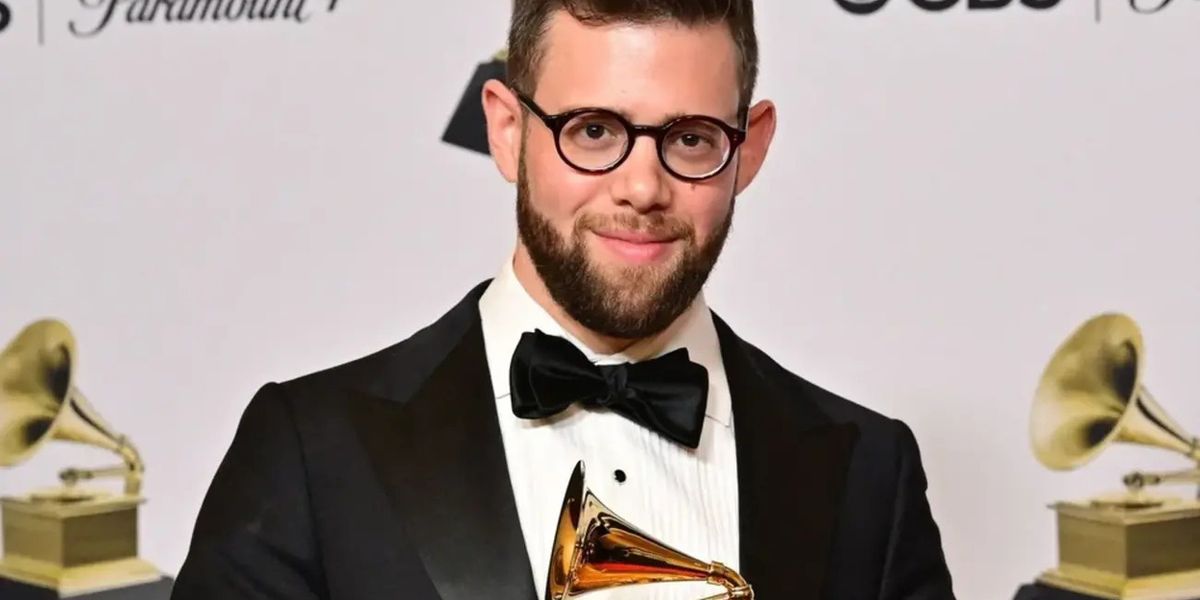
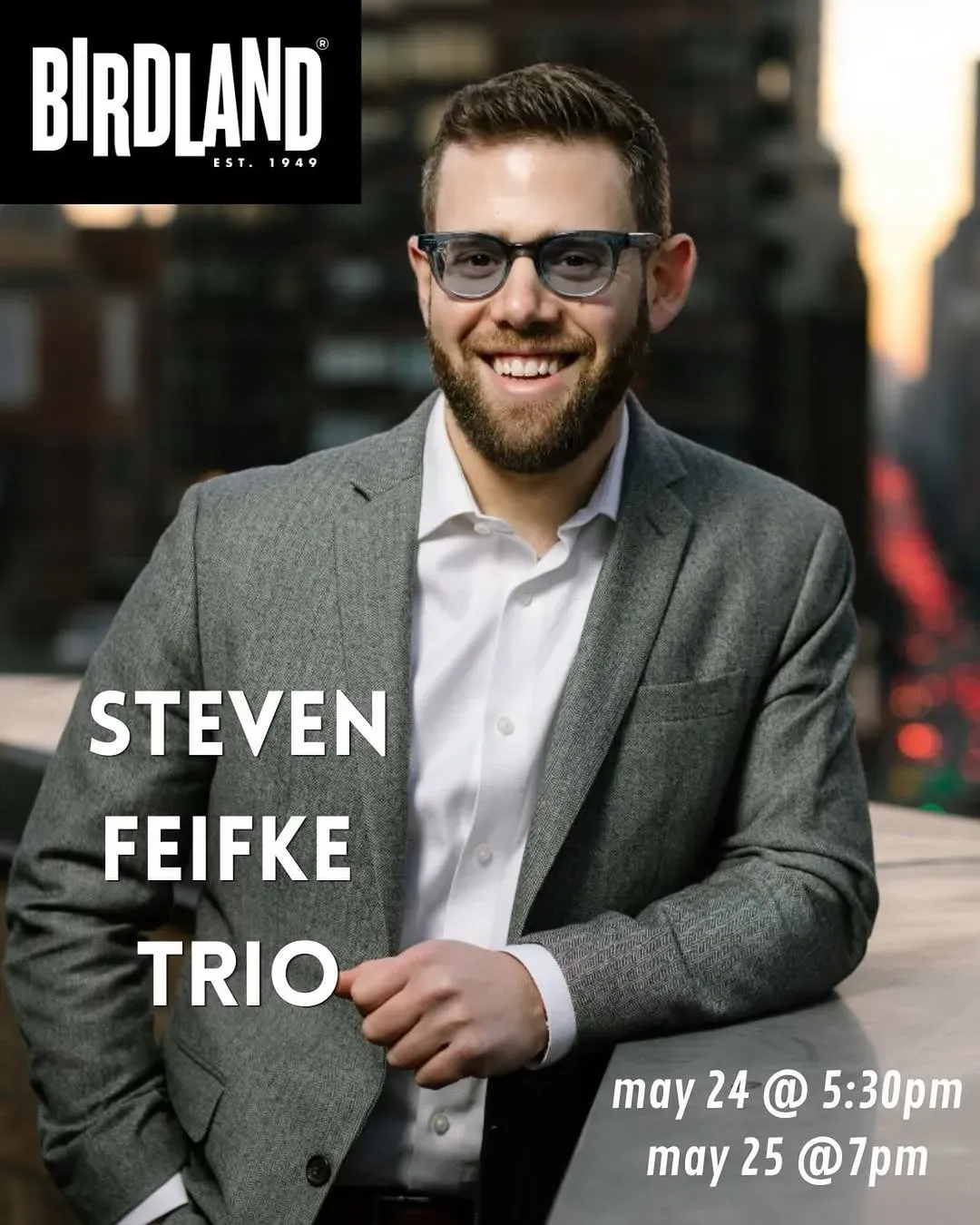
At Birdland Jazz Club on West 44th Street in Manhattan, you can find quite a a variety of jazz. For example, this month you can find the tradition of the legendary Count Basie Orchestra with the group that still bears his name, silky sounds of French-born chanteuse Cyrille Aimee, and this Sunday's return of the endlessly entertaining set of 1920s specialties in the "Hot Combination" recreation of the uber-peppy styles of two of the era's stars with audience favorites Bryce Edwards and Mike Davis and their band. And on May 24 and 25, one attraction was the Steven Feifke Trio, whose Sunday set favored classics from the 1940s with new energy.
Yes, it was Memorial Day Weekend and somewhere in the music world, Bob Dylan, Leslie Uggams, and Patti LaBelle – all born in the 1940s and still with us – were celebrating their happy birthdays, but pianist Steven Feifke (who was born in the 1990s and whose birthday would be celebrated just a few weeks later) was at Birdland Jazz Club, celebrating good music with good vibes, joined by musical mates Phil Norris on bass and Charles Gould on drums. If you weren’t invited to the birthday parties to be chillin’ with Dylan, lounging with Leslie, or having a slice of the Patti cake with the candles, you could be quite content sticking with Steven, to fill the hour with Phil, and spread cheer with Charles.
Sitting at the keyboard, Steven Feifke does not casually “tickle the ivories”: those ivoried keys aren’t giggling, but singing, laughing, voicing joy, dancing, and almost emitting a happy “Ouch!” when the attack on the keys is more demonstrative and assertive. But it’s in a good, exciting way.
Judging by the Sunday set on May 24, at least, the Trio doesn’t favor the kind of “Less Is More” approach to presenting songs. Apparently taking their sweet time is a preferred M.O., as if “short and sweet” would feel incomplete or perfunctory. Almost everything they chose to play was lengthy. The first two selections, both of which were written for films in the mid-1940s — Bronislau Kaper and Ned Washington’s “On Green Dolphin Street” and Rodgers & Hammerstein’s “It Might As Well Be Spring” – clocked in at more than nine minutes each. The talented men explored the nooks and crannies of these melodies, offered embellishments and variations and side-trips on the journeys through the songs, with what might be heard as in-the-moment improvisations and accents. Each would get solos or a main focus with the others in support, with early loyal and more direct statements of the main chorus before inventively finding six degrees of separation before “taking the long way home” to return to the “bones” of the melody as the composer wrote and how it was first played or sung about 80 years ago.
Other selections included the welcome “My Foolish Heart,” which would be foolish to take at a breakneck tempo, so Victor Young’s melody got mostly a more sensitive, thoughtful setting which put in mind this ballad’s words of self-caution about being aware of the “line between love and fascination” (another lyric by Ned Washington, for yet another movie of the 1940s). It had a gentle piano start, and Mr. Gould switched from sticks to brushes, and the number did swell with emotion without merely depending on volume and speed or razzle-dazzle.
Things could get thick, with cyclones of dense sound, then calm down for a respite, and then gear up for more. They may have dwelled on relished, repeated phrases, but tempo changes and switching focus from one musician to the next as they turned tunes inside out created vital variety. Dazzling though it was, the length and more muscular and fleeter passages might have been a bit much for some more impatient listeners eager to move on. However, the most athletic and intense sections or grand endings received certainly the most enthused and sustained applause. Being energized and impressed can have that effect on audiences!
And they weren’t done dipping into the 1940s for movie songs, with “It Could Happen to You” from And the Angels Sing and then “I Remember You” from The Fleet’s In, dedicated with fondness to reed player and friend Ken Peplowski, who passed away in February. The bittersweet quality and intent filled the room; in its own way, the more straightforward, less adorned treatment was the program’s highlight, as pure emotion from the heart trumped the impact of the bigger and bolder showpieces.
Speaking of reed players, jazz saxophonist Alexa Tarantino came up from the audience to join the group as an extra treat and fine flavor in the musical mix, showing her skill, weaving in and out of a montage that included “Happy Birthday” and “Let’s Fall in Love,” aptly romantic as she is the pianist’s wife. But it was breezy rather than mushy.
There wasn’t much talk, but what was spoken by the leader emphasized his down-to-earth manner and camaraderie with the bassist and drummer, although some time-consuming chatter with the latter about being an accomplished runner didn’t seem especially relevant in the long run. But his own work doing orchestrations and original music for Jerry Seinfeld's show Comedians in Cars Getting Coffee was a more interesting, tied-in topic. But Steven Feifke and his colleagues need not drive anywhere for an extra shot of caffeine as it seems they have unlimited drive and energy, with a lot of kick.
Follow Steven Feifke on Instagram @StevenFeifke
Find more upcoming shows at Birdland Jazz Club on their website at www.birdlandjazz.com
Reader Reviews