


Review Roundup: Simon Stone's THE ORESTEIA, Now Open At The Bridge Theatre
The production runs until 19 September


|
|
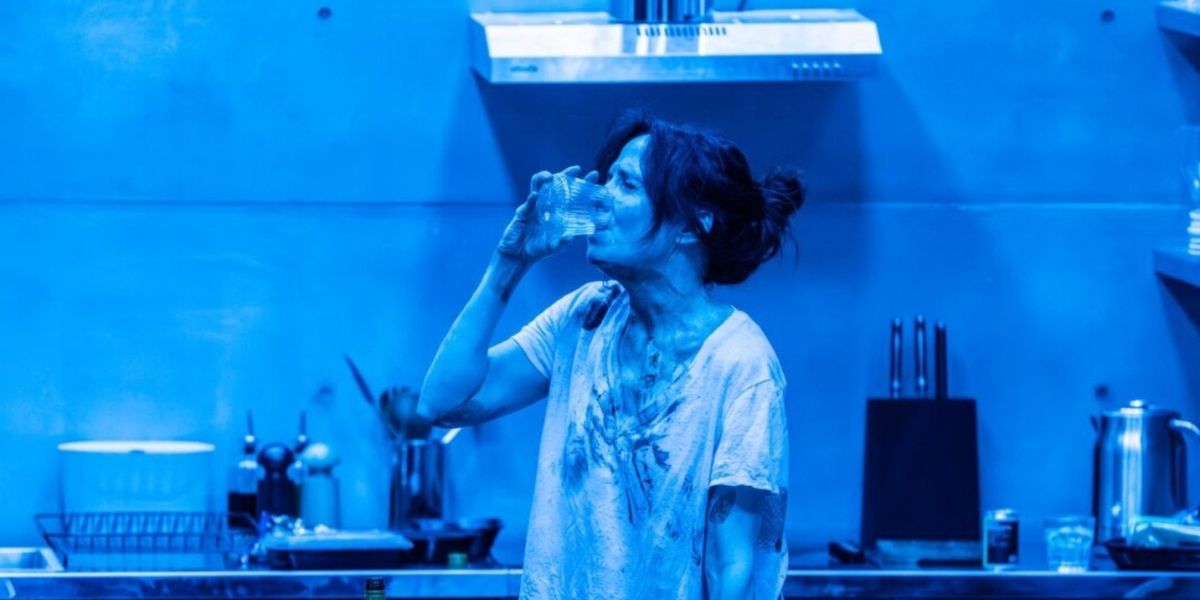
A contemporary family wakes up in a Greek myth and can’t seem to find a way out of their hellish destiny.
Writer and director Simon Stone is joined by the same creative team that brought the “fantastically original, gripping and magnificent” (The Guardian) The Lady from the Sea to life; set designer Lizzie Clachan, costume designer Mel Page, music by Stefan Gregory, lighting designer Nick Schlieper, and casting director Jessica Ronane CDG.
What did the critics think?
The Oresteia plays at the Bridge Theatre until 19 September
Photo Credits: Johan Persson
 Alexander Cohen, BroadwayWorld: Although suavely cloaked in contemporary dress, the underlying dynamics don't quite translate. Greek tragedy demands that the killing be both morally understandable and unconscionable at once. Isabelle takes her own life rather than being sacrificed by Christopher, and the cycle of revenge that follows never garners the weight it needs. By the end of a gruelling three and a half hours, there isn’t much moral meat left on the bone, just a slasher gorefest.
 Tim Bano, The Standard: Three-and-a-half hours whip by, crowned by a coup in the epilogue: suddenly Stone reminds us that all this juicy violence we’ve been enjoying as spectacle – bloody hand-prints on the pristine glass, Stanley knives shoved into guts – stands in for the scenes of brutality playing out in the world’s many war zones. That visceral thrill turns to queasy sucker punch. House Middleton becomes a metaphor for any race of people stuck in a cycle of retributive violence. No deus ex machinas here. It’s all too painfully human, a reminder that we’re the sowers of all this violence, and the reapers too.
Sarah Crompton, WhatsOnStage: tone’s writing is entirely cogent until the concluding act, which crams too much in; it simply isn’t as rigorous as the others. Alice is particularly poorly served; she is a misfit, socially awkward, never quite sure of her place in the story, which feels a waste of Sheehy’s wonderful comic timing and capacity for suffering.
But his direction is impeccable, constantly ratcheting up the pressure while allowing the characters space to breathe. Montie has a wonderful moment where, torn from her American home, she dreams of returning across the sea. Parker seizes it with trance-like delicacy, bringing sympathy for a character who elicits little. Morrissey too finds the sorrow beneath Chris’s bullish exterior, suggesting his melancholy with a little stoop of the shoulders, a raise of the head.
Olivia Rook, London Theatre: The cast is astonishingly strong. Morrissey and Parker have grim chemistry, showing how guilt can curdle and kill a relationship. She turns malevolent in her grief, taking cold pleasure in the murder of Christopher and proclaiming herself “the angel of vengeance”, while Macmillan — as her accomplice and second husband Jerome — is completely undone by guilt and welcomes death. Sheehy is eminently watchable as the fast-talking, socially stunted Alice, and Glynn-Carney delivers a gut-wrenching performance as a man undone by his own mind, conjuring memories of his recent performance in Ivo Van Hove’s All My Sons — another play about buried family guilt.
Andrzej Lukowski, TimeOut: And Stone’s characters are by and large enjoyable. You’ll appreciate Sheehy’s performance a splash more if you’ve seen her in anything else and can appreciate just how far her delightfully awkward posh girl Alice is from anything else the Welsh actor has done. But she’s a delight either way, a vibrant cocktail of privilege and inferiority complex. US star Parker teeters on the cusp of panto villain but she’s tremendously good at it; with a couple of gloriously scenery-chewing monologues. And there are some great second-order characters too, particularly Rakhee Thakrar as Christopher’s parodically wholesome new girlfriend Chandra.
Alice Saville, The Independent: Stone's scenes are thickly written and disorientating, making the audience battle to work out the ties between the large, bickering family on stage. No one acts as you'd expect them to: there are incestuous caresses and uneasy cruelties. This wealthy clan's language is psychological violence, long before the first physical blows land. When the invitable blood does start to fall, designer Lizzie Clachan's masterpiece of a set comes into its own. This precisely-imagined cube contains a whole house on two floors. At heightened moments it slowly revolves so that we can glimpse dagger-wielding murders or red-stained victims as they run through this perfect doll's house world, filling it with horror.
Dave Fargnoli, The Stage: Designer Lizzie Clachan provides an ominous, multi-storey set that traps the characters inside a cube of concrete and glass. It is a sort of brutalist human zoo, where we observe the family’s death-spiral through massive windows and sliding screen doors, distancing us from the action and forcing the actors to wear mics. On press night at least, the result was a distinctly muffled, echoey sound that robbed some performer’s lines of depth and texture. Stone’s commitment to capturing the realistic rhythms of conversation leads to constantly overlapping dialogue and argumentative interruptions that further garble his text.
Average Rating: 80.0%
- To read more reviews, click here!
- Discuss the show on the BroadwayWorld Forum

Sign up for all the news on the Fall season, discounts & more...








Reader Reviews
To post a comment, you must register and login.