


Review: Michael Feinstein's STANDARD TIME: ON THE TOWN at Carnegie Hall
Cabaret legend Michael Feinstein returned to Zankel Hall on February 25 for his latest Standard Time concert, ON THE TOWN
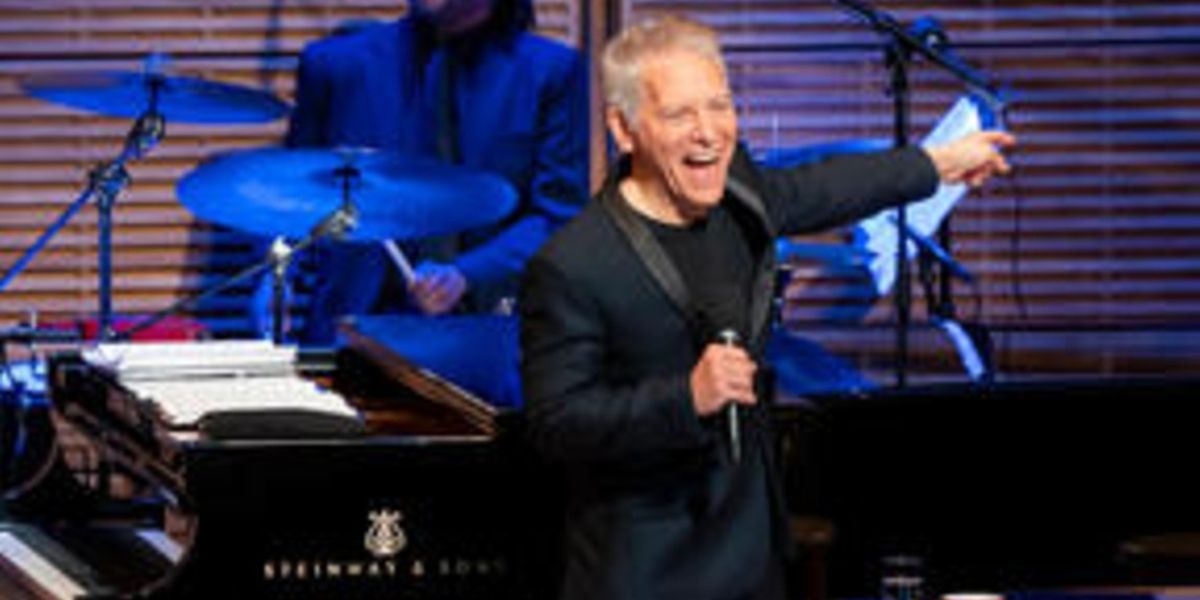
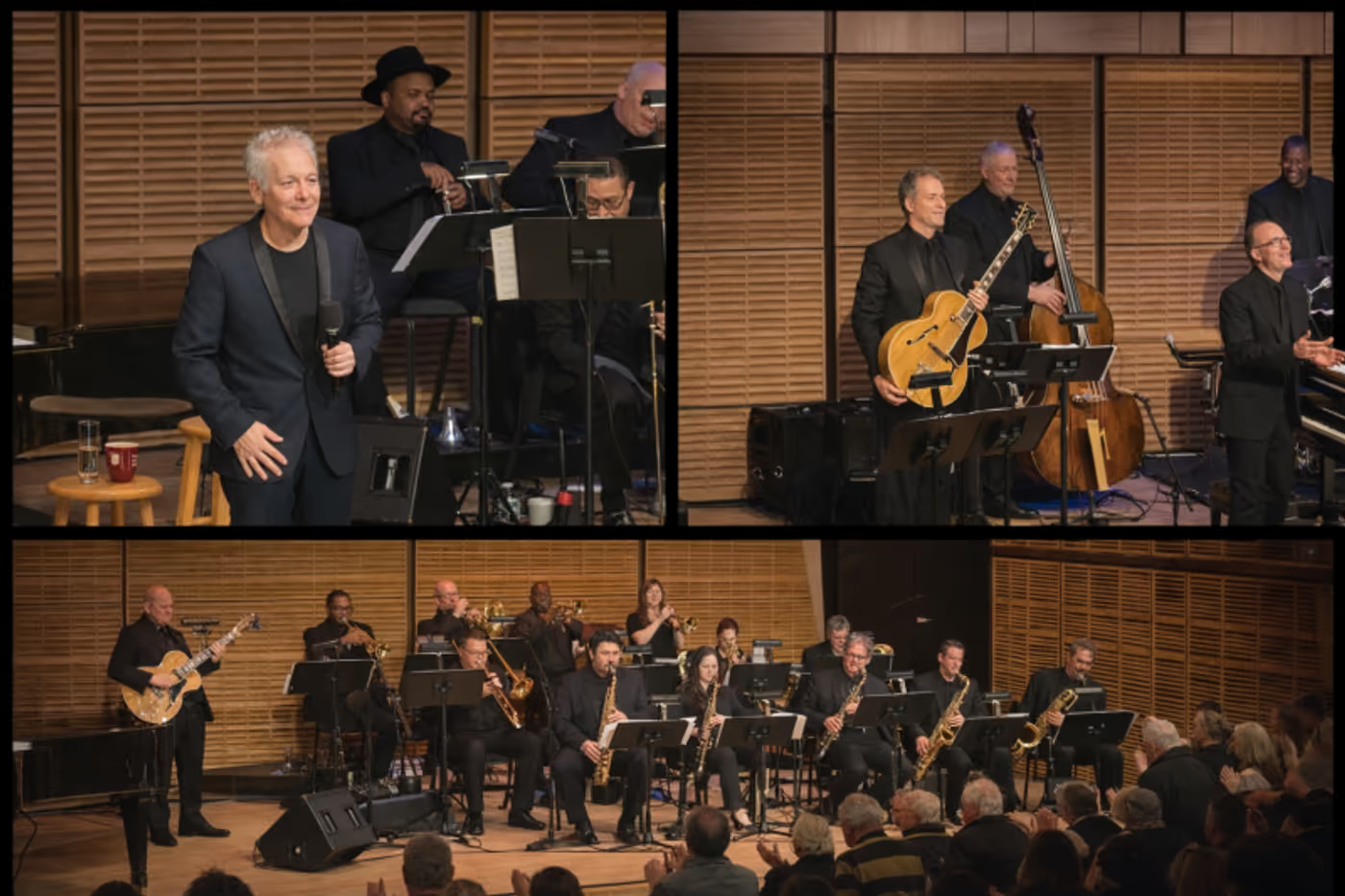
Cabaret legend Michael Feinstein returned to Zankel Hall on February 25 for his latest Standard Time concert, On the Town. Feinstein was accompanied by the 17-piece Carnegie Hall Big Band, with his usual trio of pianist/arranger Tedd Firth, bassist David Finck and drummer Mark McLean, along with guitarist Matt Munisteri, making up the rhythm section.
Though the title suggested a Bernstein/Comden & Green theme, the diverse set reflected the glory days of the New York nightclub scene. The opening big-band instrumental, Steve Allen’s “This Could Be the Start of Something Big,” kicked the evening off in high gear, with hot solos by Sam Dillon and Brandon Wright on tenor sax.
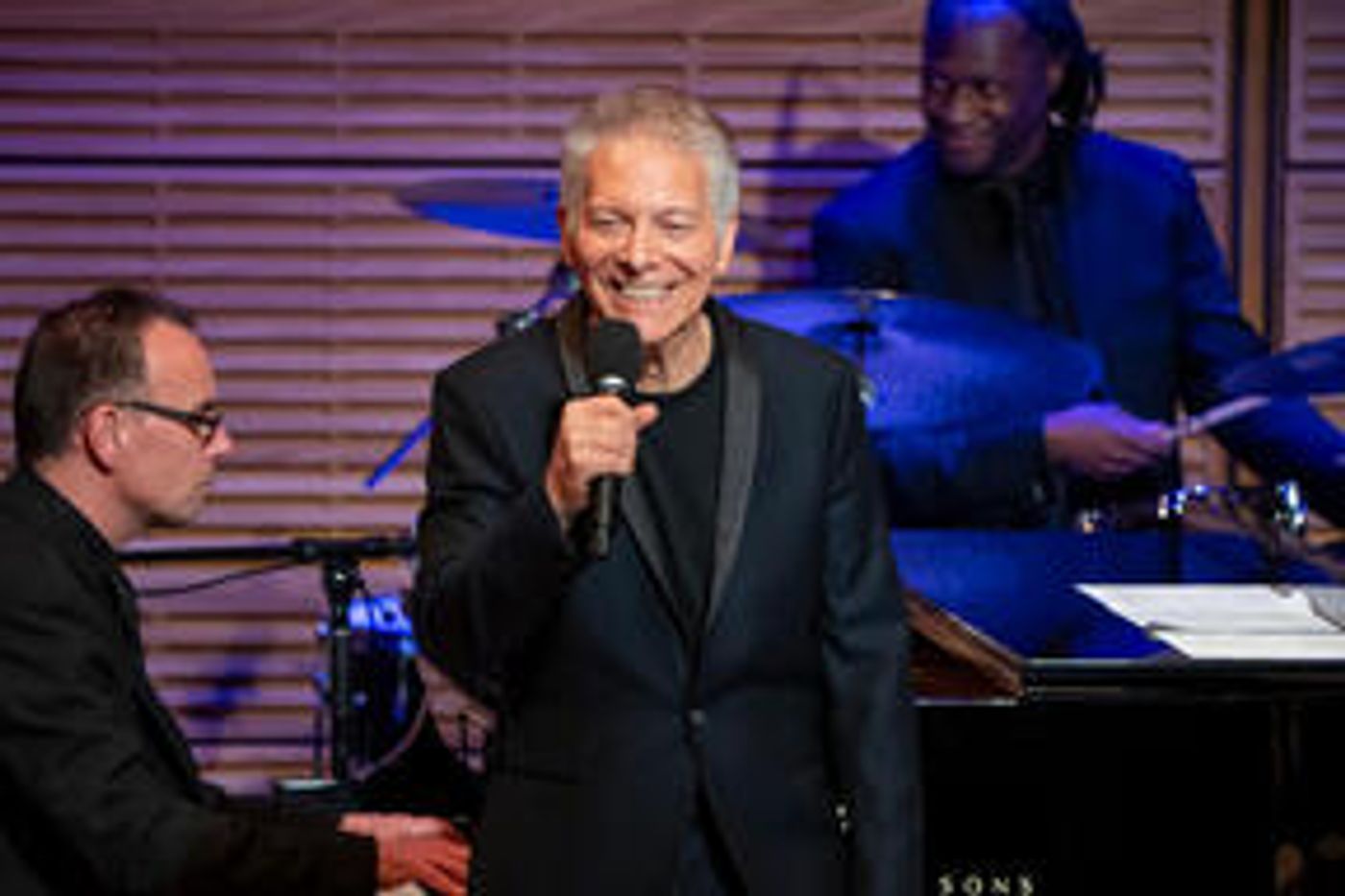
Feinstein, sporting a distinguished new look with gray hair, wore a black suit and black tee. A fast, modulated arrangement of “From This Moment On” (Cole Porter) was one of several with a powerful, big finish by Feinstein, whose voice has grown richer and warmer over the years.
For an Irving Berlin segment, the band was led here by Alphonso Horn on trumpet for a wild opening number that quoted “Bie Mir Bist Du Schön” before morphing into “Steppin’ Out With My Baby.” Horn’s horn added greatly here. Feinstein deftly maneuvered into “Cheek to Cheek,” including its verse.
Speaking of the challenges of opening a nightclub, he relayed “an old saying in the nightclub world: How do you have a million dollars in the nightclub business? You start with two million!” He listed and told anecdotes about some of the great old New York nightclubs like the Stork Club, Copacabana, 21, El Morocco, and, of course, the Algonquin, where he had his debut in 1986.
Feinstein took to the piano to perform a lovely rendition of “My Favorite Year” (Michele Brourman/Karen Gottlieb), which didn’t make it into the film of the same name, though it was later used in the television show Santa Barbara. His 1988 recording helped popularize this song. His voice here was pure and gorgeous, with a palpable emotional connection. This was one of the show highlights.
A fun take on “Is You Is or Is You Ain’t My Baby” (Louis Jordan, Billy Austin) had a similar feel to The Drifters’ arrangement of “On Broadway.” It featured a hot trumpet solo by Summer Camargo.
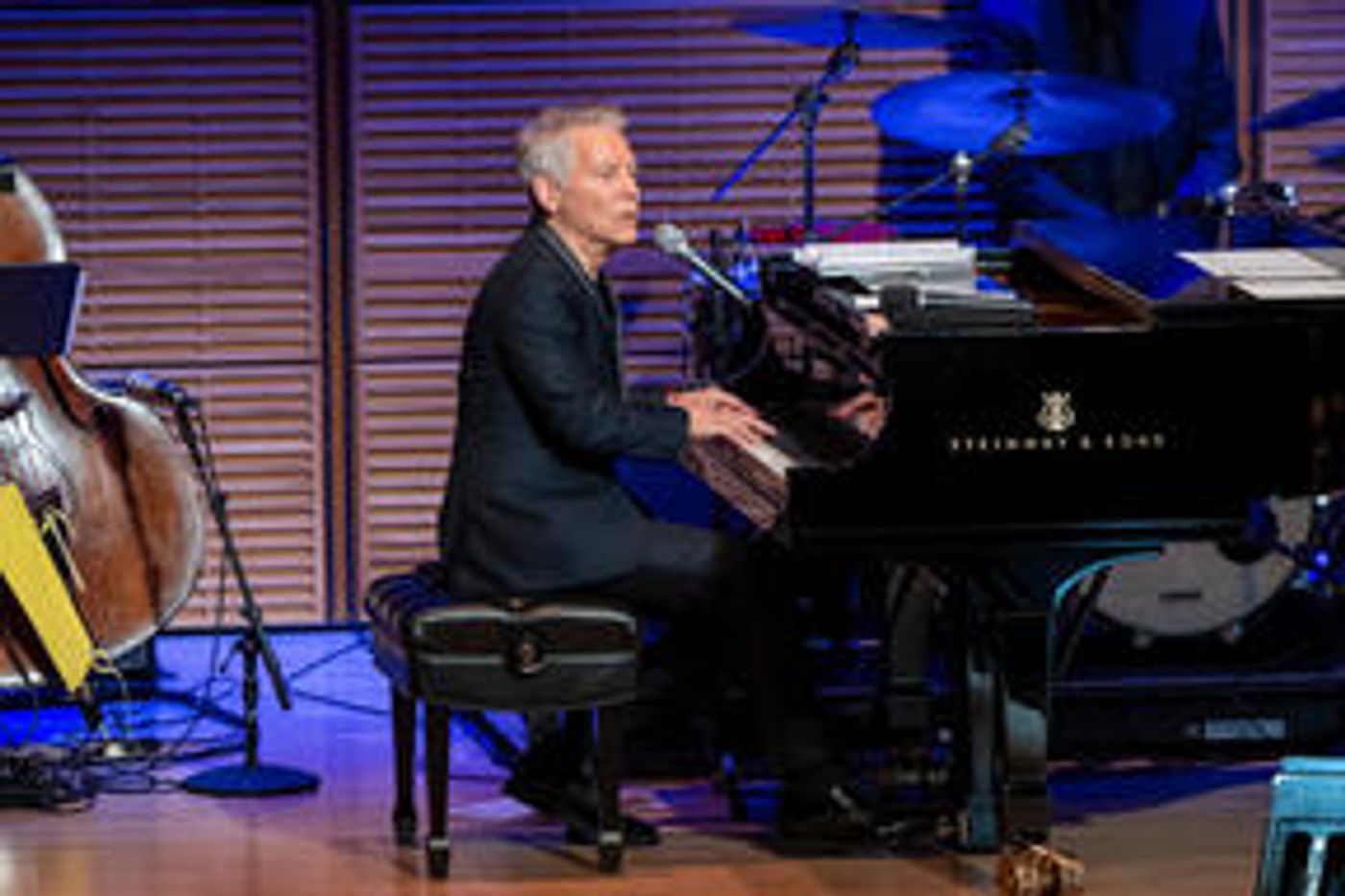
Feinstein typically includes some “deep cuts” in his set. One here was a somewhat obscure Nat King Cole single, “What Does It Take.” Tedd fully recreated the 1952 Billy May arrangement, and the band did a great job with May’s signature swooping saxophone sound.
For the remainder of the set, Feinstein chose songs associated with particular performers, including Sinatra, Peggy Lee, Liza Minnelli and more. The biggest highlight of the set was a spectacular, mixed-meter Firth arrangement of “Night and Day” (Cole Porter) that shifted a slow “And its torment must be true” to the top as a sort of opening salvo, followed by the actual “beat, beat, beat of the tom-toms” verse. The arrangement captured the kind of obsessiveness to detail of a Sondheim score; it accented the relentless nature of the song, as a person thinks "night and day, day and night." A huge finish by Feinstein brought the song to a resounding climax.
One of Firth’s signature moves for Feinstein is to borrow a piece of one song and graft it to another to give depth to the narrative. He did that twice in this program, notably with a big-band arrangement of Billy Joel’s “New York State of Mind” that had Feinstein first sing, rubato, the verse to “Manhattan” (Rodgers and Hart). At the song’s end, Feinstein sang a line that combined elements of both songs, taking “The great big city’s an endless toy” into “a New York state of mind” power ending.
A beautiful, intimate moment had Feinstein sing the rare verse to Ray Noble’s “The Very Thought of You” with only Munisteri’s lovely guitar accompaniment. The arrangement for the band was equally lovely, with the reed section on flutes. Feinstein ended it with only guitar, his singing here quite tender.
Feinstein had another Firth flip, with “All My Tomorrows” (Sammy Cahn/Jimmy Van Heusen) serving as the verse for a very Basie-like arrangement of the Spiral Staercase hit, “I Love You More Today than Yesterday,” again merging the songs at the conclusion.
To honor Bobby Short (forever associated with one of the last great swanky nightclubs in New York, Café Carlyle), Feinstein performed a killer version of Cole Porter’s “Begin the Beguine” that had all the hallmarks of Nelson Riddle arrangements of “Night and Day” and “I’ve Got You Under My Skin” for Sinatra: flutes, bouncing bass trombone riffs, a heartbeat rhythm, and ascending intensity into a climax. (Firth later revealed privately that the arrangements were by Bill Elliott, a fellow who utilizes Riddle’s style.) Feinstein’s powerful singing here had him at the very top of his range.
Feinstein returned to the piano to finish the set with a rubato “Just One of Those Things” (Cole Porter), with Firth taking over when the band came in to swing out the back half of the number. For an encore, Feinstein performed one of his most celebrated numbers, “Isn’t It a Pity” (George Gershwin/Ira Gershwin), with only Firth’s stunning voicings underpinning Feinstein’s intimate, moving interpretation.
Learn more about the artist at www.michaelfeinstein.com
The next Standard Time concert is April 15. For more great shows at Carnegie Hall, including upcoming editions of Standard Time, visit https://www.carnegiehall.org/Events.
Photos: Stephanie Berger except curtain call photos by Andrew Poretz

|
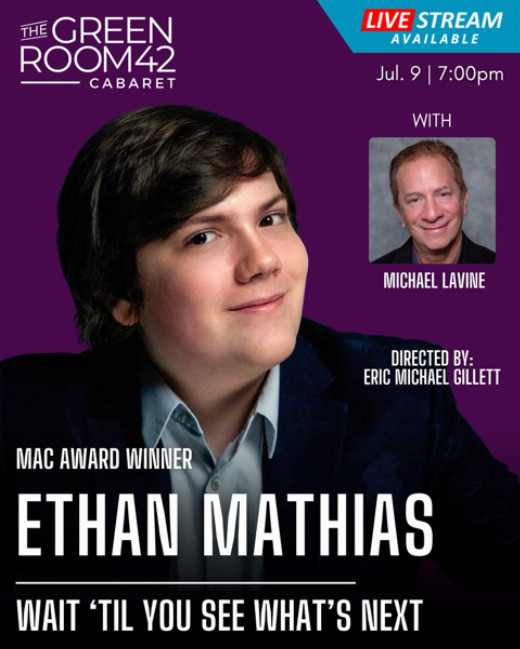
Wait 'Til You See What's Next The Green Room 42 (7/09-7/09) |
|
That's So 70s: A Trip Back To Peace, Love And Rock 'N’ Roll 54 Below (9/25-9/25) |
|
Queen Diva- Strength of a Woman: A Phyllis Hyman Tribute 54 Below (9/12-9/12) |
|
Darwin Del Fabro Sings Etta James: At Last 54 Below (9/27-9/27) |
|
Allison Bailey, feat. Casey Cott, Lauren Paley, & Talia Suskauer! 54 Below (8/16-8/16) |
|
54 Sings Broadway's Greatest Hits! 54 Below (8/22-8/22) |
|
David Rasche: Half an Evening with David Rasche 54 Below (9/10-9/10) |

|
Ilia Isorelýs Paulino 54 Below (7/08-7/08) |
|
Linda Eder 54 Below (7/29-7/29) |
|
The Green Wave (Marea Verde): A Latin Pop Concert 54 Below (7/03-7/03) |