


Review: HAMLET at Guild Hall Players At St James Episcopal Church
The production closed March 22nd, 2026.
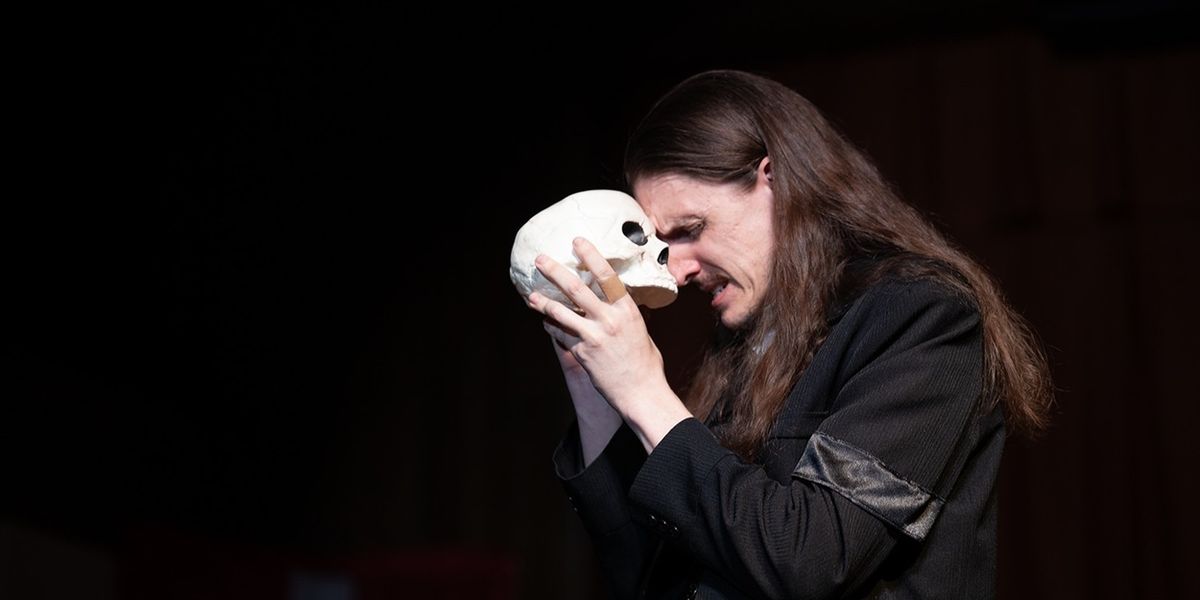
Hamlet, William Shakespeare’s longest play, and considered the most powerful and influential tragedy in the English language, was performed by the Guild Hall Players last weekend at Saint James Episcopal Church. With a smart adaptation from the First Folio by Wichita State University Professor Joseph Urick, and straightforward direction and scenic choices by Phil Speary, this production of Hamlet was easy to understand, and cut the normally 4 hour production down to a manageable, fast paced 2 1/2 hour performance that suits a modern audience.
Hamlet takes place in Denmark, and follows Prince Hamlet’s quest to exact revenge against his uncle, Claudius, who murders the King, Hamlet’s father. Claudius seizes the King’s throne and marries Hamlet's mother, Gertrude. According to Speary, “Hamlet is a great, thoroughly engaging entertainment. It has everything you would want to find in a film or television drama – intriguing mystery, treacherous deception, witty dialogue, and ghosts, murder, and revenge.
Urick’s adaptation provides a unique prologue, which was reminiscent of “Radio Murders” comedies, a formula to simplify, bring humor to, and shorten complicated plays. Urick’s Hamlet begins with a tableau of the entire cast, who come to the stage to greet each other, and witness the a fight call between Hamlet and Laertes that teases the deadly finale. Hamlet, also played by Urick, ends this tableau with his advice to the players, “Speak the speech,” thus eliminating the lengthy and complicated players sequences.
Speary’s scenic concept was minimal; a bare stage framed with curtains, occasional furniture, a heavy emphasis on costumes, with the main focus being the acting. The absolutely gorgeous and richly detailed costumes were coordinated by Karen Harpenau. I couldn’t discern whether the costumes had more of an Edwardian or Victorian bent, but the effect of the ornate costumes over the minimal set made the actors stand out in all the best possible ways. Wig Master Gilbert Pearce created magnificently opulent hairstyles for the women, but the most magnificent were reserved for matriarch Gertrude, particularly in her chamber scene, with mounds and mounds of luxurious locks. Minimal props with maximum effect were provided by Louise Brinegar. Sound Designer Randy Harrison provided a very familiar Sunday Movie of the Week Soundtrack vibe to the proceedings, giving the production a very comfortable, accessible feeling. Tony Applegate’s Lighting Design extended a pink, warm glow in the interior scenes. During Hamlet’s soliloquies and monologues, Hamlet’s face was cleverly juxtaposed from a cold, stark, haggard, and insane look, to a face pink and full of life, all by switching from warm to cold specials.
The cast here does an excellent job telling the story in a concise way. Mark Manette played Claudius like your well meaning uncle, who realizes too late that his foolhardy scheme to kill Hamlet’s father and steal his throne and wife was not well thought out, and proves that there is indeed method in Hamlet’s madness. Manette’s prayer soliloquy in Act II is spot on. Together with Polonius, played here by Joe Parrish, they prove to be the best bumbling elders ever devised since the invention of the modern sitcoms, like Frank Barone in Everybody Loves Raymond. Mary Tush Green plays Gertrude as the compliant wife, perfectly ignorant about what she’s done until Hamlet jerks her head up and the truth hits her like a ton of bricks.
Erin Polewski gives Horatio, Hamlet’s Best Friend, a very steady, focused demeanor, floating through the performance with a smooth, fluid gate. Horatio seems to be the only sensible figure in the lot, well contrasted and standing in great relief to a court in turmoil.
Newcomer Karen Harpenau made her Guild Hall debut playing Ophelia. Originally from Wichita, she retuned to the US after 11 years abroad performing in Berlin, Germany. Harpenau is a serious Musical Theatre artist, and this is her first attempt at Shakespeare. She does an outstanding job here, showing us Ophelia’s awesome character arc, starting with the stable, happy Ophelia, seemingly unfazed by Hamlet’s untoward behavior. As she moves through the play, we see Ophelia’s descent into madness, beginning with her speech in Act 2 after she sees Hamlet (Get Thee to a nunnery), to her tight and sublime work in Ophelia’s mad scene. Harpenau wandered through the gathered cast, a plethora of emotions drifting across her face, handing them herbs and flowers, leaving them dumbfounded, while she built her dialog exquisitely, with great craft.
Hamlet was played by Joseph Urick with great intensity, care, and pacing. Urick had many fine moments, especially those where he hinted that he absolutely knew what Hamlet was doing. Especially outstanding was the 2nd Act scene in Gertude’s chambers where he was visited by his ghostly father. Another totally unexpected moment was later in Act 2, when Claudius gave Hamlet the backhand for Hamlet’s insolence. At the end of the speech, Hamlet spits out an unexpected tooth. Urick’s fight scenes were tight and coordinated, especially the concluding fight.
What’s up next for Guild Hall? The Book of Will, written by Lauren Gunderson and directed by Jeremy Buoy, will run one weekend only, from May 21 through the 24th. Tickets are available at the door. Guild Hall performs at the St. James Episcopal Church, 3750 E Douglas Ave, Wichita, KS 67208
Sign up for all the news on the Fall season, discounts & more...

|
A Clay Walker Family Christmas Kansas Star Event Center (12/11-12/11) |

Reader Reviews
To post a comment, you must register and login.