

Review: Adnan Production’s CHICAGO Dominates GBB
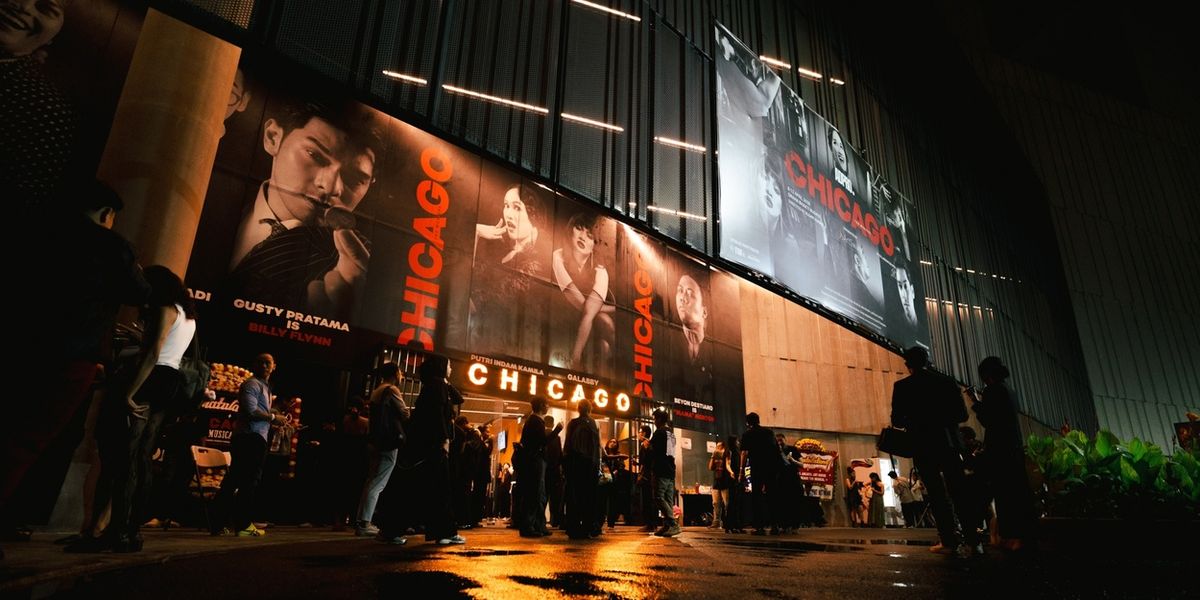
From 8-12 April 2026, Adnan Production brought the longest-running American musical in Broadway history, Chicago, onto the stage of Graha Bhakti Budaya.
Review by Nabila “Hana” Hananti, editing by Rakaputra Paputungan.
From 8-12 April 2026, Adnan Production brought the longest-running American musical in Broadway history, Chicago, onto the stage of Graha Bhakti Budaya. It ran a total of eight shows (including the Gala performance), showcasing the many different talents within the theatre industry of Indonesia.
Chicago was produced by Adpro in collaboration with Jakarta Art House. This show was presented by ArtSwara. Interestingly, the dialogues in this play were brought to life in Indonesian, courtesy of the script translator, Palka Kojansow.
The storyline of Chicago follows the original play that has existed for decades. What sets it apart was the localization implemented alongside the translation into Indonesian — a whole different language from a whole ‘nother country. This made Chicago in Jakarta not a mere translation; it was an adaptation. This translation resonated with the audience, bringing in a story that’s more easily understood, made especially apparent through the jokes that evoked plenty of laughter within the theatre. The cast whose first language was not English also didn’t have to work twice as hard in order to express the same thing in their non-native language. Chicago was also the first officially Indonesian-translated musical to be brought to the country, making it a potential trendsetter.
Of course, this show would not work as well as it did if it weren’t for the collaboration of the people working on this production. This show was produced and directed by Aldafi Adnan; Hamada Abdool acted as its choreographer, Ivan Tangkulung as the music director, and Aldy Inzaghi as the stage manager. Their hard work, alongside the countless people working on this production, was shown in how the cast has managed to dominate the stage that is Graha Bhakti Budaya. I would like to discuss these performances one by one.
This review discusses the 3rd show of Chicago, held on the evening of Friday, April 10th 2026.
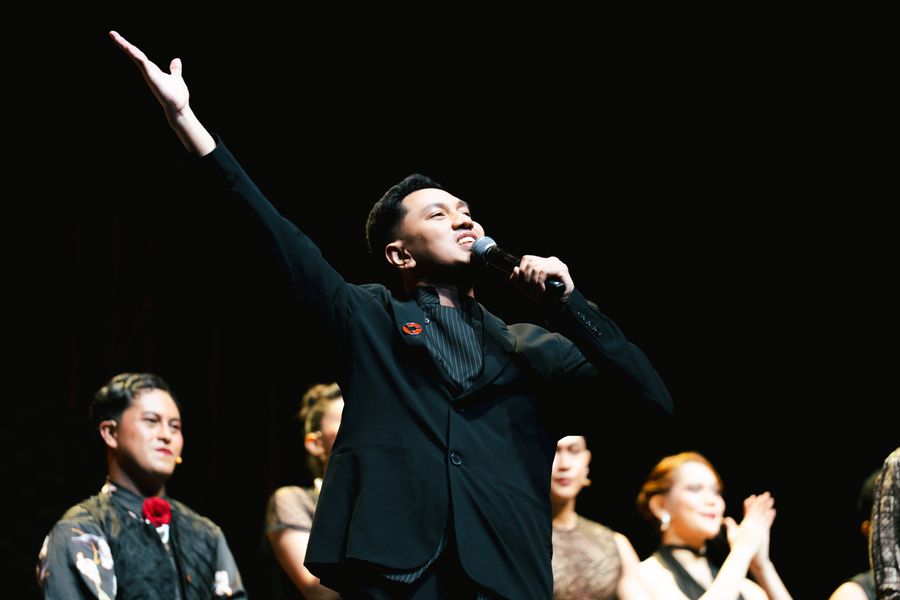
As Chicago is a play with many solo numbers, it is imperative for the cast to have impeccable Stage Presence. The prime example is how effortlessly Gusty Pratama (played as Billy Flynn) charmed the audience with his charisma. Within his solo number, “All I Care About Is Love”, he was incredibly cool. His intense presence alongside his vocal prowess made an incredible impression. This number was his introduction to the story and Gusty Pratama managed to convey the complexity in the ironic nature of the song. At first glance, you can immediately tell the tone that we’re bound to expect from Billy Flynn. This charisma persisted throughout the show. His demeanor was very sharp. The way Gusty Pratama stated the beliefs that Billy Flynn had has made me question my own beliefs. He had truly portrayed the evilness and ridiculousness that is the law sector—how everything really is a spectacle. He controlled the stage in every moment he was in, with his performance only faltering when he was to share a scene with Roxie. Perhaps this was because Roxie was trying to control the stage herself, courtesy of the character’s narcissism, but we’ll get to that.
Galabby (playing Velma Kelly) and Beyon Destiano (playing Mama Morton) were an iconic comedic duo. It could be argued that they were just having simple conversations during their many scenes. But, Galabby’s deadpan delivery combined with Beyon Destiano’s affectionate reaction brought a perfect balance to their scenes, especially when you notice the layers of acting behind their pretense. Velma Kelly cared so much while Mama Morton could’ve not cared less.
Galabby’s Velma Kelly was fun. Her line delivery was succinct and clear. She simply said what had to be said and it was enough. So many of her jokes landed effortlessly, evoking plenty of laughter from the audience. However, oddly enough, her movement was not as dominating. The choreography she was given seemed to be almost restraining; it lacked any consistency, creating a sense of frantic unsureness in her movement. Perhaps Galabby was exerting too much of her physical versatility for both comedy and showmanship, to the detriment of storytelling. All in all, the pros outweighed its cons. She gave an incredible performance, and so Chicago was brought to life because of her.
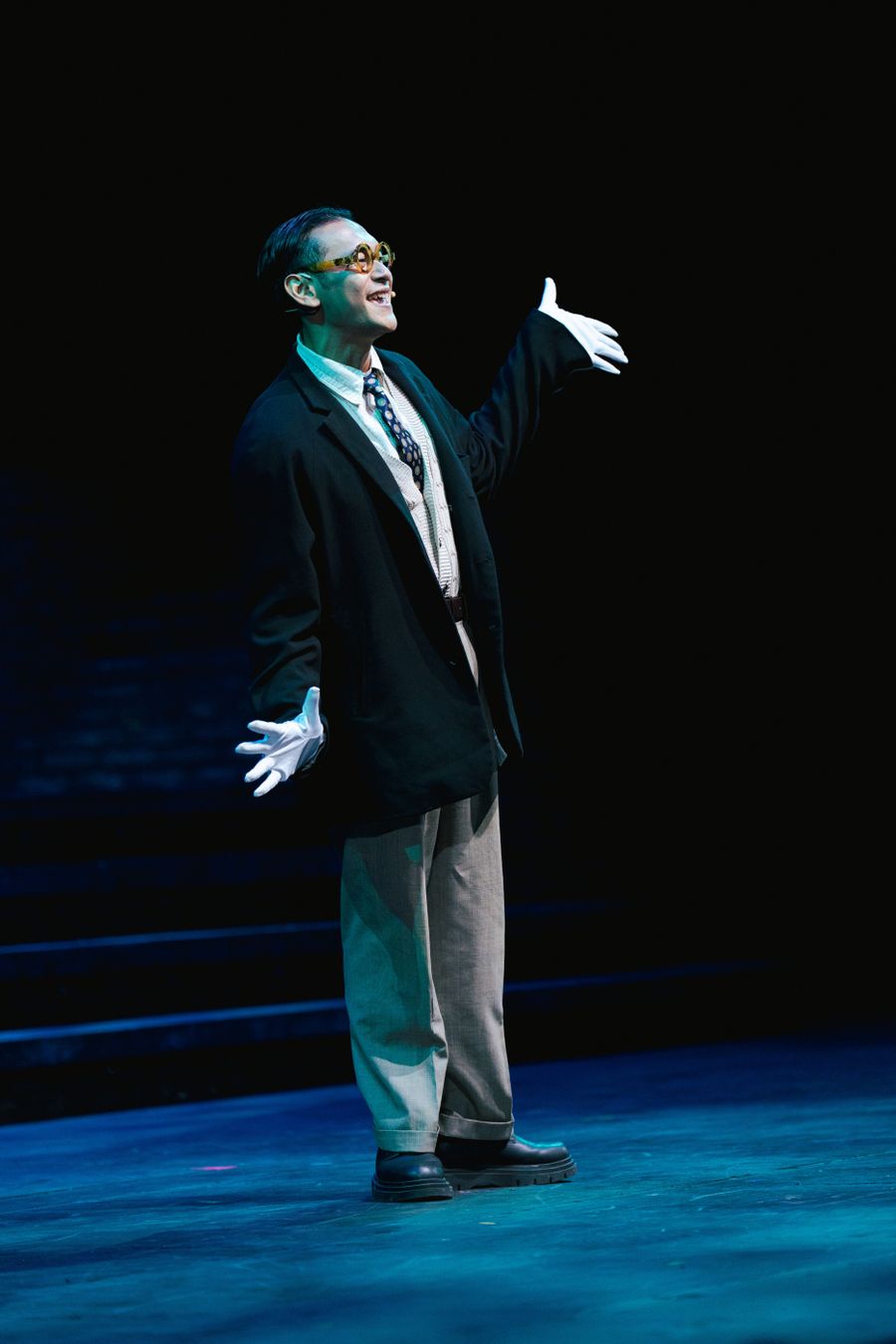
Raditio Permadi (as Amos Hart) brought one of the most interesting characters within Chicago. At the beginning, he was a mere comical character. His interaction with Roxie was painful to watch, for he came off as an unlucky man whose wife was playing him like a fiddle. However, by the second act, once he played a more active role, Raditio Permadi showed that he too could dominate the stage. He was a very vivid storyteller with incredibly controlled and precise movement. He conveyed and expressed everything with full of intention; there were no wasted movements nor empty meaning behind his words—most notably seen during the number “Mister Cellophane”. He was spectacular.
Putri Indam Kamila (as Roxie Hart) was sweet—too sweet that she comes off as sociopathic—and that made for a hateable character to watch. At times, her Roxie felt formulaic, over-the-top, and lacking in depth. While this worked well for the satirical and comedic parts, the lack of desperation and inner turmoil left me utterly disappointed. The way I see it, there was no inner turmoil within Putri Indam Kamila when she was playing Roxie.
Although Chicago is a satire, this approach made the play feel less like a parody of the justice system and more as if Roxie Hart was the parody itself. She could control the stage very well, and this was shown through her solo number “Roxie”. However, it becomes difficult to pay attention to her when she has to interact with someone else. For example, when she was with Amos, it’s like she lost all of her presence. She had little chemistry with the other character; hence, it prevented Roxie herself from feeling grounded.
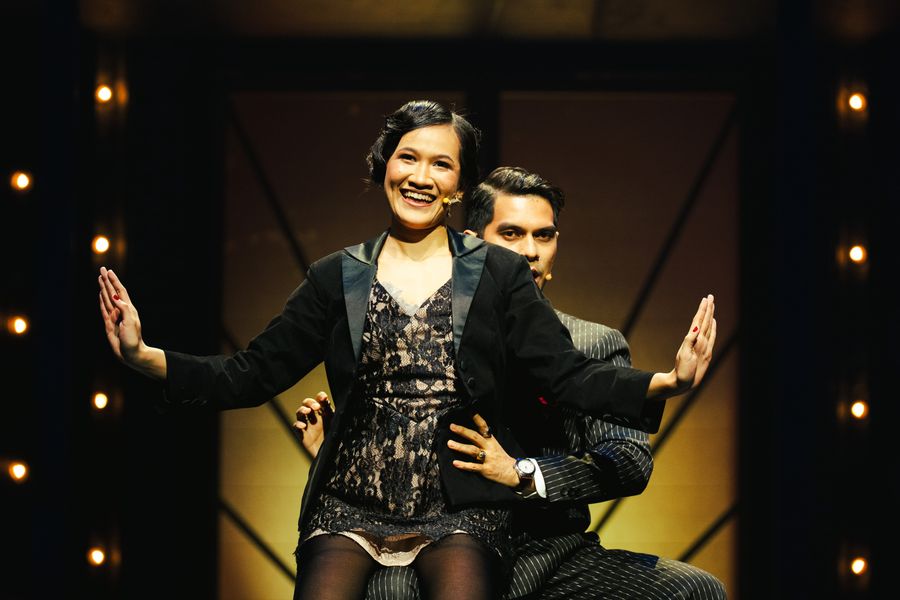
As a side note, contrary to Galabby, the choreography seemed to suit Putri Indam Kamila very well. She moved effortlessly, exhibiting more freedom and flexibility in her steps compared to Galabby.
Roxie only felt fully-fletched during the number “Roxie”. Perhaps that number worked very well because it was just a song about her—bragging about herself. Her storytelling and long monologue were delivered succinctly, and she dominated the stage during the time she was left alone on top of it. Yet outside of the spotlight, the real, human side of Roxie was left in the dark. Too much razzle-dazzle, too little depth.
The artistic team of Chicago worked hard to create a monochromatic color scheme of red and black. It resulted in a classy aesthetic, crafted from the combination of set, wardrobe, makeup, and lights. The play of different colors were mostly done through lighting, either by enhancing the vividness or setting the atmosphere of the scene.
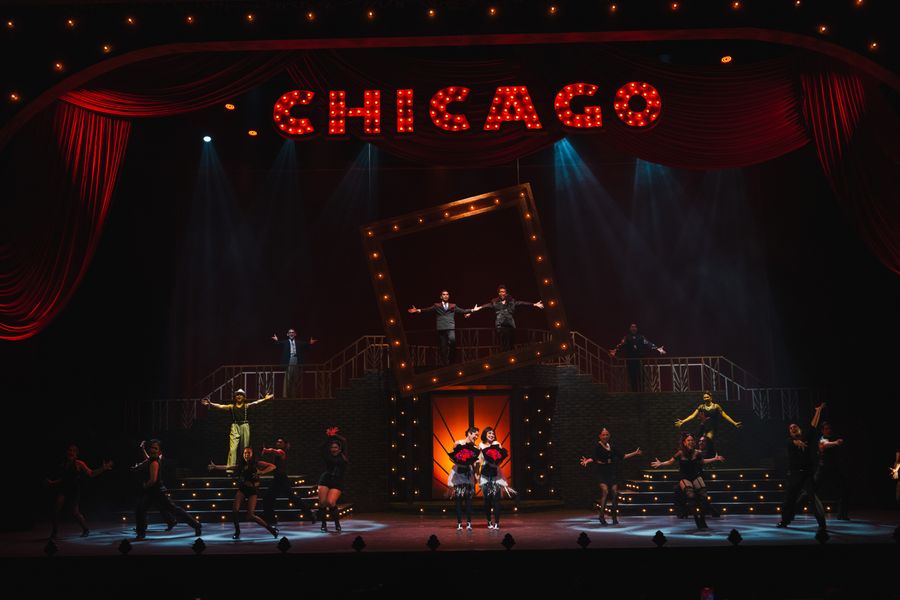
However, while the set supported the story really well, it also felt rather empty. The lighting was good at putting a spotlight onto the characters, working together with the set to create the ambiance that was the “Club of Chicago”. Unfortunately, it didn’t work as well during the juxtaposition moments – such as the opening scene in which Roxie Hart was committing adultery. The lights didn’t help put focus on Roxie and her lover while the choreography of “All That Jazz” was playing. This made it seem like her crimes were inconsequential when it was the moving point of the plot.
Now, my previous knowledge of Chicago was through watching the 2002 movie. Since the movies were juxtaposed with acting, I didn’t realize how much this play depended on solo numbers. The actors had to dominate the stage completely, otherwise this whole play would fail its very concept. Thankfully, they’ve managed to find these incredible actors with equally incredible Stage Presence to bring Chicago in Jakarta to life.
Yet, conversely, working with a group of actors with such immense charisma individually made it difficult to strike the right chemistry. The show’s spark often dulled during numbers and scenes involving two or more people. The cast seemed to have limited chemistry with one another, with Beyon Destiano and Galabby being the only exception.
All in all, Chicago was an entertaining show. It was an amazing showcase of skill and performance, brought by a group of people who dedicated their life to the performing arts. There was heart in this production that isn't always found in such a commercial production. Though it can still be improved, Chicago was a proof of hard work and professionalism. It was an innovative approach that I hope will be adopted more going forwards, and I’m excited to see more.
Reader Reviews

Videos