


Interview: Writer, Director & Actor Ann Noble of DEAD MAN at Echo Theatre Company
Dead Man, written and directed by Ann Noble, is being presented by The Echo Theater Company and Theatre Ghosts.
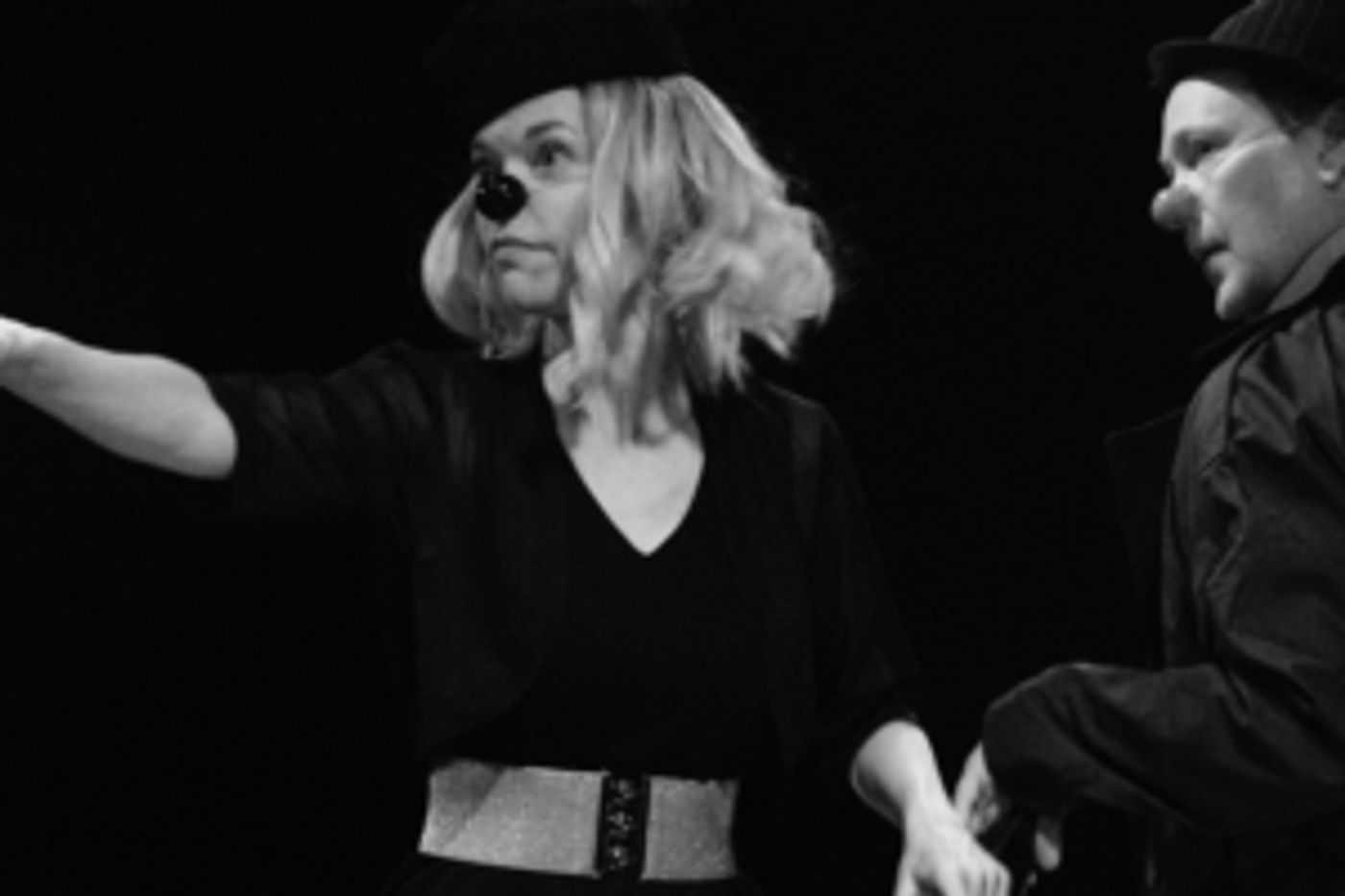
Ann Noble and Christian Haines
All production photos by Carolina Rodriguez
Direct from its smash hit run at the 2026 Hollywood Fringe Festival, the noir comedy clown mystery Dead Man, written and directed by Ann Noble, is being presented by The Echo Theater Company and Theatre Ghosts on Tuesdays July 21, 28 and August 4 at 8 p.m. at the Echo Theater Company in Atwater Village Theatre.
Beginning on a dark and stormy night, a lone private eye investigates a crime everyone wants to forget, and it will take more than one clown to figure this all out. Written and performed in Theatre Noir clown style, it begins with Somebody’s dead and Somebody else must find the killer. Different somebodies but…you get the idea.
But what happens when the private investigator’s too-smart secretary gets involved in solving the case or when a mysterious blonde femme fatale enters the death scene? It only proves life is easier when everything’s black and white…except for those pesky greys.
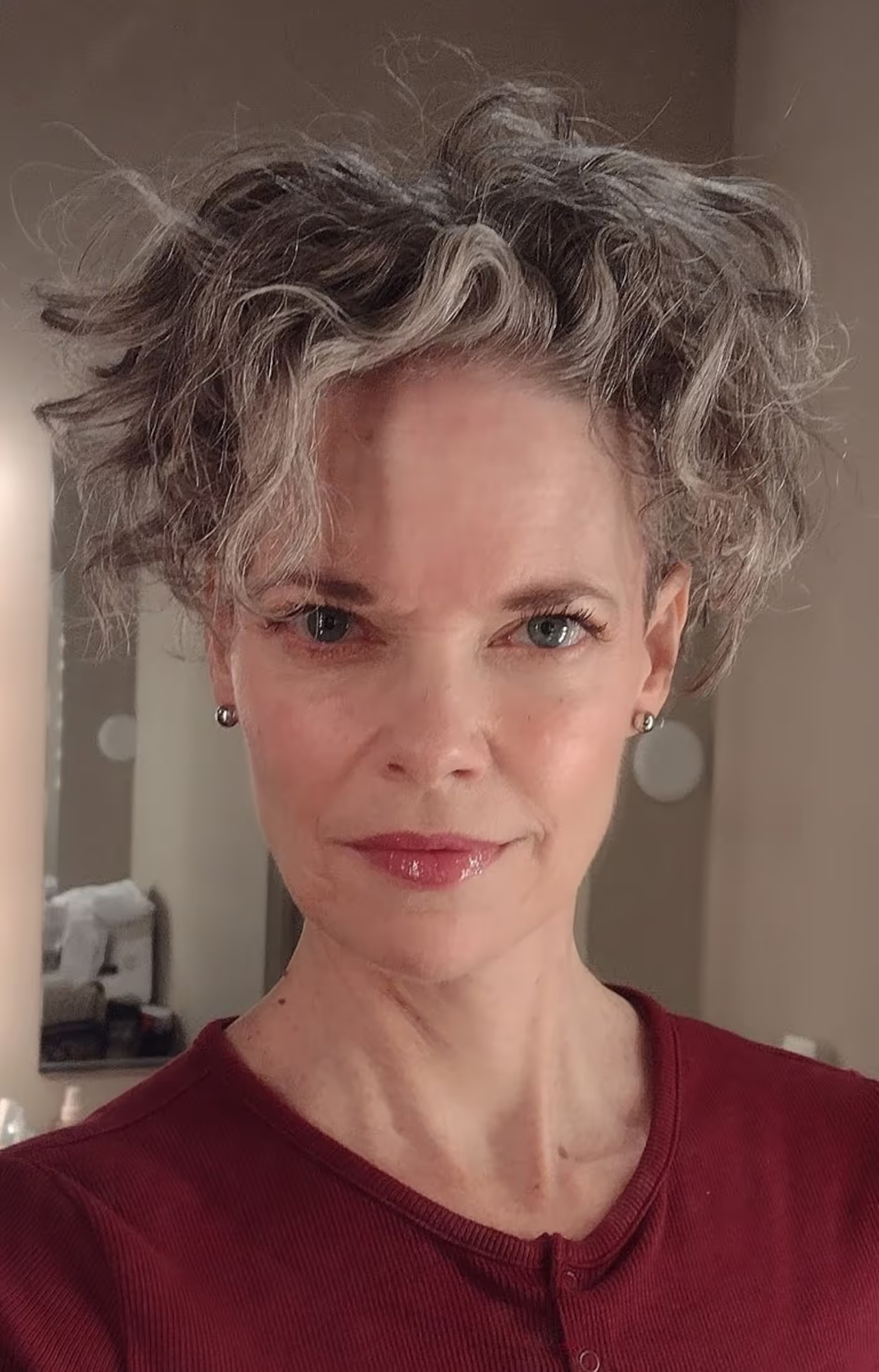
Writer, Director & Actor Ann Noble. Photo courtesy of the artist.
I spoke with Ann Noble who, along with writing and directing the play also appears as that blonde femme fatale, about the creation of the play, why she decided to first bring it to the Fringe, and how it’s evolved to be presented at the Echo Theatre Company.
Thanks for speaking with me. Ann about your new play, which I enjoyed so much during this year’s Hollywood Fringe Festival in which Dead Man was described as a "noir clown mystery," although those two genres don’t naturally seem to go together.
What first sparked the idea of combining classic film noir with clowning?
I’m never a hundred percent sure where these “ideas” come from, but I do remember wanting to write something for myself and Jeffrey Johnson again (we had done my play “52 Pick-Up” last Fringe and loved working together as clowns). I absolutely knew it would be another clown piece, as I find it’s so wonderful for Fringe, and for actors to really explore and play on stage and with the audience. The “noir” piece just came to me. Perhaps it’s because I have done so many plays over the past couple of years set in the late 1930s/early 40s (Crevasse, The Skin of Our Teeth, Corktown ‘39, The Night of the Iguana), and have spent a lot of time researching the era… Or perhaps it’s because when I grew up, there were always so many “spoofs” on the noir genre (I’m particularly thinking of Guy Noir from The Prairie Home Companion) that it seemed, somehow, to actually fit with my idea of what “clown” is. The noir world explores the darker side of things, and even though clowning can be funny and silly, it too reveals the deeper and perhaps more raw side of the human condition.
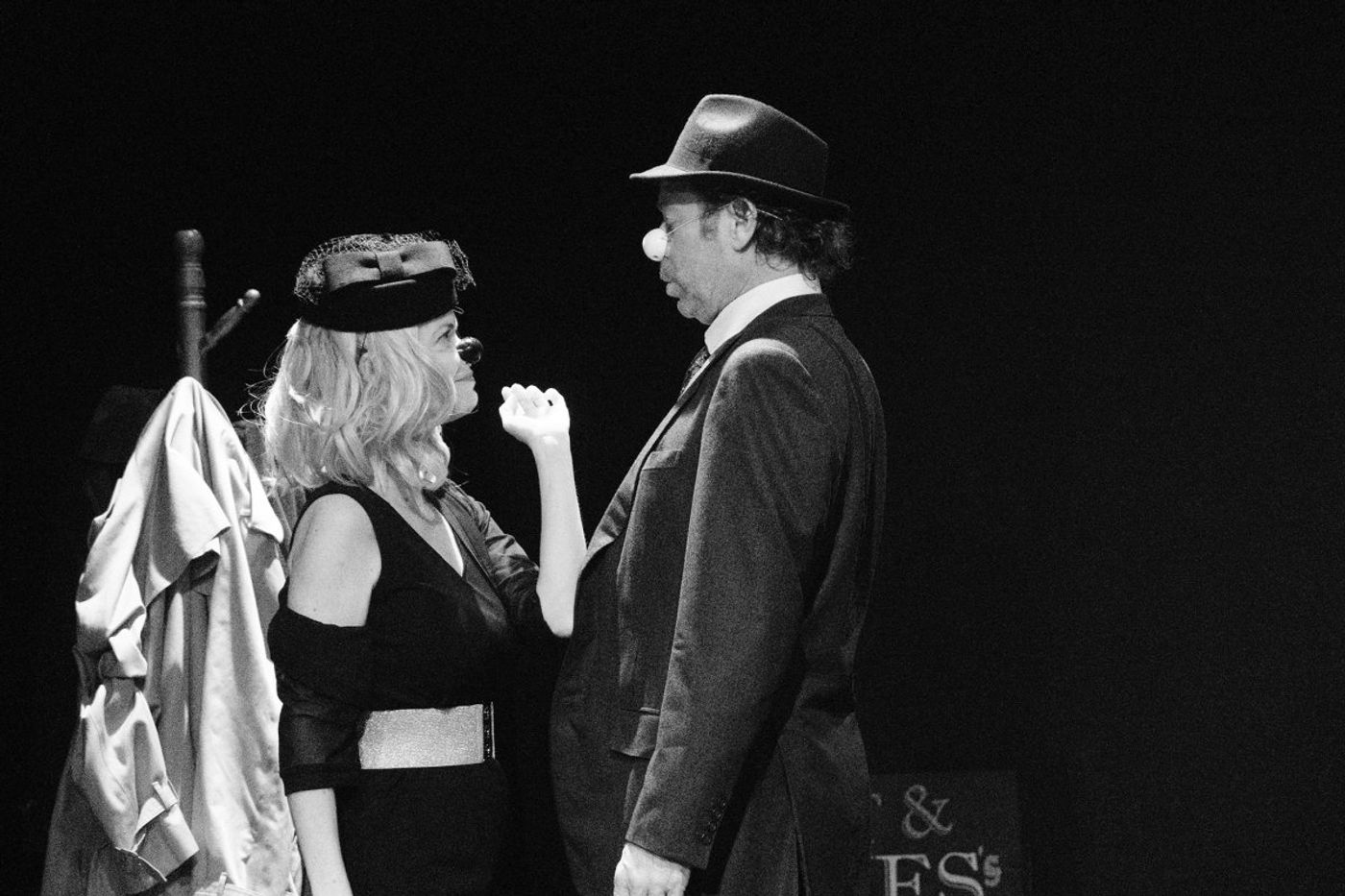
Ann Noble and Jeffrey Johnson
Reviewers consistently reminded audiences to come expecting laughs but leaving unexpectedly moved. How did you approach balancing broad physical comedy with genuine emotional depth?
In my opinion, the best comedy comes out of deep emotional truth. If we can’t recognize the “funny” as truly human, it’s just not that funny. I don’t think of it as “balance”, I think of it as one giving birth to the other. I also truly believed that audience want both: they want to laugh and they want to be moved. Otherwise, what’s really the point? In my opinion. So, I always, in all my plays (and performances) make sure to include within a story that will hit the heart, the moments and situations that we all can recognize as ridiculously human. For me, you can’t show the fullness of what it means to be human without both laughter and tears.
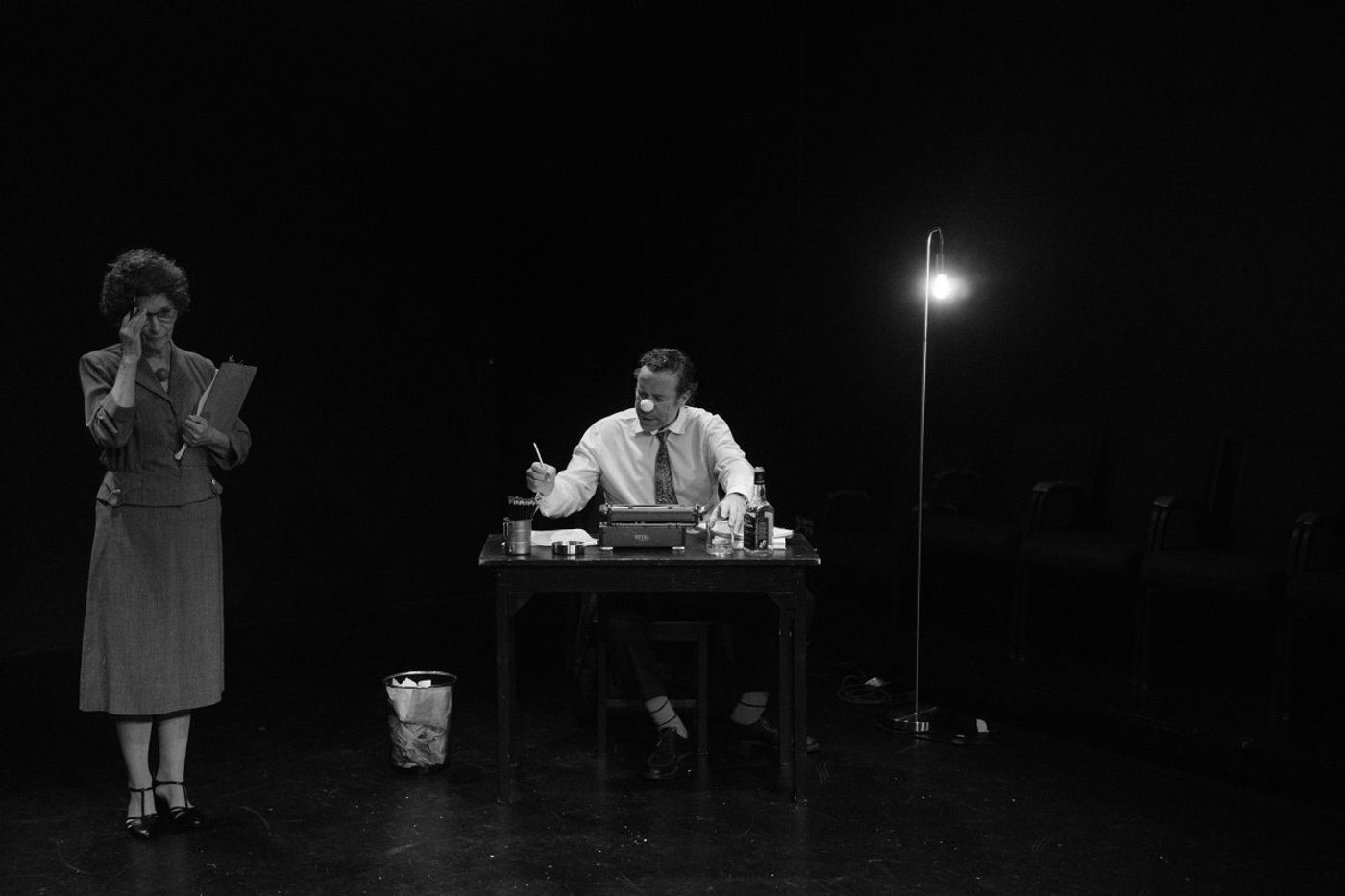
Robin McDonald and Jeffrey Johnson
Several critics praised the show’s surprising twists and ending without giving anything away. What was your philosophy in building a mystery that works as both a comedy and an emotional journey?
It’s not so much a philosophy as it is just good old-fashioned storytelling. Every good story is actually a “murder mystery.” There’s always something that comes at the end that we didn’t quite see coming, but we knew was coming. I believe storytelling, in any form, is a craft. You must learn it and practice it and make it your own. Again, in my opinion, to tell a story well, it must be structured so that whatever the ending is, it is both surprising and inevitable. William Goldman said it best, I’m paraphrasing a bit here, but: “give the audience exactly what they want, but not in a way that they expected.”
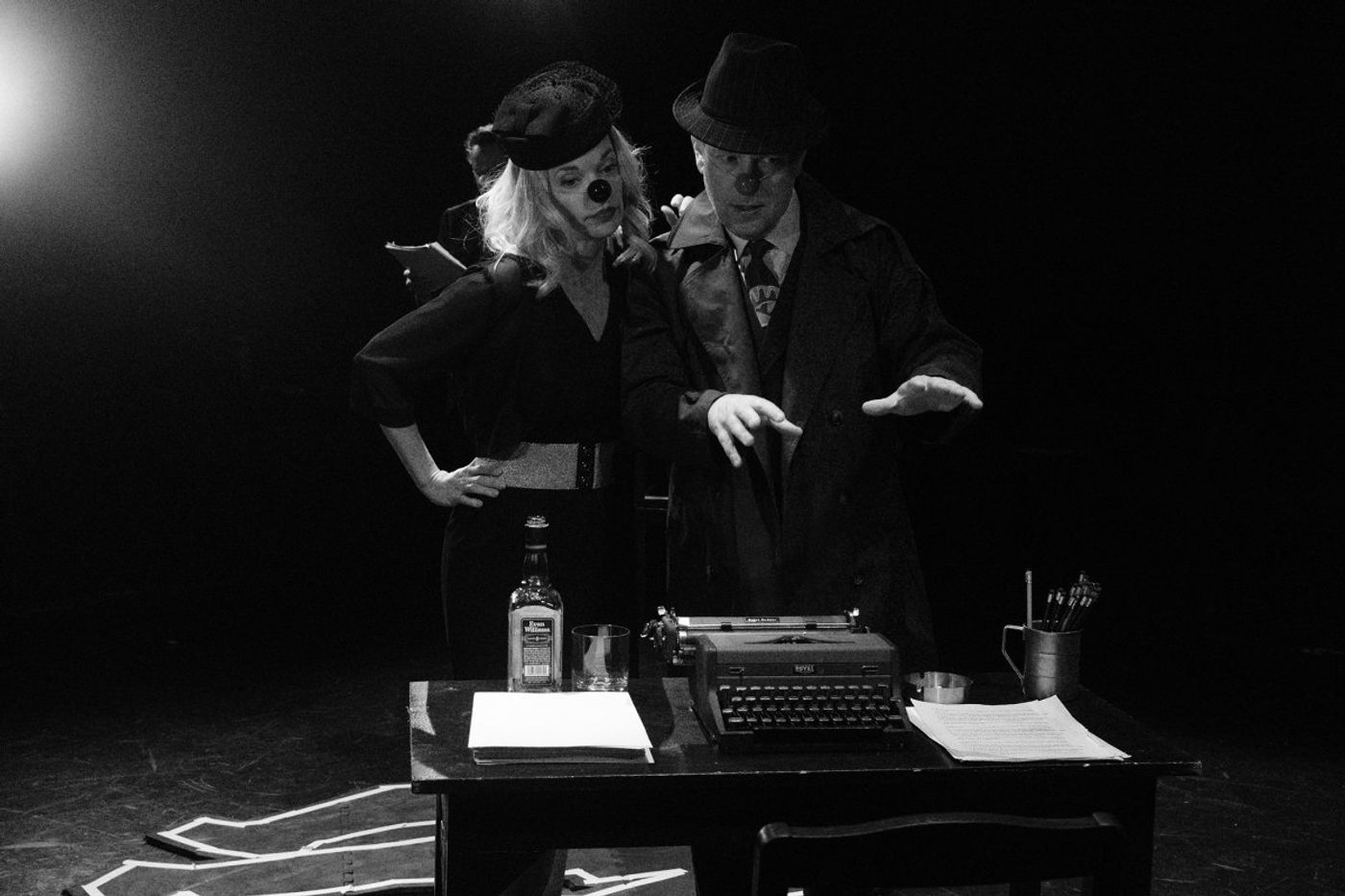
Ann Noble and Christian Haines
As both the writer and director, how did your vision evolve during rehearsals? Were there moments when the cast’s clown work or improvisation fundamentally changed the script?
There were slight changes, mostly little additions from some improv, but nothing fundamental. I’m not a fan of presenting a script without it working as it is on the page. Little changes and tweaks are always welcome, especially when working with such superb actors, but the story is the story. And if it needs to change a lot, structurally, then it’s not really ready for performance. And certainly not ready for Fringe! I want actors to feel free to play, and I find that only really works when the story they’re telling is strong and foundationally sound. Not that I’m not a huge fan of devising work (like the piece I worked on with Ghost Road Theatre last year, The Unraveling), but that is a specific kind of theatrical process that was not the point of this piece.
Did you write the blonde femme fatale character with yourself in mind to portray her?
Yes. Again, I wrote this piece for these actors. And while I hope the piece will have a future and that other actors will find joy in portraying these characters, for right now, it is for us four specific artists.
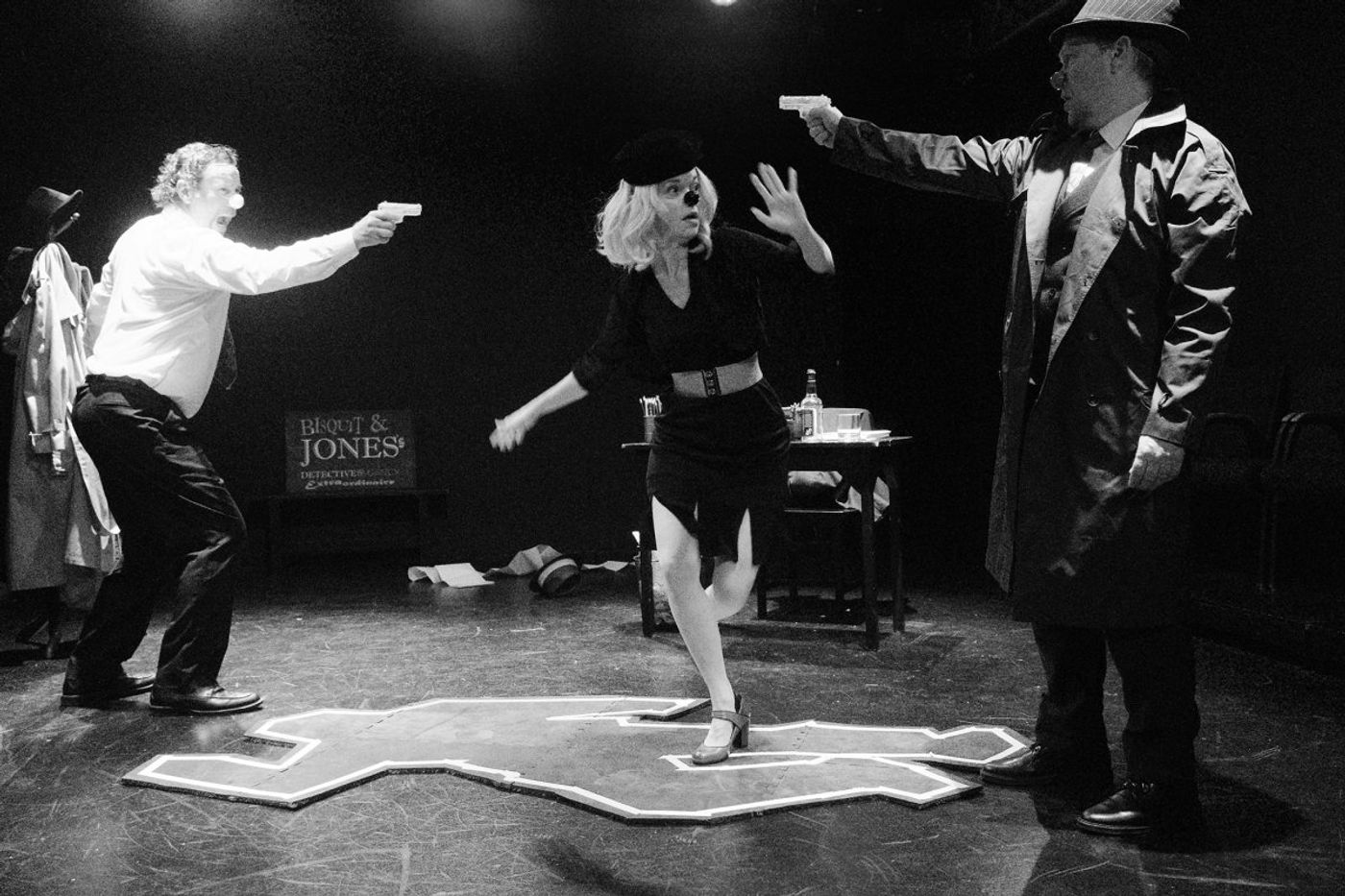
Jeffrey Johnson, Ann Noble, Christian Haines
One review compared Dead Man to "Dick Van Dyke meets The Naked Gun through a theatrical clown lens." What artistic influences - whether films, performers, or theater traditions - helped shape the show’s unique style?
There are so many…Tom Stoppard, Samuel Beckett, Lily Tomlin, Robert Altman, William Gibson, Ursula K. Le Guin, Donald O’Connor, Lorraine Hansberry, Shakespeare, Philippe Petit, Lauren Bacall, Humphrey Bogart, Carol Burnett, Jackie Chan, Judy Holliday, Tony Gilroy, Charles Grodin…
Film Noir often deals in stark ideas of right and wrong, yet your play hints that "life is easier when everything’s black and white... except for those pesky greys." What interested you about exploring those moral gray areas through comedy?
Because that’s where we actually live. I think we wish it was all black and white, we wish it was easy to choose the right thing. But it never is. Again, I find it to be the truth of what it means to be human: to be in a place of having to make difficult decisions. And, as deeply unsettling as that can be, it’s also wonderfully poignant. I think it’s important to laugh at ourselves and our situation, when we can. Dark times require great light.
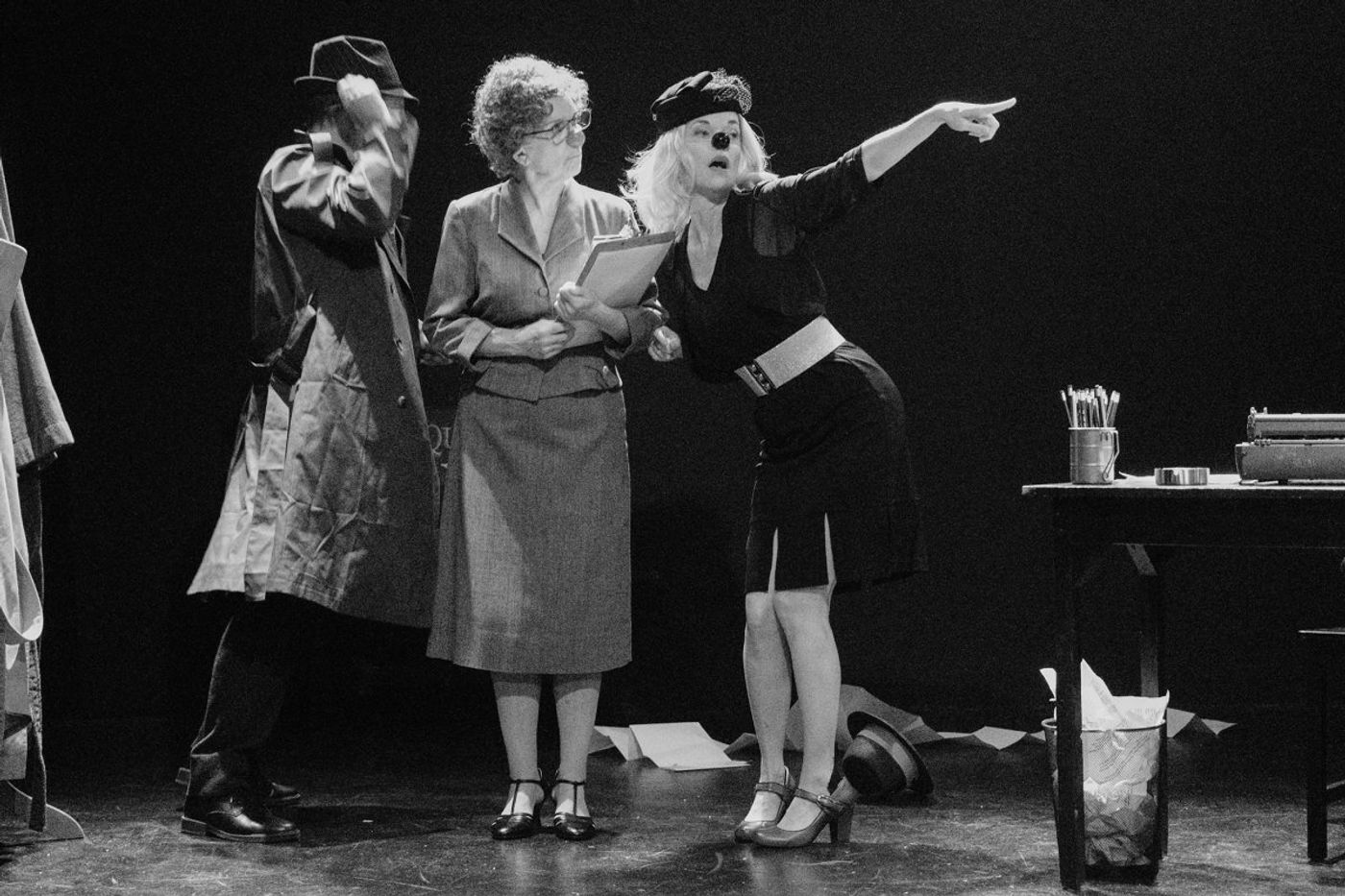
Christian Haines, Robin McDonald, Ann Noble
Critics repeatedly praised the ensemble chemistry and physical storytelling. What qualities were you looking for in the cast, and how did you develop that level of trust and timing among performers?
We have all worked together before, in different capacities, so the trust was already there. When I write these shows for Fringe, I only write for people I already know and trust. The process is too fast to take the time to explore with someone new. Not that I don’t love working with new people and getting to know people who are not already in my circle. But Fringe doesn’t really allow for that. The process is extremely compressed, and everyone needs to move fast and efficiently. So a shorthand is not only preferred, it’s a necessity. And again, I wrote all these parts for these actors, so I knew they could do what they needed to do to make the piece sing: the physical ability, the mental acumen, the verbal acuity, and the heart-filled tenderness. They really can do it all. They also all have a wicked sense of humor, which is intrinsic to excellent chemistry. That wonderful sense of play. I’m grateful they all said “yes”.
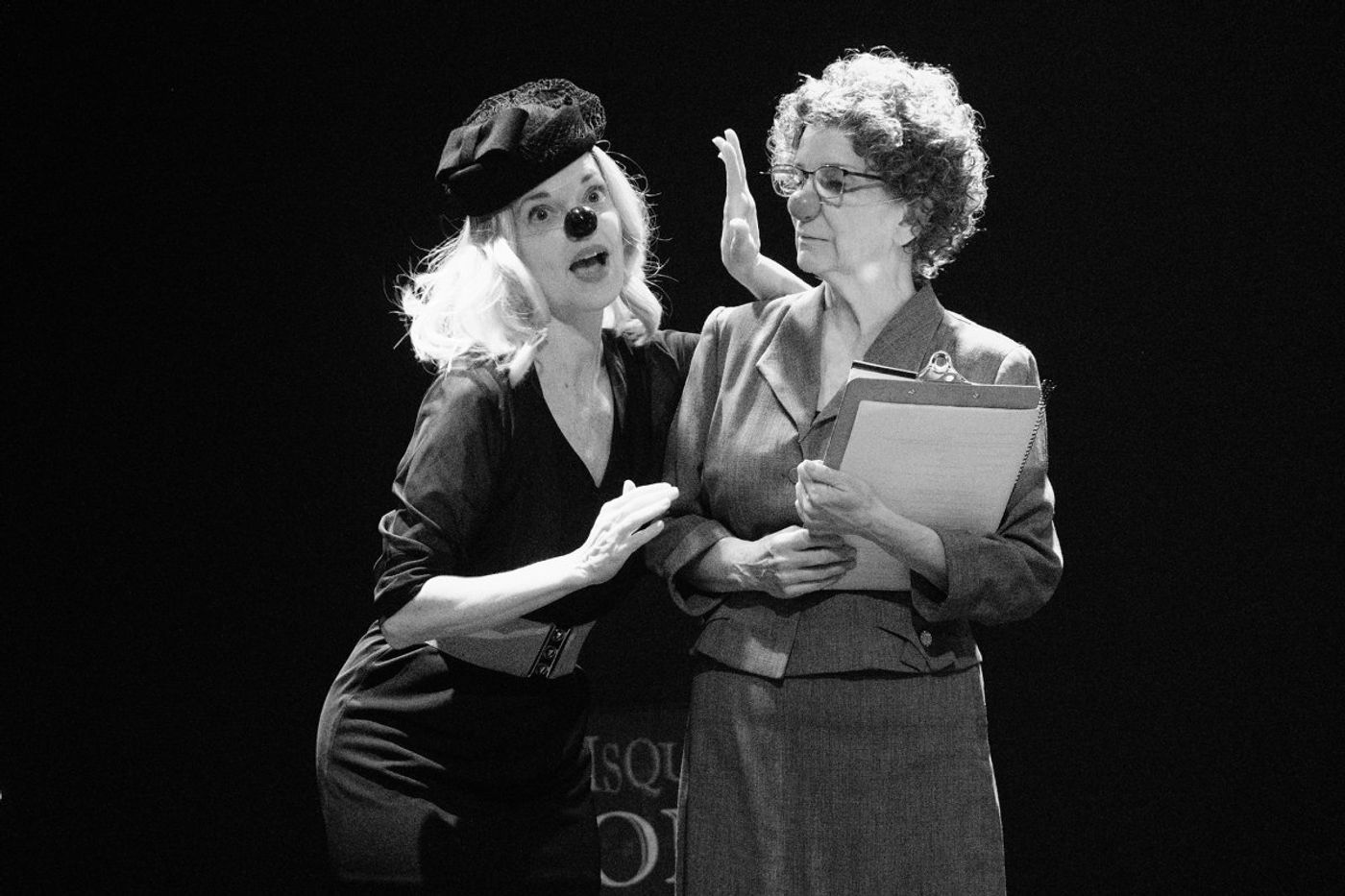
Ann Noble and Robin McDonald
Dead Man was a standout success at the Hollywood Fringe Festival and is now moving to the Echo Theater Company. What have you learned from audiences during the Fringe run, and are you making any changes for this next production?
The only changes we’re making are in terms of the staging. I directed the piece for the Black Box at the Broadwater, which is a thrust space. But at the Echo, we’re in a proscenium space, so we’ve had to re-do a bit of the blocking and movement on the stage. Otherwise, the piece is the same. We found it really hit a “sweet spot” in terms of the entire production for audiences, so, you know, “if it ain’t broke, don’t fix it.” I’m just grateful more people get to see it; we had to turn away so many at Fringe because the seating was limited and we only had a handful of dates/times to see it.
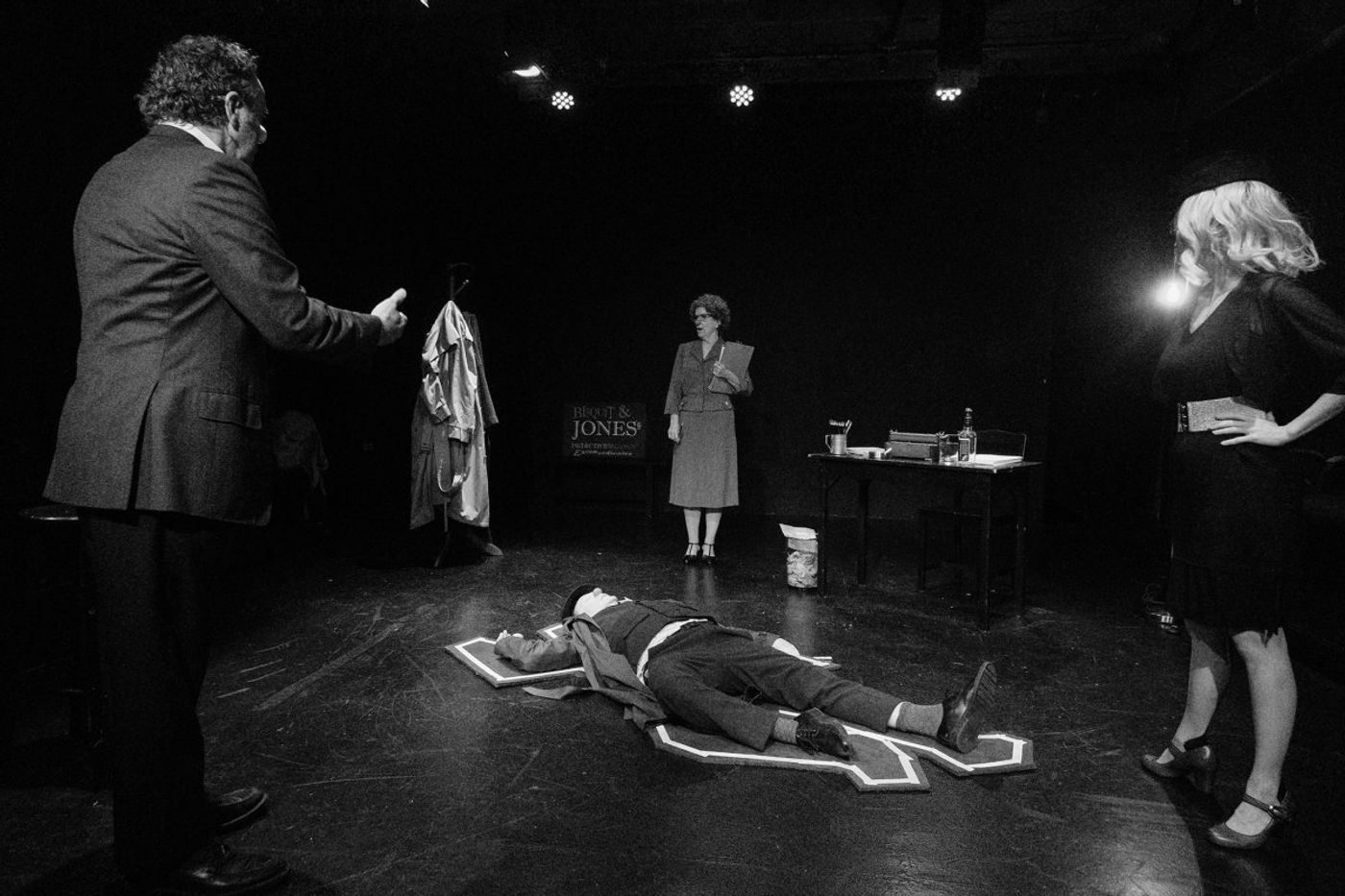
Christian Haines, Jeffrey Johnson, Robin McDonald, Ann Noble
Clowning is sometimes misunderstood as being all about slapstick or silliness, but reviewers have described Dead Man as clever, heartfelt, and even heartbreaking. What do you wish more people understood about “Clown” as a storytelling form?
I guess maybe that Clown is as old as we are. It’s a different way of wearing a mask. It’s a way of honoring the “trickster” energy that has been with us since we crawled out of the cave (or the water). There was a stunning show at Fringe this past year that explored this entire myth; it was created by The Clown School Company called “Trickster.” I always think it’s wonderful when people go back and look at the history of theatre and storytelling…from the Greeks to Commedia…it’s always important, and I have found, to recognize what shoulders we stand on as we progress on our individual journeys through the arts.
Without spoiling the mystery, what do you hope audiences are still thinking about on the drive home after they’ve laughed their way through Dead Man?
I hope it will spark delight in their hearts, and make their brains break a bit as they track back through the piece to find all the little clues that led to the end.
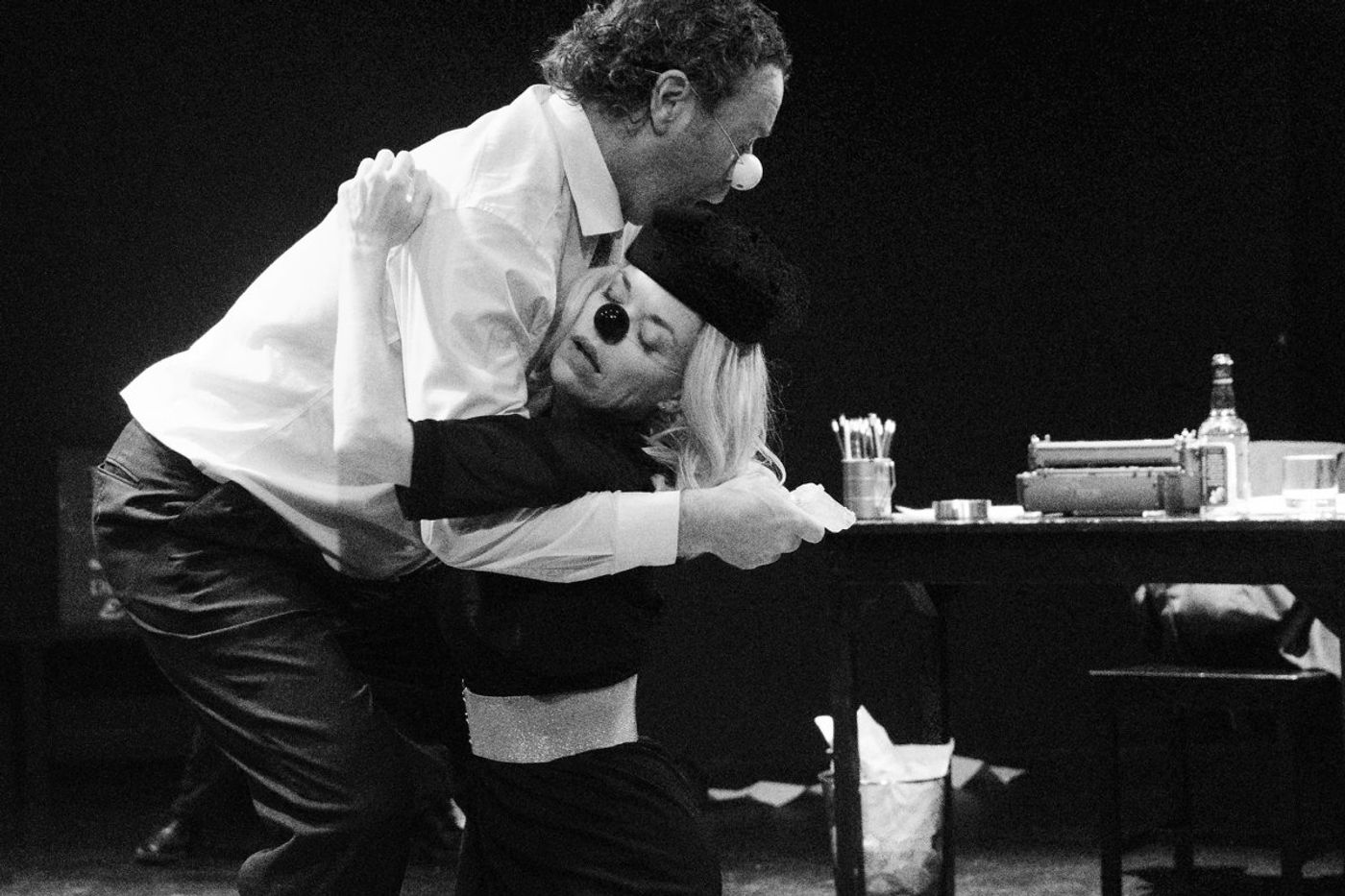
Jeffrey Johnson and Ann Noble
Anything else you would like to share about the play or yourself as its writer, director, and one of the stars?
Just my gratitude for the extraordinary theatre community here in L.A. I could not do what I do without the support of all the other actors, writers, directors, stage managers, designers, producers and theatre-goers who keep showing up even, and especially, in these precarious times.
Thanks so much, Ann!
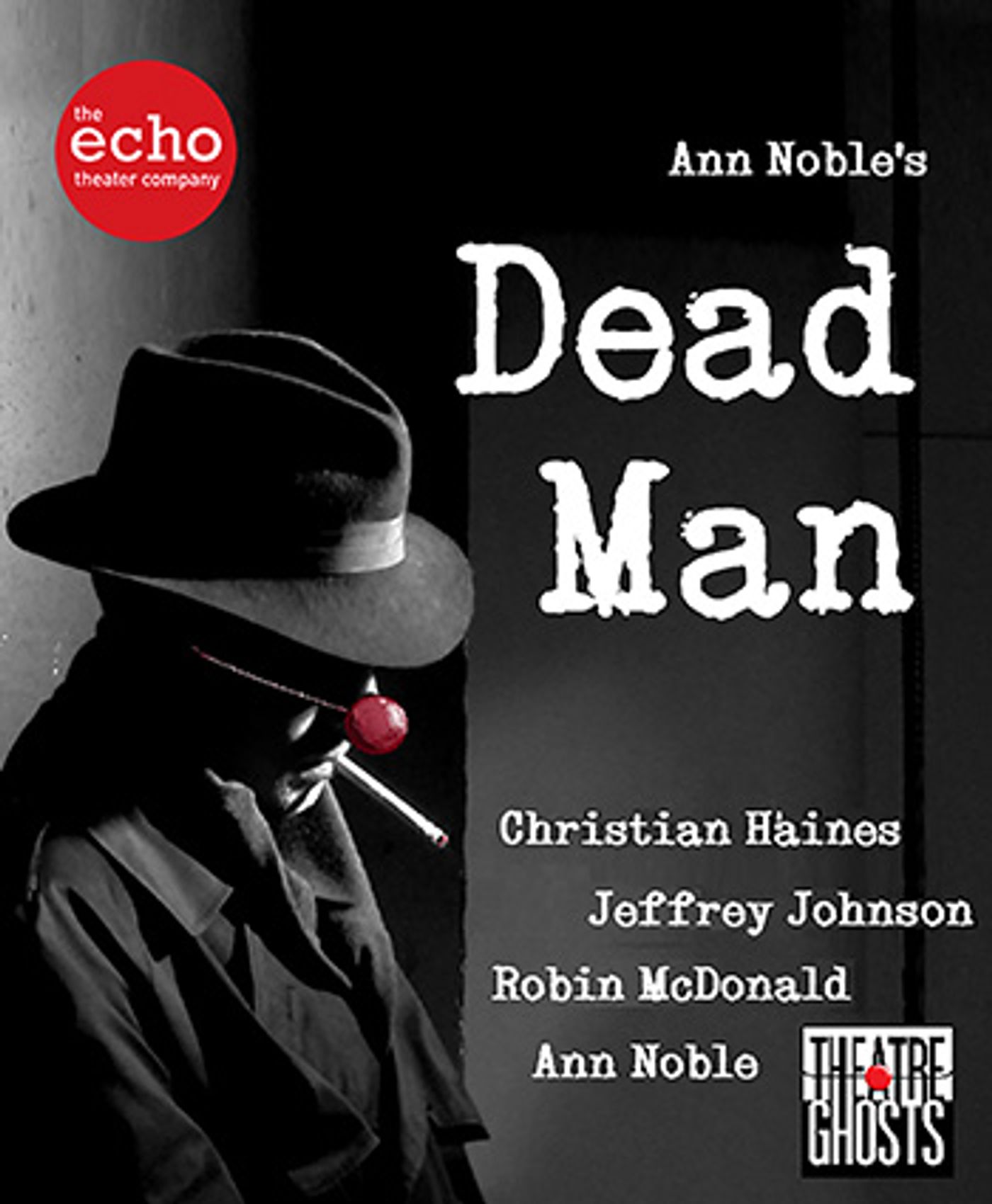
The noir comedy clown mystery Dead Man, written and directed by Ann Noble, starring Christian Haines, Jeffrey Johnson, Robin McDonald, and Ann Noble, is being produced by The Echo Theater Company and Theatre Ghosts on Tuesdays, July 21, 28, and August 4 at 8pm at the Echo Theater Company at the Atwater Village Theatre, 3269 Casitas Ave., Los Angeles, CA 90039
General admission tickets are $20, with a $1.75 fee added if purchasing with a credit card, available online at EchoTheaterCompany.com or by calling (747) 350-8066. FREE parking in the Atwater Crossing (AXT) lot one block south of the theater.

|
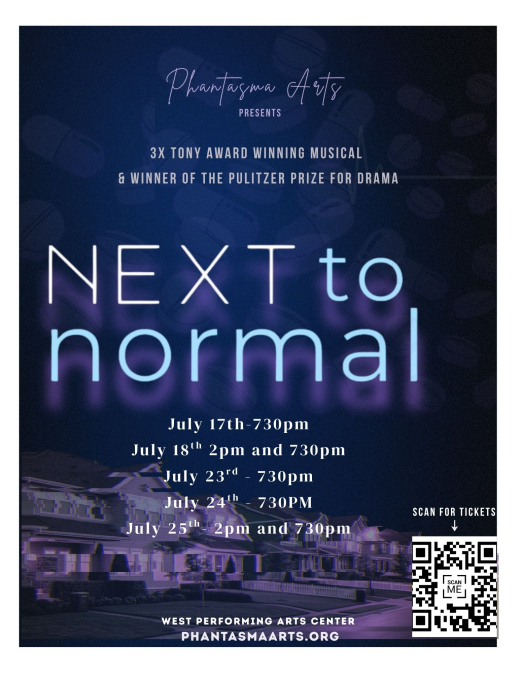
Next to Normal West Performing Arts Center (7/17-7/25) |
|
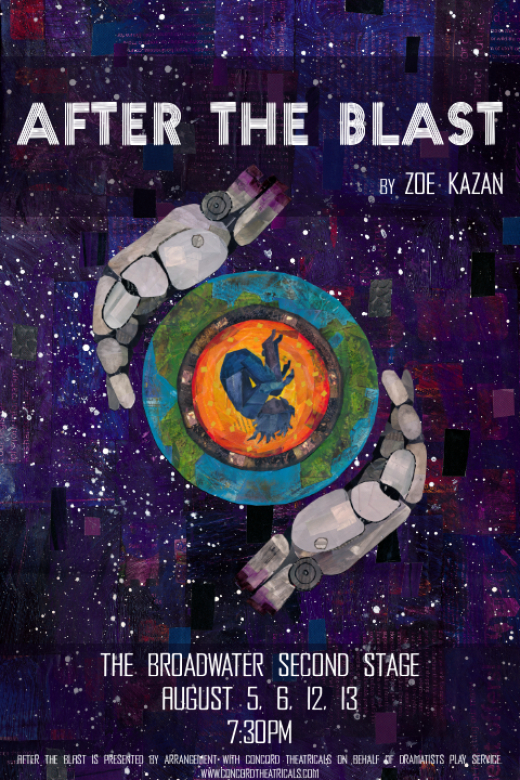
After the Blast The Broadwater Second Stage (8/05-8/13) |

|
E=MC² Einstein The Musical Kiki & David Gindler Performing Arts Center (7/03-7/26) |
|
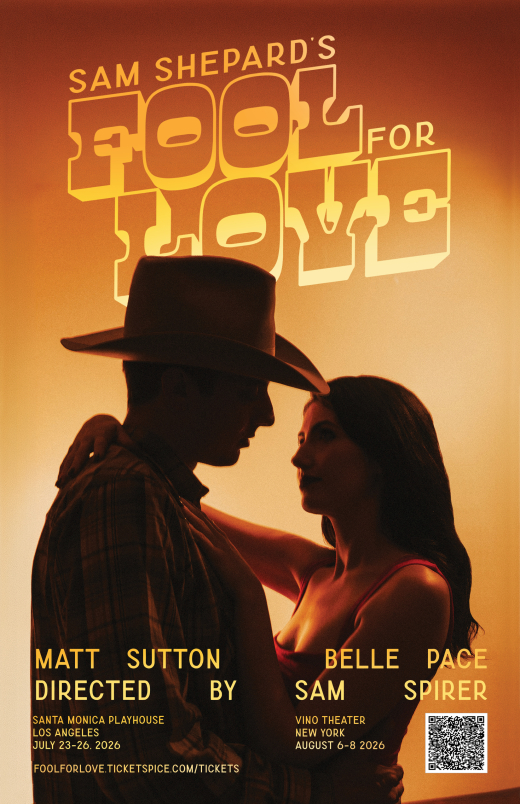
Fool for Love Santa Monica Playhouse (7/23-7/26) |
|
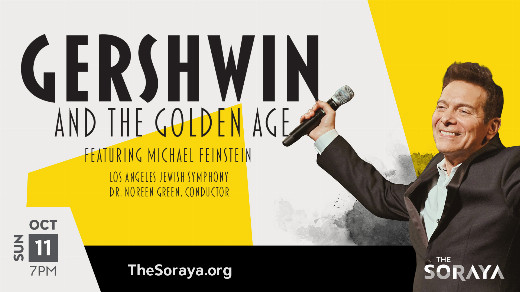
Gershwin and the Golden Age Younes and Soraya Nazarian Center for the Performing Arts (The Soraya) (10/11-10/11) |
|
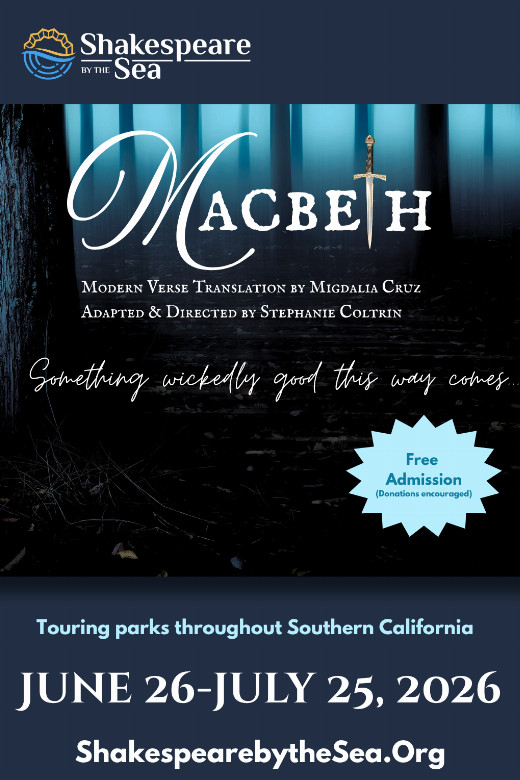
Macbeth Shakespeare by the Sea (6/26-7/25) |
|
|
Water for Elephants Hollywood Pantages Theatre (9/08-9/27) |
|
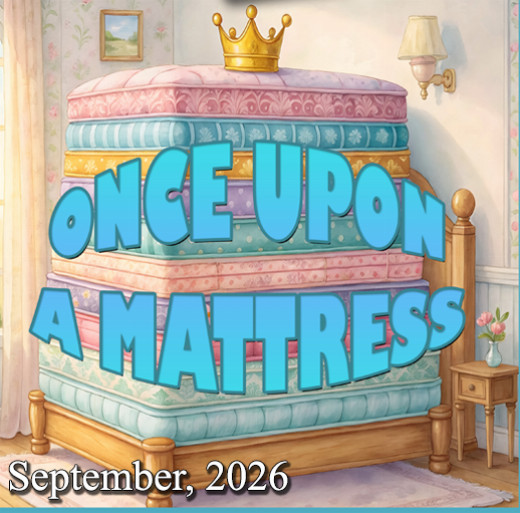
"Once Upon a Mattress" Whittier Community Theatre (9/12-9/26) |

|
2026 Award Recipients Announced, Celebrating Excellence in Film, Art, and Emerging Media Culver City Theater (6/21-12/31) |
|
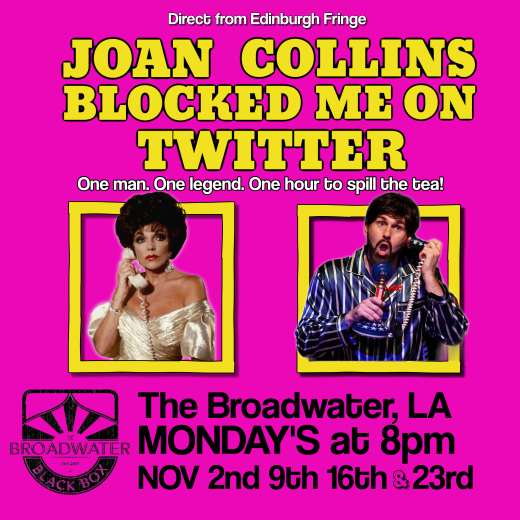
Joan Collins Blocked Me on Twitter Broadwater BlackBox Theatre (11/02-11/23) PHOTOS |