Interview: Shawna Lucey of OPERA SAN JOSE
A fast-rising star in the opera world, Lucey is one of many women holding leadership positions in classical music organizations throughout the Bay Area
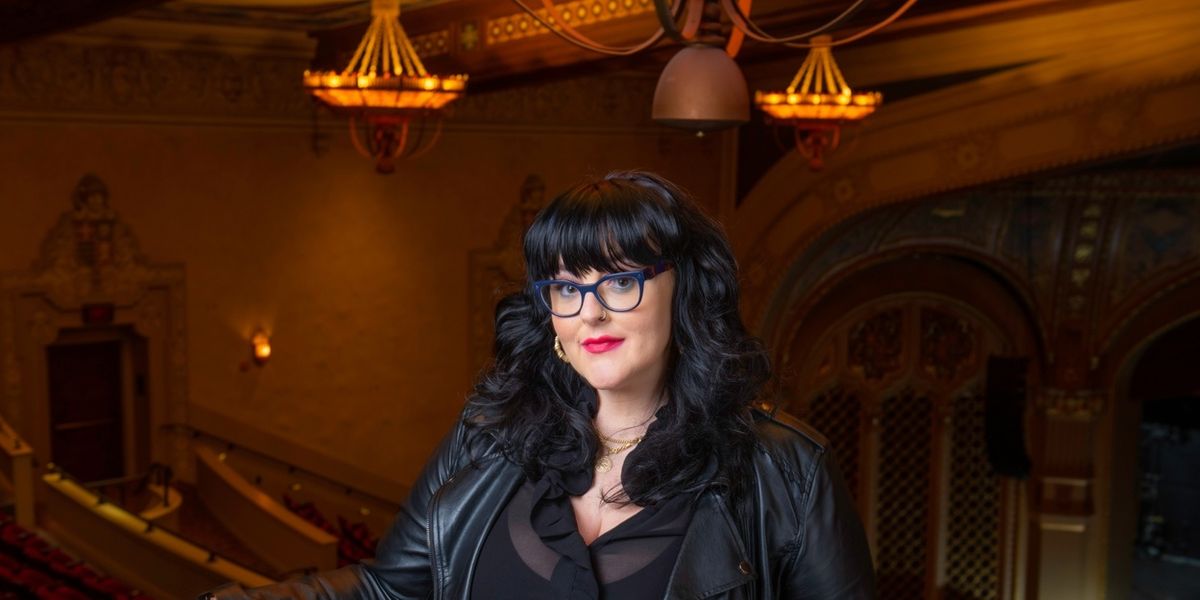
When Elim Chan was announced this week as San Francisco Symphony’s newly appointed Music Director, much was made of the fact that she would be the first woman to lead one of the “Big 7” American orchestras, and rightly so. This was a day many of us have been waiting decades to see. But, what I haven’t seen commented on so much is that Chan will join a Bay Area classical music scene that already includes numerous women in leadership positions, including Eun Sun Kim, Music Director of San Francisco Opera; Carrie-Ann Matheson, Artistic Director of the Merola Opera Program; Valérie Sainte-Agethe, Chorale Director of the Philharmonia Baroque Orchestra & Chorale; Julie Haydon, Director of Children’s and Youth Choirs at Cantare; and Shawna Lucey, General Director & CEO of Opera San José. Not to imply that we’ve reached a state of equity – we’ll know that when the appointment of a woman leader is no longer news – but in the meantime, let’s celebrate how far things have come, at least in the Bay Area.
It is in that spirit that I recently talked to Lucey. Her career in particular seems to have shot into the stratosphere over just the past few years. Not only does she lead Opera San José where she will direct John Adam’s Doctor Atomic next season, she will also be helming two productions at San Francisco Opera. And when we spoke, she happened to be calling in from southern California where she was directing Verdi’s Falstaff at Los Angeles Opera. Clearly, Lucey is very much in demand these days so I wanted to know how she got to where she is, what her vision is for Opera San José and what she loves most about her job. Speaking with her, it was clear that she is an extremely smart over-achiever passionately in love with her artform and dedicated to her community. The following conversation has been edited for length and clarity.
How did opera first come into your life?
I come from theater and was doing my Master’s Degree in Stage Direction at a Russian theater institute in Moscow. I always have to give the caveat, “I’m not Russian, I’m just from Houston.” [laughs] But Russian theater training is excellent so I had this vision of doing my MFA there, and it was absolutely wonderful. During that time, I had been working at Bread & Puppet Theater in Vermont on and off, and I didn’t want to work there again, but I wasn’t sure what to do with myself. My directing mentor said, “Oh, you read music and you speak a couple of languages. You should really look into directing opera.”
I didn’t know anything about opera really so I applied for every job I could find and the one I got was as a technical apprentice at Santa Fe Opera, and off I went. I had no idea how lucky I was to have gotten that position. One of my first jobs was to set up an orchestra reading of Verdi’s Falstaff. We got all the chairs and stands and everything ready for the orchestra and they came in and started playing, and I thought “Omigod, if my directing work can be centered around this incredible music, wouldn’t I be the luckiest person on earth?” I like to say it was love at first note. I committed myself to opera and never looked back.
What kind of career did you imagine for yourself in opera?
I knew I wanted to be a stage director, that was my number one calling. I really wanted to get in there and make emotionally compelling productions of opera that audiences cherish, that when they come into the theater they know they’ll be well taken care of by the production, by the performances. That was my whole goal and my aspiration, and then… in March of 2020 (remember that time?) I had just finished directing a Lucia in Kansas City and come home to New York City to repack my bags cause I was due to go to Hawaii to direct Salome. Well – I did not go to Hawaii, nor did I direct Salome [for obvious reasons]. It was a time of intense reflection for me, and I thought you know, I really do love this artform so I want to think about what my next career iteration might be, and that’s when I had the idea of becoming a general director.
I joined Columbia University’s Masters of Science program in Non-Profit Management because I knew that I spoke the language of the art fluently, but I needed to also speak the language of the business side fluently. While I was still in the program, Khori [Dastoor, prior GM of Opera San José] moved to Houston. I had worked with her and admired her, and so I thought “Oh, I’ll apply for that position. I won’t get it, but I’ll learn a lot in the process.” And, lo and behold, I got it and moved to San Jose in April of 2022.
Did you have any trepidations that it might be a difficult road ahead for you as a woman in your chosen field?
Oh, yeah. I mean, I believe it’s only like 5% of general directors are women, something like that. I have always understood that the challenges would be very high in any field. I went to an all-girls school in Houston and our principal, she always reminded us that we should be prepared to receive 75 cents on the dollar of what men in an equal position make, and we will work twice as hard to maintain that position. There was a lot of transparency around that in my adolescence, and so I felt very clear-eyed about that fact.
I think I have an advantage here in that our company was founded by a woman, Irene Dalis, and my predecessor is a woman and so there’s a culture of that, for opera and other arts organizations as well, in the South Bay. It’s very common for executive leadership to be women here so that has felt very comforting. It is a bit of an outlier from other markets, for sure.
And at least you weren’t walking into the room as the first woman in charge they’d ever encountered.
No, no, no. It’s much more common at Opera San José for it to be run by a woman actually, and that has been a wonderful kind of intro culture to be in. We have a good mix on our board of directors I would say, and quite a few women who in their professional careers held positions of leadership, so it’s really a very welcoming culture in that respect.
Did you have any key women role models or mentors to help point the way?
Oh, absolutely! I have been very fortunate to have key female mentors. I’ll specifically highlight Jennifer Good, who is the director of production at San Francisco Opera. She has known me since I was a technical apprentice and has been a key mentor for many years. And then Paula Suozzi, who is the Executive Stage Director at the Metropolitan Opera. She is a dear friend and mentor as well. And my directing mentor is also a woman. So I’ve been very fortunate to have a career that’s influenced by female mentors.
And then I am really lucky to have actually more female colleagues than I expected. Just today, I got an email from Annie Burridge who’s the general director of Austin Opera. I’m very close with Allison Swenson who runs Opera Omaha, and of course, Khori in Houston, just to name a few. There’s a lot of really great female colleagues who are doing spectacular work in a number of markets across the country.
How would you describe where things are at right now in terms of equity or parity for women in the classical music world?
That’s such a great question. As I’m speaking to you, I’m actually in Los Angeles directing Verdi’s Falstaff [at Los Angeles Opera], which I mentioned is the first thing I ever worked on as a technical director. And it’s an opera I really love for a number of reasons. Not only is it Verdi’s last opera, it’s such an absolute musical masterpiece and it’s a comedy, which is so rare. What a delight to get to work on a comedy.
And one of the things that has always inspired me about that opera, and about Merry Wives of Windsor and the Shakespeare as well, is one could posit that Shakespeare was of course writing in the time of the reign of Elizabeth I, and throughout her reign she was assailed with doubts about her ability to hold this most important position for the English people, and yet she was a very strong and capable ruler.
In Elizabethan England, the wives were the keepers of the household purse, and so part of the reason why Falstaff is going after the women is not just to romance them but to get ahold of the finances of the households, and the comedy all pins on how capable and smart and shrewd the women are. And that kind of ability to lead in the household sphere of course scales to the head of the country as well, reflecting on Elizabeth and her abilities as a leader. So I approach it with that knowledge, that that’s some of what Shakespeare’s grappling with and reflecting for his country.
And if we look at the United States today, it’s not just classical music, right? We are but a reflection of our culture. So it’s not that classical music is out of step with the rest of what is happening in the United States. If we look at is the United States full of belief in and support for women in leadership positions, I think we can resoundingly say that is obviously something we still grapple with as a country and as a culture, if we look at elections or the way women’s position has eroded today. So, in terms of parity and equity in the world of classical music, I will just say I think we’re apace with parity and equity in the American ethos. Misogyny is obviously still alive and well amongst us, so it certainly is not something we have defeated, neither as a country nor as an artform.
You’ve got a really full plate these days. In addition to your “day job” as General Director & CEO of Opera San José, next season you’ll be directing two operas at San Francisco Opera – Marriage of Figaro and Tosca – plus Doctor Atomic at OSJ which is an entirely different animal. What does this moment feel like to you? Does it feel like you’ve “arrived?” Does it feel overwhelming?
You know, I’m a mom so doing about six things at once is just the nature of the beast. I mean, there’s no way around that. I like to joke why do one impossible job when you can do three? [laughs] But really and truly, my artistic identity and my executive identity are one and the same. They are fully integrated and they make each other better.
What I mean by that is I know as an executive the finances and the particular challenges of being a classical music performing arts producer in 2026 in the United States, and so it pushes me as an artist to continue to find creative solutions so that we offer the highest caliber of artistic product, because our audiences need it. I fully believe that because of the way we are siloed into our phones, we need community and camaraderie more now than perhaps any time in human history.
One of the things about being overworked, which I’m thrilled to be, is first of all I have always chosen to do more than less. When I was an undergrad, I did two full degrees at the same time. I have a full degree in Theatre in the Performing Arts college, and a full degree in Italian in the Liberal Arts college. It’s not a double major; I have two diplomas.
I knew you had those two degrees, but I just assumed it was some sort of double major.
No, no, I did two at once because I can’t help myself. I am voracious in my love of the artform and my desire to always figure out how I can be a better contributor, both to my community of the South Bay and to the opera industry at large. How can I best dedicate everything I’ve got to this artform that I so completely believe in and I think every person should have access to? Every single person should at least once a year think, “Oh, I’ve gotta go see my opera.” I don’t expect every single person to become a subscriber or a donor, but I want every person to have access to that glorious, glorious music.
By mmersing myself so completely in both sides, it gives me an ability to be fluid. I know that sounds really strange, but it’s like I don’t have time to question my ability to be a stage director, I don’t have time to ask myself do I know what I’m doing. I’m like – I have done it, I went and trained with the Russians, I’ve gotta trust that training. And it’s there, my artistic voice is there. It’s not that I make every perfect decision, but I am very lucky to be surrounded by some of the most incredible people I’ve ever worked with, whether it be the singers I’m engaging with, the conductors, our board members, or hearing from our audience members about their experience of operas past, operas today.
What it gives me is the freedom to be wildly present in a way where I don’t have a lot of time to like think, wonder and contemplate. I’ve got to just stay focused and be in the moment, and that’s a beautiful gift. One might say very succinctly, it’s idle hands, devil’s work. I would definitely get up to some devilish work if I had idle hands!
As a theater guy, I love that you programmed Fiddler on the Roof next season. How do you view the boundaries between opera and musical theater? I could be wrong, but I assume you wouldn’t program something like Mamma Mia?
Right. It is a very interesting line that people have very defined feelings about. There are theater people who are like “Opera? Why in the world would I do that?” Or opera people who are like “You are an opera company and you must only do opera.” One of the things I love is understanding how my beautiful singer colleagues came to be. Like how did you understand that you have this innate talent that happens with so few people? To dedicate yourself to this artform is a lifelong passion and how people end up in that funnel is so fascinating. And almost universally, it’s through musical theater, right? Our singers loved musicals, they loved being in musicals, but somehow their voice sent them in a different direction.
When we’re doing community engagement events or donor events, we always toss in some MT and our singers are so excited to do it. It’s like a homecoming. And I do think of musical theater as one of the greatest accomplishments of the United States. I mean, if you think about American contributions to world culture, it’s hard to top musical theater and jazz. I mean – hello! Those are ours, and I am really proud. So, you know, it is a perfect kind of a gateway drug, we think of it that way. We specifically programmed Fiddler because of Eugene Brancoveanu, who is a beloved star of the Bay Area and beloved friend of Opera San José. He’s never taken on the role of Tevye and he has a great musical background, so I know our people are going to love it, he’s going to love doing it, it’s going to be quite the experience.
It’s not that we would program a musical every season by any stretch of the imagination, but we always want to be thinking how can we expand our tent? How can we make opera more something that people will encounter, that they’ll consider? And musical theater is a great way to do that. People will come out for musicals and think “Omigosh, I had a great time! I didn’t know I could have a great time at the opera. I’ve heard of this name, Carmen. I’ll try that. Oh, it’s got tunes that I know, a wild story I can get into.”
Where would you like to take Opera San José in the next five to ten years?
I am really proud that Opera San José is the largest performing arts employer in the South Bay, and I know that our city partners within municipal government understand that we’re an anchor organization for performing arts workers in Silicon Valley. And it’s not just what we see onstage. It’s like our folks are making wigs for us and we’re their union contract so that then they can make wigs for, you know, weird rave events that are happening in warehouses in Morgan Hill or whatever. [laughs]
I think of us as an economic driver in downtown that really puts us on the map as an arts district in San Jose, a city people think of as the capital of Silicon Valley, the capital of innovation. So we’re leaning into that identity and being really forward thinking in terms of what an opera company can be for our local constituencies, for our performing arts workers. I think of Michaela Singer who’s making her role debut in Traviata right now with us. This is twenty years in the making for her, and we’re going to be the home where she takes the great leap.
Then thinking about audience development, we’re really experimenting with our digital offerings and seeing how we can help shape the audience experience. If we look at the greater ecosphere of this moment in technology, which certainly informed our decision to program Dr. Atomic in this time of reflection where we’re at this crossroads about to enter a new era of human existence with AI, just as the nuclear age launched a totally different human experience, how can we help drive forward best audience practices for opera, for performing arts in general so that what happens in the United States is that we really have markets of people consuming the performing arts passionately and consistently.
I think about all of these drivers and areas of innovation where we can experiment and be nimble, and lead and share our findings with the rest of the opera world. And then also learn from our colleagues.
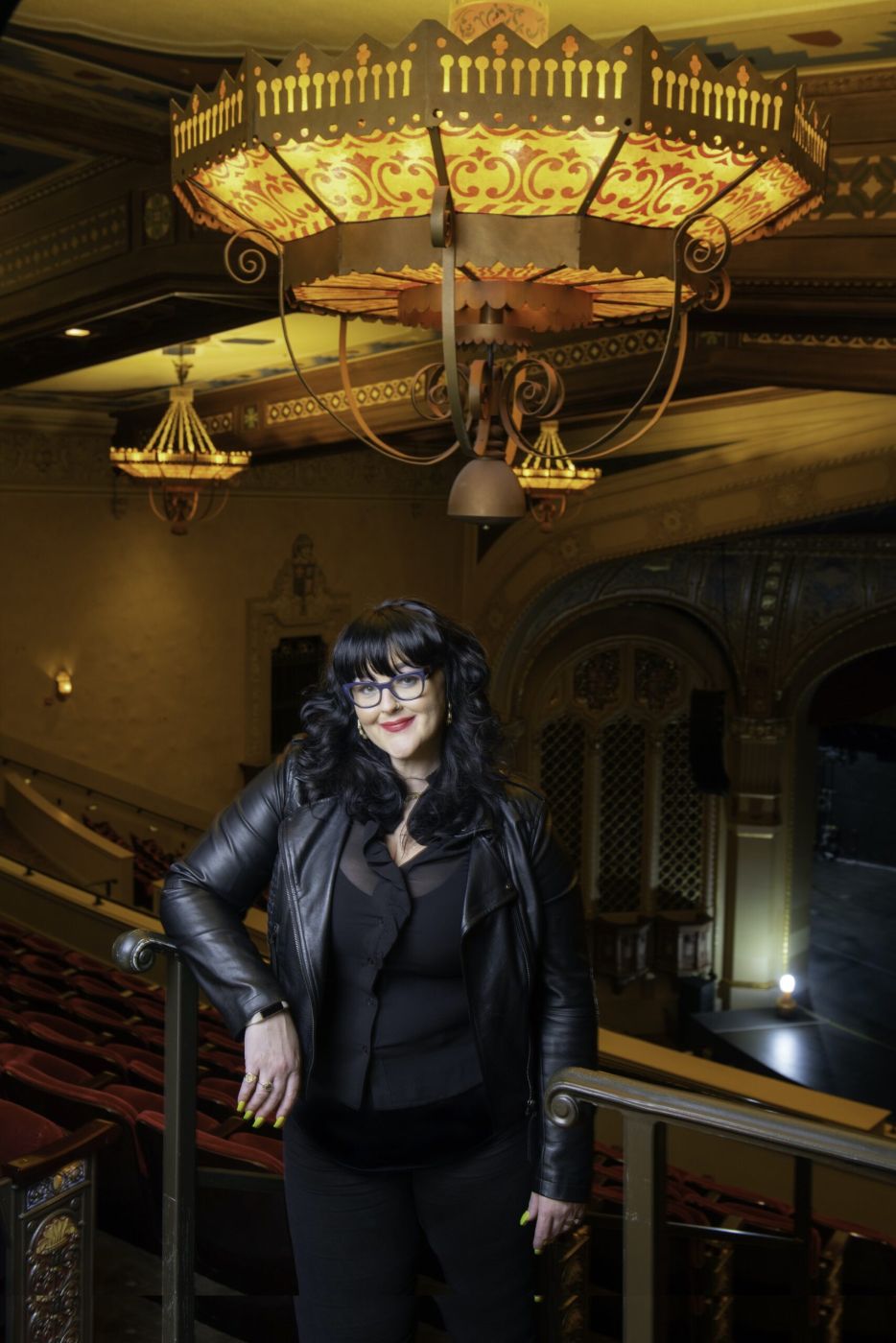
at the California Theatre, the company's home space
What are you most proud of so far in your tenure at Opera San José?
I’m so proud of everything that we are doing, I won’t say it’s me doing it. We have a very collaborative, very cross-functional, very supportive culture and environment in our company. That extends from our board of trustees all the way through the way we welcome our audiences into the California Theatre. We are one of the friendliest opera companies to come and experience opera. People always remark on that to me. I stand in front of the theater and welcome our patrons before every performance. I think it’s really important that I can thank every single person who’s coming to the theater for joining us.
I’ve always been a stage director who’s thought about the audience experience, making sure the audience understands what the story is, what the experience is. As a general director, that just expands to how can we help solve your parking problems, where should you eat, how can we make it this full experience for you and thank you for coming and being with us. Because we can’t make great opera without our patrons.
Our patrons know they have direct access to me, anybody can speak to me before any performance and I’m happy to hear what people want to share with me. I think that kind of truly welcoming environment, for both artists and patrons, is probably what I am most proud of, that we are all aligned, from board to staff to orchestra to everyone on the front lines. We are that company where people are welcomed and held, as community.
What is the best part of your job as General Director and CEO of Opera San José?
I’ll give you an exact example. I stand in front of the theater and I welcome our patrons, and I see them when they’re coming in, you know like sometimes people are arguing with their date or they were stuck in traffic. They’re in all these different states, right? Then I watch when the doors open at intermission, and their faces are transformed. And I cannot get enough of that. It is like crack! [laughs] Cause if I’m looking at an Excel spreadsheet or having a difficult meeting or whatever – Sometimes work is a slog, right? – I know what we are doing and what we are dedicated to is creating beauty and belonging in the world. We are in service of the god of theater, and I see it on the faces of the audience. They are transformed by their time in the theater, and that is 100% the best part of my job.
(photographs by David Allen)
Videos

|
Anastasia the Musical Douglas Morrisson Theatre (5/22-5/31) |
|
Comedy Oakland at Elbo Room Thu June 18 8pm Elbo Room Jack London (6/18-6/18) |

|
Iphigenia in Splott Shotgun Players Ashby Stage (7/25-8/30) |

|
Hamilton (Angelica Company) San Jose Center for the Performing Arts (7/07-7/18) |
|
Ah Ha! Circus Bella (6/03-7/26) |
|
“Dracula: A Feminist Revenge Fantasy, Really” San Francisco Playhouse (5/14-6/27) |

|
Madison Beer Bill Graham Civic Auditorium (6/23-6/23) |
|
Comedy Oakland at Elbo Room Thu June 11 8pm Elbo Room Jack London (6/11-6/11) |
|
Comedy Oakland at Quinn's Lighthouse Sun May 24 7pm Quinn's Lighthouse (5/24-5/24) |
|
Comedy Oakland at Elbo Room Sat June 20 7pm Elbo Room Jack London (6/20-6/20) |
| VIEW ALL SHOWS ADD A SHOW | |