


Interview: Michael Van Duzer of INCITATION TO THE DANCE at Theatre West
Michael Van Duzer, a well seasoned theatre director, writer and actor shares insightful and fluid answers on making theater in Los Angeles successfully work for him.

Michael Van Duzer is an established Los Angeles theater triple threat: A gifted playwright, focused director, and an Off-Broadway actor. His local directing credits include The Collection, What the Butler Saw, As You Like It, Rosencrantz and Guildenstern are Dead, Edward II, The Double Dealer (Best Direction), Halsted Street: Chicago (GLAAD nomination), The Lisbon Traviata, the local premiere of Daniel MacIvor’s In On It (Weekly Nomination), and the Musical Theatre Guild production of The Golden Apple. Since 1991, he has served as the resident director for the Opera Buffs, helming concert productions of Carmen, La Boheme, La Cenerentola, and The Ballad of Baby Doe.
Michael also directed the world premieres of his own plays: Hopeful Romantic (Robby Nomination), Recalled to Life, and the one-act collection Tawdry Tales (Best Comedy). Other self-directed one-acts include The History of Gay Theatre in Something More than 60 Seconds and Trattoria of Terror, both commissioned by Theatre Out in Orange County. At Theatre West, he directed The Musical Comedy Murders of 1940, the world premiere of The Man Who Saved Everything, and numerous short pieces for WestFest, including his own plays Hands Beneath the Table and Sons of God.
In the last decade, he has occasionally returned to acting, most notably in the world premiere of Our Man in Santiago, which earned him a Robby Award (established by theater critic Rob Stevens) for his portrayal of Henry Kissinger. He later joined the sizzling cast when the highly praised production moved to Off-Broadway. Additionally, he served on the Board of Directors for Theatre West for eight years, four of which he served as its Artistic Chair. Michael always remains committed to the LA cabaret community, advocating for two holiday music shows and two cabaret concerts, annually. He currently serves as the Theatre West's resident promising playwright and also a noted play director for the in-house company.
Michael took time out of his bustling schedule for Broadway World LA to answer ten questions about the post-COVID LA theater scene and his love of edgy spoken dramas, classic musical theater and his original cabaret concerts.
In which month were you born, and in what city?
I was born in Jacksonville, North Carolina, two days before Christmas. My father was a Marine who served in both WWII and Korea. He was stationed at Camp Lejeune for my birth.
What is your earliest memory of a live performance?
I’m going to cheat on this one and start with my actual first live performance, which I only wish I could remember. My father was stationed overseas for a year, and my mother moved us in with my grandmother and youngest aunt in Los Angeles. At 18 months, they took me to see the Broadway tour of GYPSY with Ethel Merman. Obviously, after that, I had no choice but to pursue my vocation of “Show Queen.” “Opera Queen” came a few years later. (Fun Fact: Ethel Merman never performed with National Tours but she took GYPSY! on the road to showcase for the film version in Hollywood. Her co-star and best friend on Broadway, June Squibb, repeated her role as Electra for the tour. The film role was eventually awarded to Rosalind Russel).
Did your parents or caretakers nurture your artistic talents?
I think my parents were mostly bemused by my theatrical aspirations. But, as I started as a child soprano, they spent a lot of time driving me to and from rehearsals with the Army Navy Chorus, or the Catholic Girls’ High School productions of THE KING AND I, and OLIVER, where I was probably the best-fed starving orphan ever. As I got older, they dutifully tried steering me towards more lucrative career choices. But they never pressured me to change my path.
Are you university-trained, or did you develop your skills through professional experience?
I attended USC and graduated with a BFA in Theatre. But it wasn’t the best time for the Theatre Department. This said, I had some worthwhile performing opportunities, as well as my first forays into directing and writing.
At what age did you begin supporting yourself, and what roles did you hold before committing to the LA theater scene?
I began supporting myself after graduating in the early 1980’s, but performance opportunities were rarely paying. I joined a new group called Celebration Theatre, which focused on LGBT plays. I acted in their first production, wrote and directed my first produced one-act as a part of their second production, and became their Artistic Director for about a year when health issues prompted me to take a job at Actors’ Equity Association. I remained there for nearly 30 years.
What qualities do you look for first in a cabaret act (e.g., vocal quality, stage presence, or song list)?
My favorite cabaret acts are the highly personal ones-- though you’d better make me laugh. And those with truly unique themes and a wide variety of song styles. The latter are much more difficult to research and put together, but when done well, they are truly memorable.
How do you professionally feel about the use of backing tracks versus live bands in cabaret?
Theatre West has been my artistic home for the last decade, and, as Betty Garrett was one of the company’s founding members, music has always been an important element in both our workshops and performances. I’m not sure why musical performances became scarce after Betty’s passing. My guess would be expense. But when Victoria Lavan took over our Musical Workshop after COVID, she focused on bringing back live musical performances with a band of top musicians, our members, and some incredible guest artists, chosen from her former students. I call these shows cabaret-concerts, as they combine the intimacy of cabaret with large group numbers. We’ve done three December Holiday shows, and last Fall, Victoria and her musical partner, JOHM A. GOUX , devised a salute to popular music from 1967 to 1972 called AQUARIUS. Goux brought tracks into the mix with both skill and success. Tracks are not used for all the numbers. Many songs feature the live band or even just the piano. But the tracks blend seamlessly into the show’s musical fabric and are a useful tool for musical productions.
Which is more effective: selecting a piece and then casting, or finding a musical that fits an existing theatrical acting company?
As a membership company, Theatre West deals with this problem constantly. While the company’s focus is on casting members in our productions, choosing only shows that can be cast within the current company severely limits our options. INCITATION TO THE DANCE, which is currently running, is a show I developed over nine years at Theatre West. When it was chosen for production a couple of years ago, those on the reading committee knew that we had no one in the company to play one of the roles. When it came time to cast the show, we had several age-appropriate members who, for a variety of reasons, turned it down or weren’t quite right, and I still had to look outside the company. My view is that you should always choose the better/more interesting property.
As a playwright, what subject matters attract audiences, and which do you consider to be "risk-takers"?
I’m tempted to say that it depends on who your audience is, but it’s no longer that simple. The days of a dedicated subscriber base are pretty much over, except in certain high-profile cases. Younger audiences prefer not to be held hostage by a future date, and older audiences are seeing less since the pandemic. Every show is a risk. One basically has to court a different audience for each show and hope the patrons who regularly attend your performances will show up. INCITATION, for example, should appeal to the LGBTQ audience, particularly older gay men, and cinephiles. But you also need to assure the general audience that issues surrounding long-term relationships are universal.
Which Los Angeles venues are your personal favorites, and which ones are still on your "todo" list?
Certainly, I enjoy working in my home theatre. And the number of spaces I’ve worked in that no longer exist is too long to mention. Putting on my opera hat, I have enjoyed working on Opera Buffs productions at Zipper Hall. Local dream venues would be the Walt Disney Concert Hall or the Mark Taper Forum.
Recently, Michael’s production of the new play, Incitation of the Dance, opened at Theatre West. Its title Inspired by Gene Kelly'S 1956 film; Invitation to the Dance, but this dark sexy comedy explores the complexities of long term relationships vs. temptations—described by one critic as a "gay gray play." The production runs Fridays thru Sundays from February 27 to March 15. Buck Buster: $10 off for tix bought in advance online. This Theatre West popular production will be followed by a two-night engagement of My Uterus: A Womb with a View, a bold timely comedy written and performed by the famed DINA MORRONE for one weekend only March 21 & 22. Coming this Mother's Day on Sunday May 10th, there will be a very special Theatre West cabaret concert on 30 years of hit Broadway show tunes for moms, dads, sibs and caretakers who love Broadway musicals!
Theatre West is centrally located on the upper West Cahuenga Blvd between Hollywood and Studio City. Metered parking until 6pm and free on Sundays. Metro Stop: Universal Studios/Universal City, B Line (red) Senior TAP Cards or Santa Monica's MODE or GoGoGrandparent with Lyft and ACCESS. Plenty of favorite eats like savory Nong's Thai Kitchen and delicious Sweet Lily French Bakery Cafe' nestled in this renowned walk-up theatre community.
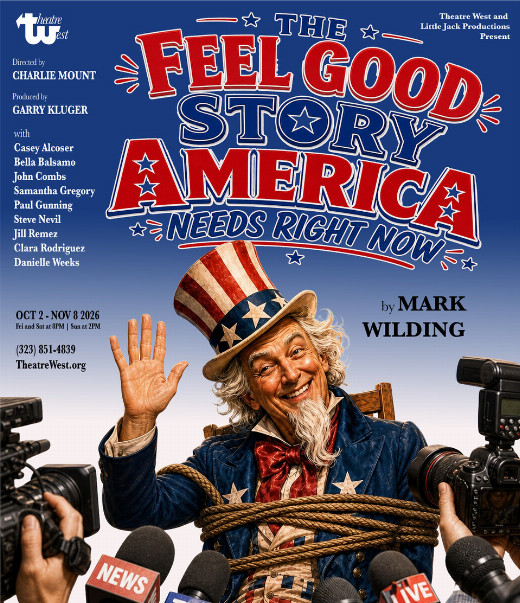
Sign up for all the news on the Fall season, discounts & more...
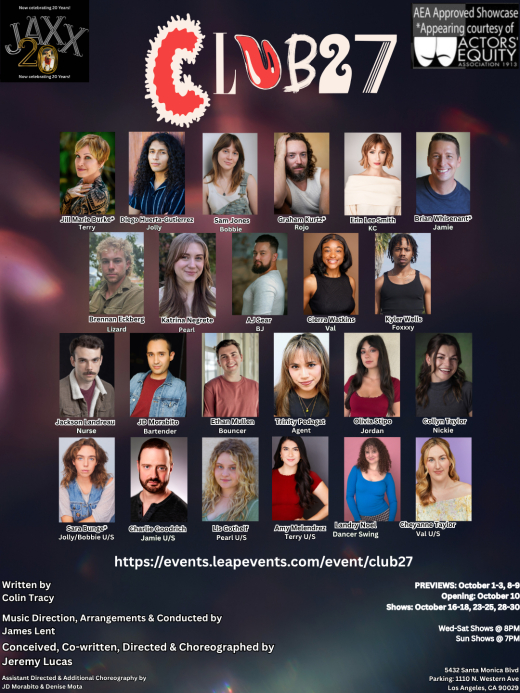
|
CLUB27 Jaxx Theatre (10/01-10/30) |
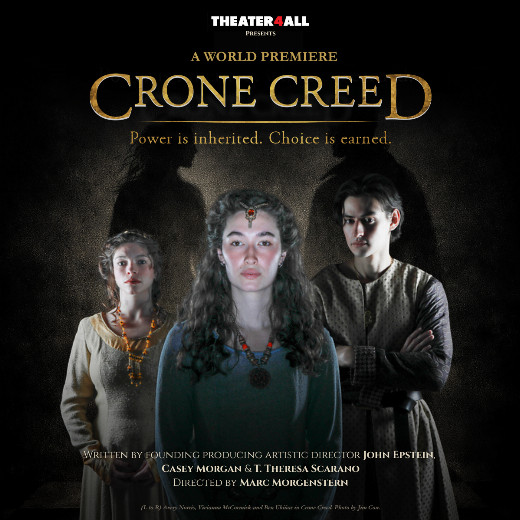
|
Crone Creed El Portal Theatre (9/30-10/17) |
|
Good Night, Oscar North Coast Repertory (9/16-10/11) |
|
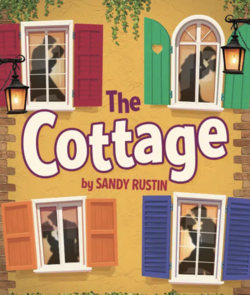
The Cottage North Coast Repertory (10/28-11/22) |

|
Woof Odyssey Theatre (10/03-11/08) |
|
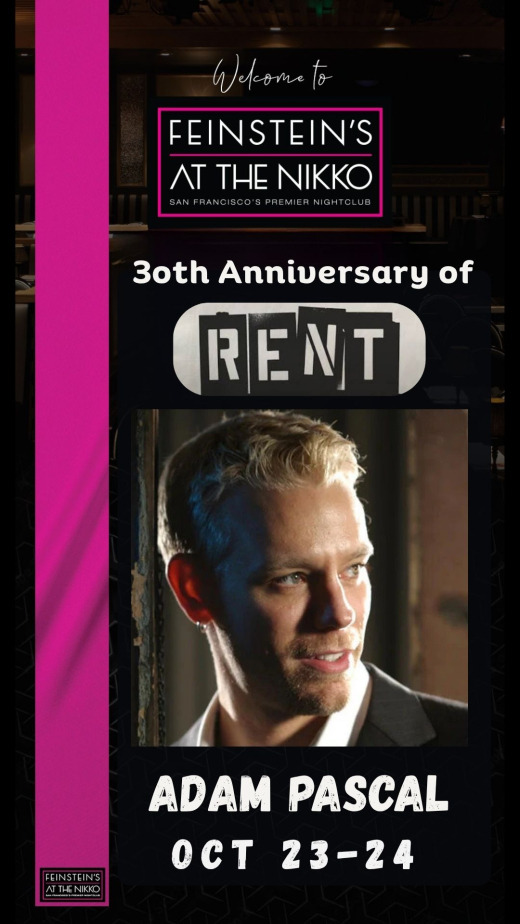
Adam Pascal Feinstein's at the Nikko (10/23-10/24) |
|
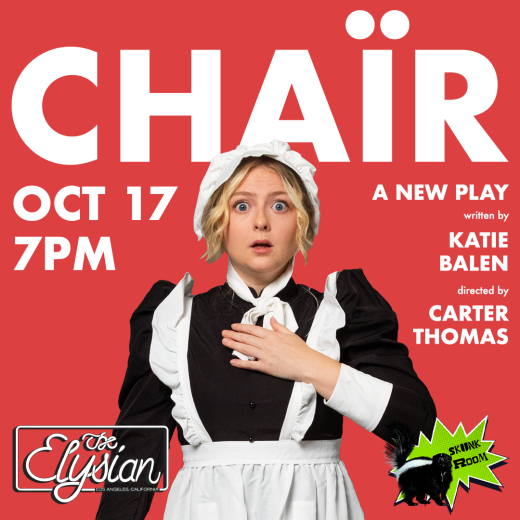
CHAÏR The Elysian Theater (10/17-10/17) |
|
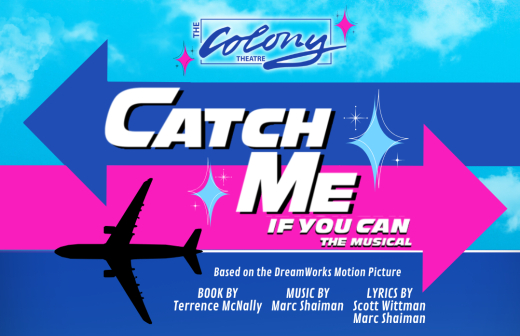
Catch Me If You Can Colony Theatre (9/17-10/18) |
|
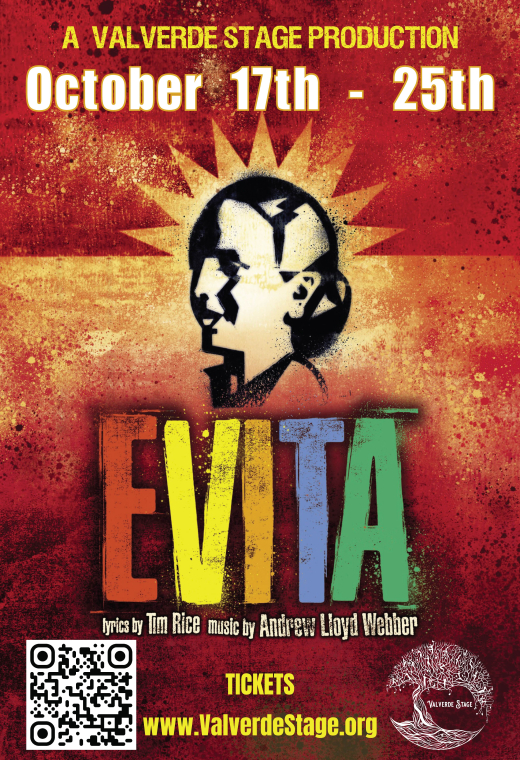
EVITA Valverde Annex (10/17-10/25) |
|
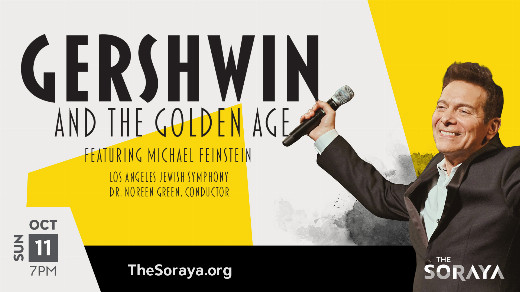
Gershwin and the Golden Age The Soraya (10/11-10/11) |
