


Interview: Eva Curry of THE DARKENED ROOM at Body Vox
From Broadway Puppetry to Portland's Séance Table: A Conversation with Eva Curry on Writing and Directing "The Darkened Room"
From Broadway Puppetry to Portland's Séance Table: A Conversation with Eva Curry on Writing and Directing "The Darkened Room"
Broadway World Portland sat down with director and playwright Eva Curry, daughter of famed puppet and effects designer Michael Curry, ahead of her directorial debut, "The Darkened Room," a two-actor play about real-life Victorian spirit medium Florence Cook. The show runs at Body Box and marks the first Portland production from Michael Curry Design since 2016.
Dawn Sellers: You've been working for your dad at Michael Curry Design for a while, then went off to New York, and now you're back. Is this your first production?
Curry: Yes. Solo production. [Laughs] Thank you.
Tell me about "The Darkened Room."
It's just two actors, and it's going to be about an hour, give or take, probably give. It's based on a real medium named Florence Cook. Since it's a play, it has to focus on a really tiny sliver of her life, which is toward the end of her career, when she was struggling on all sides. Followers doubting her, scientists trying to expose her, fellow mediums trying to expose her. She was taking it from everywhere.
That's also when she has this spirit control character, Katie King, who was like her spirit guide. But Florence is coming to a reckoning: can I continue doing this? Is it worth my life? Because it is her life, she'd have no life as she'd want it without this. She's backed into a corner. The whole thing takes place while she's being investigated by a journalist.
So, it's just two actors?
Two actors, and puppeteers.
What was your first spark? Why Florence Cook?
I've always been really into esoteric things. I don't even know if I believe in any of it, but I'm fascinated by it, and by the practitioners, who were almost all women. I've always loved tarot; at the very least it's a beautifully illustrated deck of cards. I was getting into that world when I ended up at the premiere of Beetlejuice on Broadway, talking with the magic specialist there, Michael Weber, who is truly amazing. He does everything, and there was recently an article where Steve Martin interviewed him about all the movies he did magic for that people don't even know about. He helped me a lot with the illusions in this show. But at the time he told me, if you like tarot, you have to learn about these mediums.
So, I got a book about mediums in general, and one of the main focuses was Florence Cook. We don't know a lot about most of these female mediums. That secrecy was intentional on their part. But Florence was pretty well known, so there's more to find about her than most. I started reading everything I could and became obsessed. Not just with her, but with the whole world. She was never fully debunked, unlike a lot of the others. She'd just disappear for a few years and pop up somewhere else doing something new. I think she's the ultimate female entrepreneur.
How did the project evolve into this show?
It's been many versions. Originally it was a feature film. I was in a writing fellowship that wanted us to develop a feature. Then I realized my love is theater, and these séances were theater, so it already was a show. It became a one-woman show for a while, because I only cared about Florence. I didn't want to hear anyone else's voice. Then I realized she needed someone to play against. So, I developed another character. Everyone in it is based on real people; it's highly researched, to the point where sometimes I have to pull away from the research because — well, that's not what actually happened. But that's what can happen on stage.
How did you decide what to leave out? Were there things you really wanted to include but couldn't?
There are a lot of other female mediums in her story. Some are antagonistic, some her friends. They are fascinating and it was hard to focus just on Florence. Once you've done that much research, everything feels essential. Every character, every séance with a news article behind it. I kept having to ask myself — if you walk in and you've never heard of this world, what can you actually take in in an hour? I cut about half the characters I originally had.
This play relies on puppetry and illusion. Without giving too much away, what can the audience expect?
I struggled a lot with Katie King, Florence's spirit control. I knew she needed to feel present on stage, in multiple ways. She's really the third character in the play. I considered making her an actress, but she's such an ethereal figure, and even as someone who's researched this obsessively, I genuinely don't know if she was real. I wanted to preserve that question rather than answer it.
So, she comes to life through puppetry and illusion. She's real, but ethereal. She has a body, but also not. I collaborated with my dad on that, and now that I've seen it, I think this is the only way she could ever come to life. A lot of the tricks in the show are things these mediums would actually have used. I wanted to honor that, using their own art forms to tell their story. And I like leaving some things visible. Part of the joy of live theater over film is seeing how something's done and thinking, "how cool that they pulled that off,” even after the fact.
As you talk about illusion, it makes me think about how men were the magicians of the era, but women were the mediums. Do you see this correlation?
Absolutely. It's part of why this subject excites me so much. There were plenty of male magicians doing similar things, but almost no female magicians, because of how the culture framed it. The same instinct that got women burned at the stake two centuries earlier got repurposed. Now you're "in touch with the spirit world." Men handed women that power to start, "you must be in touch with something beyond the veil,” and the women said, essentially, sure, that's what's happening, come see. They took the power, but it was placed on them first.
Were any of the mediums you researched branded as witches and burned at the stake?
There's a fine line these women walked. You're allowed this power, allowed to channel it, allowed to bring people in, until you cross an invisible line that Florence and others didn't know the location of, because men were mostly the ones deciding where it was. Cross it. Take too much power, embarrass the wrong man and suddenly you're exposed as fake. For this era, I'd say it was less "witches" and more "frauds." Same mechanism as witchcraft, though, you're fascinating and useful until you ask for too much, and then you're evil.
You mentioned some of the other mediums were antagonistic. Was there real competition at the time?
There was. The same dynamic women still face now, this perceived idea that there's only so many spots at the top. That was enforced by the culture, but also sometimes by the women themselves. There was real sisterhood too, collaborative séances, community, but also competition, because this was life or death. Some mediums were exposed violently. They were set on fire, acid thrown on them. And even without that, once you were exposed you had nothing. You'd already burned your other options. So, it could be everyone for themselves. Florence never threw anyone under the bus, but it was done to her.
Tell me about working with your dad, Michael Curry.
He's my hero, genuinely. I think anyone who's worked with him would say the same. I grew up at the studio. My dad would always whip up a little costume or prop for whatever play I was staging as a kid. We've been collaborating since I was about four. Professionally, I now run our design department, new projects, client contact, moving things through the fabrication pipeline. This is the first time we've gotten to purely, creatively collaborate, and it's also the first time I'm directing, so it's been a learning experience for him too, sitting back and letting me learn, which isn't naturally his style. He always says it would take longer to teach someone than to just do it himself. But it's been rewarding for both of us. He's constantly inspiring me with his ability to make something out of nothing, especially without a Broadway budget, which is really where he shines.
It's also a family production beyond the two of us. My brother is doing the music, my mom is doing the costumes, my fiancé is in the play. Very much a collaborative family experience.
Working with a smaller budget than you're used to — was that a challenge?
We say this constantly in the studio. Limitation of space, time, budget, materials. It doesn't hinder creativity, it expands it. I've felt that on this show. I'll want an effect, and the answer ends up being, what if it's just smoke? You light it right, turn off the light, and it looks better than any hydraulic rig or lift ever could. The simplest solution is, 99% of the time, the most effective one in theater. It's been about distilling everything down to what you actually want the audience to feel in that moment.
Tell me about the cast and how they were chosen for this production.
I wrote the lead with a specific actress in mind. Sadie is a friend I've known since third grade, when we started making plays together. She's mostly done theater, spent time in LA, and recently got a psychology degree. Now she's figuring out what she really wants to do, which I think is wonderful, because she's doing this purely for the joy of it. The other lead is a very experienced actor based in Portland now, with credits in New York and LA. He is honestly almost overqualified for this, but he's brought a lot to the character I wrote as a foil for the lead.
This is your directing debut, but you've written for years. I love that you're letting the actors collaborate in shaping the show.
I think it's essential, though I understand why some directors don't work that way. I watched my dad run a workshop with the Lion King cast recently, and there, you can't bring your own thing to the character, it's already something specific. But we're developing this from scratch, so if a line doesn't work, we cut it. What would your character actually say? It's helped me get authentic performances, especially from my lead, Sadie. She's brought things to the character I never imagined.
How long did the writing take?
About a year to get to the one-woman version. Then last fall I realized it needed to be two people, and I've been rewriting since November. Honestly, it won't be done after this production either. We'll do this version, and then I'll rework it again.
What do you want audiences to leave the theater thinking about Florence?
Mostly, I want it to be fun. I want people to walk into a world they don't know anything about, be excited by it, and be entertained, because that's what Florence was, ultimately, an entertainer. Her story has real ups and downs, and I want people to feel for her. But I think the greatest honor I can give her, and these women in general, is just making a fun night for people. I want them to leave thinking, what a cool world I didn't know about, and what a cool girl.
You spent a decade in New York before returning to Oregon. Tell me about that.
I moved there at 19 and lived there 11 years. I went to school there, fell in love with the city, stayed. It was hard to leave. It's the best city in the world. But I wanted to be at our studio full-time, and I think Portland has a genuinely exciting, up-and-coming arts and theater community that I want to be part of.
What's next for you after this?
I have to plan my wedding. [Laughs] Beyond that, I want to keep writing Florence's story. Maybe a longer show, or my real dream is a truly immersive experience, something like Sleep No More but with more story behind it. This world is so ripe for that, and it's something our studio keeps getting asked to develop. Immersive is the thing everyone wants right now, but I don't think anything we've worked on has paid off the way it could. I think we can build something that's genuinely immersive, with real story, real practical effects and puppetry. This show is my way into that.
Anything else you'd like people to know?
Mostly that we're trying to genuinely engage the Portland theater community with this. Our studio almost never gets to work here. Most of our projects are international, or in New York if they're domestic. The last time we did anything in Portland was 2016, with the Oregon Symphony. Before that, my dad did a show at the Keller in 2001. We have such a good community of artists here, and I don't want this to feel like I'm just putting on my perfect little play. I want people to come up to me excited. I want to hear their ideas, I want to help on their next project the way I'd want help on mine. I think Portland needs that kind of engagement right now, and honestly, I think it already has it. We're just too Oregonian to say so.
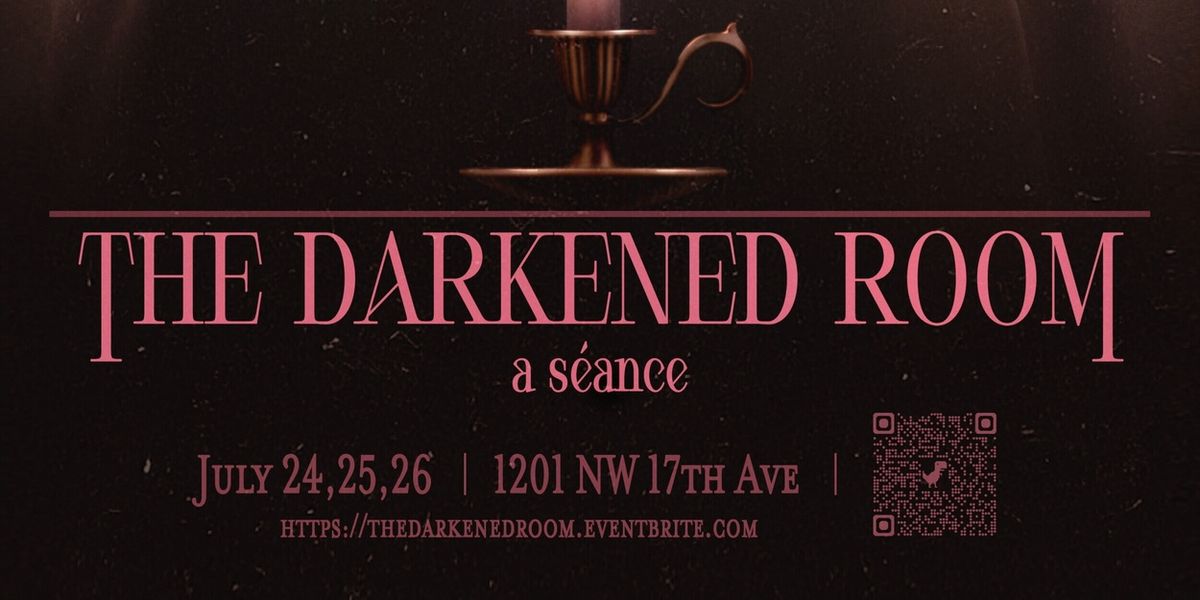
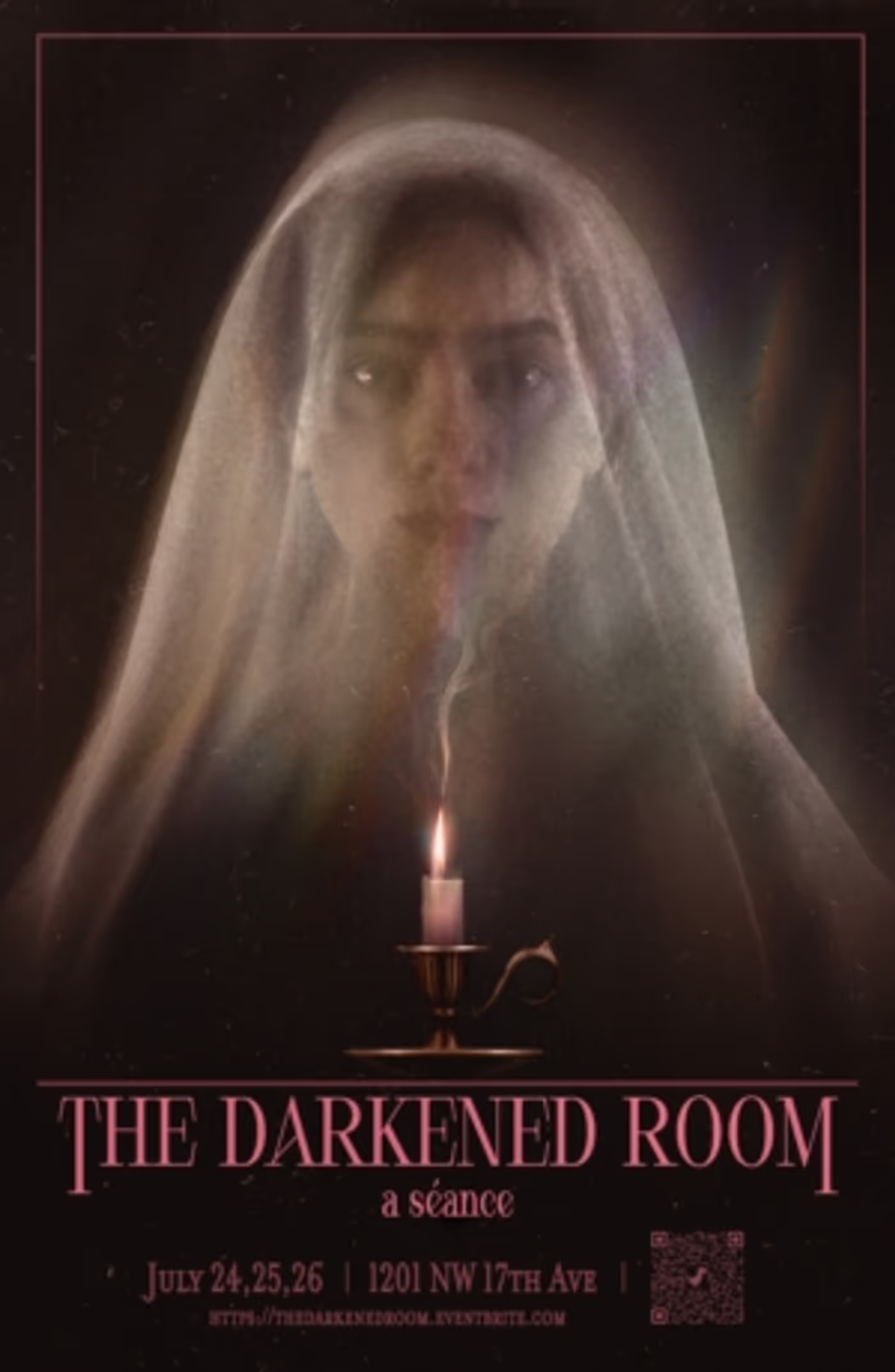
"The Darkened Room" runs at Body Box, 1201 NW 17th, Portland, Oregon on July 24, 25, 26, 2026.

|
Performathon 2026! Ten Fifteen Productions (7/18-7/18) |

|
Hands on a Hardbody Lakewood Theatre Company (7/10-8/16) |
|
THE BIG ONE-OH! Bridgetown Musical Theatre (8/01-8/02) |

|
The Taming of the Shrew Oregon Shakespeare Festival (6/05-10/11) |
|
Protégé Spotlight Recital: Sam Rosenthal, Viola PSU, College of the Arts, Lincoln Performance Hall (7/14-7/14) |
|
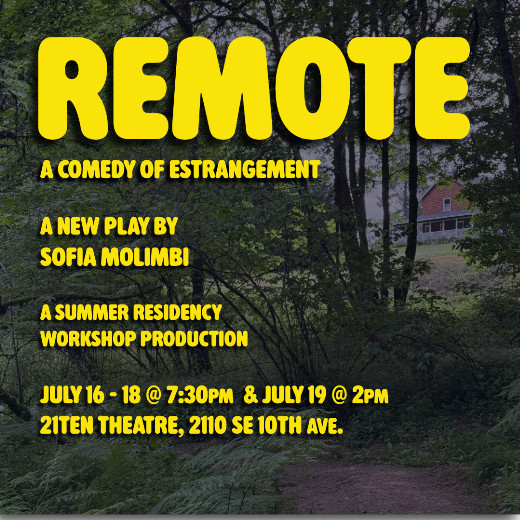
Remote 21 Ten Theatre (7/16-7/19) |

|
Cirque Ma'Ceo LIVE in Grants Pass July 17 - 19, 2026 Josephine Co Fairgrounds (7/17-7/19) |
|
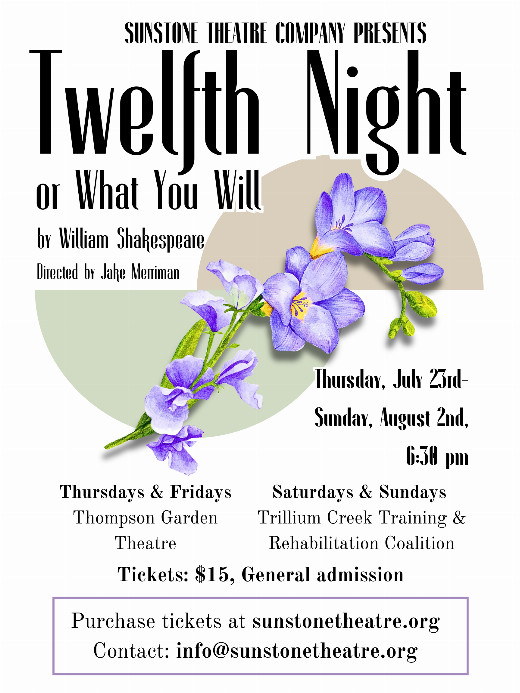
Twelfth Night, or What You Will Trillium Creek Training and Rehabilitation Coalition; The Thompson Garden Theatre (7/23-8/02) |

|
Oregon State Beavers vs. Montana Grizzlies Reser Stadium (9/19-9/19) |

|
FOOLISH MORTALS: A Haunted Mansion Burlesque Cabaret Alberta Rose Theatre (10/02-10/04) |