How Does an Independent Ukrainian Film Reach Locarno During a War? Producer Dmytro Minzianov on the Festival Strategy Behind Bad Roads and Demons
The co-founder of Kristi Films explains how state grants, in-person dealmaking, and backing first-time directors turn small national films into festival contenders.
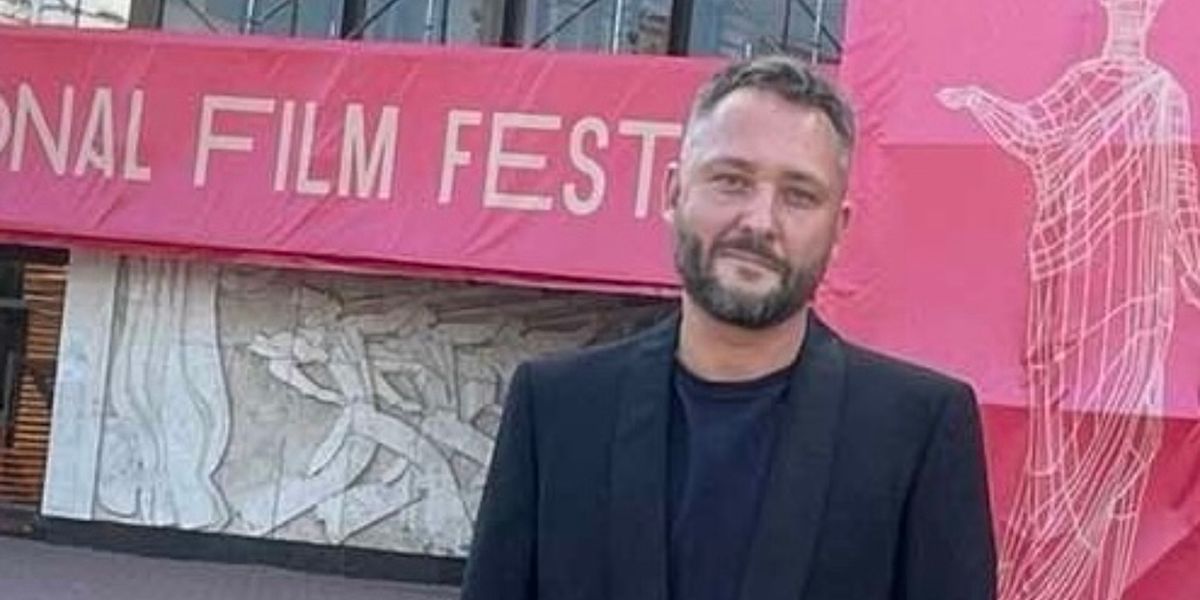
Written by Molly Peck
Ukrainian cinema is having an unlikely run on the international festival circuit. Even with the industry hollowed out by full-scale war, Ukrainian directors and producers turned up in force at Cannes this May, and earlier in 2026 Kyiv committed roughly 124 million dollars to a new national cultural fund, the Thousand Spring program, part of it set aside for film, as The Globe and Mail reported. Underneath the numbers sits a stubbornly practical question: how does a small, battered national cinema get its work selected by the most competitive festivals on the planet, and then keep it there?
One answer is the handful of people who have pulled it off more than once. Dmytro Minzianov, co-founder and chief producer of Kristi Films, put Bad Roads into Venice's Critics' Week in 2020 and then watched it become Ukraine's official Oscar entry; he carried a work-in-progress of Demons to Cannes, sent Kings of Rap to Cottbus, and premiered the US–Ukraine co-production Satisfaction at SXSW this year. His newest film, Demons, directed by Natalka Vorozhbyt, the playwright and screenwriter behind the war drama Cyborgs and the hit series To Catch the Kaidashes, has been picked for the Concorso Cineasti del Presente at Locarno, the Swiss festival's competition for first and second features, which runs August 5–15.
We spoke with him about how those selections actually happen, what it costs to keep producing across a war and an ocean, and the work he has taken on since moving to California.
Locarno's Concorso Cineasti del Presente is built around debut and sophomore features, and it placed Demons in a small field of new directors. For Natalka Vorozhbyt, it is the follow-up to Bad Roads. What does a selection like this signal for the film?
Part of me still can't quite believe it, because this film nearly didn't get finished. Our lead was Ruslana Pysanka, one of the most recognisable faces in the country, a screen actress and long-time TV host. Demons became her last role. She died in July 2022 with about ninety percent of her scenes already shot, and you can't simply recast around a loss like that. Natalka and the team went back into several of the closing scenes and reworked them to hold the original idea and to do right by Ruslana. So for us, Locarno isn't a line on a poster. Cineasti del Presente gets watched very closely by buyers and by other festivals' programmers, and a place in it tells all of them the film is worth their time. Celluloid Dreams has world sales now, and we open in Ukrainian cinemas in March 2027.
You've said Ukrainian cinema is having a moment. But a country names only one film a year as its Academy Award entry, and for the 94th Academy Awards that film was your Bad Roads, which also drew fifteen Golden Dzyga nominations, more than any title in the award's history. Across your slate you've collected more than twenty awards and thirty nominations and pulled in over 1.2 million dollars in competitive state grants. Does it feel like you're now shaping where the whole industry goes?
I try not to frame it that way about myself, but I do think about the industry. Look at what the numbers actually mean. A country submits exactly one film to the Academy Aards each year, just one, and the national committee chose Bad Roads over everything else Ukraine produced. That isn't a personal trophy; it's a signal about where the bar sits for the whole national cinema. The same year it took fifteen Golden Dzyga nominations, a record, so the domestic industry read it the same way. Where I think I actually move the market is upstream. I put state money behind first-time directors nobody else would finance: more than 1.2 million dollars across the slate, all won in open competition. Pavlo Ostrikov and Roman Perfilyev won at home and travelled abroad, and now those are careers. And I get Ukrainian-language arthouse onto HBO, Apple TV, Amazon and into Samuel Goldwyn's release pipeline, a level of distribution most independent Ukrainian films never reach, across Europe, North America and Asia. When one small company keeps clearing bars the rest of the field can't, you stop competing in the market and start setting where it points.
Kristi Films, which you co-founded in 2016, has become a first stop for debut directors, and your slate has pulled in more than 1.2 million dollars in competitive Ukrainian state grants. Then the invasion arrived in the middle of Demons. What has it taken to keep producing through all of that?
The money comes the hard way. You pitch to the Ukrainian Cultural Foundation and the Ministry of Culture in open competition, and you either win the tender or you don't. That is how Bad Roads, Kings of Rap and Demons got financed. For the development of projects with debut filmmakers, I spent not only the fund’s money but also my own, supporting people nobody else would touch. Pavlo Ostrikov shot Graduation '97 and Mia Donna with us before anyone knew his name, and both won at home and travelled abroad. Roman Perfilyev made Once Upon a Time in Ukraine with us, a rowdy period action picture riffing on Ukrainian folk history, the kind of large-scale genre film nobody here was attempting; Samuel Goldwyn Films, one of the oldest US independent distributors, took it into American cinemas and onto Apple TV and Amazon. Then February 2022. Demons were half-shot, the unit had to scatter, and within months I was rebuilding from scratch in California, knocking on doors in an industry that had no idea who I was. Holding one film together across a war and an ocean was the hardest thing I've done.
You do most of your dealmaking in person on the festival floor rather than over email. On Satisfaction that's how you landed cinematographer Máté Herbai, whose camerawork on the Oscar-nominated On Body and Soul won the Golden Frog at Camerimage. Walk me through how a meeting at Cannes or Venice actually turns into a film.
Because a producer who mails a screener and waits by the phone doesn't exist, as far as the industry is concerned. Two minutes in the Palais with a sales agent beats a month of emails, which is exactly why I was at Cannes in 2022 for Demons and at Venice in 2020 for Bad Roads. Once Máté Herbai signed on to Satisfaction, every department treated the film as serious, and that only happens after you have delivered a few times.
Since 2022 you have been a voting member of the European Film Academy, the body behind the European Film Awards, and you also sit in the Ukrainian Film Academy. Neither seat is handed out for a long CV. How does judging other people's films feed your own?
It means I sit through a great deal of what Europe and Ukraine release each year and then vote for the European Film Awards and for the Golden Dzyga. That rewires how you read a script. You start spotting which choices cross a border and which ones only land at home, and that's the same instinct you need when deciding what to finance. Getting into the Ukrainian academy is no formality either: established members put your name forward, a supervisory board signs off. The seat is a judgment in itself.
You mention choices that cross borders. In your own films, which ones travelled, and which stayed local?
Films about this war travel, and they have to. When Ukrainian producers take a story like Bad Roads to Venice or Cannes, the point is to put the suffering of ordinary people, lives broken by Russia's aggression, in front of audiences who would otherwise never see it. That lands harder than ever now, because viewers in many countries can imagine themselves in those circumstances. Genre travels too, which is why we built Once Upon a Time in Ukraine as an action film first and a history lesson second. What stays home is the dense stuff: wordplay, in-jokes, the domestic detail that means everything here and nothing abroad. Kings of Rap, rooted in a very Ukrainian youth scene, is loved here and harder to export. The craft is knowing which is which before you spend a single hryvnia.
Kristi Films now works across three countries, Ukraine, Greece and the United States, and Satisfaction, your co-production starring Emma Laird (fresh off The Brutalist) and Fionn Whitehead (Christopher Nolan's Dunkirk), came directly out of that structure. It premiered at SXSW to warm reviews, with Deadline calling it a hauntingly beautiful study of trauma. What are you building on this side of the Atlantic?
What I brought to California turned out to be in demand: the Habit of making high-quality work on Ukrainian budgets. Partners for US–Ukraine co-productions came quickly. Satisfaction, directed by Alex Burunova, was the first proof, shot in Greece with our companies on three sides of the deal. Next comes 33. It is a noir-action set across one long, foggy night in Kharkiv in 1933, then the capital of Soviet Ukraine: a mysterious stranger and his companion Beata cut through mobs of Chekists with a Thompson, hunting for a girl named Eve who can stop the Great Famine. Psychotherapists have patients revisit a trauma and reimagine it, and that is the idea here. We hand a country its own catastrophe back as a genre picture in which Ukrainians win. A well-known actor has already agreed to join. Alongside it I have signed a production service agreement on STARCON and a deal memo on The State, a four-million-dollar picture with an American partner. None of it closes the Ukrainian chapter: Demons are heading to Locarno while I set things up here, and I want the two industries pulled closer together, not apart. To younger producers I say the real job is the unglamorous part: grant applications, sales agents, being in the room. Talent gathers where the producer has already earned some trust.
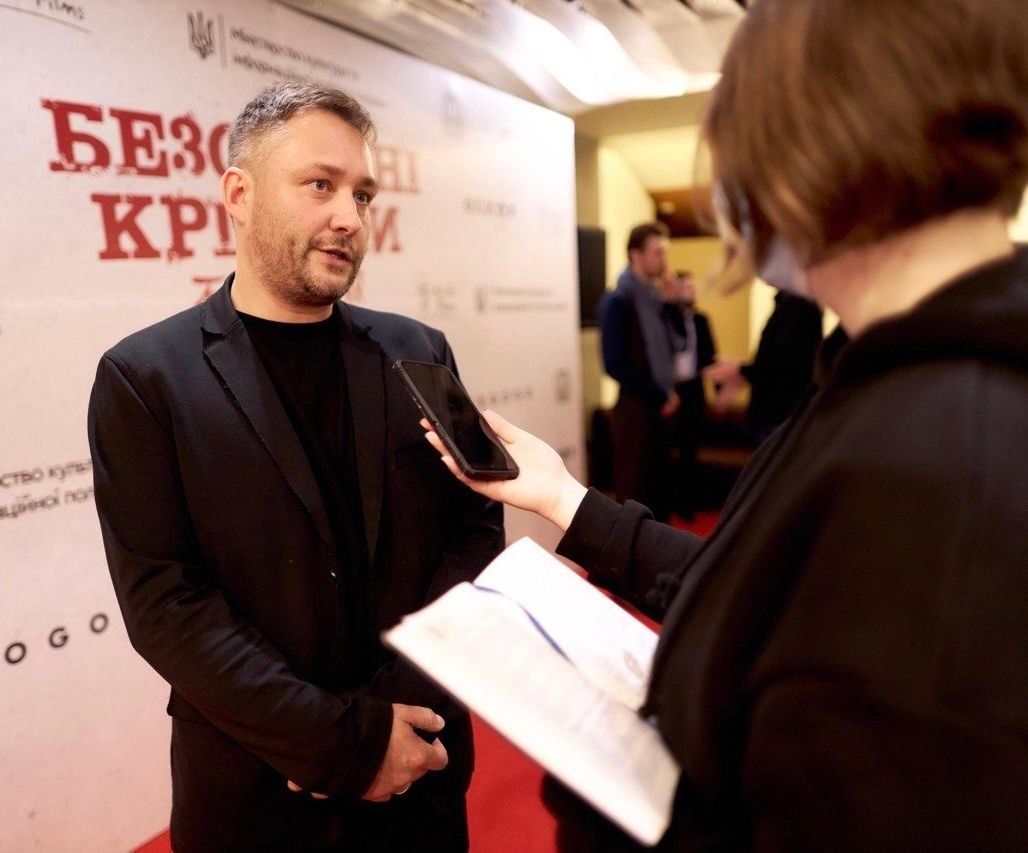
Photo Credit: Dmytro Minzianov