American Composers Orchestra Will Perform EarShot Readings at The DiMenna Center
Jeffery Meyer conducts works by Seare Farhat, Tyler Kline, and others, with mentors Valerie Coleman and Huang Ruo
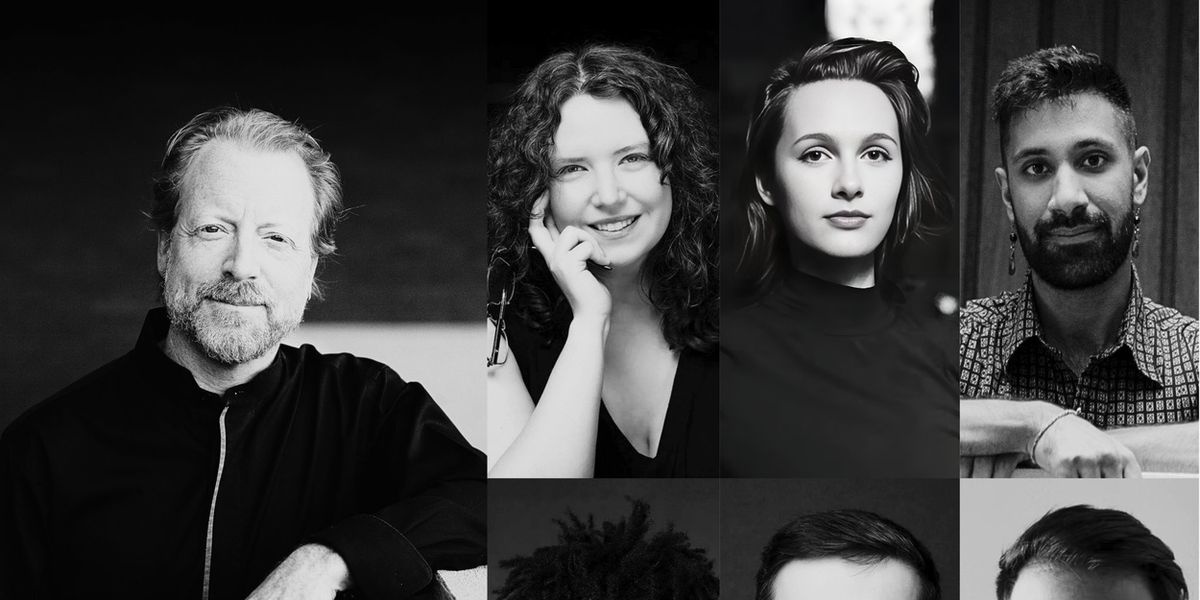
The American Composers Orchestra has announced details of its June 2026 EarShot Readings at The DiMenna Center for Classical Music in New York City with a public working rehearsal on Thursday, June 11, 2026 at 10:30 AM and a public reading on Friday, June 12, 2026 at 7:30 PM. Led by Jeffery Meyer and mentor composers Huang Ruo, Valerie Coleman, and Curtis Stewart, this year's program features works by Seare Farhat, Tyler Kline, Ty Bloomfield, Coral Douglas, Kimberly Osberg, and Benjamin T. Martin, and a spiritual by Steven R. Gerber.
Additionally, on Friday, June 12, 2026 at 1:30 PM, ACO will host a public EarShot CoLABoratory Workshop featuring Malachi Brown's new ACO-commissioned work, and at 2:00 PM, a Compose Yourself! program for high school composers, including readings and workshops of new works and a 4:30 PM performance under the direction of ACO Education Director, Kevin James, all at The DiMenna Center. The events take place during New York Music Month, a city-run festival presented by the NYC Mayor's Office of Media and Entertainment, with 60 events across the five boroughs throughout the month of June.
“As part of New York Music Month, we're proud to partner with the American Composers Orchestra to support the next generation of composers through the EarShot Readings program, giving emerging artists the opportunity to develop their work with a full orchestra right here in New York City,” said Commissioner Rafael Espinal of the NYC Mayor's Office of Media and Entertainment. “This is about more than performance, it's about building a pipeline for the future of music. And by making it accessible to the public, we're opening the door for New Yorkers to experience and learn from that process firsthand. Because in this city, music isn't a luxury, it's essential.”
Encompassing all of ACO's composer advancement initiatives, EarShot is the first ongoing, systematic program for developing relationships between composers and orchestras on the national level. Serving over 390 composers since its inception, EarShot began in NYC with new music Readings in 1991. It expanded in 2008 to national Readings in partnership with orchestras nationwide, in collaboration with the League of American Orchestras, New Music USA, and American Composers Forum. EarShot has also included the Jazz Composers Orchestra Institute, CoLABoratory, Pathways, and more. Readings composer alumni have gone on to win every major composition award, including Pulitzer, GRAMMY, Grawemeyer, American Academy of Arts and Letters, and Rome Prizes. Since 2009, more than 25 works have been commissioned by partner orchestras from EarShot participants, and more than half of selected EarShot composers report receiving a commission directly resulting from their participation.
EarShot now includes orchestral readings, CoLABoratory residencies, professional development, commissioning/consortia, and publishing. Its goal is to broaden the definition and role of the composer and build replicable models for co-created projects between composers, artists, and community partners. Artistic projects developed via EarShot are a key component of ACO's concert programming. ACO's EarShot programs serve as replicable models for organizations nationwide seeking to undertake similar work.
Benjamin T. Martin's Unfurling Dances features a protagonist with a quirky and somewhat volatile personality. When they introduce themselves at the top of the piece, they get easily distracted and change paths on a whim — a jaunty string section, a crazed piano figure, a wild drum break. However, after they run out of steam, we see a more vulnerable side of them in the form of incredibly slowed-down, disjointed versions of their original iteration over a bed of lush sound. Equipped with this newfound understanding, our protagonist attempts their original flight path once more against a more metrically grounded groove. “When I compose,” Martin says, “I tend to personify musical elements in my head as I'm working through them. I'll think of certain melodic lines, rhythms, or instruments as characters in a play, neighbors in an imagined musical community— friends (or enemies, as the case may be) with whom I can converse in the largely solitary stretches of the compositional process.”
Ty Bloomfield says of his piece fragrances of something sweet, “I wrote this…with a particular memory I had with my grandmother Mary, who I had been thinking about a lot over the nine months I wrote this piece. She was the first person who introduced me to coffee, which I love a lot now. After always being refused the drink by my mom, I remember jumping at the opportunity to have it, which, oddly, resulted in me being completely knocked out on her living room floor. In every cup of coffee I have to this day, I think about her. The title ‘something sweet' refers to coffee, [which is what] this piece is about, but in particular my grandmother, who was also someone incredibly sweet, kind, and supportive.”
Coral Douglas's TERROR MANAGEMENT THEORY examines death anxiety through embodied knowledge of grief. It treats grief not only as an emotion but as something etched into breath, muscle, pulse, and autonomic rhythm, what some call “the body keeping score.” Douglas says, “After my grandfather's sudden passing in 2020, I navigated a few existential months of frequent, unpredictable panic attacks, and at this point in my life, without the language to internally decipher or externally describe what was happening in my body. Luckily, they always seemed to pass.” As this piece unfolds, it similarly climaxes in sudden, explosive waves of orchestral density, dynamic intensity, and timbral abrasion before dissolving into fragile stillness.
Tyler Kline's West of the Sun is conceived in five connected sections, four of which are titled after Haruki Murakami novels, characters, or chapters within novels: Hajime, Kafka/Sputnik, The Thing Made Elsewhere, and End of the World. The final section is the orchestration of an earlier solo piano piece of Kline's called “blood orange.” Murakami's writing has served as a touchstone for Kline in recent years, primarily due to Murakami's treatment of surrealism. Kline states that “The title, West of the Sun, has multiple meanings to me: most directly, it references Haruki Murakami's novel South of the Border, West of the Sun, and more generally, this piece draws inspiration from Murakami's body of works. In South of the Border, West of the Sun, the main character's name is Hajime (はじめ), which translates to ‘beginning' or ‘genesis' in English. The idea of genesis plays an important role in the beginning of this piece: my goal was to wholly create the sound world of the piece right from the start, as if the listener opened a door and was suddenly in a different universe.” At the most foundational level, this piece is meant to be perceived as an “opening” into a new sound world.
Seare Farhat's shadows rising soundless as night is a reflection on a poem by Derek Walcott, titled The Season of Phantasmal Peace. Walcott's poetry is filled with rich images of dusk at the precipice of darkness, of birds far overhead crying mutely, and of humanity at a distance. The poem's description of birds abandoning humanity asks a poignant question: How have humans betrayed our Earth? In the face of our anthropogenic climate crisis, how does nature cry out? This orchestral work aims to grapple with the impossible yet inviting task of translating these poetic ideas into music, speaking as the birds in Walcott's poem do, in "multitudinous dialects, twittering tongues, stitching and crossing" the sky. The piece also reflects on Walcott's specific approach to art, echoed in his own words from his 1992 Nobel Prize Lecture: “Tonally the individual voice is a dialect; it shapes its own accent, its own vocabulary and melody in defiance of an imperial concept of language.”
Kimberly Osberg's Night Lights was originally commissioned by harpist Michelle Lundy for the Beau Soir Ensemble (a Debussy trio of National Symphony Orchestra musicians) and was inspired by different sources of light at night. The arrangement for orchestra was specially created for the 2025 Minnesota Music Educators Association All-State Orchestra under the direction of conductor and new music advocate, Cullan Lucas. The first movement features an evolving ostinato; the second includes woody effects, playfully detailed percussion, and buzzing punctuations in the background of a trumpet and English horn duo trading with pizzicato strings; the dancelike third movement lilts and breezes as each instrument group takes its turn with the unfurling melody and pulsing accompaniment. Infectious joy lasts throughout the final movement, making the ending deeply resonate in its surprisingly quiet triumph in the last measures.
On Friday, June 12, 2026 at 1:30 PM, ACO will host a CoLABoratory Workshop open to the public featuring Malachi Brown, a 2024 ACO EarShot alum, exploring the possibilities of the cello section and the creation of space and distance within player placement throughout the orchestra. These generative workshops are a development space for new works commissioned as part of 18-month residencies with ACO.
Sign up for all the news on the Fall season, discounts & more...
.jpg?format=auto&width=300)