


Misty Copeland's Joyce Festival Has the Stars but Not the Story
The Ballet Festival's second week assembles a diverse, technically flawless lineup — then gives them very little to say.
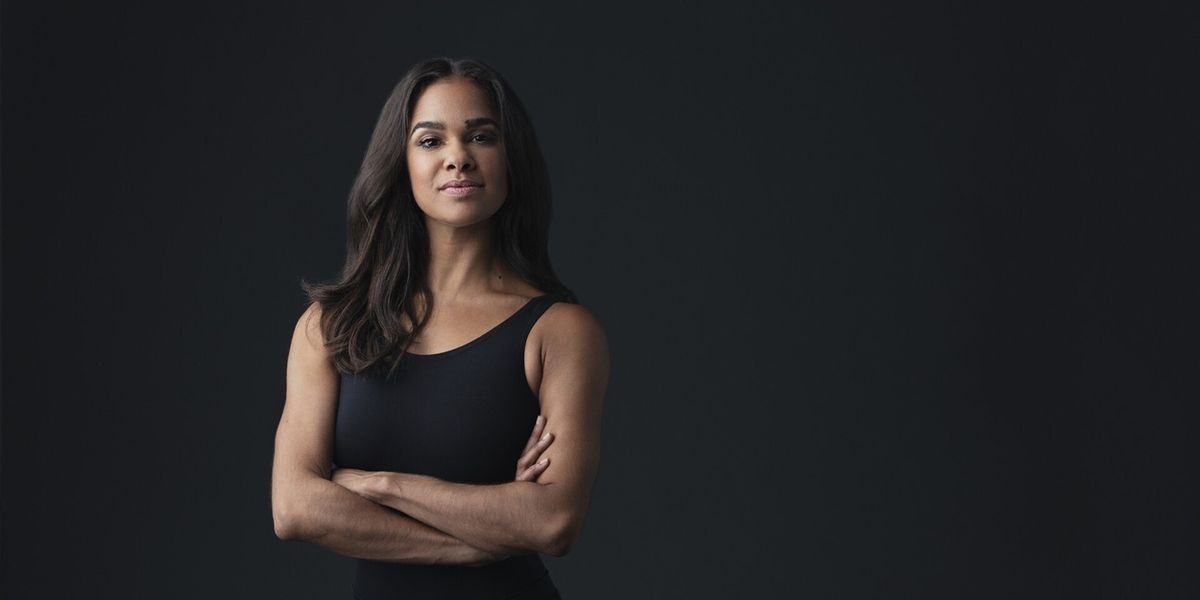
What is the future of ballet? It's a question that's been contemplated on many stages for many years. Misty Copeland takes her turn answering that query at The Joyce Theatre Ballet Festival. The two-week program, curated by Copeland, features contemporary and classical repertory, as well as new commissions.
Held August 4–16, the program's second week featured works by Stanton Welch AM, artistic director of Houston Ballet; Andrea Miller, founder of Gallim dance company; Alonzo King, founder of LINES Ballet; John Taras, the Balanchine associate who made this Firebird for Dance Theatre of Harlem; Dwight Rhoden, co-founder of Complexions Contemporary Ballet; Roland Petit, founder of Ballet National de Marseille; James Whiteside, American Ballet Theatre principal dancer and choreographer; and Ilo, an Atlanta-based choreographer.
Diversity, in every sense, is obviously what Copeland aspires to see in the future of ballet. Her stage has Black, brown, queer, established and emerging artists. It's a feat to gather them in New York City and provide an audience to witness work that reflects a collective answer to the question of what ballet might become. Yet the success of this festival can't rest in its excellent intentions when the execution is muddied.
The festival suffers from an uneven bill. While my colleague notes the strength of week one, week two lacks a clear perspective. The future of ballet is diverse and — what? What is the conversation between contemporary and classical repertoire? Why, outside of their appeal to inclusivity, do these particular works reflect the future of ballet? Those specifics go unanswered and the festival becomes a beautiful spectacle with minimal substance.
Copeland as a curator is none too particular — there are two pieces set to Ave Maria, for example. The evening's programming was also almost entirely ballet and contemporary work, which made the closing piece — a jazz and street style–influenced number by Ilo — land on a confusing note, disconnected from the throughline of the rest of the bill. Copeland's influence is felt most in Taras' staging of "The Firebird" — arguably one of her most known roles — wonderfully performed by Dance Theatre of Harlem artists. Her status is also reflected in the coterie of starry artists she amassed. But popularity and legacy, however well-earned, isn't enough to carry a program without a clear point-of-view.
There were artists who broke through the flatness. Taylor Stanley, a principal with the New York City Ballet, brought stunning precision and fluidity to Miller's “Middle Length Poem.” Miller's choreography was also the first piece to explore an emotion — it was awkward, uncomfortable at times, but there was a feeling. Madison Brown, corps de ballet at the American Ballet Theatre, brought a dynamic elegance to Rhoden's highly athletic Ave Maria. And, while all of the dancers were technically flawless, Alonzo King LINES Ballet Guest Artist Babatunji, in an excerpt of King's Deep River, was one of the few performers who appeared to want to be on the stage more than anything else.
For those who already love ballet, the Joyce Festival offers a chance to see it performed at a high level by a range of gifted artists. But for anyone encountering the art form for the first time, there is very little here to make a case for why they should seek out more of it — and a festival asking what ballet's future looks like should, above all, make that case
Prefer BroadwayWorld in Google Search?
Add us as a preferred source so our stories show up more often in Top Stories and Google’s AI answers — for you.
Sign up for all the news on the Fall season, discounts & more...
