


Review: TOSCA, Glyndebourne
The world-famous opera venue stages its first ever production of Puccini's masterpiece
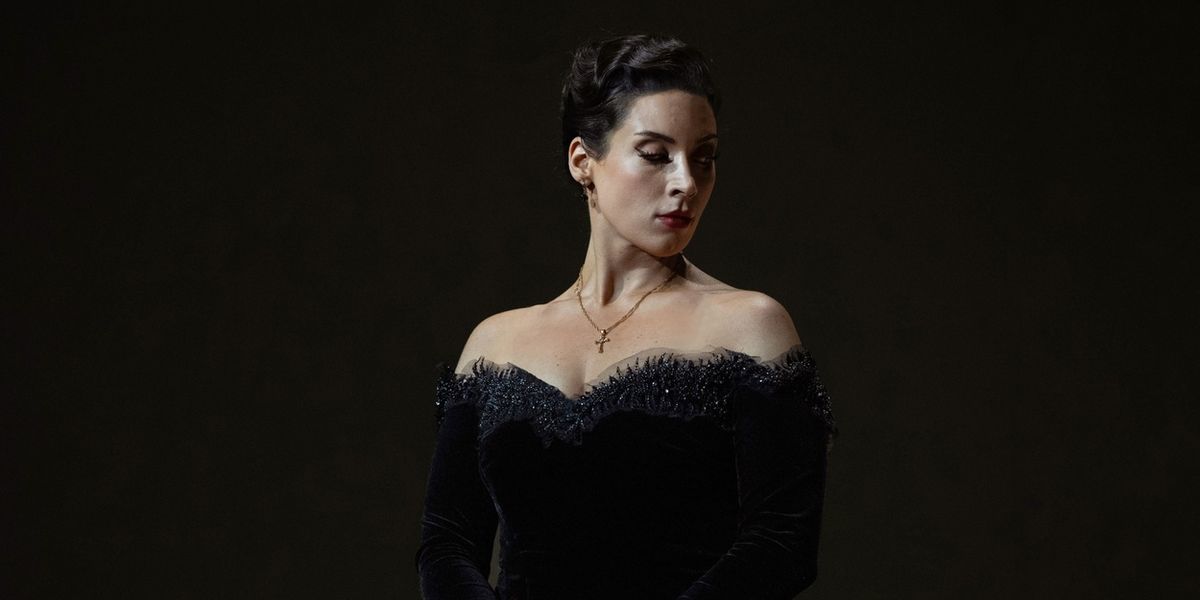
 Tosca is Giacomo Puccini's fast-paced thriller of an opera; brimming with tension and political intrigue. For many it is Puccini's best work, yet incredibly it has never been staged at Glyndebourne. Until now. It is a show of firsts all round: the first mainstage production for director Ted Huffman and is the first Puccini opera for Glyndebourne’s music director Robin Ticciati, who conducts the London Philharmonic Orchestra in the first of two performance runs.
Set over a 24 hour period in Rome in the 1800s, during the time of huge political unrest wiht the Napoleonic wars. Corrupt Chief of Police, Scarpia has tempestuous opera singer Floria Tosca in his sights. When he suspects her lover Cavaradossi of assisting an escaped political prisoner he seizes his opportunity to have Tosca for himself. Scarpia offers Tosca an impossible choice; give herself to him or her lover will be killed.
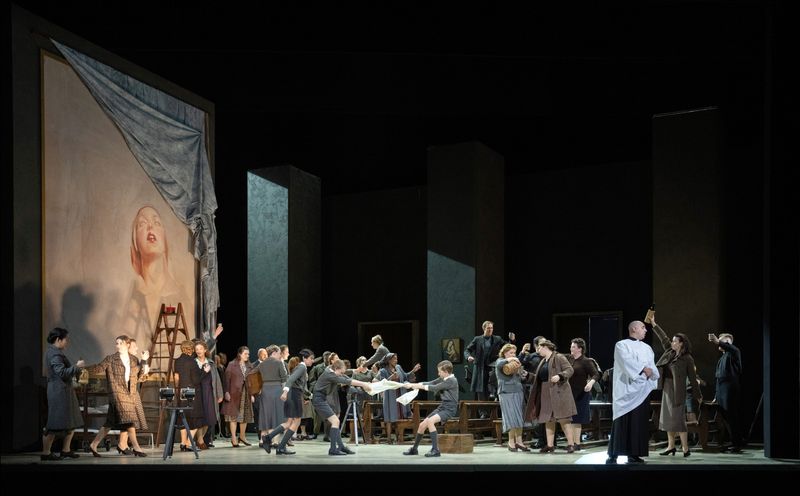
Photo Credit: © Glyndebourne Productions Ltd. Photo: Richard Hubert Smith
The three main singers deliver in spades. Caitlin Gotimer has form with the role and makes a strong Glyndebourne debut as Floria Tosca. She embodies the diva-like tendancies well and her "Vissi d’arte" is intense and moving. She handles the lower register notes beautifully and her top notes sparkle.
Matteo Lippi has simply gorgeous tone and texture as Cavaradossi; his farewell to life, "E lucera le stelle" is heartbreakingly tender and raw. The chemistry between the pair could be a little sparkier, but I'm sure this will develop with time.
Vladislav Sulimsky is a more measured and vain Scarpia than other iterations. Strutting around in a gangster-style double-breasted suit, he brings menace and cruelty masked by a sly smile. Didier Pieri's Spoletta is suitably slimy and The Glyndebourne Chorus is on top form, particularly with "Te Deum".
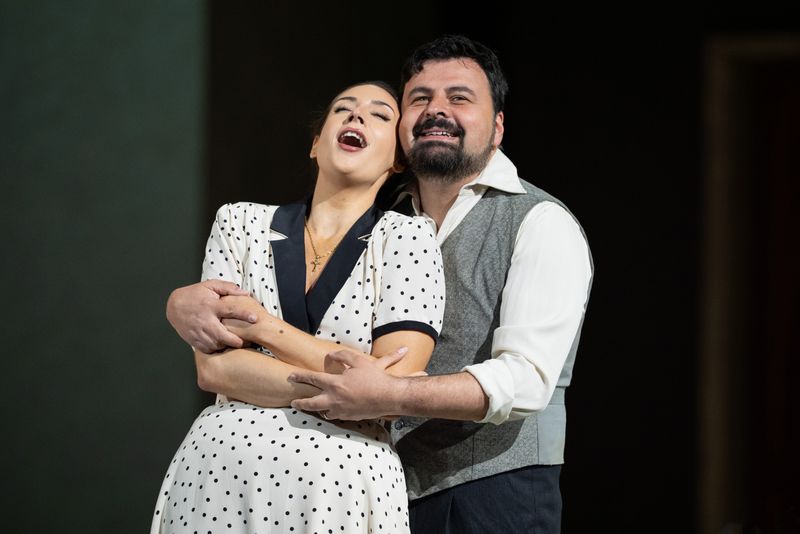
Photo Credit: © Glyndebourne Productions Ltd. Photo: Richard Hubert Smith
It's hard to think of many versions of the opera that have deviated hugely from the traditional format of the opera. Huffman, inspired by 1940s neorealist Italian film, maintains the basic premise but transports each scene. Act 1's church is stark, modern-looking and bare. Act II is usually set in Scarpia's private apartments, but moves to a modern-looking restaurant where Scarpia dines with elegant women eating pasta, but orders a burger himself, squirting ketchup with relish. Act III takes us to a deserted quarry lit spookily by a car's headlights, where the brutality of the regime is made clear as bodies are manhandled over a ridge with impunity. This is a dark world where violence is normalised.
Ticciati gives an abundant performance from the pit, a little loud in places at the start, but teasing out the building drama of the score. His handling of the orchestra is well-balanced, holding on and then letting go at all the right moments: the pacing is beautifully judged and makes for a spine-tingling finale.
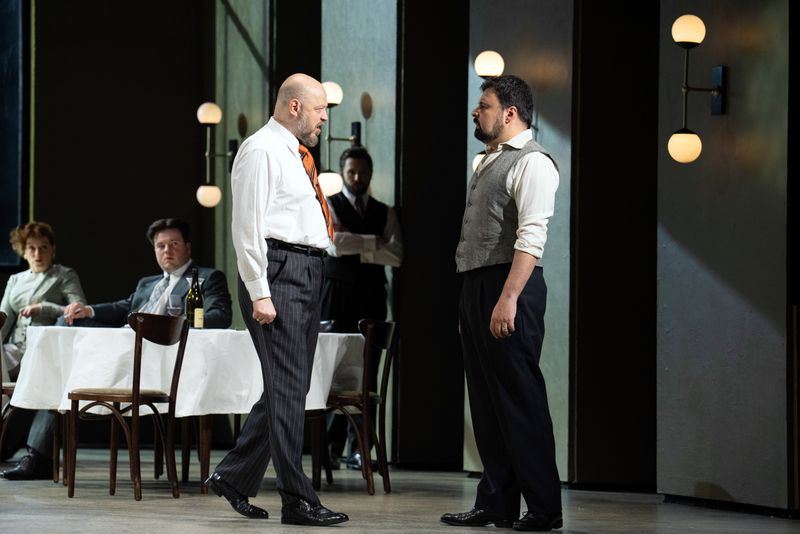
Photo Credit: © Glyndebourne Productions Ltd. Photo: Richard Hubert Smith
D M Wood's lighting design is bright and cold, with some very effective shadows created in the church scene as Scarpia's shape looms menacingly over Cavaradossi's painting. Costume Designer Astrid Klein leans into the 1940s aesthetic, with an emphasis on greys and beiges. No red for Tosca here, her only nod to glamour being a muted glittering neckline and full skirt in rich dark blue as she appears in the restaurant after her performance.
Although the dazzling backdrop of Rome is missed, it's always interesting to see how a director can innovate such a traditional opera. Huffman has form with staging new operas and his desire to put his stamp on this version of the production is plain to see. The 1940s staging is effective, showing a brutal and oppressive landscape without hope or colour, but the decision to change the very ending may be problematic for some. No spoilers here, but Tosca's autonomy is central to her character; she lives and dies on her own terms and to alter that reshapes the whole production.
A fine start to Glyndebourne's new season.
Read soprano Caitlin Gotimer's guest post about taking on the role of Tosca at Glyndebourne here.
Tosca is at Glyndebourne from 21 May - 22 June, then 4-30 August
Photo Credits: © Glyndebourne Productions Ltd. Photo: Richard Hubert Smith
Sign up for all the news on the Fall season, discounts & more...
.jpg?format=auto&width=300)





Reader Reviews
To post a comment, you must register and login.