Interview: 'I Feel Innately Connected to Puccini’s Scores': Soprano Caitlin Gotimer on Taking On TOSCA at Glyndebourne
'Our production does an incredible job of depicting the ways that people will turn a blind eye to political violence"
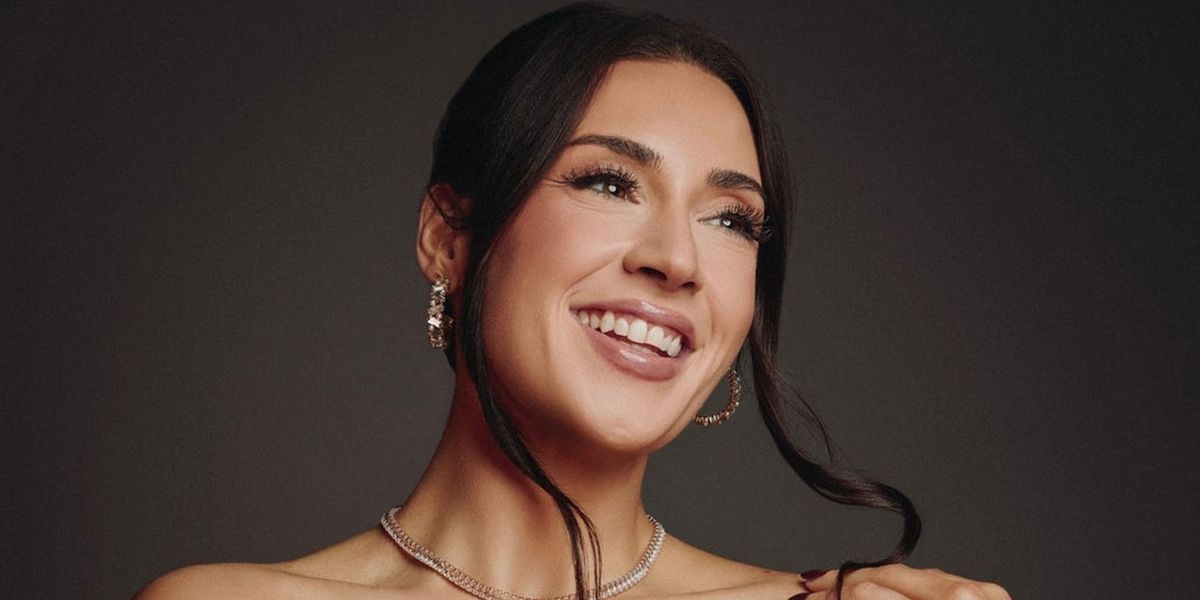
2026 marks the first time that Glyndbourne has staged Puccini's Tosca, a devastating opera of love and betrayal. It’s also a first for Glyndebourne Music Director Robin Ticciati, who conducts this powerfully dramatic piece, as well as a Festival debut from exciting American director Ted Huffman.
American soprano Caitlin Gotimer is a rising star in the opera world; a former Operalia finalist, she will make her UK debut in the title role of Floria Tosca, a challenging role for even the most accomplished singer. BroadwayWorld spoke to Gotimer about starting out in opera, taking on the role at one of the world's premiere opera venues and the political thriller at the heart of the story.
You didn’t intend to become an opera singer, as you were a pre-med student. What happened to bring you into the operatic world?
When I first started my undergraduate studies at Binghamton University, I knew nothing about opera. All throughout middle and high school I performed in musicals. I didn’t think I had the potential to make musical theatre my career, so I didn’t plan to pursue it in college. However, after only a little while without performing, it felt like a piece of me was missing.
I auditioned for that semester’s musical, Man of La Mancha, and I must have sung pretty well because almost immediately, I got sent to an audition to sing for the Voice/Opera Faculty. I sang "You’ll Never Walk Alone" from Carousel, which I think was fate in a way, because it meant that the opera faculty got to hear me sing a musical theatre piece that is traditionally sung in a classical manner. I didn’t realise I was singing in a classical style; I was just copying the CD. That audition changed my life. I was given the opportunity to take lessons with Professor Thomas Goodheart, and before I knew it, I was given my first contract at a regional opera company and had changed my major.
Do you have a favourite composer to sing?
Puccini for sure. Madama Butterfly was the first opera I ever saw and I was blown away. At the time I was so new to opera that we weren’t quite sure if I was a soprano or a mezzo-soprano, but I remember leaving the theatre thinking “I’m going to sing Cio-Cio-San someday.” It’s funny because I had no reason to be so sure, but I was actually right: I made my Cio-Cio-San debut this season. Since I started singing opera, I’ve felt innately connected to Puccini’s scores. Of course I enjoy singing other composers as well, but choosing a favourite is easy for me.
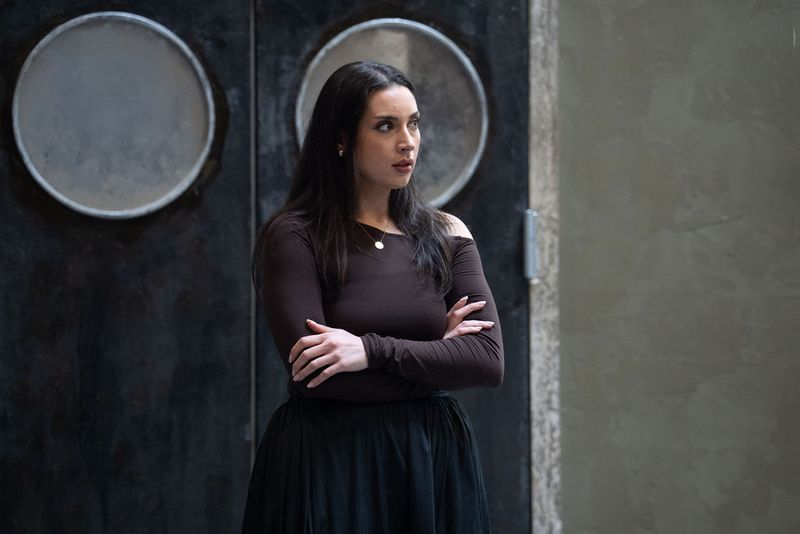
Photo Credit: Richard Hubert Smith
This year’s staging of Tosca at Glyndebourne is the venue’s first-ever production. How does it feel to be involved in such a major event?
My primary feeling about it is one of gratitude. Talent is one thing, but a million other things have to line up to receive an opportunity like this. I can think of so many small things that had to happen exactly as they did in order for me to end up in the audition room for this production. I am so thankful that the team at Glyndebourne believes in me enough to be their first-ever Tosca; it’s a tremendous honour. I’m thankful, too, that since the first day I arrived here at Glyndebourne, the entire team has been so kind, supportive, and committed to the highest level of artistry possible.
You first sang the role of Tosca for Arizona opera in 2023. What keeps bringing you back to the role?
When I accepted my first offer to sing Tosca, I was relatively young given today’s standards for casting. It wasn’t a role that was even on my radar at the time. I was hesitant at first to say yes, but given my strong relationship with Arizona Opera, we ultimately decided it was a safe place to make such an important debut. Since then, I’ve never once questioned if I made the right decision.
Vocally, the role showcases what I do best and never asks something of my voice that doesn’t feel right. Sometimes there are roles where certain arias or scenes have passages that don’t fit as well as the rest of the role. Tosca is not that way at all; I love to sing the whole score from beginning to end. As a character, I deeply relate to her and understand her very well. I am lucky that I’ve been asked to sing Tosca again several times since my debut in Arizona and have some more on the horizon as well.
What’s it like playing an opera singer, playing an opera singer?
It’s great because I can really relate to her, and not just in the big ways, but in the subtle ways too.
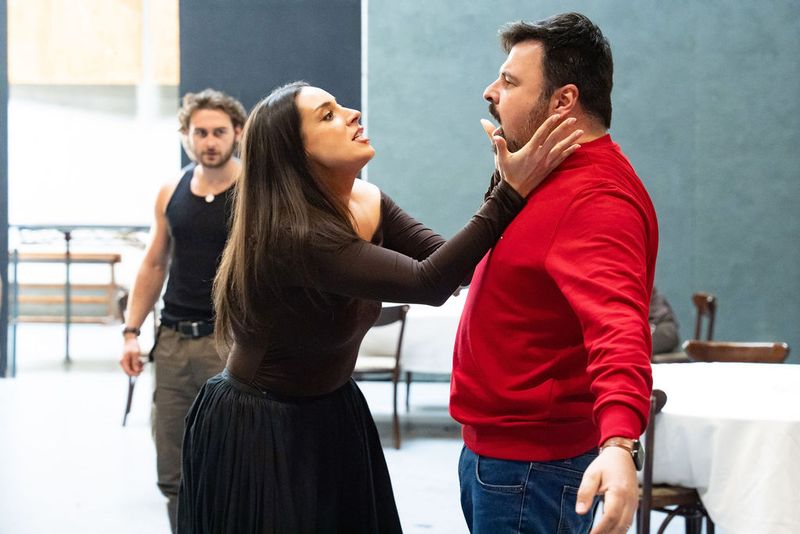
Photo Credit: Richard Hubert Smith
You were sharing the role with Natalya Romaniw, but she has had to withdraw due to her having a baby. How does it feel to be taking on the role solo?
I send all my best wishes to Natalya for a healthy delivery and for those precious family moments that are too important to miss out on. As for myself, I am very thankful to have so many opportunities to perform this piece and for the extended time at Glyndebourne, which is a magical place.
“Vissi d’arte” is one of the most well-known arias in opera. How do you conjure up all of Tosca’s emotions of love, despair and sadness in that song?
During my previous two productions of Tosca, which were both two years ago, I was going through one of the most difficult periods of my life personally. There are many people who will tell you not to let your personal emotions bleed into your performances in order to protect your voice, (and your sanity, I’m sure.) But there was no way I could be going through what I was going through and not feel those emotions during "Vissi d’arte".
For me, it was actually a privilege to process my emotions and bare my soul in one of opera’s most beautiful arias. I’ve never felt more vulnerable than in those moments, so when the aria was over and the audience broke the silence with their applause, you can imagine how special that was to me. In those moments it felt, in a weird way, that an entire theatre of people was there to support me. I think there’s no way to explain it other than as the magic of theatre, and the magic of gathering as a group and going on a gorgeous, heartbreaking journey together. Now, two years later, things are very different, and luckily, much better. However, one does not forget a feeling that intense, and so I plan to bring the same vulnerability to the aria in this production.
What is your favourite part of the opera to perform?
As special as "Vissi d’arte" is, I think my favourite part is Tosca’s Act 1 entrance and her duet with Cavaradossi. Practically speaking, it’s a low pressure moment so I can be fully present without too much worry. On a deeper level, I love getting to do this scene because I feel strongly that Tosca needs to be multi-dimensional throughout the duet. Tosca is a diva, yes, but with Cavaradossi she’s able to let her guard down. It’s important that the audience be introduced to Tosca not just as a hot blooded, jealous diva, but as a woman who is deeply in love, very flirtatious, and willing to fight for her relationship. She’s also funny in this scene! It always gets laughs from the audience. It’s a joy to show so many shades of her personality in the Act 1 duet.
What is the most challenging?
Act 2 as a whole. The pacing is important, vocally and dramatically. The biggest challenge is to be committed and present in every moment while still remaining grounded in your vocal technique.
You will be working with two different singers as Cavaradossi and Scarpia and two different conductors. What do you think will be the challenges and benefits in that set-up?
The phrase “this is how we’ve always done it,” is one of my least favourite sentences that gets said in theatre. I think the challenge will be adjusting what needs to be adjusted for our second run even if I have grown accustomed to things being a certain way. The benefit of this set up is that the energy will feel fresh and new for our second round of performances. There will be a new excitement.
How do you develop the chemistry between Tosca and Cavaradossi?
In my opinion, the most important thing is to feel comfortable with your scene partner. If you develop a sense of trust and safety with them, then you can be fully committed to the storytelling without having any anxiety or discomfort. I am very lucky that Matteo Lippi is a wonderful colleague and fantastic scene partner.
There is such emotional depth and lyrical power in this opera it must be exhausting to perform. How do you prepare and ensure you stay fit and healthy for the run?
Tosca is an emotionally and physically demanding role. I take my health and fitness very seriously, lifting weights and doing Pilates regularly. This really helps with the stage combat (which I do in stilettos, by the way.) Aside from exercise, I try to meditate daily, I take zinc, and I’m really bad about drinking enough water, but it’s one of the most important things one can do as a singer. As we get closer to the performances, I’ll start being stricter with myself, hopefully…
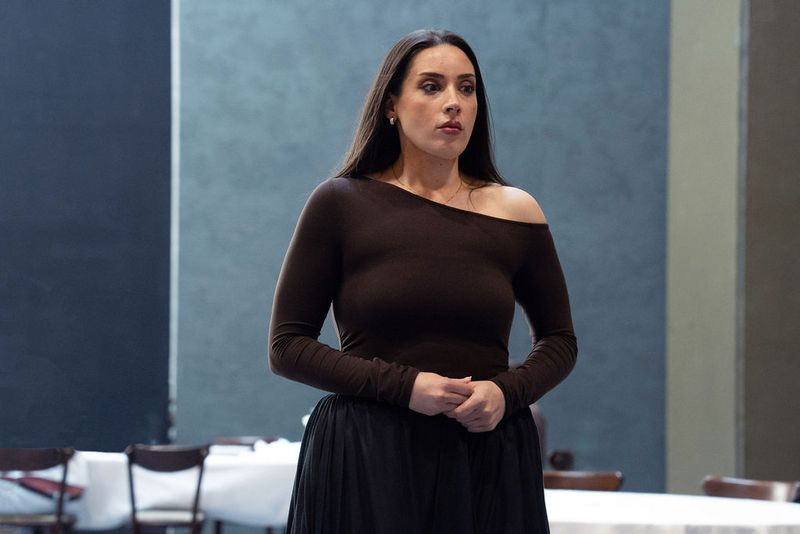
Photo Credit: Richard Hubert Smith
What do you hope audiences take away from this production of Tosca?
Too often with Tosca, we get swept up in the music and the story of the three main characters and forget that it is actually a political thriller — and in a way, I think that in itself may be one of the opera’s biggest takeaways. It is easy to narrow in on our own stories and ignore the broader reality until it affects us personally.
Our production does an incredible job of depicting the ways that people will turn a blind eye to political violence out of either a feeling of powerlessness or of callousness, or in Tosca’s case, a certain level of privilege. In Act 1, Tosca lovingly describes her and Cavaradossi’s “nest,” their villa which serves as a hidden escape from the world around them. Having that nest, she is focused on her career, her relationship with Cavaradossi, and her faith. We love her for that; she is a light in a story full of unrest. But the reality is their nest cannot protect them from an oppressive regime, no matter how beautiful, hidden, or loving it is. In fact, a political refugee ends up hiding in the garden of that very villa.
On the flipside, Angelotti and Cavaradossi, who are both politically involved, also meet tragic fates. I think that’s the verismo of it all: there’s no textbook way to live your life in an authoritarian regime. But focusing on love, helping those in need, and being willing to give up everything you know and love to flee with your boyfriend? Not a bad way to go down fighting.
All in all, I hope audiences don’t just get swept up in the beauty of the music, but instead leave reflecting on all of these ideas.
Tosca is at Glyndebourne from 21 May - 22 June, then 4-30 August
Main Photo Credit: Corey Rives Visual Art
Sign up for all the news on the Fall season, discounts & more...
.jpg?format=auto&width=300)