


Review: SALOME, York Hall
Radical production of Richard Strauss's still controversial opera is gory and gruesome
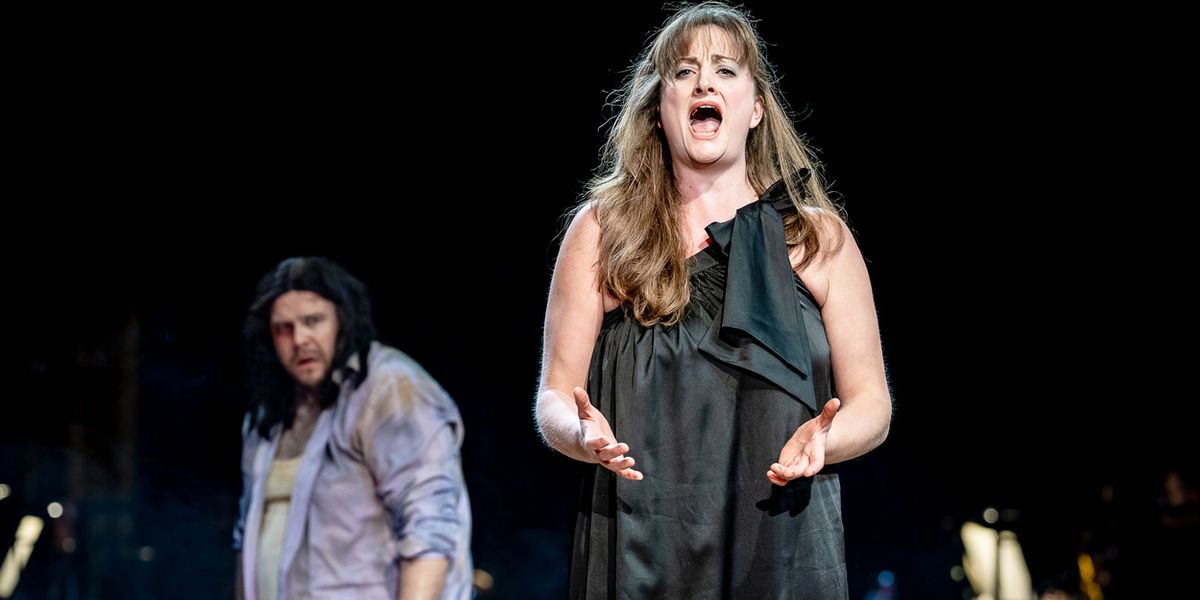
 There are ghosts at York Hall. I could feel the presence of Harry Carpenter commentating on a bout from the legendary East End venue on Sportsnight late on a Wednesday when I had school in the morning. So it’s ironic that a hall that saw the likes of Tyson Fury, Lennox Lewis and David Haye attempt to knock the block off an opponent, sees a princess achieve that feat without a single punch being thrown.
Mark Ravenhill’s radical staging, on a large thrust with Ben Woodward’s superb orchestra above and behind, suggests a fashion show runway, an immediate invitation, no, insistence, that the gaze (interestingly, both male and female) be privileged. Establishing that early on, and with a gaudy birthday party for King Herodes as a framing device, prepares the ground for the passions to come, up close and personal in this semi-immersive production.
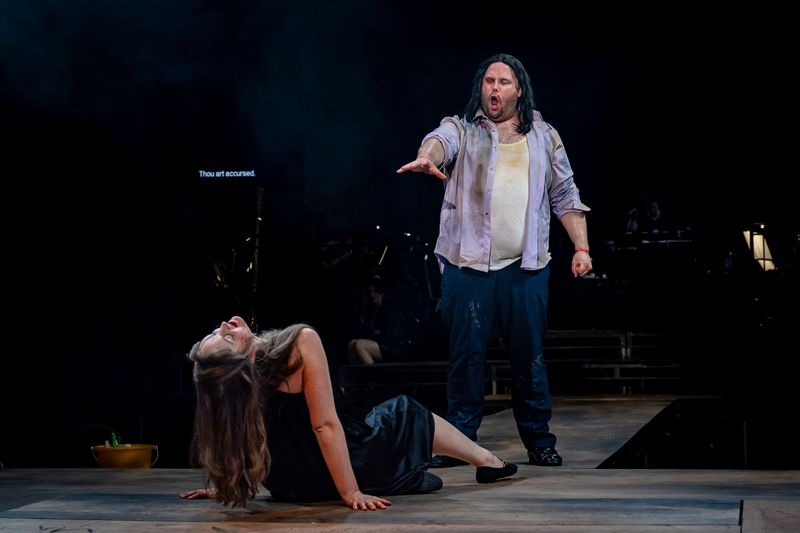
Jokanaan, (John the Baptist) is imprisoned, a seditious presence in the state gaining followers amongst factions within the Jews and steadfast in his prophecy that The Messiah is come in the form of Jesus Christ. Salome, having shown her ruthlessness by brokering her beauty in subborning Narraboth (James Schouten), the Captain of the Guard, to disobey orders and allow her to see the incarcerated prophet, is fascinated by this seemingly possessed man.
She sings of her lusting for the prisoner, of his skin, his hair, his lips, but receives nothing in return but rejection and a stream of accusations against her mother, Queen Herodias, now also her aunt - there are many echoes of Hamlet in this work.
When the foolish, besotted King promises her anything unto half his kingdom in exchange for a striptease at which he can leer, she exacts her prize - the head of Jokanaan on a silver platter.
As you can surmise from that outline, and, as surely most of the audience will know, the 100 minutes feels like a continuous enactment of trigger warnings - there’s a pretty graphic suicide in there too - but opera is about nothing if it’s not about heightened emotions, heightened characterisations.
And that’s where the structure didn’t quite work. Richard Strauss used Oscar Wilde’s play for the libretto and there are times when the poetry and the barrage of similes saps the pace, the urgency of the madness subsumed by excursions into passages of romantic language that we get, from the start, won’t change things. The music is telling us of psychological mayhem with every chord. That verbosity is in contrast with the snap ending that demonstrates how an all-powerful ruler can be emasculated by hubris. We can only wish…
The music dips, soars and plunges around this cavernous space with a near terrifying sense of menace. I had expected the acoustics to be unforgiving but, for the musicians and many of the cast, they were not, a near-full house covering many of the hard surfaces that can make the sound mushy with echoes.
In an alternating cast, I saw Eleanor Dennis as the lead, giving a strong vocal performance in one of the toughest roles a soprano can play. Her climactic aria, clutching a bloodied head lovingly, delivers the hit the house wanted, although her dance was ugly, rather than seductive. Perhaps that is the point though - Herodes (Robin Whitehouse) had so long fantasised about his stepdaughter that the reality hardly mattered and the toxic masculinity power move was all. As it was for her, once she understood the leverage she was granted and that she could have the reward she craved. (And it saved us the prospect of watching opera singers dance, which is seldom an edifying sight).
Joseph Gansert sings Jokanaan well, but his character is defined by his iron will so there’s little room for development, with his key moment happening off stage. With his long straggly hair, his head on the platter is striking, but it does give him a resemblance to Meatloaf in his appearance, something I felt hard to shake and rather killed the mood at times.
Arriving late in a lurid red jacket, Deborah Humble makes a wonderfully evil Herodias, egging on her daughter to avenge her honour with the death of the man who had fearlessly traduced her and, probably, knowing that exposing her husband’s transgressive lust would only diminish him within his febrile court. Unusually for an opera, the women emerge as the victors rather than victims in this version.
The opera thumps you like a body shot to the solar plexus, the music an extraordinary swirl that justifies the adjective seminal, so often applied to its influence. The singing, staging and venue all work well together, but I could never quite engage with the characters nor their predicament. Certainly a production that ticks a box on any opera fan’s bucket list, but, alas, it's no knockout.
Salome is at York Hall until 23 April
Photo images: Steve Gregson
Sign up for all the news on the Fall season, discounts & more...







Reader Reviews
To post a comment, you must register and login.