


REVIEW: The Regent’s Park Open Air Theatre Production of FIDDLER ON THE ROOF Arrives In Sydney
FIDDLER ON THE ROOF
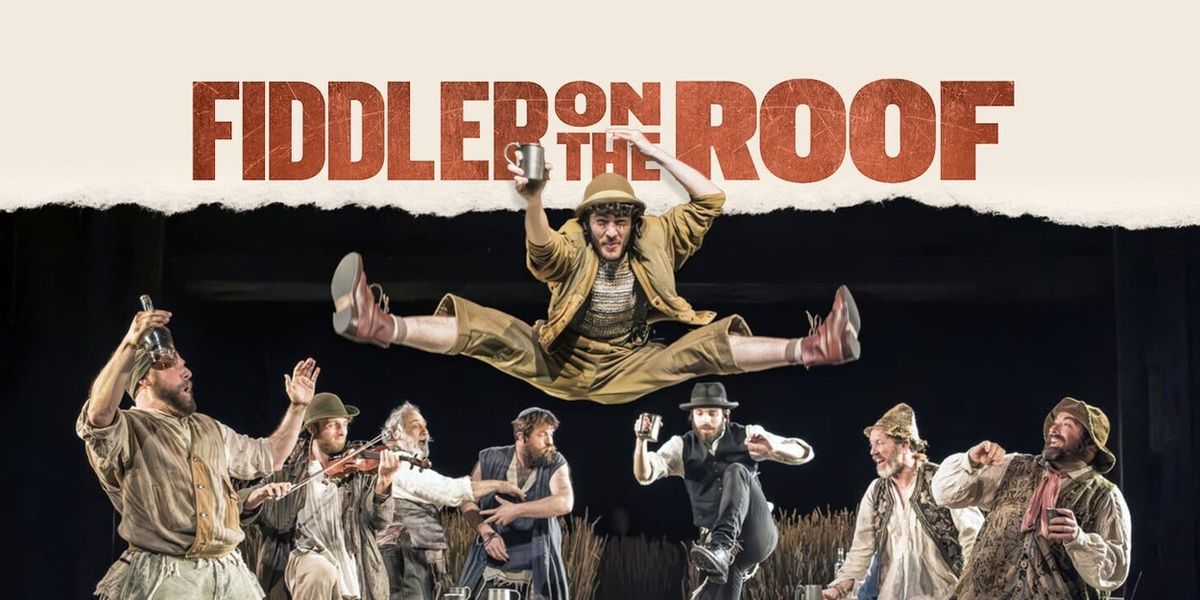
Wednesday 5th August 2026, 7pm, Theatre Royal Sydney
Jordan Fein’s (Director) production of FIDDLER ON THE ROOF, originally staged at Regent’sPark Open Air Theatre in 2024 is presented on the Theatre Royal stage with an Australian cast. 62 years after it premiered on Broadway, the timing of this staging is interesting in both the current political climate and when viewed through a contemporary lens of women’s rights and feminism.
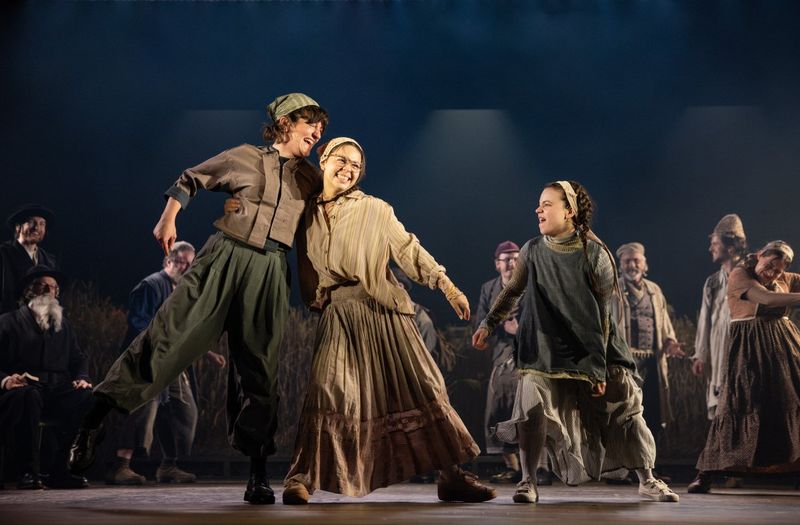
Set in Anatevka, a fictional village in the Pale of Settlement of Imperial Russia where Jewish people were permitted to live, poor Dairyfarmer Tevye (Troy Sussman) and his wife Golde (Alexis Fishman) live with their five unwed daughters, Tzeitel (Freya Boltman), Hodel (Ellen Ebbs), Chava (Caity Plummer), Shprintze (Romy Juliette Glass), and Bielke (Ksenia Teliatnikova). Their lives are driven by work, religion and finding husbands for the daughters, the more financially advantageous, the better, with little to no regard for the future happiness of the daughters. Layered over this focus, which seems terribly outdated when viewed through a 21st century lens by someone that does not ascribe to the culture of the story, but rather holds more contemporary feminist views, is the historic element of the family, and the villagers, living on land that they held with tenuous certainty.
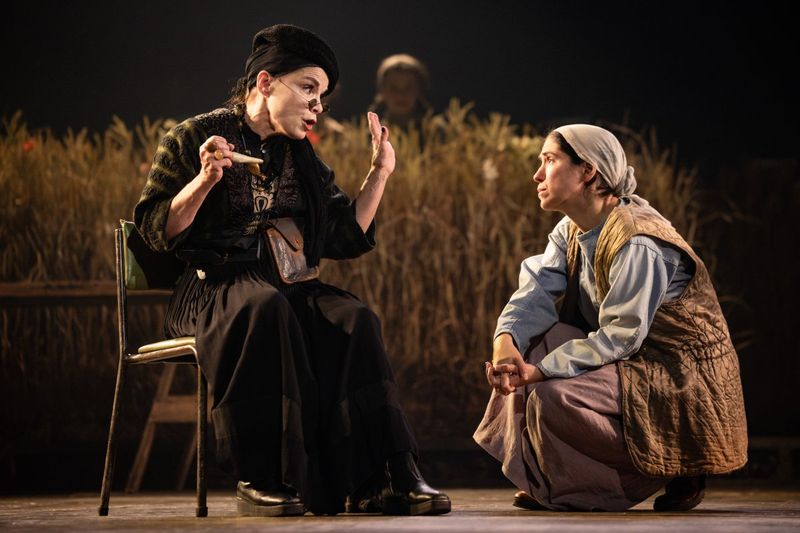
As a musical theatre production, this work is clearer and more entertaining than earlier more ‘traditional’ stagings. The inclusion of Ben Adler as the Fiddler, presenting as a constant presence also anchors the work to it's title. Tom Scutt’s (Designer) design for an outdoor stage has utilised more creative means to express the spaces with minimal major set changes, the work taking place on a stage bordered by stands of wheat, though research indicates the Jewish inhabitants of Pale of Settlement communities would have possibly not farmed the land themselves. A “roof” to the stage is created by lifting the remainder of the ‘field’ above the action to clear a performance space that is transformed by the addition of tables and chairs, Tevye’s dairy cart and other smaller elements, relying on the imagination more than other productions. Scutt’s costume design helps anchor the idea that the community is poor though some elements in his costuming and prop design raise questions as to the era in which the work is supposed to be set, allowing ambiguity as to whether this was intended as a window into a past world or a partial reflection of more contemporary times.
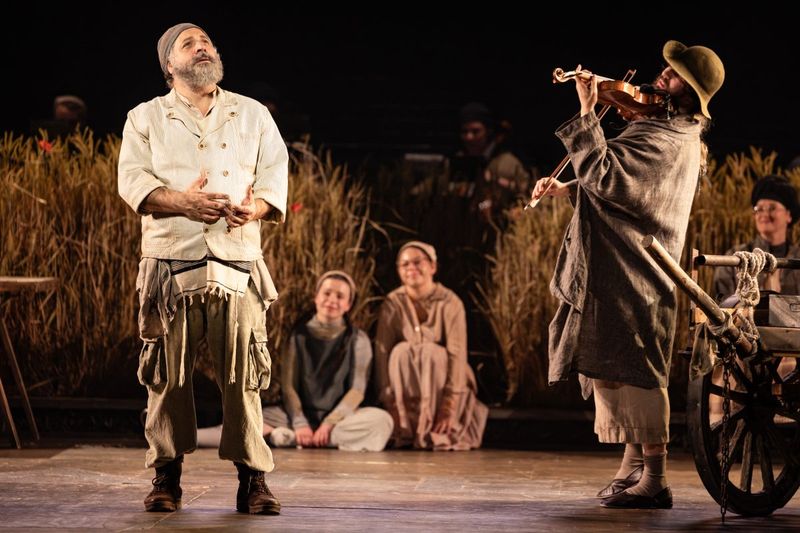
Engaging an Australian cast, Fein has opted to have the work not try to impose foreign accents on the work, potentially to try to provide more connective links for contemporary Australian audiences. This does make the work more accessible than earlier iterations that made the work feel like it was of a world remote from the current time and location. The strongest at bringing their own authenticity to the role was Ellen Ebbs as Hodel, the tomboy of a second daughter who falls in love with an educated ‘revolutionary’ and is prepared to give up all she has known to follow a love her father doesn’t really want to sanction. Even with this element of ‘relatability’ trying to soften the image, there is a degree of feeling that the work doesn’t quite sit right in the 21st century. Whilst Fein’s direction tries to lighten the tone of the bulk of the work, leaning into comedy elements and highlighting some the contradictions of the culture, such as the importance of tradition, of which the origins are now unknown, there is an underling uneasiness at the intentions of presenting the work in the 21st century. The theme of arranged marriages being the norm, and the selection of husbands is particularly on the nose in a modern society when it’s clear that if Tevye had his way the health and happiness of his daughters would not even been a consideration. The pig-headed racism he expresses towards his middle child who marries outside of her religion and community, to the point he no longer acknowledges her existence does nothing to garner any sympathy for Tevye and his social and cultural values. Layered on this portrayal of women’s place in society, even with Tevye reluctantly accepting two of his daughter’s choices, is the mirror to the modern world events. While the audience is ‘asked’ to sympathise with the residents of Anatevka as they are evicted with three days’ notice to clear, it’s hard not to consider contemporary events that are often argued down religious lines rather than humanitarian lines.
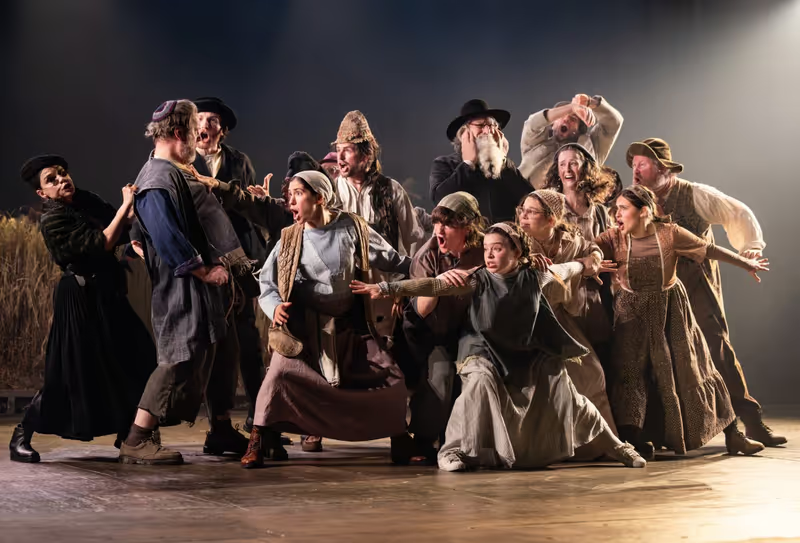
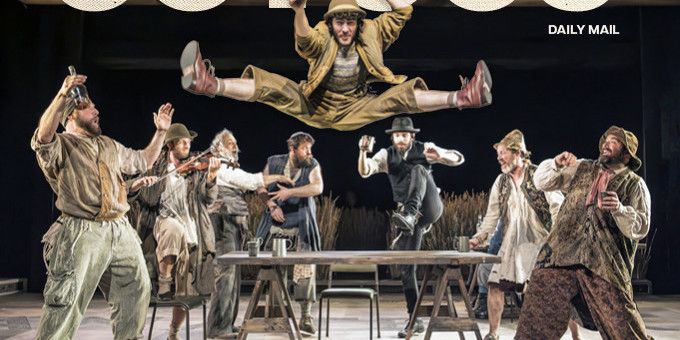
Purely as a piece of theatre, this is an engaging performance, both visually and musically and Scutt’s inventiveness delivers some unique expressions such as the nightmare of Tevye’s Dream played out by the whole ensemble. It honours Jerome Robbins’ original Broadway production by recreating the “Bottle Dance” though the seasoned audience members are likely to be more skeptical about the balancing act than others. Art however usually is presented with some degree of social commentary so the message that the viewer sees may be very diverse based on the individual.
Photos: Daniel Boud
Prefer BroadwayWorld in Google Search?
Add us as a preferred source so our stories show up more often in Top Stories and Google’s AI answers — for you.
Sign up for all the news on the Fall season, discounts & more...
|
Morning Melodies: Christmas with Lucy Durack Kingston City Hall (12/08-12/08) |
|
As For Me And My House Campbelltown Town Hall Theatre (10/15-10/18) |
|
Where is the Green Sheep? Riverside Theatres (10/07-10/10) |
|
Reefer Madness Pioneer Theatre (11/13-11/22) |
|
Beetlejuice the Musical Capitol Theatre, Sydney (11/21-1/10) |
|
The Choir of Man Merrigong Theatre Company (9/30-10/04) |

|
Captain Corelli's Mandolin Genesian Theatre (9/04-10/10) |
|
Piss Be With You Cleo Rapture (2/23-6/02) |
|
The Elevator Ensemble Theatre (9/18-10/18) |
|
Monty Python's Spamalot Sydney Event Centre - The Star (10/15-10/18) |
