
The Museum of Modern Art announces a 14-month initiative to examine new architectural possibilities that address the rapid and uneven growth of six global metropolises: New York, Rio de Janeiro, Mumbai, Lagos, Hong Kong, and Istanbul. Organized by Pedro Gadanho, Curator, Department of Architecture and Design, Uneven Growth: Tactical Urbanisms for Expanding Megacities enlists six interdisciplinary teams of international architecture and urbanism scholars, experts, and practitioners to participate in a series of workshops that begin on October 26, 2013, with each team focusing on a specific city. The resulting proposals will be exhibited at MoMA from November 22, 2014, to May 10, 2015. Uneven Growth is organized by MoMA in collaboration with the Museum of Applied Arts (MAK), Vienna.
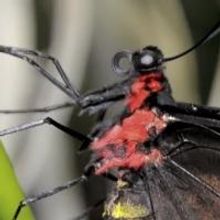
The Butterfly Conservatory: Tropical Butterflies Alive in Winter, an annual favorite visited by millions of children and adults, returns to the American Museum of Natural History today, October 12.
The Butterfly Conservatory: Tropical Butterflies Alive in Winter, an annual favorite visited by millions of children and adults, returns to the American Museum of Natural History on October 12. Celebrating its 16th year at the Museum, this popular winter attraction transforms the iciest day into a summer escape, inviting visitors to mingle with up to 500 fluttering, iridescent butterflies among blooming tropical flowers and lush green vegetation in 80-degree temperatures. The Butterfly Conservatory will be on view through May 26, 2014.
At Skylight Opera Theatre's Annual Meeting on Tuesday, September 27, 2011, Skylight's Managing Director, Amy Jensen, announced that the theater ended the 2010-2011 season with a net increase of $30,000 in total assets, pending final audit results. Total net assets remain at approximately $4.7 million, including $2.5 million in endowment investments.
The Butterfly Conservatory: Tropical Butterflies Alive in Winter, an annual favorite visited by millions of children and adults, returns to the American Museum of Natural History on October 8.
'The Butterfly Conservatory: Tropical Butterflies Alive in Winter,' an annual favorite visited by millions of children and adults, returns to the American Museum of Natural History on October 16. Celebrating its thirteenth year at the Museum, this highly popular winter attraction transforms the iciest day into a summer escape, inviting visitors to mingle with up to 500 fluttering, iridescent butterflies among blooming tropical flowers and lush green vegetation in 80-degree temperatures. The Butterfly Conservatory is on view through May 30, 2011.
The smash hit show challenged four people to spend over seven hours in coffins on the stage of one of London's oldest and most haunted theatres. Those who made it through the night without leaving their coffin would have the chance to win two flights to New York.
'The Butterfly Conservatory: Tropical Butterflies Alive in Winter,' an annual favorite visited by millions of children and adults, returns to the American Museum of Natural History on October 16. Celebrating its thirteenth year at the Museum, this highly popular winter attraction transforms the iciest day into a summer escape, inviting visitors to mingle with up to 500 fluttering, iridescent butterflies among blooming tropical flowers and lush green vegetation in 80-degree temperatures. The Butterfly Conservatory is on view through May 30, 2011.
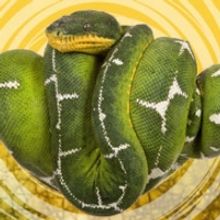
The real monsters, dragons, and basilisks are back! More than 60 live lizards and snakes from five continents in exquisitely prepared habitats. In addition to the live animals, the exhibit uses interactive stations, significant fossils, and an award-winning video to acquaint visitors with the world of the Squamata, the group that includes lizards and snakes. Vistors can learn about ballistic tongues of chameleons, how a basilisk escapes from predators by running across water, amazing camouflage of Madagascar geckos, the 3-D thermal vision of rattlesnakes and boas, spitting cobra fangs, blood-squirting Horned Lizards, flying snakes and lizards, and other gravity-defying squamates.