


Melbourne's RISING 2026 Expands With Pasifika Block Party, First Peoples Works & More
The event will run from 27 May to 8 June.
Melbourne's premier festival of music, art and performance has expanded again, with RISING today announcing a new wave of programming across its 2026 lineup. The additions extend its city-wide invitation to move, gather and experience music, dance and art across the city.
Building on a program that will transform Melbourne from 27 May to 8 June, these additions place participation, nightlife and public space at the centre, spanning late-night parties, dance classes, major free events, First Peoples-led works, visual art, public programs and new music collaborations.
“This next wave of programming pushes further into the pulse of the city. Into clubs, onto trams, streets and shared spaces,” said RISING Artistic Director Hannah Fox. Whether you choose to enter the big collective energy of large-scale free gatherings, or venture off the beaten path to an intimate dance floor, RISING is about communion – experiencing music, movement and culture, together.
CITY-WIDE PARTIES AND AFTER DARK CLUBS
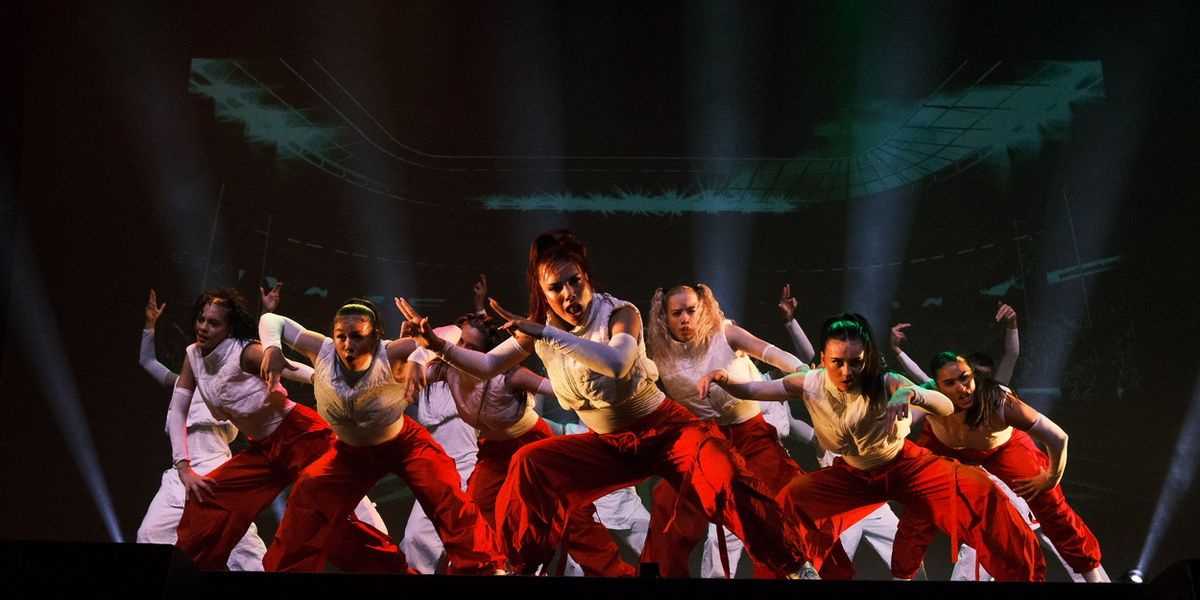
Presented with Fed Square, a major new free event takes over the heart of the city on Saturday 6 June. God Save the Queens is a large-scale Pasifika block party led by global street dance icons The Royal Family Dance Crew. Part performance, part mass participation moment, the event invites audiences onto the floor as the crew break down their signature Polyswagg choreography live. It's a defining moment in a night that unfolds as a full-scale Pasifika music and dance takeover.
As the sun sets, the square transforms into an open-air celebration of Pasifika music, dance and community. The newly announced lineup spans the high-energy hip hop of JessB, whose club-ready sound moves between rap, R&B and dancehall, and trailblazing Afro-Pasifika DJ, producer and global music icon Lady Shaka. They are joined by HALFQUEEN, the Aotearoa DJ known for genre-bending global club sets that channel diaspora, nostalgia and collective release, Auckland MC Rubi Du, and Kween Kong, the internationally recognised Samoan-Tongan performance artist whose work fuses contemporary dance, drag and Pacific cultural practice into bold spectacle.
Rounding out the night, Neo Sun performs with the Pasefika Victoria Choir, reimagining traditional Pacific sounds through electronic experimentation and newly developed choral works created for this performance, capping off the lineup for this major, free event spanning Polynesian techno, dancehall and global club sounds.
Elsewhere in the city, RISING's late-night pulse continues with Bass Lounge, hidden beneath the Paramount Food Court in Chinatown. Enter through the golden doors for the festival's Friday night after parties, a neon-lit underworld of global club sounds, cracked electronica, live sets and karaoke rooms, open from 10pm through to 4am.
Across two Fridays, the lineup leans into the lounge's off-kilter energy. On the first Friday of RISING, 29 May, Rotterdam-based selector Karim aka Rotational, a centrifugal party-starter and dollar-bin digger, spins everything from Algerian synth-pop to deep-cut wave into sets with a gravitational pull. He's joined by Brussels producer Naomie Klaus, performing live, whose tragico-glamorous sound moves through moves from electronica, post-punk infused dub, to languid pop. Rounding out the night are sets from the electrifying Kidskin, tripped out live dub via Front Page Leslie, reggaeton-infused low end grooves from Zalina, and interstitial sounds provided by Elsie (Skylab Radio/Public Listening Project) and Xavier (High Note/Public Listening Project).
Then on Friday 5 June, the lounge sinks deeper. Netherlands-based Nicolini, an aficionado of ‘penni funk', brings hyper-rhythmic live sets that feel like a pirate radio broadcast from a car park party—blown-out bass, pitched vocal chops and fever-dream Dembow. He's joined by electro-femme pioneer Artificial (Nicole Skeltys), drawing on three decades of sound and experimentation. Carrying the night through to the early hours is Ed Kent, alongside back-to-back sets from local DJs and radio hosts Bridget Small with Sofay, and Emelyne with Kassie.
A new addition to the RISING map, Bass Lounge is a late-night haunt designed for post-show drift and deep dancefloor immersion, a place to disappear into sound, community and the city's after-dark edge.
DANCE CLASSES AND MASS PARTICIPATION
RISING also expands its participatory program with the announcement of the full lineup and schedule for Land of 1000 Dances, set to reopen the historic Flinders Street Station Ballroom and Gymnasium as a living dance academy. From Narre Warren to Northcote, Melton to Merri-Bek, Frankston to Footscray, dance schools, crews and choreographers from across Victoria are training it into Flinders Street Station to teach classes in the iconic surrounds of Melbourne's most famous, and mysterious ballroom with classes spanning ballet, jazz, voguing, Polyswagg and more.
Award-winning performer Joshinder Chaggar leads high-energy Bollywood sessions, while Country Struts return to RISING with their crowd-favourite boot scootin' and a live band–backed bush dance. Elsewhere, Melbourne Shuffle pioneers trace the roots of the city's globally recognised rave-born style, while Chantal Bala aka Tejan Diesel Revlon leads voguing sessions grounded in expression, confidence and community and international dance icons The Royal Family Dance Crew treat fans to a rare Polyswagg workshop.
Alongside these highlights, a suite of classes for younger dancers including ballet, contemporary dance and K-pop opens the program to the next generation, while a mix of styles invites audiences of all ages and experience levels onto the floor.
Extending beyond the theatre, these additions reinforce the inaugural Australian Dance Biennale as a national platform that moves between performance, club culture and community participation.
MUSIC SUPPORTS AND NEW COLLABORATIONS
Across the program, a newly announced suite of supports strengthens the music offerings, pairing international headliners with a deep bench of local and global artists.
Tokyo-via-Manhattan rapper and artist Nina Utashiro joins TR/ST at Hamer Hall. Working across trap, pop and metal, Utashiro delivers sharp, villain-coded flows that take a bird's-eye view of Japanese society.
At Festival Hall, rap icon Lil' Kim is joined by Dutty Worldwide, a collective bringing high-energy, community-driven club sounds that centre queer, trans, Black, Indigenous and POC dancefloor cultures. Also on the lineup is Soju Gang, a proud Gunai/Kurnai, Yorta Yorta and Wiradjuri artist and Naarm nightlife mainstay, known for her shapeshifting DJ sets spanning old school hip hop, R&B, baile flips and jersey club.
At Max Watt's, Nashville alt-rockers Wednesday are supported across two nights by distinct local voices. Alien Nosejob brings the formidable fuzz of a project that has evolved from a genreless bedroom recording experiment into a full six-piece band, spanning punk-adjacent sounds. Then for the second show, Season 2 featuring members of Parsnip, The Stroppies and Phil and the Tiles, deliver a tightly constructed, melody-driven set shaped by hooks, drones and rhythmic interplay.
Elsewhere, at Melbourne Recital Centre, anaiis is joined by Bumpy, the Naarm-based Noongar soul artist with a tender yet powerful voice, with a shimmering contemporary sound that draws on folk, funk and jazz.
Promising an Afrobeat juggernaut of an evening at Hamer Hall, Seun Kuti & Egypt 80 are supported by Naarm's Public Opinion Afro Orchestra, delivering their patented percussive, high-energy sound that blends pan-African influences with local and hip hop elements, presented in collaboration with PBS FM's Stani Goma.
And Cate Le Bon is joined by Naarm-born songwriter Georgia Knight, whose work draws on autoharp-led compositions, moving through folk, trip-hop, noise and synth textures to create dark, cinematic pop.
FIRST PEOPLES: ART, LEGACY TRAM AND PUBLIC PROGRAMS
First Peoples-led work extends across RISING in 2026, spanning major public art, projection and participatory programs throughout the city.
Presented in partnership with RISING, Transport Victoria and Yarra Trams, the First Peoples Melbourne Art Trams return in 2026 bringing the power of the Blak imagination to the tracks. Curated by Taungurung woman Kate ten Buuren, this year's edition will see six trams transformed into moving canvases across the city during RISING and remaining on the network for 12 months.
This year also introduces Wadawurrung Elder and senior artist Marlene Gilson OAM as the Legacy Tram artist. Her multi-figure paintings reclaim and reframe histories of Country, embedding cultural knowledge and storytelling into the public realm. Her work, exhibited from Ballarat to the Venice Biennale, brings a powerful intergenerational perspective to the project.
The newly announced Legacy Tram artist adds to the previously announced lineup of artists including Natasha Carter (Dja Dja Wurrung, Yorta Yorta and Jaru), Mitch Mahoney (Boonwurrung and Barkindji), Jenna Mayilema Lee (Larrakia, KarraJarri, Wardaman), Zena Zada Cumpston (Barkandji/Kurnu) and Sonja Hodge (Lardil).
An exciting new series of public programs will accompany the Trams, in Blak Art on the Move which invites audiences to go deeper into the work with artist talks, workshops and public art tours offering insight into the ideas and histories behind the Trams.
In this series of public programs, you'll hear directly from this year's artists about their works, and the curator about the history and enduring significance of First Peoples public art. There are a range of ways to get involved, from hands-on printmaking workshops, artist talks, a hop-on hop-off public art tour along the tram network and more. These activities will run between Saturday 30 May until Monday 8 June.
At Hamer Hall, Calling Country: The Land Speaks Back illuminates the expansive façade with a large-scale projection series centring Indigenous perspectives on land, language and more-than-human connection.
Newly announced works by the Djirri Djirri Women's Dance Group, Traditional Custodians of Narrm and surrounds, bring Wurundjeri ceremony to the fore. Meaning “Willy Wagtail” in Woiwurrung, Djirri Djirri present the Wominjeka (Welcome to Country) dance filmed beneath Victoria's Mountain Ash forests, alongside a work centred on Bulin Bulin, the lyrebird and keeper of language. Through song, story and movement, these works speak to creation, care for Country and the layered relationships between land, culture and bird kin.
The series spans local and international First Peoples artists, exploring transnational connections and reciprocal relationships with land, and launches with a work by Cannupa Hanska Luger. Born on the Standing Rock Indian Reservation and an enrolled member of the Three Affiliated Tribes of Fort Berthold and is Mandan, Hidatsa, Arikara and Lakota, Luger creates large-scale installations and performances that offer new ways of seeing our shared humanity while centering Indigenous worldviews. Following his monumental Times Square work Midéegaadi, he brings a new iteration to Naarm, that envisions the regeneration and return of the North American bison through a speculative ancestral time-space world. Incorporating traditional dance and new regalia the work speaks to the return to land and care for Country and animal kin.
Sign up for all the news on the Fall season, discounts & more...
|
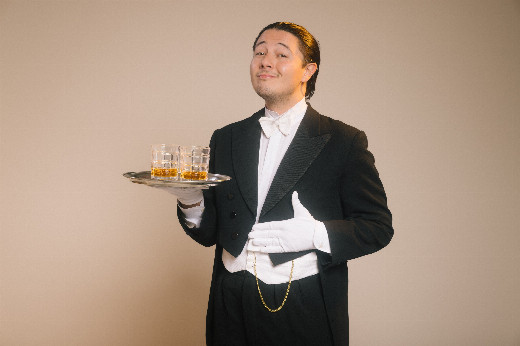
Country House: An Improvised Comedy of Manners Meat Market (10/13-10/17) |
|
The Shawshank Redemption: Live On Stage Arts Centre Melbourne (2/03-3/07) VIDEOS |
|
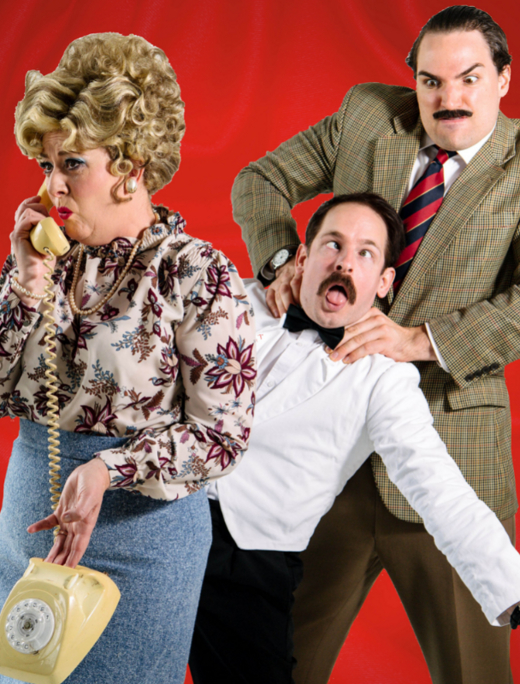
Faulty Towers The Dining Experience Oaks Melbourne on Market Hotel (3/06-12/12) |
|
SLUGS FESTIVAL HUB: MEAT MARKET – THE STABLES (10/01-10/17) |
|
Sink or SING! A Sing-Along Cabaret Festival Hub: Trades Hall - ETU Ballroom (10/14-10/18) |

|
The Manager Is Me The Motley Wherehaus (10/08-10/17) |
|
Play In A Day: Volpone, Or, The Fox The University of Melbourne (11/18-11/18) |
|
Scandal Viva Melbourne (5/01-4/25) PHOTOS |
|
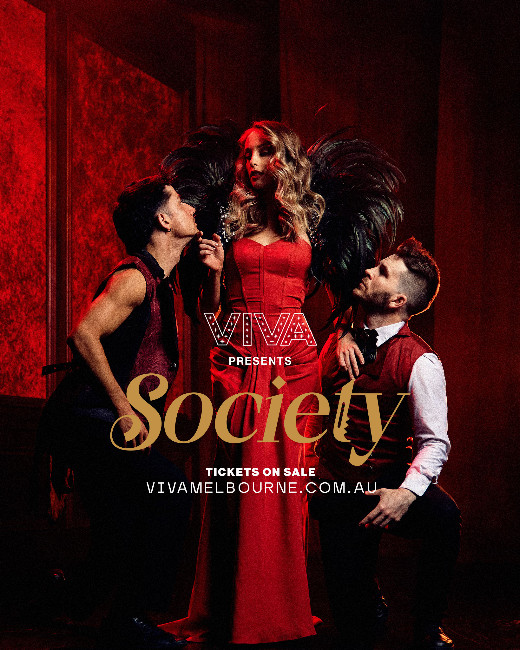
Society Viva Melbourne (5/01-4/25) PHOTOS |
|
Piss Be With You Grouse (10/12-10/18) |
