What a Character Wears Is Never an Accident: Roger Teng on the Psychology of Costume Design
Teng's career has spanned theatrical productions to independent films and vertical drama series.
Written by Matthew Kayser
When audiences watch a performance, they often notice a costume without thinking about why it feels right. A jacket, a dress, or even the way a garment fits can quietly shape the first impression of a character before a single line of dialogue is spoken. While actors bring characters to life through performance, costume designers help audiences understand who those characters are long before the story unfolds.
For Costume Designer Roger Teng, clothing has always been more than fabric or fashion. It is a form of storytelling rooted in observation. Throughout his career, which has taken him from theatrical productions to independent films and more recently to vertical drama series, he has approached costume design with one central belief. The choices a character makes about what they wear reveal something about who they are.
His interest in costume design became more focused after seeing Wicked on Broadway as a high school student. While many audience members admired the production's elaborate costumes, Teng found himself thinking about something different. He was captivated by how costumes could transform actors, establish the world of the story, and make every character instantly believable.
Watching ensemble performers move between different roles left a lasting impression. Their costumes did much more than distinguish one character from another. They helped establish the world of the story and made each character believable.
Over the years, Teng's career has expanded across multiple forms of entertainment. His experience includes associate costume design at The Muny in St. Louis, assisting on Broadway productions in New York, creating the visual worlds of independent short films, and leading costume design for vertical drama series that have reached more than 100 million viewers worldwide. But it's the theatre work, and the specific demands of the associate role, that Teng describes as the foundation everything else was built on.
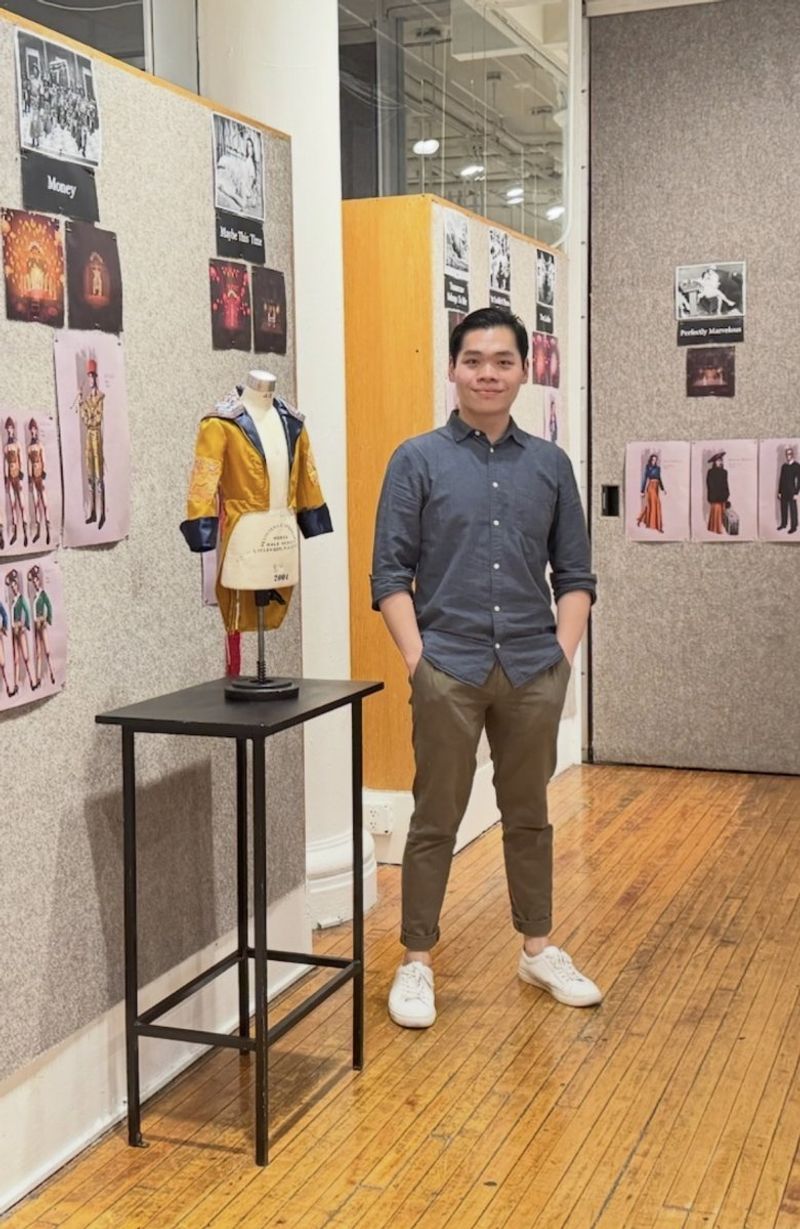 An associate Costume Designer, he explains, isn't simply executing someone else's sketches. At the Muny, on Joseph and the Amazing Technicolor Dreamcoat, the lead designer handed him a set of swatched fabrics and a color concept and asked him to place them across the coat itself. Teng worked out the actual placement, and the designer signed off before it went to the maker.
On Dreamgirls, the designer knew a quick-change sequence needed to work but hadn't landed on how. Teng, thinking of how a kaftan's layered construction works, suggested breaking the costume into pieces that could come off in sequence, which is an idea the designer then built into the actual solution and communicated to the shop.
"You're constantly making calls the designer doesn't have time to make personally," Teng says of the role. "Sourcing, fittings, digging through what's actually available from vendors and shops and deciding what's close enough to work versus what has to be altered or built from scratch. On the bigger, signature pieces, everything gets run past the designer, but there's a hundred smaller decisions in between that fall to you, and you need real judgment to make those well." That balance, between creative judgment and creative deference, is what Teng sees as the real skill of associate work. It is a role that rarely gets discussed as leadership, but that requires it constantly.
His independent film work sits somewhere between that structure and full authorship. On his own short films, Toe Tag and Terminal, Teng built the entire visual world from the ground up in close partnership with a director and production designer, without the resources a larger production provides, and in vertical drama, a newer format reaching audiences in the hundreds of millions, he's now applying that same instinct for judgment and consistency to a medium built on entirely different constraints. To Teng, it is proof that the discipline he developed as an associate extends far beyond the stage where it began.
Along the way, Teng has developed a philosophy that extends beyond costume design itself. He believes storytelling begins with curiosity. The more deeply a creative professional understands people, including their fears, contradictions, motivations, and aspirations, the more authentic the work becomes.
He also believes that artistic careers require patience. Large productions and small independent projects both offer valuable lessons, even if those lessons arrive in different forms. For Roger Teng, costume design has never been about creating beautiful clothing for its own sake. It is about understanding people, and about the quiet, independent judgment required to bring someone else's vision to life without losing your own instincts along the way. That balance, more than any individual costume, defines his work and reflects the quiet craft behind effective visual storytelling.
Photo Credit: Roger Teng
Sign up for all the news on the Fall season, discounts & more...
.jpg?format=auto&width=300)