


Misty Copeland’s Joyce Ballet Festival Finds Freedom in Ballet’s Traditions
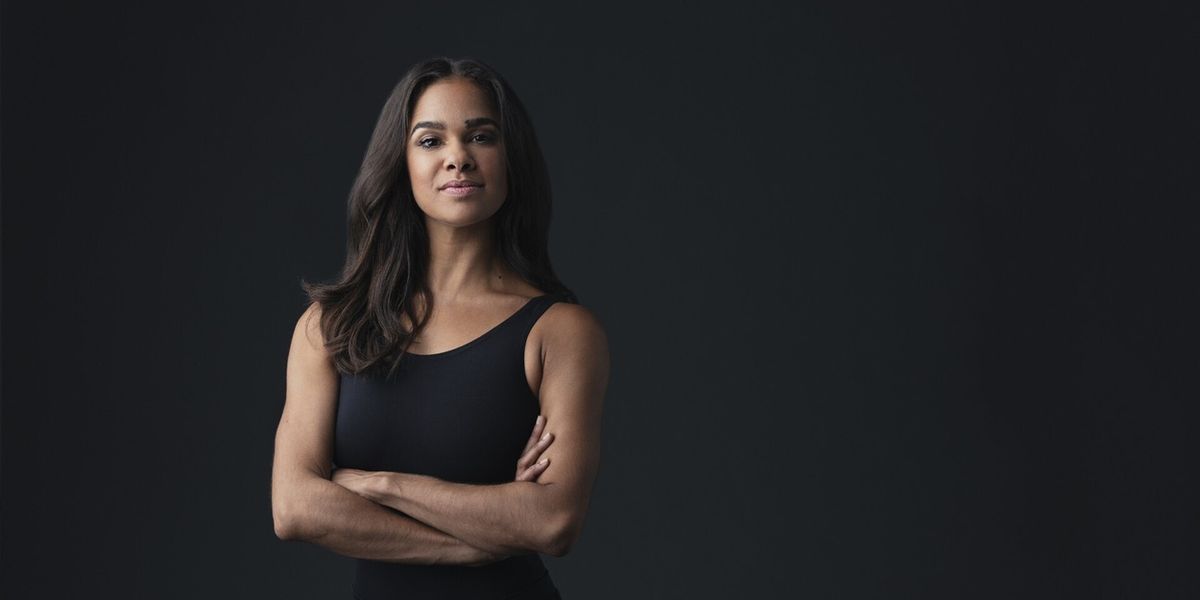
What happens when ballet stops asking what it has always been and starts asking what it can become?
On opening night of The Joyce Theater’s Ballet Festival, curated by Misty Copeland, it seemed the answer to this question was found not in abandoning ballet’s traditions, but in stretching them, placing classical technique alongside contemporary movement and established repertory alongside new work. The result was an opening night that made a joy-filled and thoughtful case for ballet’s ability to evolve.
The two-week festival brings together dancers and choreographers from American Ballet Theatre, New York City Ballet, Dance Theatre of Harlem, Complexions Contemporary Ballet, Hubbard Street Dance Chicago, Paris Opera Ballet and other leading companies. On opening night of the festival, jazz, contemporary, hip-hop and classical ballet all found a place within the program, with two world premieres being presented alongside historic, revived works.
“I feel like it's really this culmination of what's been important to me throughout my career,” Copeland said in a post-show audience Q&A and talkback with Desmond Richardson, co-founder and co-artistic director of Complexions Contemporary Ballet. “The storytelling is at the back of everything that we do as performers, and I feel like I've always been really aware and conscious of the stories that I've been able to tell on stage as a principal dancer at American Ballet Theatre.”
Richardson was the first Black dancer to be promoted to the principal dancer role at American Ballet Theatre in 1997, with Copeland being the first Black woman to be promoted to the role in 2015.
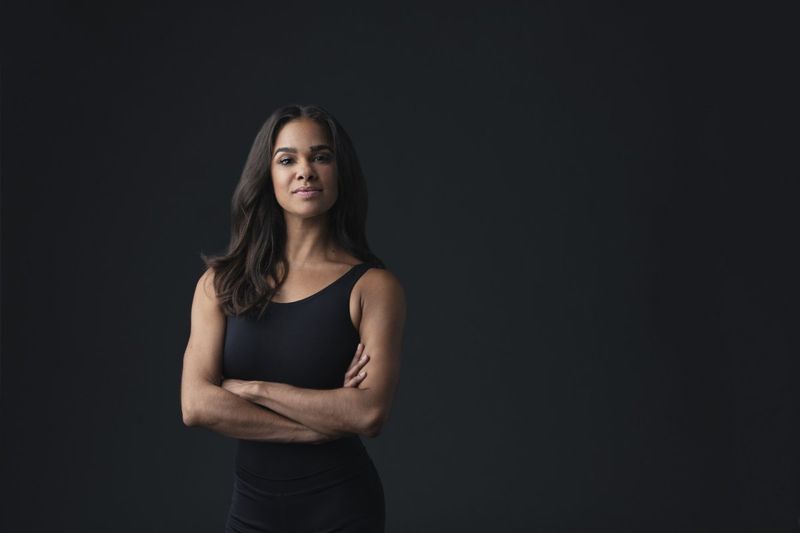
“When The Joyce came to me and said that they wanted me to curate, I said, ‘I really want to think about what the future of dance looks like for me through my eyes and perspective,’” Copeland said. “I wanted to be able to highlight Black, Brown and Queer voices. Not because they don't have a voice and have not been a part of this art form, but because I wanted to give more of a space to show the impact that they've had for a long time.”
Ingrid Silva’s Interactions, performed by Elias Re and Renan Cerdeiro, opened the evening and established the relational and storytelling elements of Copeland’s program -- themes that continued to emerge as dancers moved between various styles.
“I mean, that was definitely intentional to be able to really showcase the broad kind of expansion of what these artists are capable of, what their range is,” Copeland said.
She said that some of the festival’s choreographers had never worked with classical dancers, while some classical dancers had never performed certain styles of dance represented in the program.
“I think that's one of the best parts of being a performer is taking yourself outside of your comfort zone and seeing how far you can go, then coming out on the other side and saying, ‘I did that,’” she said.
.jpg?format=auto&width=800)
The theme of bridging the gap between ballet's history and its future was particularly evident in José Limón’s Sonata for Two Cellos, a work that had not been performed in 25 years. Originally performed by Limón himself and later by Desmond Richardson at the 2001 Jacob’s Pillow Gala, the work arrived on the program with a strong legacy. New York City Ballet Soloist Victor Abreu inherited that history and made it his own as he captured the choreographic and musical detail of the piece, contrasting the fluidity and circular nature of the first movement with the sharpness and repetitive structure of the second.
Hubbard Street Dance Chicago’s Shota Miyoshi brought technical precision and grace to Bob Fosse’s Percussion IV, navigating the choreographer’s famously stylized movement with strength.
In Dwight Rhoden’s Ave Maria, Complexions Contemporary Ballet artists Joe González and April Watson also showcased physical strength and power. González seemed to defy gravity with his jumps and turns, while Watson’s stillness throughout certain elements of the choreography was equally commanding. The lack of ballet’s traditional gender dynamics stood out throughout all of the evening’s work. Strength was not assigned to one dancer while delicacy belonged to another. All were given space to command the stage.
Copeland shared that this sense of agency is an important part of her own life and career in ballet.
“When I think back to when I was 13 years old and first discovered ballet, I was one of six children. We were houseless at the time, and we were living in a motel,” she said. “The first time I felt this sense of safety in my life was being in a ballet class and being on stage and not feeling like anyone could touch me in any way. It was up to me, the choices and decisions I was making.”
.jpg?format=auto&width=800)
Richardson added his own experience of moving beyond the idea that ballet has to be defined by its rules, and instead, finding a sense of freedom within its structure.
“Alvin Ailey said to me when I was coming into the company at 18 years old, ‘You know, you have such a good ballet line, but that's just a means to a way. You want to train your instrument so finely that ballet liberates you,’” he said.
The night ended with a world premiere, Rising, choreographed by Aleisha Walker. Performers included Madison Brown and Walker of American Ballet Theatre and Ariana Dickerson, Carly Greene, and Delaney Washington of Dance Theatre of Harlem. Rising was a fitting way to end the night, both in the title of the piece and its world premiere, as it seemed to usher ballet into a new era defined by possibility. After an evening in which Limón could sit alongside Fosse, contemporary work could exist alongside classical repertory, and dancers from different generations and backgrounds could redefine what audiences expect from ballet, Rising felt earned.
One of the most striking aspects of Copeland’s festival on opening night was its inability to fit into a singular definition of dance, allowing the distinct language of artists and works to speak for themselves. Collectively, the program asked audiences and artists to view ballet’s past as a foundation upon which to build and discover how far the art form can still go.
“Ballet chose me and then I chose it,” Copeland said. “I think that there's something so pure in the technique that I was so drawn to. There's something so beautiful about the repetition, the structure. There's something that I think allowed me to feel this sense of home and safety, but at the same time, allowed me creative freedom.”
The Joyce Ballet Festival continues through August 16 at The Joyce Theater. Week Two, running August 11–16, features Stanton Welch’s Clear, Andrea Miller’s Middle Length Poem, Alonzo King’s Deep River, excerpts from John Taras’ Firebird, Dwight Rhoden’s Ave Maria, Rudolf Nureyev’s Thaïs, James Whiteside’s Mantle, and the world premiere of Ilo’s Melt: From the Inside Out. Tickets are available at Joyce.org.
Sign up for all the news on the Fall season, discounts & more...
