EDINBURGH 2026: ADDING UP AMERICA Q&A
Adding Up America runs from 5 - 31 August
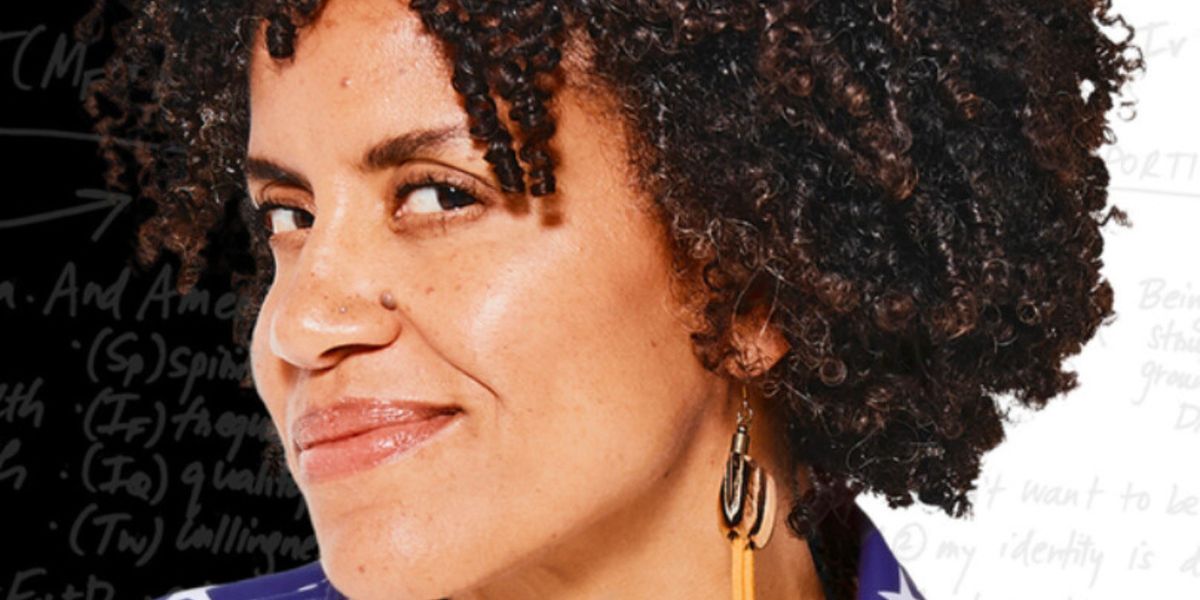
BWW caught up with writer and performer Monique DeBose to chat about bringing Adding Up America to the 2026 Edinburgh Festival Fringe.
Tell us a bit about Adding Up America
It's a solo show about race, identity and the calculations we make to survive, but not in the way you might expect. I grew up mixed-race in America - Black father from the segregated South, white Irish Catholic mother from upstate New York - and from the time I was very small, everything in my world was either Black or white. I became a mathematician because numbers made sense to me in a way that people didn't. One plus one is always two. You can't argue with that. Race, I discovered, does not work that way but America keeps trying to make it.
So I put the equations on a board. The real ones. The ones I ran my whole life to figure out where I belonged, whose world I was safe in, which version of myself was required in which room. I show the audience my working, the actual working, not the version that makes me look good. It's funny. It goes to some real places. And people leave feeling something they weren't expecting to feel when they walked in.
What are the challenges of presenting and performing such a personal story?
The challenge is that you cannot phone it in. Ever. With a personal show there is nowhere to hide. The audience knows immediately if you are not fully present because they are sitting close enough to see your eyes. Every performance you have to be willing to go back to the places that cost you something, and mean it every time.
There is also the challenge of proportion, knowing the difference between being vulnerable and being self-indulgent. I am telling my story but I am not telling it for me. I am telling it so that someone in that room can exhale and think, 'oh, I am not the only one who has felt this'. The moment it becomes about my catharsis rather than their recognition, I have lost the thread.
And then there is the specific challenge of this material. I say things in this show that I spent decades being too afraid to say. About race, about choices I am not proud of, about the ways I used other people's identities to navigate my own safety. That requires a particular kind of courage every single day. I do forgiveness work throughout a run like this not because I am being hard on myself, but because staying open enough to tell the truth requires constant maintenance.
How important is music to the piece?
It is not decoration. That is the most important thing I can say about it. The songs do not sit on top of the story, they are inside it, doing work that the spoken word cannot do alone.
There are moments in this show where I have taken the audience somewhere very specific and very real, and the only honest response is music. Not a speech, not an explanation, a song. Because some things can only be fully expressed that way. The music catches what the words drop.
I am a singer-songwriter first. I have been performing original music internationally for years. So when I write a song for this show it is not a theatre song written to serve a scene, it is a real song that happens to live inside a story. I think audiences feel that difference even if they cannot name it. That is what I am going for.
What sets it apart from other shows at the festival?
A few things, honestly.
First, the mathematical device is not a metaphor borrowed for effect. I studied mathematics at UC Berkeley. When I put an equation on that board I genuinely know what it means and the audience feels the difference between someone using mathematics as a clever theatrical concept and someone for whom numbers are actually a native language. That specificity changes everything.
Second, most shows about race ask you to witness something. This show asks you to recognize something. There is a difference between watching someone else's challenge and sitting in a room where the story keeps touching something in your own life. I am not up there being a victim of anything. I am up there showing my work, including the parts where I was the problem. That kind of honesty is rarer than it should be.
And third, I am an American woman who has just moved to London, performing a show about America, in Edinburgh, right now. The timing and the vantage point are not accidental. America looks very different from here. And I think British audiences are going to recognise more of themselves in this story than they might expect.
What would you like audiences to take away from it?
Permission. Permission to be complicated. Permission to have gotten things wrong. Permission to look honestly at the calculations they have been running in their own life about race, about belonging, about who they have chosen to be and why and decide they want to run different ones going forward.
I do not want people to leave having watched my story. I want them to leave having remembered their own.
The show ends with a question, not an answer because I think that is the most honest thing I can offer. If it starts one conversation that would not otherwise have happened, that is everything to me. If it starts a hundred of them, that is the whole point.
Adding Up America runs from 5 - 31 August
Photo credit: Ki Price
Sponsored content
Sign up for all the news on the Fall season, discounts & more...
.jpg?format=auto&width=300)