Guest Blog: 'What Happens When You Stop Editing Yourself?': Actor and Writer Laura Kay Bailey on Her New Show, ROWLING IN IT
'I wouldn’t have made Rowling In It without input from trans and non-binary creatives.'
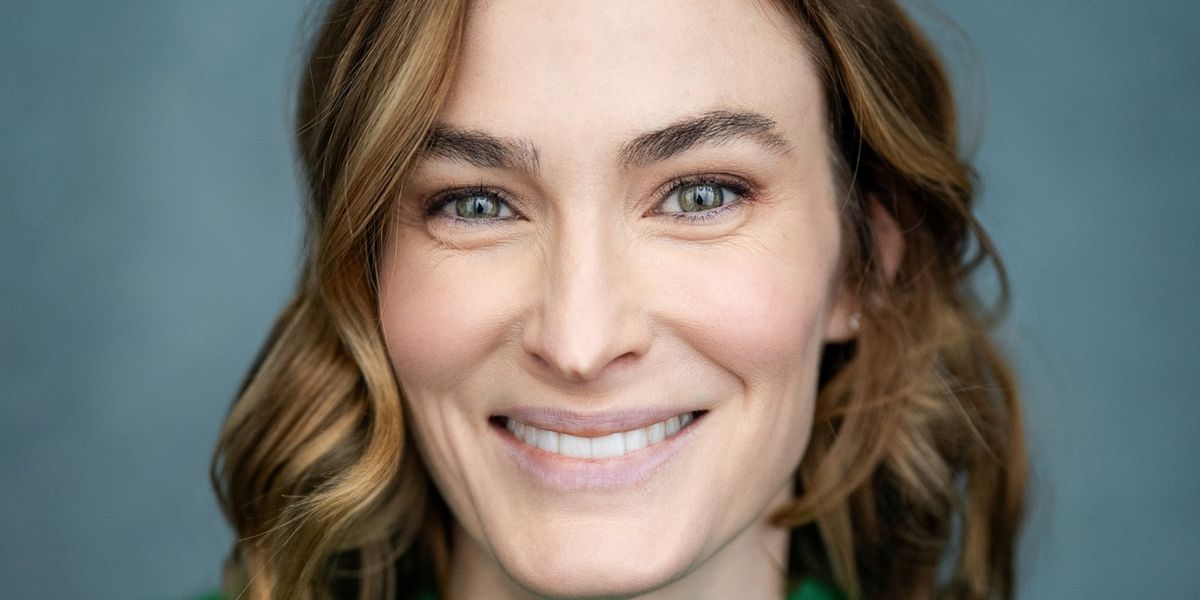
Laura K Bailey was cast as J.K. Rowling in a play that drew widespread attention at the Edinburgh Festival in 2024. Her new show, Rowling In It, revisits that experience, exploring the complexities of being a cis woman navigating a world where identity, voice, and visibility are under scrutiny — and where remaining neutral is not always a neutral act.
Writing a piece like Rowling In It, there’s a moment you realise you’ve been lying.
Not to your audience. To yourself.
For years, I thought I was someone who was easy-going. Adaptable. Chill. The kind of woman who keeps things moving, keeps things smooth, keeps things ticking along, because that’s what we must do to survive.
Which, in practice, meant I got very good at editing myself: what I said, felt, how angry I was allowed to be. I didn’t think of it as self-censorship. I thought of it as maturity.
And then I started writing Rowling In It.
The 2024 play was a watershed event in my life on multiple levels. Although the cast bonded and had a lot of fun, it was also quite traumatic in some ways. We were hounded by press and I didn’t have the knowledge to speak intelligently about the issues it brought up. It all happened so fast - one minute you’re gearing up to do a scrappy fringe show in Edinburgh, the next you’re reading headlines about yourself in national papers. Once I realised this was going to be a pivotal life experience, I started keeping a daily journal.
I needed several months to decompress. Then, on a ten-hour flight to Texas, I vomited out a 28 page draft for Rowling In It. It was pure dribble - a therapy exercise of sorts. The whole experience in 2024 felt so chaotic and morally confusing, putting it on paper was my way of interrogating it and my own blind spots.
I didn’t go into the original production with a fixed position on Rowling. If anything, I saw points of connection — we’re both white, cis, mothers, writers. Putting on that red wig, I was stepping into her shoes and trying to understand her from the inside out. But as the process went on, I found myself asking more difficult questions about power — what it means to have a platform of that scale, how that shapes the conversation around you.
As an actor, it’s easy to think you’re just there to do a job, a hired hand. But at a certain point, that stopped feeling like enough. This show comes out of that tension — between empathy and accountability, between stepping into someone else’s perspective and interrogating your own place within it.
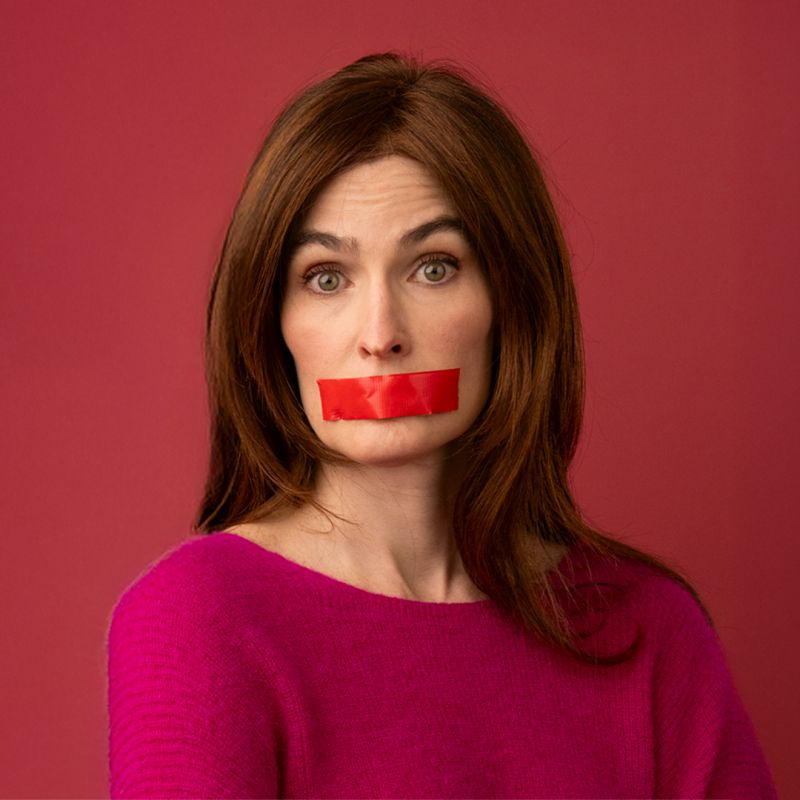
Image Credit: Katie Gabriel Allen Design
I wouldn’t have made Rowling In It without input from trans and non-binary creatives. Their input has undoubtedly made the show better artistically and more honest, ethically.
More truths came out in rehearsals, seeping out sideways. Through jokes, because I use humour as a coping mechanism. Through insightful feedback from Dominic Shaw, my director, that hit me like a sledgehammer. There were moments where I’d think, “This is funny, right?” and Dom would say, very gently, “Yes… but you’re hiding behind the words.”
The truth is, I had spent a long time making myself smaller in order to keep the peace.
As a woman, there’s a particular kind of invisibility that creeps in slowly. It doesn’t announce itself. It doesn’t feel dramatic. It looks like interrupted sentences. Deferring, softening, smoothing. Until one day you realise you don’t know what your unedited voice sounds like anymore.
That’s what this show is about.
Not the headlines. Not the noise. Not even the role of Rowling itself, but the process of reclaiming a voice you didn’t realise you’d lost. And using it to support the people who need to be heard the most.
And here’s the uncomfortable part: once you start telling the truth it’s very hard to stop.
You start saying things you would have swallowed before. You stop cushioning everything. You notice how often women are expected to present their thoughts in a way that is palatable, careful, non-threatening. You start to see how much of your personality has been shaped by that expectation.
And then the question becomes: what happens if you opt out of society’s expectations of you? Not recklessly, but deliberately.
What happens if you allow yourself to be a little less likeable, in order to be more honest?
Rowling In It is part of that process. It’s messy. It’s profoundly uncomfortable in places. I hope to God parts of it are funny. But more than anything, it’s an attempt to stop editing - to say the thing, rather than the version of the thing that will go down best.
And I think that’s why people come to the theatre – for that flicker of recognition when someone on stage says something you’ve thought but never quite said out loud.
If it makes people deeply uncomfortable, great. If the show makes people laugh, even better.
I’m at a point in my life where I’m starting to think discomfort might just be where the interesting stuff lives.
Rowling In It is at the King's Head Theatre from 6-18 April
Main Photo Credit: Yellowbelly
Sign up for all the news on the Fall season, discounts & more...